Panna cotta, meaning “cooked cream” in Italian, represents one of the most elegant yet surprisingly simple desserts to emerge from Italian culinary tradition. Originating from the Piedmont region in Northern Italy, this sophisticated treat has transcended its regional roots and now graces dessert menus in restaurants worldwide. What makes panna cotta particularly appealing to home cooks is the minimal preparation time required—many versions take less than five minutes of active cooking time, yet deliver results that appear far more labor-intensive than they actually are.
This creamy custard-like dessert combines just a handful of ingredients: heavy cream, milk, sugar, gelatin, and flavorings. The beauty of panna cotta lies in its versatility and the luxurious mouthfeel it provides—a texture so smooth and delicate that it seems to dissolve on your palate. Unlike traditional custards, panna cotta requires no baking in a water bath or careful temperature monitoring, making it accessible to cooks of all skill levels.
Understanding the Essential Ingredients
Creating exceptional panna cotta begins with understanding how each ingredient contributes to the final product. The foundation of any panna cotta recipe involves cream, milk, gelatin, and sweetener, but the proportions and specific choices matter significantly.
Cream and Milk Components
Heavy whipping cream forms the primary base, typically ranging from 1.5 to 2.5 cups per recipe. This rich ingredient provides the luxurious, silky texture panna cotta is renowned for. Whole milk, usually between one-half cup to one cup, balances the richness and prevents the dessert from becoming excessively heavy. The combination of these two dairy products creates a perfect equilibrium—sufficient fat content for smoothness without the overwhelming density that cream alone would provide.
Gelatin: The Setting Agent
Gelatin serves as the crucial element that transforms liquid cream into a delicate, wobbling custard. Most recipes call for unflavored powdered gelatin, typically between two and two and one-half teaspoons per batch. Alternatively, gelatin leaves—approximately six leaves—provide the same setting power. The distinction between powdered and leaf gelatin matters primarily in texture preferences and culinary tradition; leaf gelatin, more common in professional kitchens and European preparations, tends to create a slightly more refined texture.
Sweetening Your Creation
Sugar content typically falls between one-third cup and one-half cup, adjusted according to personal preference and accompanying flavors. Caster sugar or granulated sugar dissolves readily during the heating process, distributing sweetness evenly throughout. Some recipes incorporate additional sweetness through fruit sauces or coulis served alongside, reducing the need for excessive sugar in the base mixture.
Step-by-Step Preparation Method
Understanding the methodology transforms panna cotta from an intimidating restaurant dessert into an achievable home project.
Preparing the Gelatin
Begin by blooming the gelatin, which means allowing it to absorb liquid and soften before heating. If using powdered gelatin, sprinkle it over cold water in a medium bowl and let it rest for five to ten minutes, away from direct heat. This blooming process ensures the gelatin dissolves smoothly without clumping when warm liquid is added. If using gelatin leaves, allow them to soften in cold water for a similar duration.
Heating the Dairy Base
Pour milk and cream into a medium saucepan and place over medium-low heat. The goal is to warm the mixture to a steaming point without reaching a boil, typically requiring four to five minutes. While the dairy heats, you can begin dissolving the bloomed gelatin by pouring the warm cream mixture over it and stirring until completely combined. This method prevents lumping and ensures even distribution.
Combining Components
Once the gelatin has dissolved completely into the warm cream, add sugar and vanilla extract to the mixture and continue stirring until the sugar dissolves fully. The entire mixture should steam slightly but never boil, as excessive heat can damage gelatin’s setting ability. Some recipes incorporate sour cream at this stage—typically about one cup—which adds subtle tanginess and contributes to the characteristic smooth texture.
Setting and Chilling
Allow the mixture to cool briefly at room temperature for approximately five minutes. Pour the cooled mixture into prepared ramekins or custard cups—lightly oiled with neutral vegetable oil to facilitate easy removal. Refrigerate until fully set, typically requiring four to six hours or overnight. A perfectly set panna cotta should wobble slightly when gently moved but hold its shape, rather than appearing entirely solid.
Creating Flavor Variations
While vanilla panna cotta provides an elegant foundation, numerous flavor possibilities expand the dessert’s appeal for different occasions and preferences.
Timing Matters for Flavor Integration
Different flavoring agents require different incorporation techniques based on their chemical properties:
- Heat-stable flavorings like chocolate, cinnamon, cloves, and bay leaves should be added to the cream during the heating process, allowing them to infuse gradually
- Citrus zest should be incorporated after removing the cream from heat to preserve its bright, fresh characteristics
- Volatile flavorings such as alcohol, rosewater, or spirit-based extracts should be added only at the very end to prevent evaporation
- Fresh fruits and sauces should be added immediately before serving to maintain texture and appearance
Popular Flavor Combinations
Chocolate Panna Cotta: Add five ounces of chopped bittersweet chocolate to the cream as it heats, stirring until completely dissolved before proceeding with the standard recipe.
Coconut Lime Variation: Add lime zest (not juice, as acid can damage gelatin) to the cream mixture and either substitute one tablespoon of coconut milk or stir in toasted coconut flakes. Top the finished dessert with additional lime zest and toasted coconut for visual appeal and textural contrast.
Spiced Pear Accompaniment: Infuse the cream mixture with one cinnamon stick and three whole cloves during heating, then remove before adding gelatin. Prepare a poaching liquid from moscato wine, additional spices, and honey, simmering sliced pears for fifteen minutes and reducing the liquid until syrupy.
Presentation and Serving Suggestions
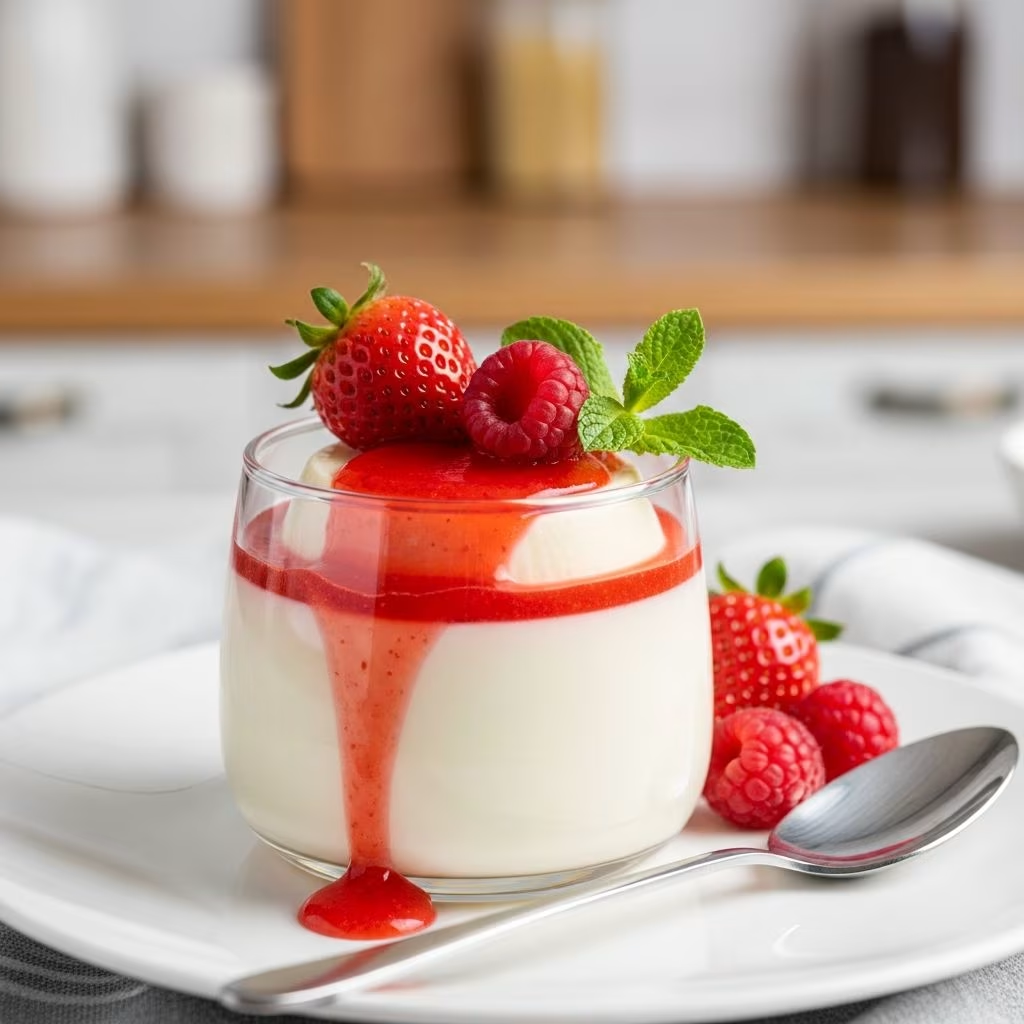
Panna cotta pairs beautifully with numerous accompaniments that enhance rather than overshadow its delicate nature. Fresh fruit coulis, compotes of baked fruits, homemade jam, and berry sauces all complement the creamy base wonderfully. Traditionally accompanied by fruit coulis or caramel, modern preparations increasingly feature experimental and creative flavor pairings.
A quality panna cotta demonstrates what professionals call “just set” consistency—wobbly and dynamic rather than solid and rigid, capable of holding its shape while maintaining slight movement. This texture represents the perfect balance between the creamy base and the gelatin’s setting power.
Equipment and Preparation Considerations
While panna cotta requires minimal equipment, having the right tools facilitates success:
- Medium saucepan for heating cream and milk
- Medium mixing bowls for blooming gelatin
- Whisks or stirring utensils for smooth incorporation
- Eight ramekins, custard cups, or specialized panna cotta molds
- Neutral-tasting vegetable oil for light oiling of containers
- Fine mesh sieve for straining, optional but recommended for ultra-smooth texture
- Refrigerator with adequate space for chilling containers
Troubleshooting Common Issues
Grainy or Separated Texture
If your panna cotta develops a grainy or separated appearance, the mixture likely reached too high a temperature during heating. Keep temperatures to a gentle steam rather than a boil. Additionally, ensure sugar dissolves completely before adding gelatin. Straining the finished mixture through a fine sieve can eliminate any graininess before portioning into ramekins.
Mixture Not Setting Properly
Insufficient gelatin or excessive heat damage can prevent proper setting. Verify that your gelatin measurement is accurate and that you’re not boiling the mixture. If you substituted reduced-fat cream or milk, increase the gelatin slightly, as fat content can affect gelatin’s setting ability. Ensure adequate refrigeration time—four to six hours minimum.
Texture Too Firm or Rubbery
Excessive gelatin creates an undesirable rubbery texture. Measure carefully and follow recipes precisely. If you prefer firmer consistency for serving warm or unmolding, increase gelatin in quarter-teaspoon increments rather than substantial amounts.
Frequently Asked Questions
Can panna cotta be made in advance?
Absolutely. Panna cotta benefits from advance preparation and can be made up to two days ahead, making it ideal for entertaining. Store covered in the refrigerator until serving time.
Is it possible to unmold panna cotta?
Yes, though it requires care. Run a thin knife around the edges of each ramekin, then dip the bottom briefly into warm water before inverting onto serving plates. This technique works best when panna cotta has achieved full firmness.
Can dairy-free alternatives replace cream and milk?
Coconut cream and milk provide acceptable alternatives for those avoiding dairy. Use similar proportions but test the gelatin ratio, as plant-based fats may set differently than dairy.
How should leftover panna cotta be stored?
Cover prepared panna cotta tightly with plastic wrap and refrigerate for up to three days. Do not freeze, as freezing damages the delicate texture.
What alternatives exist for unflavored gelatin?
Leaf gelatin provides a direct substitute with slightly different handling. Agar-agar or other gelling agents require different ratios and may produce slightly different textures. Follow specific recipe instructions when substituting.
Why Panna Cotta Deserves a Place in Your Dessert Repertoire
Panna cotta represents the ideal dessert for modern home cooks—it delivers restaurant-quality elegance with minimal time investment and straightforward technique. The silky, luxurious texture impresses diners while the simple ingredient list reassures home cooks. Whether served plain with fresh berries, accompanied by elaborate fruit coulis, or infused with exotic flavors, panna cotta adapts gracefully to any culinary vision.
The dessert’s rising popularity in fine dining establishments worldwide demonstrates its sophisticated appeal, yet its fundamental simplicity means anyone can produce exceptional results at home. With just five minutes of active preparation and basic kitchen equipment, you can create an elegant finale to any meal.
References
- Perfect Panna Cotta — David Lebovitz. Accessed April 2026. https://www.davidlebovitz.com/perfect-panna-cotta/
- Panna Cotta Recipe — Natasha’s Kitchen. Accessed April 2026. https://natashaskitchen.com/panna-cotta/
- The Best Authentic Italian Panna Cotta Recipe — Vincenzo’s Plate. Accessed April 2026. https://www.vincenzosplate.com/easy-panna-cotta-recipe/
- Vanilla Bean Panna Cotta: The Easiest Fancy Dessert You Ever Made — Sugar with Spice. Accessed April 2026. https://www.sugarwithspiceblog.com/vanilla_bean_panna_cotta/
- Panna Cotta Recipes — Great British Chefs. Accessed April 2026. https://www.greatbritishchefs.com/collections/panna-cotta-recipes