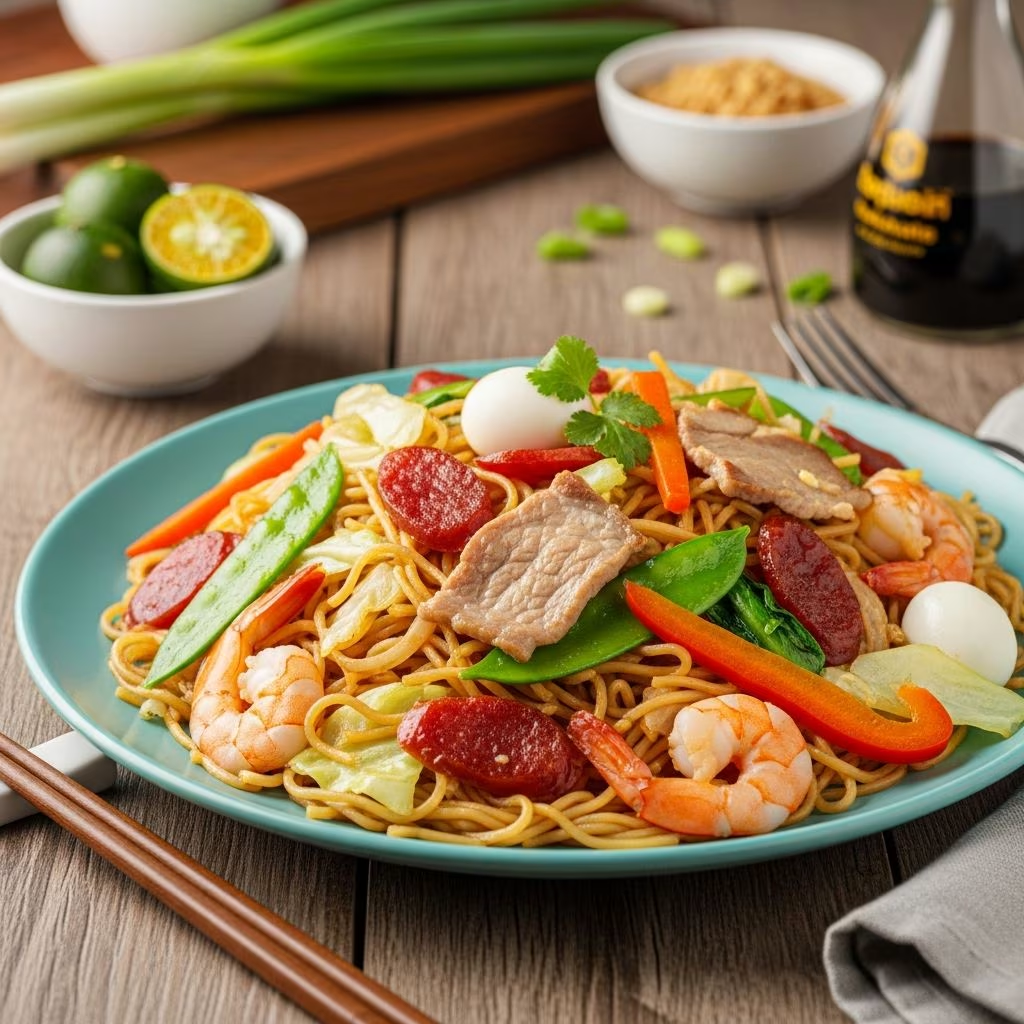
Pancit Canton stands as a cornerstone of Filipino culinary tradition, celebrated for its harmonious blend of chewy noodles, savory proteins, and vibrant vegetables all coated in a glossy umami-rich sauce. This stir-fried noodle dish offers a complete meal in one wok, making it ideal for festive gatherings or casual family dinners. Originating from Chinese influences adapted into Filipino home cooking, it symbolizes abundance and good fortune, often served at birthdays and holidays.
The Origins and Cultural Role of Pancit Canton
Rooted in the fusion of Chinese noodle-making techniques and Filipino flavors, Pancit Canton—named after Cantonese chow mein—evolved in the Philippines through waves of migration. Families prepare it for long-life celebrations, as the long noodles represent prosperity and enduring happiness. Unlike thinner rice-based pancit varieties like bihon, Canton uses wheat flour noodles for a satisfying chew that absorbs sauces beautifully.
In modern kitchens, it remains versatile, appearing at fiestas, school events, and everyday tables. Its adaptability allows cooks to incorporate local proteins and seasonal produce, ensuring it stays relevant across generations. The dish’s communal preparation fosters family bonding, with everyone pitching in to chop vegetables or stir the wok.
Essential Ingredients for Authentic Flavor
Building a flavorful Pancit Canton starts with quality components. The foundation lies in **flour stick noodles**, known as canton noodles, which provide structure and sauce-clinging texture. Proteins like thinly sliced pork, chicken thighs, shrimp, or Chinese sausage add richness and variety.
Vegetables contribute crunch and color: cabbage for subtle sweetness, julienned carrots for earthiness, snap peas or green beans for freshness, and bok choy for leafy balance. Aromatics—garlic, onions, and sometimes celery—form the savory base.
Sauces elevate the dish: **soy sauce** for saltiness and color, **oyster sauce** for umami depth, and chicken broth or water to steam the noodles tender. Optional enhancers include fish sauce for tang, sesame oil for nuttiness, and calamansi or lime juice for brightness.
| Category | Key Ingredients | Role |
|---|---|---|
| Noodles | Flour stick/canton noodles (16 oz) | Chewy base that holds sauce |
| Proteins | Pork (4-8 oz), shrimp (8 oz), chicken (8 oz), Chinese sausage | Tender bites, savory flavor |
| Vegetables | Cabbage (8 oz), carrots (3/4 cup), snap peas (10 pcs), onion, garlic | Crunch, color, freshness |
| Sauces | Soy sauce (2-3 Tbsp), oyster sauce (1-2.5 Tbsp), broth (1.5 cups) | Umami, gloss, moisture |
Step-by-Step Cooking Method
Mastering Pancit Canton requires technique to avoid soggy noodles or overcooked veggies. Start with prep: blanch vegetables to lock in crispness, then build flavors layer by layer in a hot wok.
Prep the Vegetables
- Prepare an ice bath: 2 cups ice in 3 cups cold water.
- Boil 6 cups water; blanch snap peas, carrots, and cabbage for 35-50 seconds.
- Shock in ice bath for 2 minutes, drain, and reserve.
Cook Proteins and Aromatics
- Heat 2-3 Tbsp oil in a wok over medium-high.
- Sauté minced garlic (3-4 cloves) and sliced onion (1 medium) until fragrant, 1-2 minutes.
- Add proteins: pork or chicken first (cook 2-4 minutes until browned), then shrimp and sausage (1-2 minutes). Stir in soy and oyster sauces to coat.
Incorporate Noodles and Finish
- Add dry canton noodles; pour in broth and water (1.5-2 cups total).
- Cover and simmer 5-10 minutes until noodles soften and absorb liquid.
- Toss in blanched veggies, black pepper, and sesame oil. Squeeze calamansi for zest. Garnish with scallions.
This method ensures even cooking and vibrant results. Total time: 30-40 minutes for 4-6 servings.
Pro Tips for Restaurant-Quality Results
- High heat is key: A wok maintains the stir-fry’s wok hei (breath of the wok) for smoky depth.
- Don’t overcrowd: Cook in batches if needed to prevent steaming instead of searing.
- Noodle hydration: Soak dry noodles briefly in warm water if they’re very hard, but traditionally they’re added dry to absorb sauce.
- Balance sauces: Taste before adding salt—soy and oyster are salty. Adjust with broth for silkiness.
- Fried garlic topping: Fry extra minced garlic until golden for crunch and aroma.
Delicious Variations to Try
Pancit Canton’s flexibility shines in customizations. Tailor to preferences or available ingredients for endless options.
- Seafood Supreme: Swap pork for squid balls, extra shrimp, and mussels; use fish sauce instead of oyster.
- Vegetarian Delight: Omit meat, add tofu, mushrooms, and bell peppers; boost with vegetable broth.
- Special Occasion Loaded: Include chicken liver, more sausage, and quail eggs for fiesta flair.
- Cheesy Fusion: Top with melted cheese and chili oil for a Korean-inspired twist, using instant noodle packets as base.
- Spicy Kick: Add bird’s eye chilies or togarashi during sautéing.
These adaptations maintain the dish’s essence while introducing excitement.
Pairing and Serving Suggestions
Serve Pancit Canton hot from the wok for peak texture. Pair with rice vinegar for dipping, lumpia (spring rolls), or grilled meats at parties. For drinks, try calamansi juice, iced tea, or beer to cut richness.
Portion generously—it’s meant for sharing. Leftovers reheat well with a splash of broth; store in airtight containers up to 3 days.
Nutrition and Dietary Notes
A serving (about 1.5 cups) provides balanced macros: carbs from noodles, protein from meats/shrimp (20-30g), and fiber/vitamins from veggies. Customize for low-carb by reducing noodles or gluten-free with rice alternatives. High sodium from sauces—opt for low-sodium versions.
Frequently Asked Questions (FAQs)
What noodles are best for Pancit Canton?
Use canton or flour stick noodles for authenticity; yakisoba works as a substitute.
Can I make Pancit Canton ahead of time?
Prep ingredients yes, but cook fresh for best texture. Reheat gently with broth.
Is oyster sauce necessary?
It adds umami shine, but hoisin or extra soy can sub.
How spicy is traditional Pancit Canton?
Not spicy; add chilies for heat.
What’s the difference from Pancit Bihon?
Canton uses thick wheat noodles; bihon uses thin rice vermicelli.
References
- Pancit Canton Recipe — Panlasang Pinoy. Accessed 2026. https://panlasangpinoy.com/pancit-canton-recipe/
- Transform Your Lucky Me! Pancit Canton with These 3 Asian Recipes — Pepper.ph. Accessed 2026. https://www.pepper.ph/recipes/lucky-me-pancit-canton-asian-recipes
- Pancit Canton Noodles — Urban Bliss Life. Accessed 2026. https://urbanblisslife.com/pancit-canton-noodles/
- Pancit Canton: A Filipino Noodle Dish for Celebrations — ICE.edu. Accessed 2026. https://www.ice.edu/blog/pancit-canton-recipe
- Pancit Canton Recipe | Simply Mamá Cooks — YouTube (Simply Mamá Cooks). Accessed 2026. https://www.youtube.com/watch?v=jyoLRh5CkGk
- Ultimate Pancit Canton Recipe | Special Filipino Noodles — YouTube (FoxyFolksy). Accessed 2026. https://www.youtube.com/watch?v=4OkHjrvbZuY