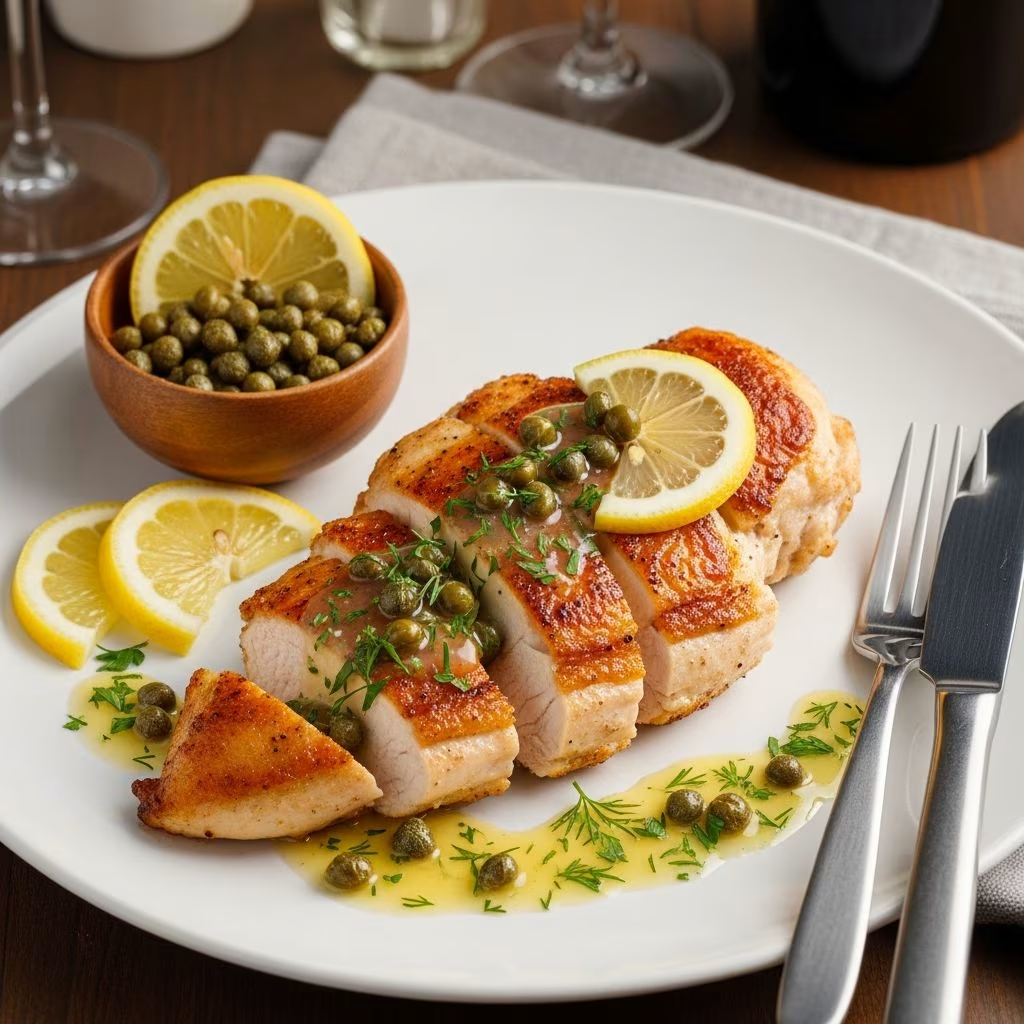
When you’re searching for a dish that combines elegance with simplicity, pan-seared chicken with lemon caper sauce delivers on both fronts. This classic preparation transforms humble chicken breasts into a restaurant-caliber meal through a straightforward technique: searing protein until golden, then building a vibrant sauce from pantry staples. The beauty of this recipe lies not in complex steps, but in understanding how citrus acidity, briny capers, and buttery richness create a harmonious flavor profile that elevates the poultry from ordinary to extraordinary.
Understanding the Core Components
This dish succeeds because each element serves a distinct purpose. The chicken provides a neutral canvas, while the sauce layer delivers all the personality. Lemon juice contributes brightness and acidity, capers add a distinctive briny bite with subtle herbal undertones, and butter rounds out the flavors with richness and body. White wine, if included, adds depth and helps dissolve flavorful browned bits from the pan—a technique called deglazing that captures every ounce of savoriness.
Preparing Your Chicken for Success
The foundation of this dish depends entirely on how you handle the chicken breasts. Most boneless, skinless breasts vary in thickness, with thicker edges and tapered ends. To ensure even cooking, consider butterflying: place the breast on a cutting board and carefully slice horizontally through the thickest part, creating two thinner cutlets. Alternatively, pound the breasts with a meat mallet to achieve uniform thickness—typically between one-quarter and one-half inch. This step eliminates the frustration of dried-out thin edges while thicker centers remain undercooked.
Once you’ve achieved consistent thickness, season generously with salt and pepper on both sides. Some variations include a light dredging in flour mixed with grated Parmesan cheese, which creates a delicate golden crust and adds subtle umami depth. If using flour coating, let the seasoned, coated chicken rest briefly before cooking—this allows the coating to adhere better and develop a more substantial crust.
The Searing Technique
Achieving a proper golden-brown sear requires attention to three variables: temperature, pan surface, and timing. Heat your skillet—preferably stainless steel or cast iron for better browning than nonstick—over medium-high heat with one to two tablespoons of olive oil. The oil should shimmer and move fluidly across the pan surface but not smoke. Once the oil reaches this stage, gently place the chicken breasts away from your body, allowing them to make full contact with the hot surface.
Resist the urge to move the chicken immediately. Let it sit undisturbed for three to four minutes, allowing the exterior proteins to denature and create a flavorful crust through the Maillard reaction. When you attempt to move the chicken with a spatula, it should release easily; if it sticks, give it another minute. Flip carefully and cook the second side for approximately two to three minutes until golden but slightly underdone in the very center—the residual heat and sauce will finish cooking the interior. Remove the chicken to a plate and tent loosely with foil to keep warm.
Building the Sauce Foundation
The magic happens when you deglaze the hot pan with white wine or additional broth. Pour the liquid into the pan and use a wooden spoon to scrape the caramelized bits clinging to the bottom—this browned material contains concentrated chicken essence and forms the sauce’s umami backbone. These fond particles dissolve into the liquid, creating immediate depth of flavor.
To this flavorful liquid, add minced garlic and finely chopped shallots if desired, cooking for about thirty seconds until fragrant. Then introduce fresh lemon juice, capers (drained and rinsed to remove excess salt), and a touch of white wine or chicken broth. This mixture simmers briefly while the flavors meld and the liquid reduces slightly, concentrating its intensity. The timing matters—cook long enough for flavors to marry but not so long that the sauce becomes too concentrated.
Achieving the Perfect Sauce Consistency
The final step transforms your pan liquid into a proper sauce through the addition of butter. Slice cold unsalted butter into large pieces and scatter it across the simmering sauce. This technique, called mounting with beurre manié or simply butter mounting, creates an emulsion as the cold butter melts into the hot liquid. The fat coats the liquid particles, creating a glossy, velvety texture that clings to the chicken and pasta.
For a creamier version, some recipes incorporate heavy whipping cream, which mellows the lemon’s acidity and creates a richer mouthfeel. This option works beautifully for those who prefer less assertive citrus. The cream combines with the capers and lemon to create a luxurious sauce that feels indulgent while remaining relatively light compared to cream-based preparations.
Serving Suggestions and Pairings
This chicken shines across multiple serving presentations. Traditional pairings include buttered egg noodles, which provide a starchy vehicle for sauce absorption, or herb-infused orzo, which offers a Mediterranean twist. Olive-oil mashed potatoes present another elegant option, their smooth texture complementing the bright sauce beautifully. For lighter accompaniments, consider whole grain pasta, which adds nutty complexity without heaviness.
Beyond starches, fresh vegetables round out the plate. Steamed asparagus, sautéed green beans, or roasted Brussels sprouts provide textural contrast and nutritional balance. A simple arugula salad dressed with lemon vinaigrette echoes the dish’s brightness without overwhelming the palate.
Variations and Flexibility
While the classic version remains timeless, several adaptations yield equally delicious results. For a grilled chicken version, marinate butterfly-cut breasts in olive oil and garlic, then char them on a hot grill before serving with chilled lemon-caper sauce. This warm-and-cold contrast offers refreshing appeal during warmer months.
Almond flour substitutes traditional wheat flour for grain-free preparation, creating a delicate coating that browns beautifully while accommodating various dietary preferences. The technique remains identical; only the dredging ingredient changes, making the recipe adaptable without sacrificing quality.
For batch cooking, this recipe doubles easily. Increase all ingredients proportionally and use a larger skillet or two pans simultaneously. The timing adjusts minimally since you’re cooking more individual pieces rather than thicker cuts of chicken.
Understanding Ingredient Quality
Several ingredients deserve closer attention to maximize results. Fresh lemon juice significantly outperforms bottled versions—its brightness and complexity can’t be replicated by shelf-stable products. When selecting capers, look for brined varieties preserved in vinegar or salt rather than nonpareille versus surfines classifications, as both sizes work equally well in sauce applications.
Butter quality impacts the final sauce substantially. Unsalted butter gives you full control over seasoning and allows the pure dairy flavor to shine. European-style butter with higher fat content creates a richer emulsion, though standard American butter produces excellent results when used correctly.
Common Mistakes to Avoid
Several pitfalls diminish the final dish. Overcooking chicken, whether through excessive searing or extended oven time, yields dry protein that no sauce can rescue. Use an instant-read meat thermometer to ensure the internal temperature reaches exactly 165°F rather than guessing by visual cues.
Underseasoning represents another frequent error. Salt distributed before cooking season the chicken throughout rather than sitting only on the surface. Undersalting the sauce results in flat flavors that fail to highlight the lemon and caper interplay.
Rushing the sauce preparation loses critical depth. Give the pan liquid adequate time to reduce and concentrate before finishing with butter. This patience generates glossy, flavorful sauce rather than thin, watery disappointment.
Timing and Preparation Strategy
This entire dish comes together in approximately twenty-five to thirty minutes from start to finish. To optimize workflow: prepare all ingredients and measure them into small bowls before cooking begins (a technique called mise en place), cook your starch in parallel with the chicken so everything finishes simultaneously, and have serving plates warming in a low oven.
If preparing for guests, you can butterfly and pound the chicken several hours ahead, keeping it covered in the refrigerator. The sauce components likewise benefit from advance prep. This strategy reduces actual cooking time to a manageable window when dinner guests arrive.
Nutritional Considerations
Boneless, skinless chicken breasts provide lean protein with minimal fat, making this preparation relatively heart-healthy. A typical serving delivers substantial protein with moderate fat from the butter and olive oil. The lemon and capers contribute minimal calories while providing electrolytes and antioxidants. This balance makes the dish suitable for various dietary approaches, from Mediterranean-inspired eating patterns to protein-focused nutrition strategies.
Storage and Reheating
Leftover chicken with sauce stores beautifully for three to four days in airtight containers within the refrigerator. Reheat gently over medium-low heat, adding a splash of broth or water if the sauce has thickened excessively. The flavors often deepen after a day, making this an excellent make-ahead option for meal planning.
Frequently Asked Questions
Can I use chicken thighs instead of breasts?
Absolutely. Thighs require longer cooking—approximately 20-25 minutes simmering in the sauce rather than 2-3 minutes—but their higher fat content yields incredibly tender, flavorful results. Reduce the heat to low after returning thighs to the pan to prevent the exterior from overcooking while interiors finish.
What if I don’t have white wine?
Substitute equal parts chicken broth or a combination of broth and lemon juice. The sauce sacrifices some complexity but remains delicious. Alternatively, a splash of vermouth adds similar herbaceous notes.
How do I prevent the sauce from breaking?
Avoid boiling after adding butter—maintain a gentle simmer at most. Remove the pan from heat if needed while swirling in butter pieces. If the sauce does separate (appearing oily rather than cohesive), whisk in a tablespoon of cold cream or add a few drops of lemon juice to re-emulsify.
Can I make this ahead?
Cook the chicken and sauce separately, storing them in different containers. Reheat both gently and combine just before serving to maintain the brightest flavors and most appealing texture.
Conclusion: Mastering an Essential Technique
Pan-seared chicken with lemon caper sauce represents more than a single recipe—it’s a fundamental cooking technique that extends to countless proteins and sauces. By understanding how to achieve proper searing, deglaze a pan, and build emulsified sauces, you develop skills applicable across contemporary and classical cuisine. This dish transforms a Tuesday evening into something memorable, proving that elegant cooking needn’t involve hours of preparation or obscure ingredients. With practice, the technique becomes second nature, allowing you to execute this restaurant-caliber meal with the ease of a weeknight dinner.
References
- The Maillard Reaction in Cooking: Science of Flavor Development — McGee, H. (2004). On Food and Cooking: The Science and Lore of the Kitchen. Scribner. https://www.scribner.com
- United States Department of Agriculture Food Safety Guidelines for Poultry — USDA. Last updated 2024. https://www.fsis.usda.gov/food-safety/safe-food-handling-and-preparation/chicken-food-product-safety
- Culinary Techniques: Professional Cooking Standards — LaFranconi, J., & Matthias, S. (2014). Garde Manger: The Art and Craft of the Cold Kitchen. Springer Publishing. https://link.springer.com
- Nutritional Composition of Boneless Skinless Chicken Breast — USDA FoodData Central. Updated 2024. https://fdc.nal.usda.gov
- Mediterranean Diet and Heart Health: Evidence-Based Guidelines — Estruch, R., et al. (2013). Primary Prevention of Cardiovascular Disease with a Mediterranean Diet. New England Journal of Medicine, 368(14), 1279-1290. https://doi.org/10.1056/NEJMoa1200303