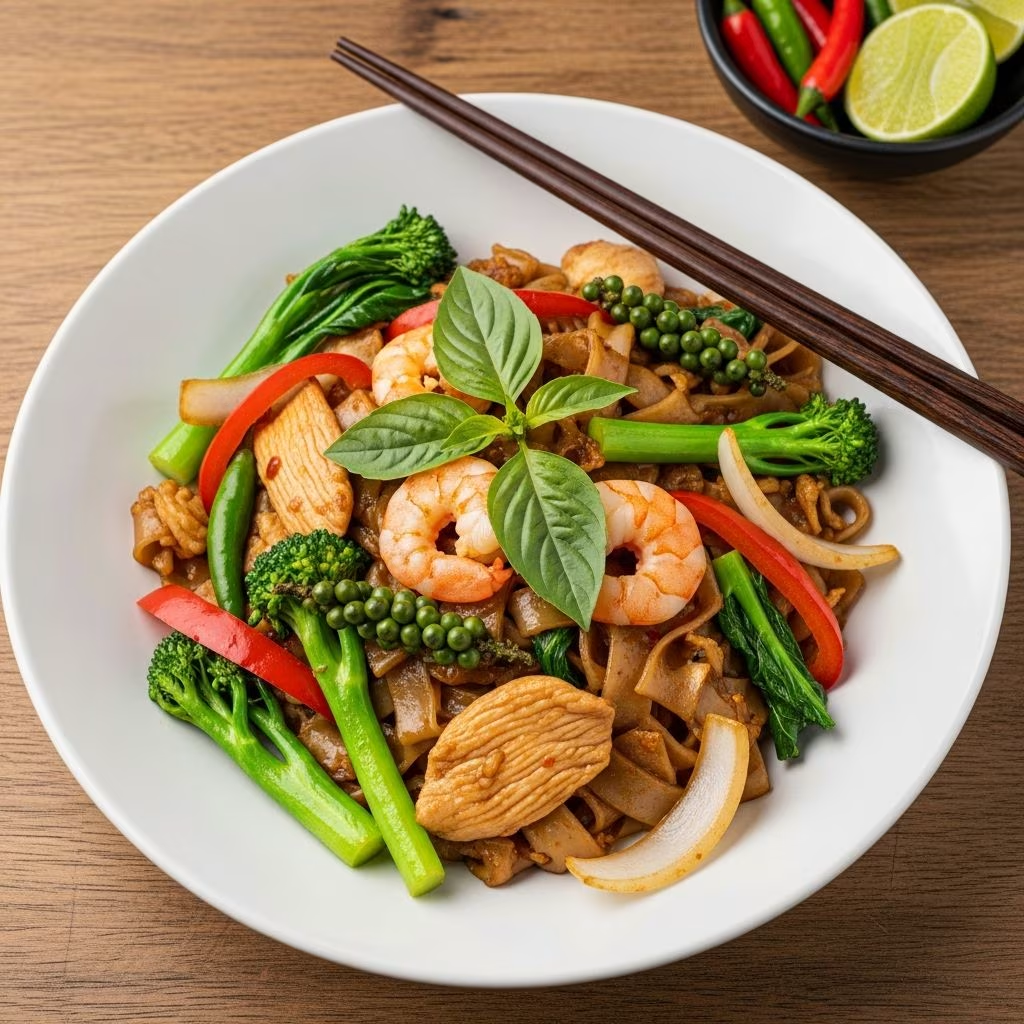
Pad kee mao, often referred to as drunken noodles in English, stands as one of Thailand’s most celebrated street food creations. This stir-fried rice noodle dish combines chewy, tender noodles with an intoxicating blend of spices, fresh herbs, and a savory sauce that keeps people coming back for more. Despite its playful nickname, the dish contains no alcohol—the name derives from the Thai term “kee mao,” which translates to “drunkard,” referring traditionally to the person consuming it rather than the ingredients themselves. The legend surrounding the dish suggests it pairs perfectly with ice-cold beer and serves as an excellent remedy for post-celebration recovery.
Understanding the Essence of Drunken Noodles
The fundamental appeal of pad kee mao lies in its straightforward yet sophisticated flavor profile. This dish represents Thai street food at its finest, delivering intense spice, aromatic herb infusions, and satisfying textures in a single bowl. The beauty of this preparation stems from the balance between heat-forward chilies, the cooling freshness of holy basil, and the umami-rich sauce that coats every strand of noodle.
The cooking method emphasizes high heat and rapid motion, creating slightly charred edges on the noodles that add complexity to the overall taste experience. This technique, fundamental to authentic Thai wok cooking, transforms simple ingredients into a dish far superior to most takeout versions.
Essential Ingredients That Define the Dish
The Noodle Foundation
Wide, fresh rice noodles serve as the structural base for pad kee mao. These noodles, typically measuring around 200 grams per serving, possess a naturally chewy texture that absorbs the sauce while maintaining structural integrity. Fresh noodles are preferable to dried varieties, though dried noodles work adequately when fresh options are unavailable. The width of the noodles matters—wider varieties provide better surface area for sauce adhesion and create more satisfying mouthfeel.
The Flavor Builders
Creating the characteristic punch of pad kee mao requires several key components working in harmony:
- Bird’s eye chilies deliver the signature heat that defines this dish. These small but potent peppers typically number between two and three per serving, though personal spice preferences should guide this quantity.
- Garlic provides the aromatic foundation, traditionally crushed rather than minced to release maximum flavor compounds.
- Thai holy basil contributes distinctive herbaceous notes that distinguish pad kee mao from other noodle preparations. This specific variety of basil differs from Mediterranean basil, offering peppery, slightly licorice-like undertones.
- Protein choices typically include chicken thighs, pork, or shrimp, with chicken thighs being the most traditional selection due to their superior moisture retention and flavor intensity.
- Vegetables such as Chinese broccoli, carrots, and onions add texture contrast and nutritional balance.
The Sauce Components
The sauce represents the technical heart of pad kee mao preparation. Traditional formulations combine:
| Ingredient | Quantity | Function |
|---|---|---|
| Oyster sauce | 3 tablespoons | Umami depth and subtle sweetness |
| Light soy sauce | 1.5 tablespoons | Saltiness and fermented complexity |
| Dark soy sauce | 1.5 tablespoons | Color, richness, and molasses notes |
| Fish sauce | 1 tablespoon | Umami amplification |
| Sugar | 2 teaspoons | Balancing heat and bitterness |
| Water | 1 tablespoon | Sauce consistency adjustment |
These components work together to create a sauce profile that is simultaneously savory, slightly sweet, deeply umami-rich, and perfectly balanced.
The Cooking Process: Technique Matters
Preparation Stage
Success with pad kee mao begins before the wok heats up. Prepare all ingredients in advance—a practice Thai cooks call “mise en place.” Cook rice noodles according to package directions, then drain and set aside. Mince garlic finely and combine with finely chopped chilies to create a rough paste. Mix all sauce ingredients in a small bowl. Cut protein into bite-sized pieces and prepare vegetables in uniform sizes to ensure even cooking.
The Wok Work
Heat oil in a wok or large skillet over high heat until the surface shimmers. Add the garlic-chili paste and cook for approximately 10 seconds—sufficient time to release aromatics without burning. The kitchen may become temporarily spicy during this phase; take care not to directly inhale the fumes.
Add sliced onion and cook for about one minute until edges become translucent. Introduce the protein and fish sauce, continuing to cook for approximately two minutes until the protein reaches proper doneness. This high-heat cooking develops fond on the wok bottom, contributing complex flavors to the final dish.
Add cooked noodles to the wok along with vegetables like broccoli or carrots. Pour the prepared sauce over the noodle mixture and toss continuously. The key technique here involves allowing the noodles to sit undisturbed for 10-15 seconds, creating slight charring on the surface, then tossing thoroughly. Repeat this sit-and-toss process two to three times, developing deeper flavors through gentle caramelization.
The Final Step
Remove the wok from heat and stir in torn Thai basil leaves, allowing residual heat to wilt them gently. The basil should retain some vibrancy rather than becoming completely cooked down. Serve immediately while the noodles maintain their ideal temperature and texture.
Achieving Restaurant-Quality Results at Home
The High Heat Principle
Professional Thai restaurants utilize extremely high heat settings that most home kitchens cannot replicate. Compensate by using a wok or large skillet with good heat retention, preheating thoroughly, and working quickly through each cooking stage. Avoid overcrowding the pan, which drops temperature and creates steaming rather than stir-frying.
The Charring Technique
One critical secret separates adequate pad kee mao from exceptional versions: controlled charring. Rather than constantly stirring, allow noodles to make direct contact with the hot wok surface for several seconds before tossing. This creates light browning that adds dimension and subtle smokiness without creating burned flavors.
Sauce Absorption
The final texture depends on sauce absorption timing. Add sauce when noodles are sufficiently hot to receive it, then toss until fully coated. The goal is noodles that are flavorfully saturated but not swimming in excess liquid—a distinction that elevates homemade versions above takeout alternatives.
Customization and Ingredient Substitutions
Protein Alternatives
While chicken and pork represent traditional choices, pad kee mao accommodates various proteins effectively. Shrimp provides a lighter option with its own distinctive flavor contribution. Beef, turkey, or even tofu work for those with specific dietary preferences. The cooking time may require adjustment based on protein choice—shrimp cooks faster than chicken thighs, while tofu requires careful handling to prevent disintegration.
Vegetable Variations
Chinese broccoli represents the classic vegetable choice, but bell peppers, snap peas, green beans, and mushrooms all integrate well into this preparation. The principle involves selecting vegetables that maintain slight crispness when cooked briefly at high heat, providing textural contrast to the soft noodles.
Basil Substitutions
Thai holy basil offers distinctive peppery notes difficult to replicate, but regular Italian basil serves as an acceptable substitute when the authentic variety is unavailable. The flavor profile shifts slightly, becoming more familiar to Western palates but losing the complex spice notes characteristic of authentic versions.
Sauce Adjustments
Personal preferences should guide sauce composition. Those preferring reduced sodium can decrease soy and fish sauce quantities. Individuals seeking additional sweetness can increase sugar slightly. The spice level remains entirely customizable by adjusting chili quantity or selecting milder pepper varieties.
Understanding the Cultural Context
Pad kee mao belongs to a family of popular Thai stir-fried noodle dishes, closely related to pad see ew (soy sauce noodles). The distinction lies primarily in the abundant chilies and Thai basil that characterize drunken noodles, while pad see ew emphasizes soy sauce without these heat and herb elements. Both dishes showcase the smoky flavors achieved through high-heat wok cooking with wide rice noodles.
This street food carries cultural significance in Thailand, often enjoyed as a casual meal reflecting the country’s food culture values: intense flavors, fresh ingredients, bold spice profiles, and rapid preparation. The dish gained international recognition as Thai cuisine’s popularity expanded globally, becoming a staple in Thai restaurants worldwide.
Frequently Asked Questions
Can I prepare pad kee mao in advance?
While ingredients can be prepped ahead, the dish itself should be cooked immediately before serving. Prepared noodles become gummy when stored, and the fresh basil loses vibrancy over time. However, sauce can be mixed several hours ahead and refrigerated until needed.
What’s the best way to source Thai holy basil?
Asian markets and specialty grocery stores typically stock fresh Thai basil, particularly in areas with significant Asian populations. Some farmers’ markets feature it seasonally. Online specialty food retailers offer dried versions, though fresh provides superior flavor and aromatic qualities.
How can I reduce the spice level?
Simply decrease the number of bird’s eye chilies or remove seeds before chopping to reduce heat intensity. Alternatively, substitute milder pepper varieties. The dish remains flavorful and satisfying with adjusted spice levels.
Is this dish suitable for meal preparation?
Pad kee mao is best enjoyed immediately after cooking. If meal preparation is necessary, store components separately and assemble just before eating. Store cooked noodles, protein, and vegetables in separate containers, combining them during a quick high-heat toss before consumption.
What beverages pair well with pad kee mao?
The “drunken noodles” nickname refers to the traditional pairing with ice-cold beer, which provides refreshing contrast to the spicy heat. Alternatively, Thai iced tea, coconut water, or simple cold water complement the dish effectively.
Conclusion: Bringing Thailand to Your Kitchen
Mastering pad kee mao represents an accessible entry point into authentic Thai cooking. The dish requires no exotic equipment beyond a standard wok or large skillet, relies on readily available ingredients, and delivers results exceeding most restaurant versions when proper technique is applied. The combination of chewy rice noodles, aromatic herbs, intense spices, and perfectly balanced sauce creates a complete eating experience that explains why this street food has captured global culinary attention.
By understanding ingredient functions, respecting cooking technique, and adapting recipes to personal preferences, home cooks can consistently produce exceptional pad kee mao that rivals professional preparations. This versatile dish accommodates dietary modifications while maintaining its essential character, making it an excellent choice for diverse entertaining situations or simple weeknight dinners requiring minimal preparation time.
References
- Authentic Drunken Noodles (Pad Kee Mao) – Hot Thai Kitchen — Hot Thai Kitchen. Accessed April 2026. https://hot-thai-kitchen.com/pad-kee-mao-2/
- Drunken Noodles (Pad Kee Mao) — Tastes Better From Scratch. Accessed April 2026. https://tastesbetterfromscratch.com/drunken-noodles/
- Thai Drunken Noodles (Pad Kee Mao) — RecipeTin Eats. Accessed April 2026. https://www.recipetineats.com/pad-kee-mao-thai-drunken-noodles/
- Pad Kee Mao (Drunken Noodles) — The Splendid Table. 2025-12-17. https://www.splendidtable.org/story/2025/12/17/pad-kee-mao-drunken-noodles
- Drunken Noodles (Pad Kee Mao) — Skinnytaste. Accessed April 2026. https://www.skinnytaste.com/drunken-noodles-with-shrimp/
- Drunken Noodles (Pad Kee Mao Copycat) — The Girl on Bloor. Accessed April 2026. https://thegirlonbloor.com/drunken-noodles/