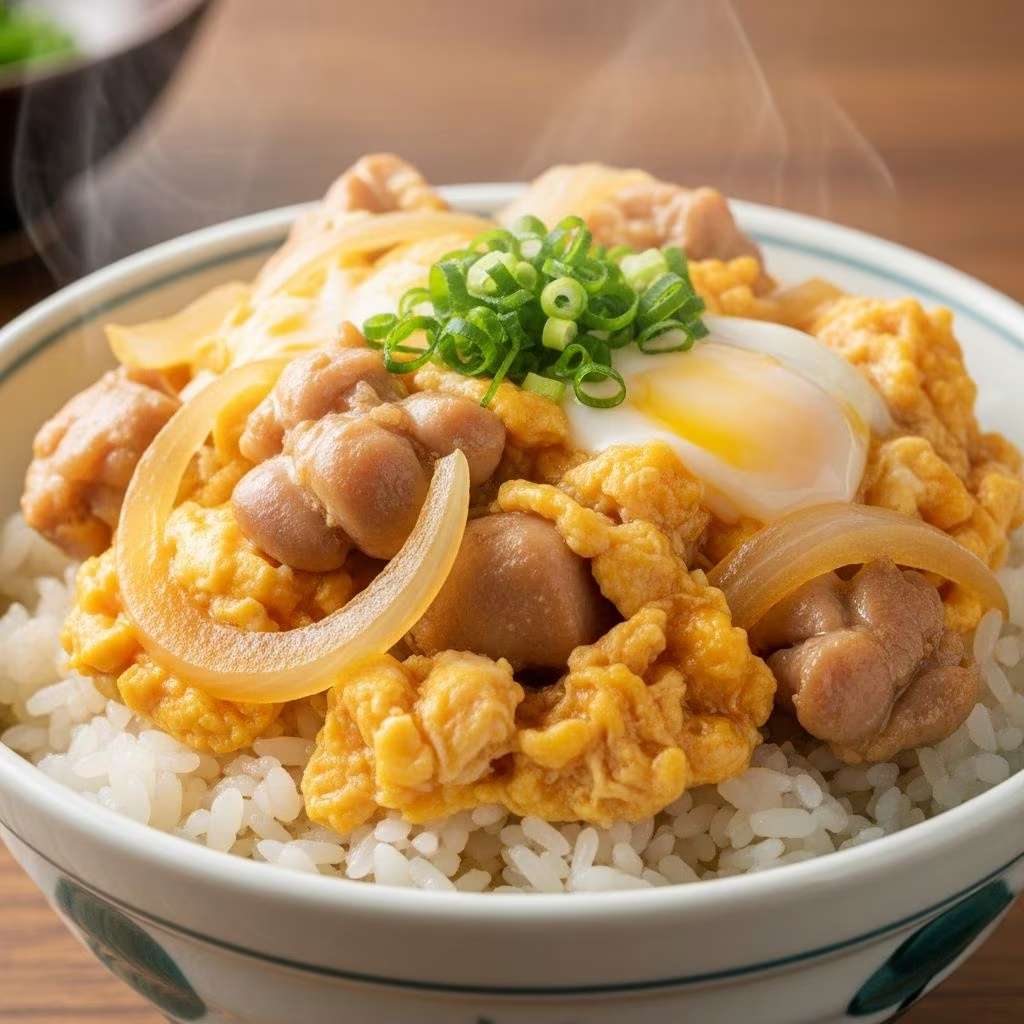
Experience the warmth of Japanese home cooking with Oyakodon, a timeless donburi featuring succulent chicken, tender onions, and velvety eggs nestled in a sweet-savory broth, all served over fluffy steamed rice. This dish, whose name playfully translates to “parent-child bowl” due to its chicken-and-egg pairing, embodies simplicity and profound flavor.
Understanding the Essence of Oyakodon
Oyakodon stands as a cornerstone of everyday Japanese cuisine, cherished for its balance of textures and tastes. Originating from the late 19th century in Tokyo, it evolved from humble ingredients into a nationwide favorite, often enjoyed at bustling food stalls or cozy family tables. The key lies in the harmonious simmer of chicken thighs—prioritized for their juiciness over breasts—sliced onions that soften to sweetness, and eggs added in stages for a custardy finish.
What sets Oyakodon apart is its sauce: a dashi-based elixir blending soy sauce, mirin, and sake for umami depth, subtly sweetened to coat the rice perfectly. Unlike Western scrambled eggs, the eggs here remain softly set, creating a glossy crown atop the bowl. This one-pan wonder cooks in about 20-25 minutes, making it ideal for weeknight dinners or quick lunches.
Essential Ingredients for Authentic Flavor
Gathering the right components ensures your Oyakodon captures true Japanese essence. Focus on fresh, quality items for the best results.
- Chicken thighs: 300-400g boneless, skinless, cut into bite-sized pieces. Thighs stay moist during cooking.
- Onions: 1 medium yellow or white, thinly sliced for tenderness.
- Eggs: 3-4 large, at room temperature, gently beaten to preserve yolk integrity.
- Steamed rice: 2-3 cups short-grain Japanese rice for its sticky texture.
- Sauce base: 1/2-3/4 cup dashi or chicken stock, 2-3 tbsp soy sauce, 2 tbsp mirin, 1 tbsp sake, 1 tsp sugar.
- Garnishes: Chopped green onions, shredded nori, or mitsuba for freshness.
Pro tip: Use homemade dashi from kombu and bonito flakes for superior umami, though store-bought works well.
Step-by-Step Guide to Perfect Oyakodon
Follow these precise steps to achieve restaurant-quality results. Prep time: 10 minutes; cook time: 15 minutes; serves 2.
Marinate the chicken: In a bowl, toss chicken pieces with 1 tbsp soy sauce, 1 tbsp mirin, and 1 tsp sugar. Let sit 5-10 minutes to infuse flavor.
Prepare eggs: Crack eggs into a bowl. Use chopsticks to lightly break yolks and whites into ribbons—avoid vigorous whisking to maintain color contrast and soft texture.
Cook the base: Heat a small frying pan or oyakodon pan over medium. Add sliced onions and dashi-sake-soy-mirin-sugar mixture (about 1/2 cup total liquid). Simmer onions until translucent, 2-3 minutes.
Add chicken: Place chicken pieces evenly over onions. Cook 2-3 minutes per side until nearly done, flipping gently. Pour in any marinade.
Incorporate eggs: Lower heat. Pour two-thirds of eggs in a circular motion around edges first, then center. Cover and cook 30-60 seconds until edges set but center is runny. Add remaining eggs (favoring yolks) for a vibrant top.
Assemble: Divide hot rice into bowls. Slide egg-chicken mixture atop, spooning excess sauce over. Garnish with green onions or nori.
For single servings, use a small pan per bowl to prevent overcooking.
Pro Tips for Restaurant-Worthy Oyakodon
- Pan size matters: Opt for 8-inch pans to mimic traditional oyakodon-nabe, ensuring even cooking and easy sliding onto rice.
- Egg technique: Separate whites and yolks initially for layered custard effect—whites first, yolks last.
- Don’t overcook eggs: Residual heat finishes them; aim for jiggly centers.
- Rice selection: Japanese short-grain rice absorbs sauce without sogginess; rinse thoroughly before cooking.
- Flavor tweaks: Adjust soy for saltiness; add shichimi togarashi for spice.
Common Mistakes and How to Avoid Them
| Mistake | Why It Happens | Solution |
|---|---|---|
| Tough chicken | Overcooking or using breasts | Use thighs; cook just until opaque. |
| Runny or rubbery eggs | Whisking too much or high heat | Gently mix; low heat post-addition. |
| Soggy rice | Sauce overload | Drizzle sparingly; serve hot. |
| Flat flavors | Low-quality soy/mirin | Use Japanese brands for authentic umami. |
Delicious Variations to Try
Elevate your Oyakodon with these twists while staying true to tradition.
- Beef Oyakodon (Gyudon alternative): Swap chicken for thinly sliced beef; cooks faster.
- Vegetarian version: Use tofu or mushrooms instead of chicken; vegetable stock base.
- Spicy kick: Infuse sauce with gochujang or rayu chili oil.
- Seafood twist: Incorporate prawns or scallops for luxurious don.
- Double egg: Top with a raw yolk for extra richness.
Scale for crowds: Double ingredients, use larger pans, cook in batches.
Nutritional Profile and Pairing Ideas
One serving (half recipe) offers about 550 calories: high protein (30g), moderate carbs (60g), and healthy fats from eggs. Rich in B vitamins, iron from chicken, and antioxidants from onions. Pair with miso soup, pickled vegetables, or green salad for a balanced meal.
Frequently Asked Questions (FAQs)
What does Oyakodon mean?
Oyakodon translates to “parent-child bowl,” referring to chicken (parent) and eggs (child) over rice.
Can I use chicken breast?
Yes, but thighs are preferred for juiciness; marinate longer if using breast.
What’s the best rice for Oyakodon?
Short-grain Japanese rice like sushi rice for optimal sauce adhesion.
How do I store leftovers?
Refrigerate up to 2 days; reheat gently to avoid tough eggs. Not ideal for freezing.
Is dashi necessary?
Essential for authentic taste; substitute chicken broth if unavailable, but add kombu for depth.
Gluten-free options?
Use tamari instead of soy sauce; confirm mirin is wheat-free.
Why Oyakodon Captures Hearts Worldwide
Its allure stems from accessibility—pantry staples yield profound comfort. Busy parents in Japan rely on it for nourishing meals, and global foodies recreate it for its foolproof appeal. Experiment confidently; each bowl refines your technique toward perfection.
References
- 15-Minute Oyakodon (Japanese Chicken & Egg Rice Bowl) — Cookerru. 2023. https://www.cookerru.com/oyakodon/
- Authentic Oyakodon Made Simple | Japanese Chicken & Egg Bowl — Just One Cookbook (YouTube). 2023. https://www.youtube.com/watch?v=SgIMT1L7kXM
- Easy Oyakodon (Japanese Chicken and Egg Rice Bowl) — Sudachi Recipes. 2023. https://sudachirecipes.com/japanese-oyakodon-recipe/
- Oyakodon (Chicken and Egg Bowl) — Just One Cookbook. 2023-10-01. https://www.justonecookbook.com/oyakodon/
- Easy Chicken Oyakodon (Chicken & Egg Rice Bowl) — Winnie’s Balance. 2023. https://winniesbalance.com/easy-chicken-oyakodon-chicken-egg-rice-bowl/