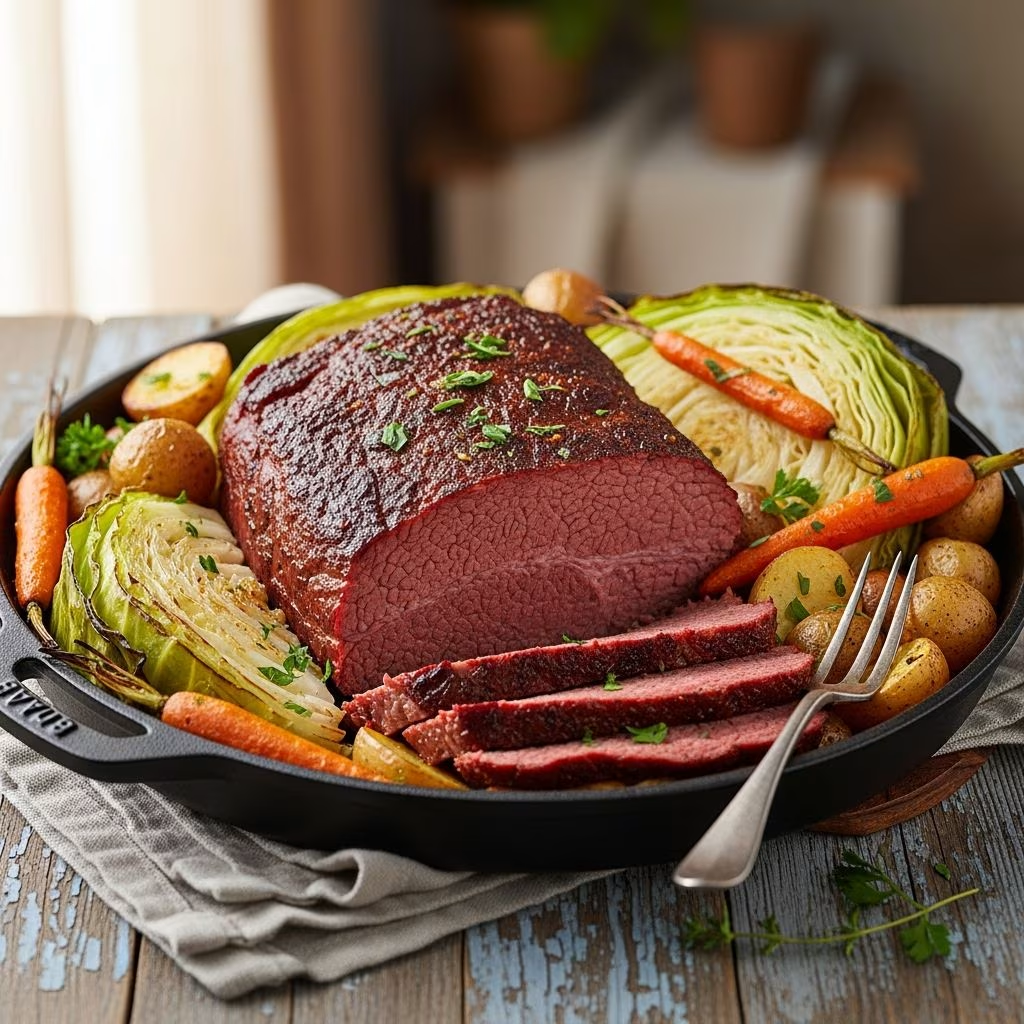
Transforming corned beef from a boiled, one-dimensional dish into a succulent centerpiece requires understanding the power of dry-heat cooking methods. Baking corned beef in the oven delivers superior results compared to traditional boiling techniques, producing meat that remains moist while developing complex flavors through caramelization and browning. This comprehensive guide explores the method, timing, ingredient selection, and techniques that yield restaurant-quality results in your own kitchen.
Understanding Corned Beef and Its Preparation Fundamentals
Corned beef begins as a cut of brisket that has been cured in a salt brine, creating the characteristic texture and flavor profile. The name “corned” derives from the large grains of salt historically used in the curing process, not from cornmeal. When purchasing corned beef for baking, select a flat-cut brisket rather than a point cut, as it contains less fat and cooks more evenly. The spice packet included with most corned beef purchases contains essential seasonings like peppercorns, bay leaves, and mustard seeds that enhance the braising liquid.
Before cooking begins, rinsing the corned beef under cold running water removes excess surface salt from the curing brine. This step prevents the finished dish from becoming overly salty and allows you to control the seasoning throughout the cooking process. Patting the meat completely dry with paper towels ensures better browning and allows seasoning rubs to adhere properly to the surface.
Essential Ingredients and Quality Considerations
A successful oven-baked corned beef dish relies on a carefully selected ingredient list that works in harmony:
- Corned beef brisket: A 3.5 to 4-pound flat-cut with spice packet included
- Braising liquid: Water, beef broth, or a combination thereof (approximately 4 cups)
- Flavor enhancers: Whole grain mustard, olive oil, brown sugar, black pepper
- Vegetables: Green cabbage, carrots, potatoes, and onions
- Optional additions: Garlic cloves, thyme sprigs, bay leaves
The quality of your vegetables significantly impacts the final dish. Select firm, unblemished potatoes that will hold their shape during extended cooking. Choose a dense green cabbage with tightly packed leaves, as loose varieties may become mushy. Carrots should be relatively uniform in thickness to ensure even cooking, and onions should be sweet varieties rather than sharp white onions to balance the savory elements.
Temperature Control and Cooking Stages
Successful oven-baked corned beef depends on a two-temperature cooking strategy that ensures the meat becomes tender while preventing it from drying out:
| Cooking Stage | Temperature | Duration | Preparation Details |
|---|---|---|---|
| Initial Braise | 325°F | 2 hours | Covered with foil, meat fat-side up in braising liquid |
| Vegetable Roasting | 350°F | 30-45 minutes | Vegetables added around meat, partially covered then uncovered |
The lower initial temperature allows collagen in the connective tissue to break down gradually, transforming tough muscle fibers into tender, succulent meat. The increased temperature during the vegetable stage encourages caramelization and browning on the exposed surfaces, creating appealing color and developing deeper flavors through the Maillard reaction.
Building Flavor Through Surface Treatment
A flavorful crust on the meat elevates the entire dish beyond basic braised corned beef. The mustard-based coating creates multiple layers of flavor development:
- Combine whole grain mustard with extra virgin olive oil, creating an emulsion that adheres to the meat surface
- Add brown sugar for subtle sweetness that balances the mustard’s sharpness and aids caramelization
- Season generously with freshly cracked black pepper for pungent spice notes
- Apply the mixture primarily to the fatty cap of the meat, which will brown and crisp during cooking
This combination of ingredients creates a protective barrier that seals in moisture while developing a flavorful exterior. The mustard’s acidic components break down muscle proteins slightly, tenderizing the meat while infusing it with complementary flavors. The sugar caramelizes during the uncovered roasting phase, creating visual appeal and complex sweet-savory notes.
The Braising Liquid Strategy
The braising liquid serves multiple purposes beyond simply cooking the meat. The spice packet should be sprinkled into the bottom of the roasting pan rather than on top of the meat, where it seasons the cooking liquid that will eventually baste and flavor the finished dish. The liquid level should reach approximately halfway up the corned beef, allowing steam to cook the exposed top portions while the submerged portions braise gently.
Some recipes enhance the braising liquid with beef broth instead of using water exclusively, adding savory depth and collagen that enriches the pan juices. The rendered fat from the meat combines with the braising liquid to create a flavorful medium for basting vegetables during the final cooking stage. This accumulated pan juice becomes a valuable resource, spooned over vegetables multiple times to ensure even seasoning and moisture distribution.
Vegetable Preparation and Timing
Vegetables require strategic cutting and staged addition to achieve optimal texture in the finished dish. Root vegetables and cruciferous plants have different cooking rates, necessitating careful planning:
Preparation techniques vary by vegetable type: Potatoes should be halved or quartered depending on size, ensuring pieces are approximately two inches across. Carrots require cutting into two to three-inch segments, which allows them to braise adequately without becoming mushy. Cabbage should be cored and cut into wedges approximately two inches thick, which maintains structural integrity during roasting. Onions work best when cut into thick wedges that keep individual layers connected during cooking.
Adding vegetables partway through the cooking process rather than at the beginning prevents them from becoming overcooked and mushy. After the corned beef has braised for two hours, remove the roasting pan and increase the oven temperature. Arrange vegetables around the meat, spoon hot pan juices over them, return to the oven covered for thirty minutes, then uncover and continue roasting for an additional thirty to forty-five minutes until vegetables achieve fork-tenderness.
Achieving Golden, Caramelized Surfaces
The final uncovered roasting phase transforms ordinary vegetables into caramelized delicacies through exposure to direct heat. During this stage, the moisture evaporates from vegetable surfaces, concentrating sugars that undergo the Maillard reaction, creating golden-brown colors and complex flavors. Potatoes develop crispy, golden edges while remaining creamy inside. Carrots become sweetly concentrated and slightly caramelized. Cabbage edges turn golden and develop lightly charred spots, creating textural contrast.
Basting vegetables multiple times during this final phase ensures even browning and prevents any pieces from drying excessively. Using a large spoon to scoop pan juices and spoon them over vegetables distributes heat and moisture effectively. This technique also prevents vegetables on the pan edges from browning too rapidly while interior pieces remain pale.
Doneness Indicators and Resting
Determining when corned beef reaches proper doneness requires understanding meat structure and texture cues. The meat is ready when a fork inserted into the thickest section slides in with minimal resistance, and a meat thermometer inserted into the center registers approximately 180 degrees Fahrenheit. The meat fibers should shred easily rather than maintain rigid structure, indicating complete collagen breakdown.
Allowing the finished dish to rest for five to ten minutes before slicing permits the meat fibers to relax and reabsorb internal juices, resulting in moister slices. This brief resting period also allows the surface to firm up slightly, making slicing cleaner. The resting period gives you time to prepare serving dishes and any accompaniments like horseradish sauce or mustard.
Serving Suggestions and Complementary Flavors
Baked corned beef and cabbage works well with traditional accompaniments and creative additions:
- Creamy horseradish sauce provides sharp, pungent contrast to rich meat
- Whole grain mustard reinforces the mustard flavors developed during cooking
- Fresh bread or soda bread soaks up flavorful pan juices
- Pickled vegetables add acidic brightness to cut through richness
- Steamed or boiled potatoes served separately accommodate varying preferences
The pan juices should be strained and served separately, allowing diners to drizzle them over their portions. These accumulated juices, enriched with meat fat and vegetable flavors, elevate simple vegetables into sophisticated components.
Common Challenges and Solutions
Understanding potential issues helps you navigate toward consistent success:
Problem: Meat remains tough after cooking — Solution: Ensure adequate cooking time based on meat weight, typically 45 minutes per pound. Verify oven temperature accuracy with an oven thermometer, as faulty thermostats lead to inadequate cooking.
Problem: Vegetables become mushy — Solution: Add vegetables during the final cooking stages rather than at the beginning. Use properly sized cuts so smaller pieces don’t overcook while larger ones finish cooking.
Problem: Excessive saltiness in the finished dish — Solution: Rinse the corned beef thoroughly before cooking and use the spice packet sparingly. Taste the braising liquid before adding salt separately.
Problem: Pale, unappealing appearance — Solution: Ensure the final cooking stage remains uncovered to allow browning. Increase the oven temperature during the final thirty to forty-five minutes to promote caramelization.
Scaling and Storage Considerations
This recipe easily scales to accommodate different group sizes. A two-pound corned beef reduces cooking time to approximately three hours total, while a five-pound roast extends to five and a half hours. Maintain the same two-temperature approach regardless of size, scaling vegetable quantities proportionally.
Leftover baked corned beef stores well refrigerated for three to four days in an airtight container with its cooking liquid. The meat becomes even more tender as it sits and absorbs flavors. Reheating gently in a low oven with additional broth preserves tenderness. Leftover corned beef works excellently in sandwiches, hash, or fried rice applications.
Frequently Asked Questions
Can I prepare this dish in advance?
Yes, you can complete the entire dish a day ahead and reheat gently in a 300-degree oven covered with foil for thirty minutes. The flavor actually improves as the meat and vegetables marinate in the pan juices overnight.
What if I don’t have a flat-cut brisket?
A point-cut brisket works but contains significantly more fat and requires careful trimming. The flat cut is preferable for this cooking method, as it ensures more even cooking and easier slicing.
Should I remove the fat cap before cooking?
No, the fat cap should remain intact, as it protects the meat during cooking and renders into the pan juices, creating flavor. Trim excess fat only if it exceeds one-quarter inch thickness.
What’s the best roasting pan for this recipe?
A heavy-bottomed stainless steel roasting pan conducts heat evenly and allows for proper browning. Avoid thin aluminum pans that heat unevenly and dark nonstick pans that may brown vegetables too rapidly.
Can I add other vegetables?
Absolutely. Parsnips, Brussels sprouts, or sweet potatoes work well. Add them during the appropriate stage based on their density—harder vegetables during the covered phase, tender vegetables during the final uncovered roasting.
References
- Cucina by Elena – Baked Corn Beef and Cabbage — Cucina by Elena. Accessed April 2026. https://www.cucinabyelena.com/baked-corn-beef-and-cabbage/
- Budget Bytes – Corned Beef and Cabbage — Budget Bytes. Accessed April 2026. https://www.budgetbytes.com/corned-beef-and-cabbage/
- A Spicy Perspective – Baked Corned Beef and Cabbage in the Oven — A Spicy Perspective. Accessed April 2026. https://www.aspicyperspective.com/easy-baked-corned-beef-and-cabbage-in-the-oven/
- The Foodie Eats – Oven-Roasted Corned Beef and Cabbage — The Foodie Eats. Accessed April 2026. https://thefoodieeats.com/oven-roasted-corned-beef-and-cabbage/
- CenterCutCook – Corned Beef and Cabbage in the Oven — CenterCutCook. Accessed April 2026. https://www.centercutcook.com/corned-beef-and-cabbage-in-the-oven/