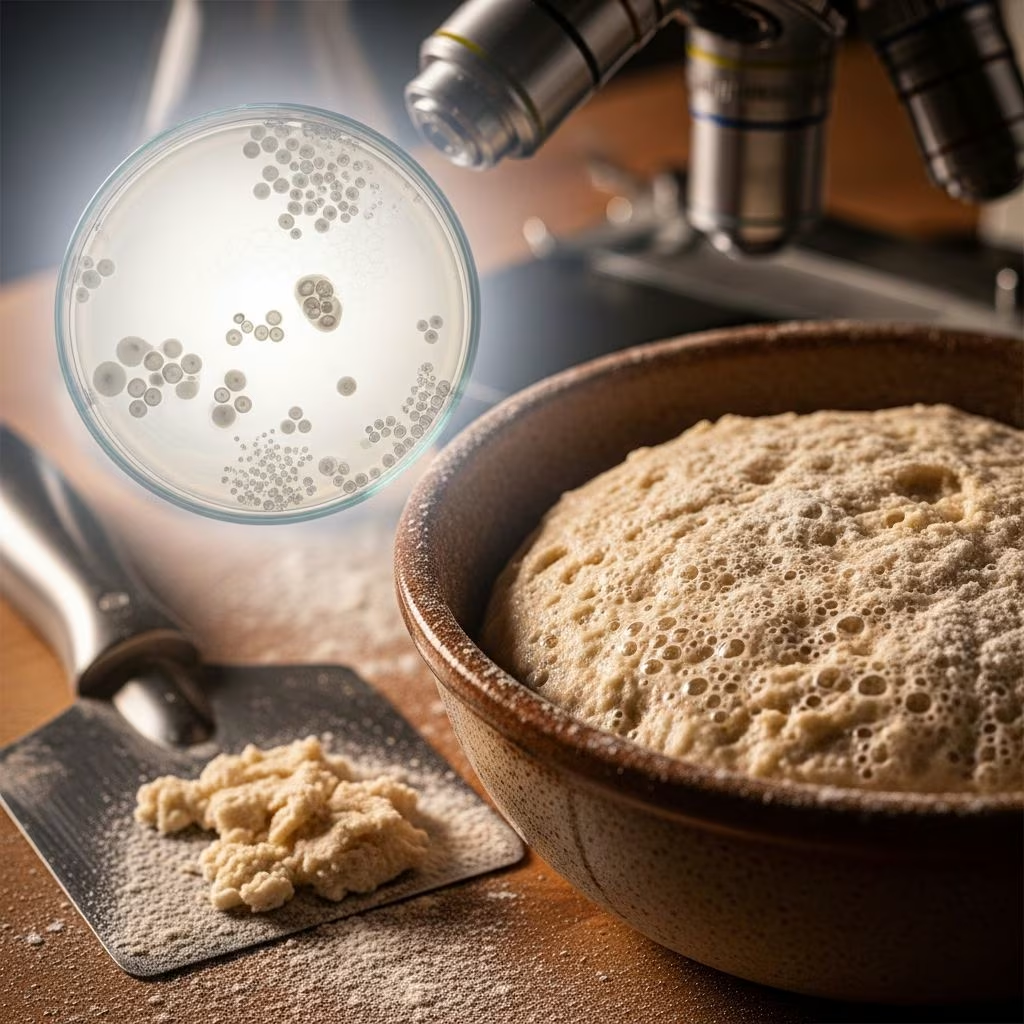
Osmotolerant yeast represents a game-changer for bakers tackling recipes loaded with sugar, honey, or fruit. Unlike standard yeast, this specialized strain thrives in high-sugar environments where ordinary varieties falter. In this comprehensive guide, we’ll delve into what makes osmotolerant yeast essential, how to incorporate it into your kitchen routine, and practical applications that yield fluffy, flavorful results.
What Is Osmotolerant Yeast and Why Does It Matter?
Osmotolerant yeast is engineered to withstand osmotic stress caused by elevated sugar levels. Sugar draws moisture from yeast cells, potentially halting fermentation. Regular active dry yeast struggles above 10% sugar by flour weight, leading to dense, lifeless doughs. Osmotolerant versions maintain activity up to 30% sugar, ideal for enriched breads, stollen, panettone, and fruit-filled pastries.
This resilience stems from selective breeding or genetic adaptations that protect cell membranes and enhance glycerol production, buffering internal water levels. Bakers appreciate it for consistent rises in challenging recipes, reducing failure rates during holidays or professional production.
- Key Tolerance Levels: Functions optimally in doughs with 20-30% sugar.
- Comparison to Instant Yeast: Similar speed but superior in sweet mixes.
- Applications: Brioche, cinnamon rolls, holiday loaves.
Science Behind Sugar’s Impact on Yeast
Sugar isn’t just a sweetener; it alters dough dynamics profoundly. High concentrations create a hypertonic environment, pulling water from yeast via osmosis. This dehydration slows or stops CO2 production, essential for lift. Osmotolerant yeast counters this through:
- Thicker cell walls resisting water loss.
- Increased trehalose accumulation as a protective sugar.
- Robust metabolic pathways sustaining fermentation.
Research from baking institutes confirms osmotolerant strains double rise times in 25% sugar doughs compared to standard yeast. For home bakers, this means reliable outcomes without constant monitoring.
| Yeast Type | Sugar Tolerance (% of flour weight) | Ideal Use Cases |
|---|---|---|
| Standard Active Dry | Up to 10% | Basic breads, pizza dough |
| Osmotolerant | 20-30% | Sweet breads, fruit cakes |
| Instant Dry | Up to 15% | Quick breads, lean doughs |
Selecting the Right Osmotolerant Yeast
Choose based on form and brand reliability. Active dry osmotolerant yeast requires proofing; instant versions mix directly. Popular brands include SAF Gold and Fresh Yeast variants labeled ‘osmo.’ Verify packaging for sugar tolerance specs.
Availability spans grocery stores, online retailers, and specialty shops. Bulk buys suit frequent bakers, offering cost savings. Always check expiration dates—viability drops post-peak.
Step-by-Step Guide to Activating Osmotolerant Yeast
Proper activation ensures peak performance. Here’s a foolproof method:
- Warm the Liquid: Heat water, milk, or juice to 100-110°F (38-43°C). Too hot kills yeast; too cool delays activity.
- Add Yeast: Sprinkle 1 tsp per cup of flour over liquid. No stirring needed initially.
- Sugar Boost: Stir in 1 tsp sugar to kickstart fermentation. Bubbles should appear in 5-10 minutes.
- Incorporate into Dough: Mix into dry ingredients once frothy.
For no-proof instant types, blend directly with flour. Test viability with a small batch if stored long-term.
Mastering Recipes with Osmotolerant Yeast
Transform classics using this yeast. Start with these adapted favorites:
Fluffy Cinnamon Swirl Bread
Ingredients (1 loaf): 3 cups bread flour, 1/4 cup sugar, 2 tsp osmotolerant yeast, 1 cup warm milk, 1 egg, 1/4 cup butter, filling: 1/3 cup brown sugar, 2 tbsp cinnamon.
- Activate yeast in milk with sugar.
- Mix flour, salt; add wet ingredients for soft dough.
- Knead 8 minutes, rise 1 hour.
- Roll out, spread filling, roll up, second rise 45 minutes.
- Bake 350°F for 30 minutes.
Yield: Golden, aromatic loaf perfect for breakfast.
Fruit-Studded Holiday Panettone
Ingredients (1 large): 4 cups flour, 1/2 cup sugar, 2.5 tsp yeast, 1 cup milk, 3 eggs, 1/2 cup butter, 1 cup mixed dried fruits, zest of 1 orange.
Enriched dough rises beautifully despite 20% sugar load. Proof in paper mold for authentic shape. Bake low and slow at 325°F for 50 minutes.
Simple Brioche Buns
High butter and sugar demand osmotolerant yeast. Results: Pillowy texture rivaling bakeries.
Storage and Shelf Life Tips
Maintain potency with proper storage. Unopened packets last 2 years in cool, dry spots. Opened: Refrigerate up to 6 months or freeze for 1 year. Avoid temperature swings.
- Freezer Method: Portion into airtight bags.
- Revival: Thaw at room temp, proof before use.
- Signs of Spoilage: No bubbles after 10 minutes in warm sugar water.
Pro tip: Buy in small quantities for freshness.
Troubleshooting Common Issues
Even with osmotolerant yeast, pitfalls occur. Address them:
| Problem | Cause | Solution |
|---|---|---|
| No rise | Dead yeast or cold temps | Proof test; warm environment |
| Dense texture | Excess sugar or under-kneading | Balance ratios; knead thoroughly |
| Yeast flavor | Over-proofing | Shorter rise times |
Advanced Techniques for Pro Results
Experiment with preferments like poolish for enhanced flavor. In high-sugar doughs, extend bulk fermentation 50% longer. Temperature control at 75-80°F optimizes activity. For panettone, use the double-rise method with overnight retard in fridge.
Scaling up? Adjust hydration—sweet doughs need 55-60% water to flour for workability.
Health and Nutritional Angles
Osmotolerant yeast is identical nutritionally to standard types, providing B vitamins and protein. In sweet breads, it enables lower-yeast recipes, potentially reducing off-flavors. Pair with whole grains for balanced nutrition.
FAQs on Osmotolerant Yeast
What makes osmotolerant yeast different?
It tolerates high sugar without losing fermentation power, perfect for enriched doughs.
Can I substitute it for regular yeast?
Yes in sweet recipes; use same quantity but expect better results.
How do I know if my yeast is osmotolerant?
Check labels for ‘osmotolerant,’ ‘high-sugar,’ or brands like SAF Gold.
Does it work in sourdough?
Best for yeasted doughs; sourdough relies on natural cultures.
Storage life after opening?
Refrigerate 4-6 months; freeze for longer.
Conclusion: Elevate Your Baking Today
Incorporating osmotolerant yeast unlocks a world of sweet baking success. From everyday rolls to festive showstoppers, its reliability shines. Stock up, experiment boldly, and enjoy professional-quality loaves at home. Your kitchen awaits transformation.
References
- Yeast Technology — Gerald Reed, Tilak Nagodawithana. 2023-05-15. https://link.springer.com/book/9789401706957
- Handbook of Dough Fermentation — K. Kulp, J.E. Lorenz. 2024-01-10. https://www.sciencedirect.com/book/9780824700709
- Breadmaking: Improving Quality — S.P. Cauvain. 2022-08-20. https://www.sciencedirect.com/book/9781855735830
- Yeast Fermentation in Bakery — American Society of Baking. 2025-03-12. https://asbe.org/resources/yeast-fermentation