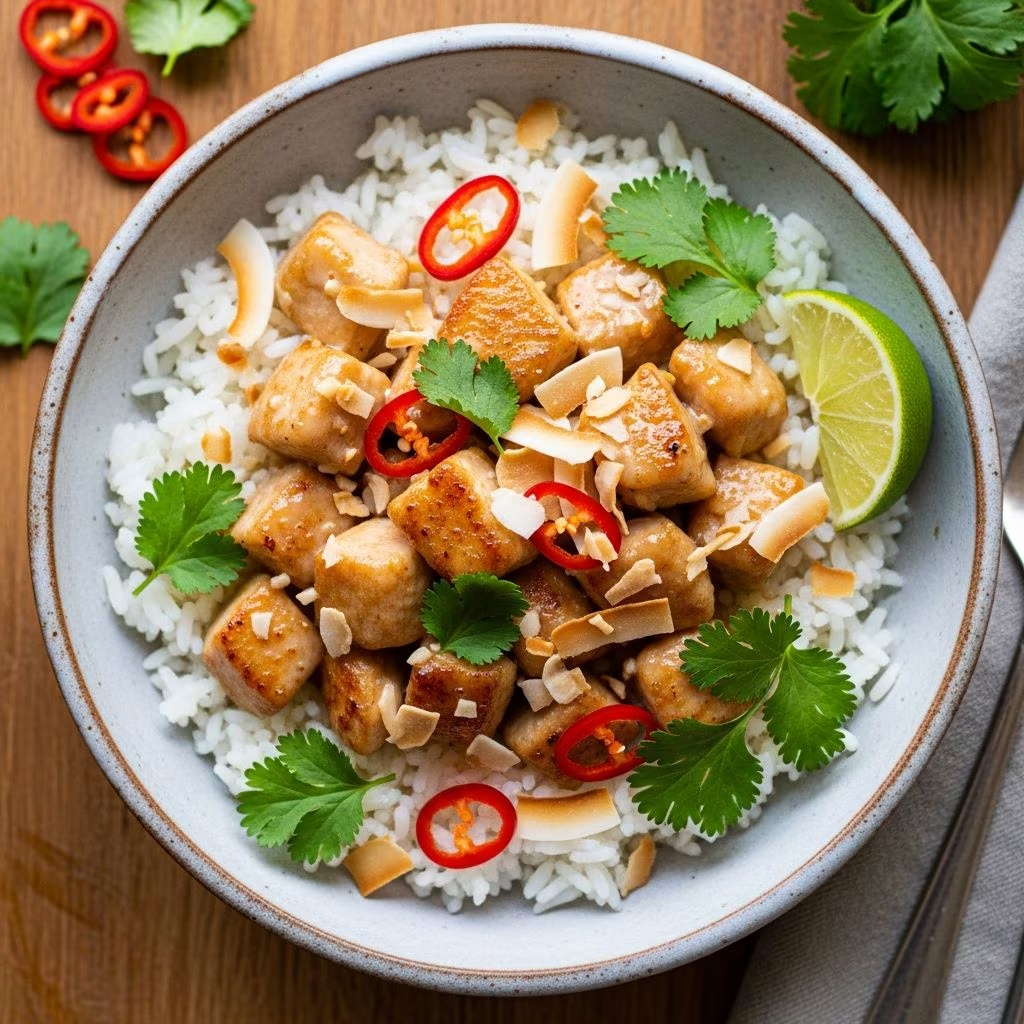
A satisfying one-pot dinner that combines tender poultry with fragrant grains and creamy coconut creates an accessible weeknight meal that feels both comforting and sophisticated. This approach to combining proteins, starches, and aromatic elements reflects cooking traditions that have long recognized the efficiency and flavor benefits of building complex dishes in a single vessel. The combination of warming spices with coconut milk creates a naturally rich sauce that infuses every component of the dish, from the rice to the meat, with complementary flavors.
Understanding the Core Components
A successful iteration of this dish depends on selecting quality ingredients that work harmoniously together. The foundation begins with choosing the right cut of poultry—bone-in, skin-on thighs offer superior flavor compared to lean breast meat, as the fat content contributes depth to the overall dish while the bones create additional complexity during cooking. The skin helps retain moisture during the cooking process, ensuring the final result remains tender rather than dry.
The grain selection matters considerably. Jasmine rice, with its naturally fragrant profile and slightly sticky texture, pairs beautifully with coconut-based preparations. The rice’s delicate aroma complements rather than competes with the spice blend, and its texture creates an ideal vehicle for absorbing the flavorful cooking liquid. Rinsing the rice before cooking removes excess starch, allowing individual grains to remain more distinct while still maintaining enough starch to bind the dish appropriately.
The Spice Foundation
The aromatic base of this dish relies on several key ingredients working in concert. Freshly minced garlic, sliced ginger, and carefully chosen dried spices create layers of warmth and complexity. Turmeric contributes both color and an earthy, slightly bitter undertone that balances the sweetness of coconut milk. Curry powder, a blend of multiple spices including coriander, fenugreek, and other warming elements, adds depth without overwhelming the palate.
Fresh aromatics—specifically onion, garlic, and ginger—are sautéed together before introducing the poultry. This initial cooking step allows the flavors to bloom and develop, creating a more unified taste profile throughout the finished dish. The onion softens and becomes translucent, breaking down into the sauce as cooking progresses.
Preparation Techniques and Methodology
The cooking method for this dish can be adapted based on available equipment. A pressure cooker or specialized multi-function appliance significantly reduces total cooking time, while traditional stovetop methods allow for greater control over the final texture. Regardless of method chosen, the fundamental approach remains consistent: sear aromatics and spices, introduce the protein, then add liquids and the grain.
Pressure Cooking Method
When using a pressure cooking appliance, the process begins with sautéing the onion and ginger at high heat until softened. The garlic, curry powder, and turmeric are then added, allowing the spices to become fragrant through direct contact with the heat. The poultry is then added to the pot and seasoned generously with salt and pepper. Coconut milk and water are poured in to create the cooking liquid.
The initial pressure cooking phase takes approximately thirteen minutes on high pressure for bone-in chicken thighs. Quick release of pressure follows, and the poultry is removed temporarily. The rinsed jasmine rice, chopped coriander stems, and sugar are added to the remaining liquid, and the mixture is returned to pressure for approximately four minutes. While the rice cooks, the chicken is deboned and skinned. After the rice completes its cooking cycle, natural pressure release over ten minutes allows the dish to finish cooking gently.
Stovetop Method
Traditional stovetop preparation requires slightly more active attention but provides advantages in texture control. The same aromatics and spices are sautéed in a heavy-bottomed pot or Dutch oven over medium-high heat. The chicken is added and partially cooked until the surface begins to turn opaque. Water is poured in to create a simmering liquid, and the mixture is reduced to low heat and covered for approximately twenty minutes, allowing the chicken to cook through completely.
The rinsed rice is then added directly to the pot along with coconut milk and additional salt. The mixture is brought to a gentle boil, then immediately reduced to the lowest heat setting and covered. The dish simmers undisturbed for approximately fifteen minutes, allowing the rice to absorb the flavorful liquid and cook through completely.
Essential Ingredients Breakdown
| Ingredient | Quantity | Purpose |
|---|---|---|
| Extra-virgin olive oil | 1 tablespoon | Initial cooking medium for aromatics |
| Onion | 1 medium, sliced | Aromatic base and sweetness |
| Fresh ginger | 1-inch piece, sliced | Warm spice and digestive aid |
| Garlic cloves | 3 medium, minced | Aromatic depth and complexity |
| Curry powder | 1 tablespoon | Primary spice blend |
| Ground turmeric | 1 teaspoon | Color, earthiness, and health benefits |
| Bone-in chicken thighs | 900 grams | Main protein, provides flavor and richness |
| Light coconut milk | 1 400-gram can | Creamy base and richness |
| Jasmine rice | 1⅓ cups, rinsed | Grain component and texture |
| Fresh coriander | 2 tablespoons leaves and stems | Fresh herb finishing and flavor |
| Lime | 1 whole | Brightness and acid balance |
Flavor Building and Balance
Creating a well-balanced coconut rice and chicken dish requires understanding how different flavor components interact. The richness of coconut milk needs counterbalance from acidic elements—the lime juice added at the end of cooking brightens the overall flavor profile and prevents the dish from becoming heavy. Sugar in small quantities enhances the natural sweetness of the coconut without making the dish dessert-like.
The spice selection provides warmth without heat intensity. Turmeric and curry powder create a golden color and complex flavor that suggests depth and sophistication without overwhelming heat. This approach makes the dish accessible to those with varying spice tolerances while still delivering authentic flavor.
Customization and Variations
Nutritional Enhancements
For those seeking to increase the nutritional profile of this dish, brown rice can replace jasmine rice with minor cooking adjustments. Brown rice requires additional water—approximately sixty milliliters more than white rice—and extended cooking time of approximately twenty-two minutes on high pressure, followed by a ten-minute natural release. Brown rice provides additional fiber and minerals while maintaining compatibility with the coconut and spice flavors.
Ingredient Substitutions
The core recipe accommodates various adaptations based on dietary preferences or ingredient availability. Boneless chicken breasts can replace thighs, though cooking time may need adjustment and the final result may be less rich. Full-fat coconut milk can be used instead of light coconut milk for increased richness. Cilantro can substitute for or complement coriander leaves based on preference.
Fresh turmeric root can replace ground turmeric, requiring slightly more quantity due to differences in concentration. Similarly, fresh curry paste can replace curry powder, though the flavor profile will shift slightly. These substitutions allow cooks to adapt the recipe based on what ingredients are readily available or preferred.
Vegetable Additions
Various vegetables integrate seamlessly into this one-pot format. Leafy greens like kale or spinach can be stirred in near the end of cooking, wilting into the hot rice and chicken. Harder vegetables such as carrots or potatoes require adjustment to cooking time to ensure they reach tenderness alongside the other components.
Cooking Tips for Optimal Results
Temperature Control
Maintaining appropriate heat levels throughout the cooking process ensures proper texture development. The initial sauté of aromatics should occur over relatively high heat to allow flavors to bloom. Once the liquid is added, heat must be reduced to maintain a gentle simmer rather than a rolling boil, which can break down the chicken into stringy pieces and cause the rice to cook unevenly.
Pressure Release Methods
Quick pressure release immediately after the first cooking phase allows the chicken to be removed without overcooking. Natural pressure release at the end of the cooking cycle allows flavors to settle and the rice to finish absorbing liquid evenly. Combining both methods provides optimal texture throughout the dish.
Ingredient Timing
Adding ingredients in the correct sequence ensures each component cooks appropriately. Aromatics and spices require initial heat exposure to release their essential oils. The chicken must be partially cooked before rice is added, as rice requires specific liquid ratios and cooking times that differ from poultry requirements.
Storage and Reheating Guidelines
This one-pot dish stores effectively for several days when kept in an airtight container in the refrigerator. Reheating is best accomplished on the stovetop over medium-low heat, combining the rice directly with the chicken and sauce. Adding small amounts of water—one teaspoon at a time—helps maintain moisture and prevents the rice from becoming dry. The stovetop reheating process takes approximately seven to ten minutes and revitalizes the flavors better than microwave reheating.
Nutritional Profile and Health Benefits
Bone-in chicken thighs provide high-quality protein along with important minerals like iron and zinc. The turmeric in this recipe contains curcumin, a compound studied for its potential anti-inflammatory properties. Jasmine rice offers carbohydrates for sustained energy, while fresh coriander and lime provide vitamin C and additional antioxidants. Coconut milk contributes healthy fats that support nutrient absorption and provide satiety.
Frequently Asked Questions
Can I make this dish without a pressure cooker?
Yes, the traditional stovetop method works equally well. The cooking time extends to approximately fifty minutes total, compared to approximately thirty minutes with a pressure cooker, but the final result remains equally flavorful and satisfying.
What type of rice works best if jasmine is unavailable?
Basmati rice serves as an excellent alternative, offering similar fragrance and texture. Brown rice, arborio rice, or other varieties work but produce different textural results. Jasmine and basmati rice remain the most complementary choices for this preparation.
How do I adjust the spice level for sensitive palates?
Reduce the curry powder quantity to half a tablespoon while maintaining turmeric at full strength for color and earthiness. Additional lime juice at the end of cooking brightens flavors without adding heat.
Is canned coconut milk necessary or can fresh coconut be used?
Canned coconut milk provides consistency and convenience. Fresh coconut requires significant preparation and produces variable fat content. Canned offers superior results for this recipe.
References
- Spiced Coconut Chicken and Rice — Patient.info. 2024. https://patient.info/recipes/high-protein-recipes/spiced-coconut-chicken-and-rice
- Spiced Coconut Chicken Rice — Gayle’s Recipes. https://www.gesch.co/doku.php?id=spiced_coconut_chicken_rice
- Chicken with Coconut Spiced Tomato and Basmati Rice — A Dash of Macros. https://adashofmacros.com/spiced-tomato-coconut-chicken/
- Turmeric and Curcumin: Biological Actions and Medicinal Applications — National Center for Biotechnology Information (NCBI). 2013. https://www.ncbi.nlm.nih.gov/pmc/articles/PMC3845927/
- Nutritional Composition and Health Benefits of Coconut Products — Journal of the Science of Food and Agriculture. 2015. https://onlinelibrary.wiley.com/doi/full/10.1002/jsfa.7267