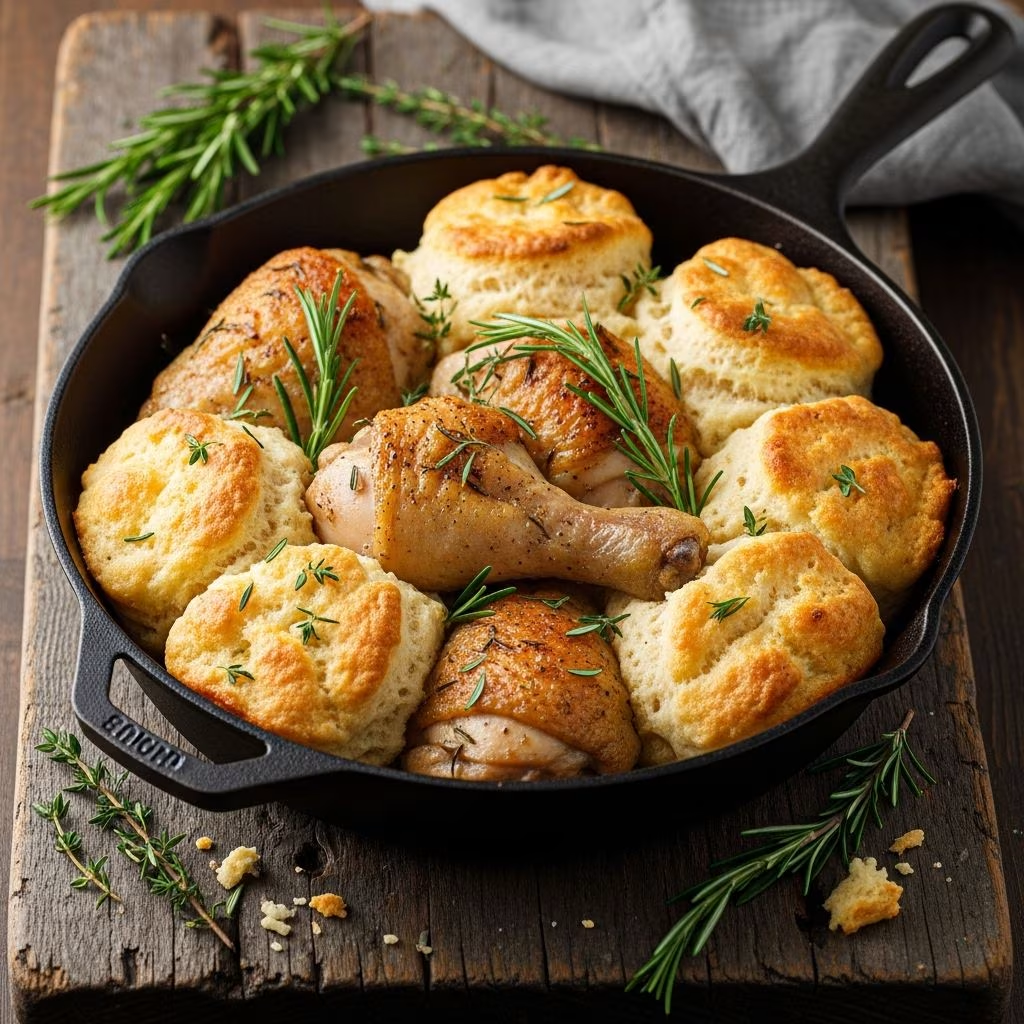
One-pan herbed chicken and biscuits represents the pinnacle of accessible home cooking, combining tender poultry, aromatic herbs, and golden-brown baked goods into a single, cohesive dish. This cooking method streamlines meal preparation while delivering impressive flavors that belie its relative simplicity. The appeal extends beyond taste—the consolidated cooking process minimizes cleanup and maximizes flavor development through the merging of all components during the final baking stage.
Understanding the Fundamental Cooking Method
The one-pan approach to chicken and biscuits differs fundamentally from traditional recipe preparation. Rather than cooking each element separately and combining them afterward, this method involves building layers of flavor directly in an oven-safe skillet. The process begins with sautéing aromatics and proteins, progresses through creating a savory gravy base, and culminates with topping the mixture with biscuits and baking until they achieve golden perfection.
This technique offers several advantages beyond convenience. The proximity of all ingredients allows flavors to meld more thoroughly than in separate cooking vessels. The gravy surrounding the biscuits creates steam during baking, resulting in exceptionally tender, flaky results. Additionally, the heating process brings together all components simultaneously, ensuring that nothing overcools while waiting for other elements to finish cooking.
Selecting and Preparing Your Protein
Chicken selection significantly influences the final dish’s quality and texture. Both boneless chicken breasts and thighs work effectively, though each imparts distinct characteristics. Boneless breasts provide leaner meat that cooks quickly, making them ideal for weeknight preparations. Thighs, conversely, contain more fat and connective tissue, yielding more forgiving results and richer flavor profiles. For those prioritizing convenience, rotisserie chicken or pre-cooked poultry can replace raw chicken, requiring adjustment to cooking times.
Proper protein preparation ensures even cooking and optimal texture. Cutting chicken into bite-sized pieces promotes faster, more uniform cooking compared to leaving breasts whole. Seasoning with salt and pepper before adding to the skillet develops flavor at the protein’s surface. Some recipes recommend briefly searing chicken just until the exterior loses its raw appearance, rather than fully cooking it through—this approach prevents drying during the extended baking process.
Building the Aromatic Foundation
The mirepoix—the classic combination of onions, celery, and carrots—forms the aromatic backbone of any quality chicken preparation. However, modern variations often expand this base. Garlic, in quantities ranging from three to six cloves depending on preference, adds depth and complexity. Some preparations incorporate mushrooms, which contribute umami and earthiness that enhances the overall dish.
Preparation technique matters considerably. Finely chopping vegetables ensures they soften quickly and distribute evenly throughout the gravy. Some cooks prefer dicing mushrooms and sautéing them separately before incorporating other vegetables, allowing their moisture to evaporate and their flavors to concentrate. Others utilize frozen vegetable blends, which eliminate chopping while providing consistent results and extended shelf life.
Mastering the Gravy Component
The gravy transforms individual ingredients into a cohesive dish. This component typically begins with a roux—equal parts fat and flour cooked together to eliminate raw flour taste and create thickening capacity. Butter serves as the traditional fat, though oil or the rendered fat from chicken skin can substitute. The flour quantity varies based on desired consistency, typically ranging from one-quarter to one-half cup.
Deglazing the pan with white wine or additional broth dissolves flavorful browned bits adhering to the skillet’s surface, a process that dramatically enhances depth. Following this step, adding broth gradually while stirring prevents lumps and ensures smooth incorporation. The ratio of broth to dairy significantly influences the final texture—equal parts broth and milk produce a creamy yet balanced sauce, while higher dairy ratios yield richer results.
Herb integration occurs during the gravy-making phase. Fresh thyme, rosemary, and sage contribute aromatic complexity, while dried versions provide concentrated flavor. Thyme appears most frequently across recipe variations, with typical quantities ranging from one-half to one and one-half teaspoons of dried herb. Fresh herbs, offering more delicate flavors, typically require larger quantities—approximately one tablespoon of fresh thyme equates to one teaspoon of dried.
Selecting the Optimal Biscuit Topping
Two primary approaches to biscuit preparation offer distinct advantages. Refrigerated biscuit dough requires minimal hands-on effort, making it ideal for busy weeknights. These pre-portioned circles or bites distribute evenly across the chicken mixture and bake predictably. Homemade biscuits demand more preparation but offer superior flavor and texture control, allowing customization through herb incorporation and fat composition adjustment.
For homemade biscuits, the flour mixture combines all-purpose flour with leavening agents—typically baking powder and baking soda in specific ratios. Salt and freshly ground black pepper season the dough, while fresh or dried herbs integrate directly into the mixture. Herbs should be thoroughly distributed throughout the flour mixture before liquid addition to ensure even flavoring. The dough’s moisture content critically affects final texture; insufficient liquid produces dense results, while excess moisture yields dense, gummy biscuits.
Perfecting the Baking Process
Temperature and timing prove absolutely essential for achieving ideal results. Most preparations utilize oven temperatures between 375 and 400 degrees Fahrenheit, with baking durations typically lasting 20 to 30 minutes. The biscuits should achieve golden-brown exteriors while remaining tender throughout. Underbaked biscuits remain pale and doughy, while overbaked versions turn dry and brittle.
Prior to biscuit application, allowing the chicken-gravy mixture to cool slightly improves biscuit quality. This seemingly counterintuitive step occurs because cooler filling produces steam more gradually during baking, resulting in crispier, flakier biscuit exteriors. Additionally, biscuits placed atop extremely hot gravy may burn before the filling heats through.
Spacing biscuits appropriately ensures even heat distribution and prevents excessive crowding. Leaving approximately one inch between individual biscuits or bites allows heat to circulate properly. Some recipes suggest topping biscuits with melted butter and fresh herbs immediately before baking, creating visually appealing, flavorful finishes.
Ingredient Flexibility and Adaptation
One-pan herbed chicken and biscuits accommodates numerous ingredient substitutions based on dietary preferences, allergies, or pantry availability. Milk variations include whole milk, half-and-half, heavy cream, or combinations thereof, each producing different richness levels. Those avoiding dairy can substitute appropriate plant-based alternatives, though results may differ slightly.
Vegetable selections expand beyond the traditional mirepoix. Frozen peas and carrots provide convenient options requiring no chopping. Potatoes add heartiness and starch, absorbing flavors while contributing textural variation. Spinach or other leafy greens introduce color and nutritional density. Some preparations incorporate sun-dried tomatoes or roasted red peppers for additional complexity.
Herb combinations offer substantial creative opportunity. While thyme predominates across most recipes, rosemary, sage, tarragon, and parsley each contribute distinctive characteristics. Experimenting with single herbs or complementary combinations allows cooks to develop personal preferences and create recipes reflecting their palate.
Practical Preparation Timeline
Understanding the complete process timeline facilitates efficient execution. Initial preparation—chopping vegetables and measuring ingredients—typically requires 15 minutes. Sautéing aromatics and proteins consumes approximately 10 to 15 minutes. Creating the gravy and simmering the filling demands another 10 minutes. Oven preheating, biscuit application, and final baking collectively require 30 to 40 minutes. Total elapsed time from start to finished dish usually falls between 75 and 90 minutes, though refrigerated biscuits can reduce this significantly.
Troubleshooting Common Issues
Several challenges frequently arise during preparation. Overly thick gravy can result from excessive flour or insufficient liquid—thinning with additional broth resolves this issue. Conversely, thin gravy indicates insufficient flour or too much liquid; simmering uncovered allows moisture to evaporate, or additional flour slurry can provide thickening. Lumpy gravy typically stems from adding flour-containing mixture too quickly or failing to whisk thoroughly; straining through fine mesh eliminates lumps.
Underdone biscuits suggest insufficient oven temperature or insufficient baking time. Conversely, burnt biscuits indicate excessive temperature or prolonged baking. Ensuring the oven temperature is accurate using an independent thermometer prevents common temperature-related complications. Pale biscuits may indicate that the mixture beneath them wasn’t sufficiently heated or that inadequate butter was applied to the biscuit surface.
Storage and Reheating Considerations
One-pan herbed chicken and biscuits stores effectively for several days when properly handled. Allowing the dish to cool to room temperature before refrigeration prevents condensation accumulation. Covered storage in an airtight container maintains freshness for up to four days. The filled, unbaked dish can be refrigerated or frozen prior to baking, though frozen versions may require extended baking time.
Reheating previously baked dishes requires careful attention to prevent drying. Low-temperature oven reheating preserves texture better than microwave approaches. Covering with foil during reheating traps moisture while preventing excessive browning. Adding a small amount of additional broth or cream before reheating counteracts any moisture loss that occurred during initial cooking and storage.
Frequently Asked Questions
Can this dish be prepared in advance?
Yes. The unbaked mixture can be refrigerated for up to 24 hours before biscuit application and baking. Alternatively, assemble the complete dish without baking, then bake when ready. Frozen preparations remain viable for up to three months.
What oven-safe skillet size works best?
A 12-inch skillet accommodates standard recipes comfortably. Smaller 10-inch skillets work for reduced portions, while larger 14-inch versions suit recipes yielding more than six servings.
Can vegetarians adapt this recipe?
Absolutely. Substituting mushrooms, hearty vegetables like potatoes and squash, or plant-based proteins creates satisfying vegetarian versions. The preparation technique remains unchanged.
Does fresh herb quantity differ from dried?
Generally, use approximately three times the dried herb amount when substituting fresh. One teaspoon dried thyme equals approximately one tablespoon fresh thyme.
How do I prevent soggy biscuits?
Allow the filling to cool slightly before adding biscuits. Use biscuit dough with adequate fat content. Ensure proper oven temperature to promote quick biscuit setting before excessive moisture penetration.
References
- One Pan Chicken with Thyme Biscuits Recipe — Add a Pinch. https://addapinch.com/one-pan-chicken-with-thyme-biscuits-recipe/
- One Pan Chicken and Biscuits Recipe — Savory Nothings. https://www.savorynothings.com/one-pan-chicken-and-biscuits/
- Easiest Skillet Chicken Pot Pie with Herb Butter Biscuits — Plays Well With Butter. https://playswellwithbutter.com/skillet-chicken-pot-pie-with-biscuits/
- Chicken and Biscuits: Easy Homemade Recipe — Well Plated. https://www.wellplated.com/chicken-and-biscuits/
- One-Pot Chicken & Biscuits — The Brook Cook. https://thebrookcook.wordpress.com/2023/02/17/one-pot-chicken-biscuits/