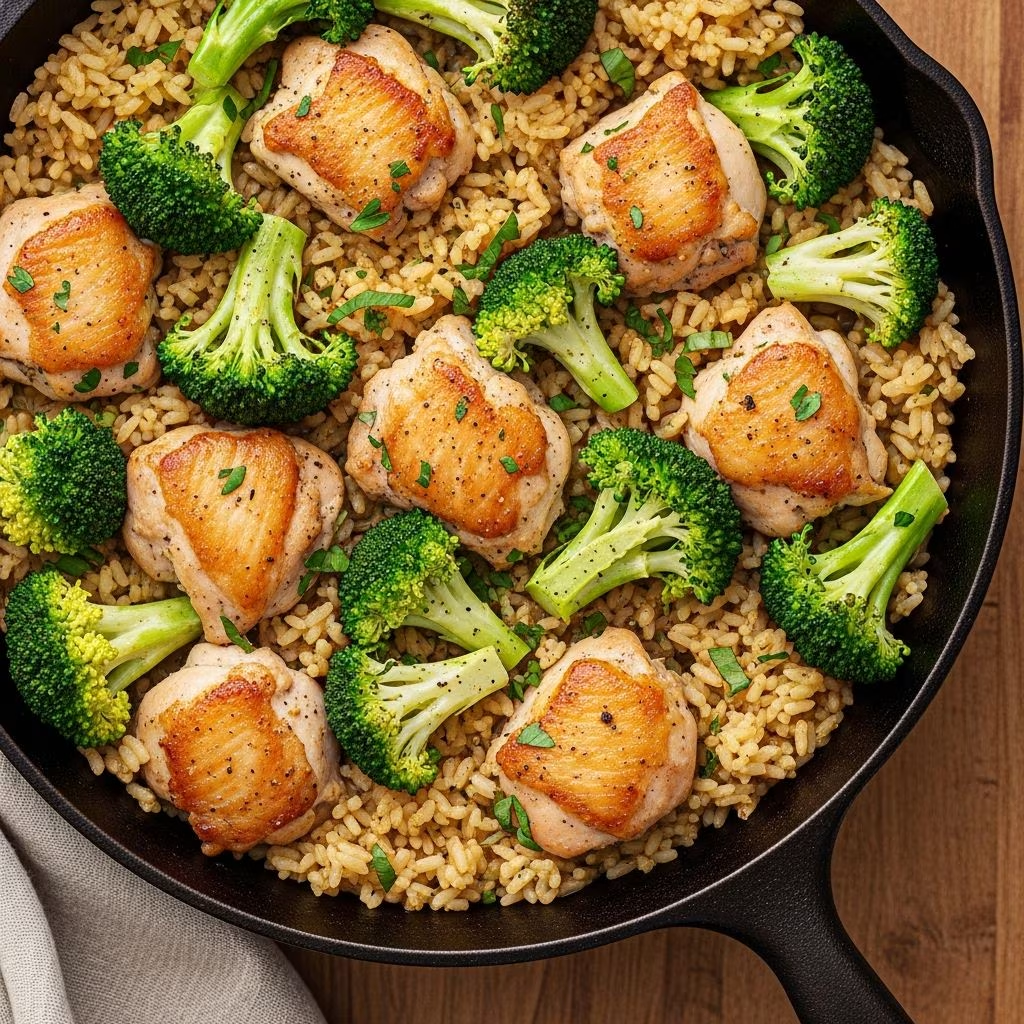
When life gets hectic, the last thing anyone wants to do is spend hours in the kitchen preparing dinner. Yet the desire for homemade, wholesome meals remains constant. This is where the one-pan chicken, broccoli, and rice skillet becomes your culinary lifesaver. Combining tender poultry, nutrient-dense vegetables, fluffy grains, and creamy cheese all in a single cookware vessel, this dish represents the perfect balance between convenience and satisfaction.
The beauty of this meal lies in its versatility and forgiving nature. Whether you’re a seasoned cook or someone who rarely ventures into the kitchen, the straightforward cooking process ensures consistent, delicious results every time. The entire preparation, from ingredient assembly to the final plating, takes approximately thirty minutes—making it an ideal solution for those seeking quick yet impressive dinners.
Understanding Your Key Ingredients and Their Roles
Success in any cooking endeavor begins with understanding what each ingredient brings to the table. When preparing a skillet-based chicken and rice dish, ingredient selection directly influences both flavor complexity and texture.
Selecting the Right Poultry
The protein foundation of this dish can be built using several options, each offering distinct advantages. Boneless, skinless chicken breasts provide a lean option that cooks quickly and absorbs surrounding flavors readily. Alternatively, chicken thighs—whether boneless or bone-in—contribute more marbling and tend to remain juicier throughout the cooking process. Some home cooks prefer ground chicken for its affordability and ease of preparation, as it requires no cutting and integrates seamlessly into the rice base.
Regardless of your poultry choice, ensuring consistent sizing promotes even cooking. Cutting larger breasts into uniform one-inch cubes prevents some pieces from overcooking while others remain undercooked.
Rice Varieties and Their Impact
The type of rice selected fundamentally shapes the dish’s texture and eating experience. Short-grain varieties like arborio rice create a slightly creamy consistency as their starches release during cooking, producing that coveted risotto-like quality. Long-grain options such as jasmine or basmati maintain more distinct, separate grains and provide a lighter mouthfeel. Standard white rice serves as an accessible middle ground that performs admirably in most applications.
Importantly, the cooking method demands uncooked rice rather than pre-cooked varieties. Raw rice absorbs the cooking liquid gradually, distributing flavors throughout while achieving the perfect tender consistency.
Broccoli Selection and Preparation
Fresh broccoli florets deliver superior texture and nutritional value compared to frozen alternatives, though the latter works in time-constrained situations. When selecting broccoli, choose firm florets with tightly clustered heads and vibrant green coloring. For even cooking, cut florets into consistently sized pieces—roughly one to two inches—ensuring they soften uniformly without becoming mushy.
The Cheese Component
Cheese elevates the dish from simple to memorable, providing richness and umami depth. Sharp cheddar offers bold flavor without excessive heaviness, while Parmesan contributes nutty complexity. Using shredded cheese rather than blocks ensures faster, more even melting. Some cooks divide their cheese allocation, stirring a portion into the rice base and reserving the remainder for topping, which creates textural contrast and visual appeal.
The Foundation: Aromatic Base Building
Every successful skillet dish begins with developing a flavorful aromatic foundation. This crucial step, often called “building the base,” involves slowly cooking diced onions and minced garlic in fat until they become soft and fragrant.
Begin by heating either olive oil or butter in your skillet over medium heat. Once the fat shimmers, add finely diced onion—approximately one-half to one medium onion—and cook for five to seven minutes, stirring occasionally. The goal is achieving translucent, softened onions that release their natural sweetness. Following the onion’s transformation, add minced garlic and continue cooking for approximately thirty seconds, just until the raw edge disappears and fragrance becomes apparent.
This seemingly brief step establishes the flavor foundation upon which everything else builds. The Maillard reaction and caramelization occurring during this phase create complex taste compounds that elevate the entire dish.
Cooking Techniques and Method Variations
The cooking approach chosen determines not only timing but also the final texture and flavor intensity of your creation.
The Stovetop-Only Method
For those without oven access or preferring streamlined preparation, the stovetop-only approach works admirably. After establishing the aromatic base, increase heat to medium-high and add your selected chicken. Breaking the meat into smaller pieces as it browns ensures even cooking and faster completion. Once the poultry achieves golden-brown coloring on all sides, add uncooked rice directly to the pan, stirring for one to two minutes until the grains become glossy and well-coated with fat.
Next, pour in chicken broth—typically two and one-half to three cups depending on rice quantity—and bring the mixture to a boil. Cover the skillet, reduce heat to low, and allow it to simmer undisturbed for approximately eight to ten minutes. At this point, add broccoli florets, re-cover, and continue cooking for another five to seven minutes until both rice and broccoli reach desired tenderness.
The Hybrid Stovetop-to-Oven Method
Some recipes employ an oven transfer technique that offers slightly less hands-on monitoring. After browning chicken and sautéing aromatics in an ovenproof skillet, add rice and toast it briefly. Pour in broth and bring to a simmer, then transfer the entire skillet to a preheated three-hundred-seventy-five-degree oven for twenty-five to thirty minutes. This method relies on dry heat rather than steam, sometimes producing slightly different texture.
Sequencing Ingredients for Optimal Results
The order in which ingredients are added significantly impacts both cooking time and final outcome. Understanding proper sequencing prevents common pitfalls like undercooked rice or overcooked vegetables.
| Step Number | Action | Duration | Purpose |
|---|---|---|---|
| 1 | Heat fat and cook aromatics | 5-7 minutes | Develop flavor foundation |
| 2 | Brown poultry | 5-8 minutes | Create color and partial cook through |
| 3 | Toast uncooked rice | 1-2 minutes | Coat grains with fat, enhance nutty flavor |
| 4 | Add broth and bring to simmer | 2-3 minutes | Begin rice hydration process |
| 5 | Simmer covered without additions | 8-12 minutes | Allow rice to absorb liquid gradually |
| 6 | Add broccoli | 0 minutes | Begin steaming tender green vegetable |
| 7 | Simmer covered with broccoli | 5-7 minutes | Cook broccoli and finish rice |
| 8 | Stir in cheese and seasonings | 2-3 minutes | Melt cheese and distribute flavors |
Seasoning Strategies and Flavor Enhancement
Basic salt and black pepper form the foundation, but additional seasonings transform this dish from adequate to remarkable. Many home cooks incorporate paprika for subtle smokiness and visual appeal. A whisper of red pepper flakes adds gentle heat without overwhelming delicate components. Some recipes include garlic powder, onion powder, or chicken seasoning for layered depth.
Rather than adding all seasonings simultaneously, adopt a staged approach. Season the raw chicken before cooking, add a pinch of salt to aromatics as they cook, and incorporate remaining seasonings with the broth. This gradual integration prevents any single flavor from dominating while allowing adjustments during cooking.
Cheese Integration Techniques
Incorporating cheese properly prevents clumping and ensures smooth distribution throughout the dish. After the broccoli has finished cooking and rice has absorbed most liquid, remove the skillet from direct heat. Stir in one portion of cheese slowly, allowing it to melt into the warm rice and create a creamy sauce. Reserve remaining cheese for topping, either stirring in just before serving or leaving it partially melted on the surface for textural contrast.
Troubleshooting Common Challenges
Frequently Encountered Issues and Solutions
Q: Why is my rice still hard after the recommended cooking time?
This typically indicates insufficient liquid or heat that’s too high, causing premature liquid evaporation. Ensure you’re using the correct broth-to-rice ratio—typically one to one-point-five cups liquid per cup of uncooked rice. Cover the skillet completely to prevent steam escape, and maintain low-to-medium heat during simmering.
Q: How do I prevent mushy broccoli while ensuring rice finishes cooking?
The key involves strategic timing. Add broccoli only after the rice has cooked for most of its required time, not from the beginning. This way, broccoli receives just five to seven minutes of heat, remaining crisp-tender while the rice finishes absorbing liquid.
Q: Can I prepare this dish using frozen broccoli instead of fresh?
Yes, frozen broccoli works perfectly, though it releases more moisture as it thaws during cooking. Add frozen florets directly without thawing, as this prevents excess water from accumulating. You may need to reduce overall liquid slightly to compensate for this additional moisture.
Q: What should I do if the chicken remains undercooked when rice is finished?
If using larger chunks or bone-in portions, you may need additional cooking time. Cover the skillet and let it rest off heat for five to ten minutes—carryover cooking often brings undercooked chicken to safe temperatures. If still undercooked, return to low heat for a few additional minutes.
Customization Possibilities and Variations
While the classic combination of chicken, broccoli, and rice with cheese provides satisfaction, this framework welcomes creative adaptations. Consider adding diced carrots or bell peppers alongside the onions for additional color and nutrition. Some cooks incorporate sun-dried tomatoes or caramelized garlic for sophisticated depth. Others experiment with different cheese varieties—Swiss, Gruyere, or even a combination of cheeses creates unique flavor profiles.
For those seeking creamier results, substitute a portion of broth with milk, cream, or even sour cream added near the end of cooking. This modification produces a risotto-like consistency that many find irresistible. Herb additions like fresh thyme, rosemary, or Italian seasoning complement the core ingredients beautifully.
Storage and Make-Ahead Considerations
This dish stores exceptionally well, making it ideal for meal preparation endeavors. After cooking, allow the skillet to cool to room temperature before transferring portions to airtight containers. Properly stored, this dish remains fresh and delicious for three to four days refrigerated. When reheating, add a splash of broth or milk to restore moisture, as rice tends to absorb liquids during storage. Heat gently over medium-low heat on the stovetop, or microwave individual portions in a covered container, stirring halfway through.
Nutritional Considerations
This one-pan meal offers substantial nutritional benefits. Chicken provides high-quality protein essential for muscle maintenance and satiety. Brown rice varieties increase fiber content and complex carbohydrates compared to white rice alternatives. Broccoli delivers cruciferous vegetables rich in vitamins C and K, along with sulforaphane—a compound being studied for various health properties. The combination creates a relatively balanced meal with protein, carbohydrates, healthy fats, and vegetables all represented.
For those monitoring sodium intake, using low-sodium broth and minimizing added salt allows better control. Those seeking lighter versions can reduce cheese quantities or substitute reduced-fat varieties without significantly compromising satisfaction.
Equipment Recommendations
Success depends partly on using appropriate cookware. A deep skillet or large shallow saucepan works best, with a tight-fitting lid essential for proper steam retention during simmering. Non-stick surfaces prevent sticking during browning and make cleanup effortless, though traditional stainless steel performs equally well. The pan should accommodate all ingredients comfortably—at least three to four quarts capacity prevents overflow when liquid is added.
If using the oven-transfer method, ensure your skillet is oven-safe, meaning both the base and handles can withstand oven temperatures. Cast iron provides excellent heat distribution, while most modern non-stick pans indicate oven-safe temperatures clearly on packaging.
Conclusion: Mastering Your New Favorite Weeknight Meal
The one-pan chicken, broccoli, and rice skillet represents accessible excellence in home cooking. Through understanding ingredient roles, mastering fundamental techniques, and maintaining attention to timing and sequencing, anyone can produce restaurant-quality results in their own kitchen. Whether preparing this dish for a busy weeknight family dinner or meal-prepping for the week ahead, this versatile framework adapts to preferences while consistently delivering satisfaction. Start with the basic formula, refine techniques through repeated practice, and don’t hesitate to experiment with variations that appeal to your palate. Soon, this dish will become your go-to solution whenever wholesome, delicious meals are needed without elaborate fuss.
References
- Skillet Chicken and Rice with Broccoli — Familystyle Food. Accessed April 10, 2026. https://familystylefood.com/skillet-chicken-and-rice/
- Cheesy Chicken and Broccoli Skillet — Cookies & Cups. Accessed April 10, 2026. https://cookiesandcups.com/cheesy-chicken-and-broccoli-skillet/
- Cheesy Broccoli and Chicken Rice Skillet — Lite Cravings. Accessed April 10, 2026. https://litecravings.com/cheesy-broccoli-and-chicken-rice-skillet/
- Cheesy Chicken Broccoli Rice Skillet — Chocolate Moossey. Accessed April 10, 2026. https://www.chocolatemoosey.com/one-pan-cheesy-chicken-broccoli-rice-skillet/
- Chicken Broccoli Rice and Cheese Skillet — Savory Nothings. Accessed April 10, 2026. https://www.savorynothings.com/chicken-broccoli-rice-and-cheese-skillet/