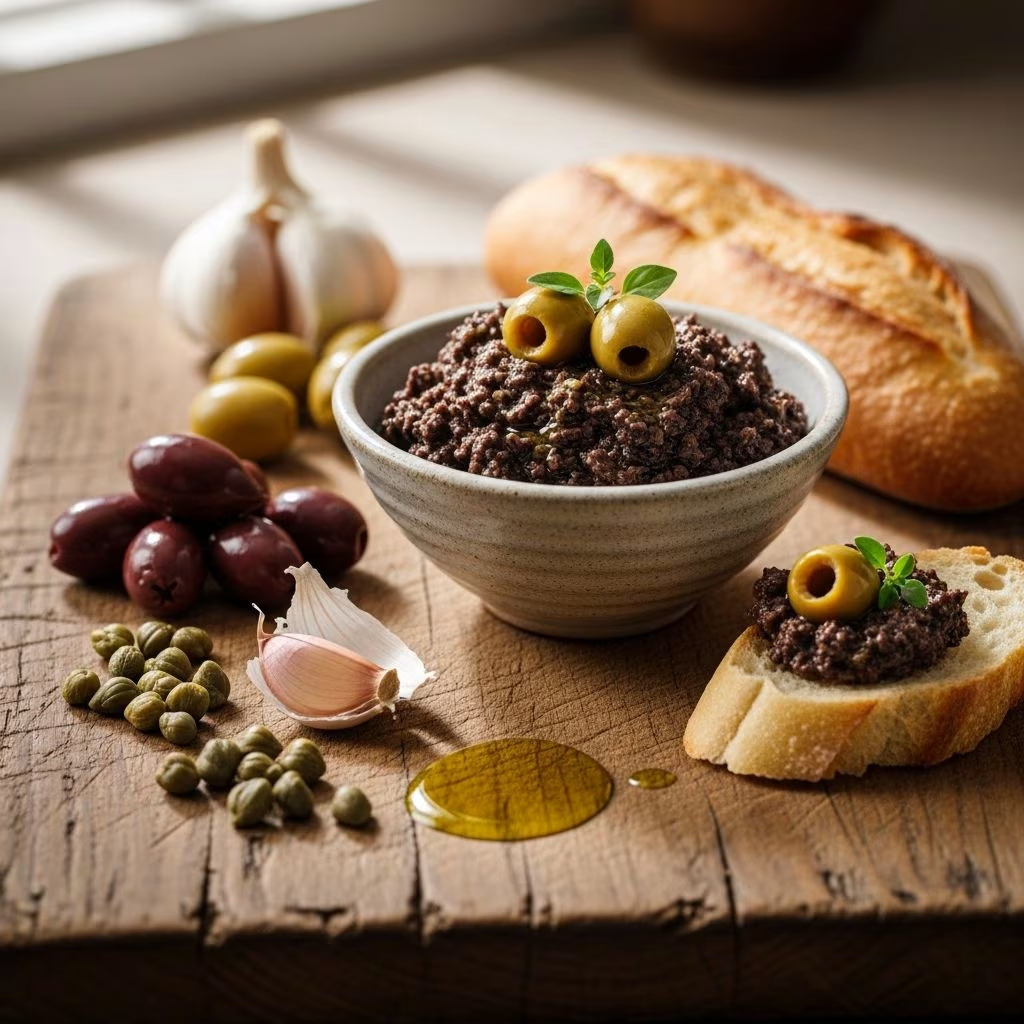
Olive tapenade stands as a cornerstone of Mediterranean cuisine, offering a bold, briny flavor profile that transforms simple ingredients into an elegant spread. Originating from Provence in France, this versatile paste combines olives with garlic, capers, and herbs, creating a condiment that pairs seamlessly with breads, cheeses, and more. Whether you’re hosting a dinner party or seeking a quick snack, tapenade delivers sophistication with minimal effort.
The Essence of Tapenade: What Makes It Irresistible
At its core, tapenade relies on high-quality olives as the star ingredient. Black varieties like Kalamata or Niçoise provide deep, earthy notes, while green options such as Castelvetrano offer a milder, buttery taste. The food processor does the heavy lifting, pulsing these with pungent garlic, tangy capers, fresh herbs, and a splash of lemon or vinegar for balance. Olive oil binds everything into a silky texture, ready in under 10 minutes.
This spread’s adaptability shines through its ability to absorb additional flavors without losing identity. Traditional versions stay purist, but modern twists incorporate nuts, dried fruits, or spices, expanding its appeal across meals.
Classic Black Olive Tapenade Recipe
Start your tapenade journey with this foundational recipe, yielding about 2 cups—perfect for 8-10 servings as an appetizer.
- 1.5 cups pitted black olives (Kalamata or Niçoise recommended)
- 2 garlic cloves, minced
- 1 tablespoon capers, drained
- 1 teaspoon fresh rosemary or thyme, chopped
- 2 tablespoons fresh parsley, chopped
- 2 teaspoons Dijon mustard
- 2 tablespoons lemon juice
- ¼ teaspoon crushed red pepper flakes
- ¼ to ½ cup extra-virgin olive oil
- Pulse olives, garlic, capers, herbs, mustard, lemon juice, and red pepper in a food processor until coarsely chopped.
- With the motor running, slowly drizzle in olive oil until a smooth, spreadable paste forms. Adjust oil for desired consistency.
- Taste and season with salt if needed (olives are often salty). Refrigerate for up to 1 week or freeze for 3 months.
This base recipe draws from time-tested methods, ensuring a balanced bite of saltiness, acidity, and herb freshness.
Green Olive Tapenade: A Bright, Buttery Alternative
For a lighter profile, green olives create a vibrant tapenade ideal for summer gatherings. Their mild flavor lets herbs and nuts take center stage.
- 2 cups pitted green olives (Castelvetrano for buttery sweetness)
- 5-6 anchovy fillets (optional for umami depth)
- ½ cup pine nuts, toasted
- ½ cup fresh basil leaves
- ½ cup fresh parsley leaves
- ¼ cup capers
- 1 garlic clove
- Zest of 1 lemon
- ½ cup extra-virgin olive oil
Combine all ingredients in a food processor and pulse to a chunky paste. The anchovies dissolve subtly, adding richness without fishiness. This version preps in 5 minutes and impresses with its fresh, nutty layers.
Innovative Twists: Elevate Your Tapenade Game
Tapenade’s beauty lies in experimentation. Here are three standout variations:
Sun-Dried Tomato Tapenade
Add ½ cup drained, oil-packed sun-dried tomatoes to the classic black olive base. Their chewy sweetness contrasts the brine, creating a robust spread for crostini or pasta.
Fig and Black Olive Tapenade
Use all black olives and incorporate ¾ cup rehydrated dried black mission figs (simmer 20 minutes until tender). The fruity depth pairs exquisitely with goat cheese.
Herb-Forward Mixed Olive Tapenade
Blend green and black olives with 1 cup each basil and parsley, lemon zest, oregano, and Calabrian chile flakes for heat. A glug of red wine vinegar sharpens the edges.
| Variation | Key Add-Ins | Best Pairing |
|---|---|---|
| Sun-Dried Tomato | ½ cup sun-dried tomatoes | Crostini, pasta |
| Fig & Black Olive | ¾ cup rehydrated figs | Goat cheese, crackers |
| Herb-Forward | Basil, parsley, chile flakes | Brie, grilled veggies |
Essential Tips for Tapenade Perfection
- Olive Selection: Choose pitted olives in olive oil or brine for optimal flavor. Avoid canned varieties lacking punch.
- Texture Control: Pulse briefly for chunky texture or longer for smooth. Pine nuts or breadcrumbs add body.
- Storage: Store in an airtight jar topped with olive oil in the fridge for 1-2 weeks. Thaw frozen portions overnight.
- Flavor Balance: Taste before serving—add more acid if too salty or oil if dry.
These techniques ensure consistent results every time.
20 Creative Ways to Serve Tapenade
Tapenade transcends the bread plate. Here are diverse applications:
- Spread on toasted baguette slices with brie for crostini.
- Mix into mayonnaise for an elevated aioli on sandwiches.
- Top grilled fish or chicken for Mediterranean flair.
- Stuff into cherry tomatoes or deviled eggs.
- Swirl into hummus or whipped feta dips.
- Use as pizza topping with mozzarella and arugula.
- Layer in lasagna or pasta bakes.
- Pair with antipasti platters alongside cheeses and cured meats.
- Fill omelets or frittatas for brunch.
- Combine with yogurt for a tangy dressing.
- Sauce for roasted vegetables like eggplant or zucchini.
- Base for flatbreads with figs and prosciutto.
- Mix into ground meat for flavorful burgers or meatballs.
- Top baked potatoes or sweet potato fries.
- Stir into risotto near the end of cooking.
- Spread on wraps with greens and feta.
- Garnish soups like minestrone.
- Pair with crackers and wine for charcuterie.
- Use in grain bowls with couscous and veggies.
- Dollop on avocado toast for a salty twist.
These ideas showcase tapenade’s versatility across meals.
Nutritional Profile and Dietary Adaptations
Tapenade is naturally vegan (omit anchovies), gluten-free, and packed with heart-healthy monounsaturated fats from olives. A 2-tablespoon serving offers about 150 calories, primarily from olive oil, plus antioxidants and fiber. For low-sodium versions, rinse olives and capers thoroughly.
Frequently Asked Questions (FAQs)
Can I make tapenade without a food processor?
Yes, finely chop ingredients by hand with a sharp knife. It takes longer but yields a rustic texture.
Is tapenade spicy?
Traditional recipes are mild; add red pepper flakes or chiles for heat as desired.
How long does homemade tapenade last?
Up to 2 weeks refrigerated or 3 months frozen. Always top with olive oil to preserve freshness.
What’s the best olive for beginners?
Kalamata for bold flavor or Castelvetrano for mild, approachable taste.
Can tapenade be frozen?
Absolutely—portion into ice cube trays for easy use. Thaw in the fridge.
Pairing Tapenade with Wines and Cheeses
Match tapenade’s brininess with crisp whites like Sauvignon Blanc or rosé. For reds, opt for light Pinot Noir. Cheeses like goat, brie, or manchego complement its intensity, creating balanced bites.
References
- Tapenade Three Ways — The Gourmand Mom. 2010-08-06. https://thegourmandmom.com/2010/08/06/tapenade-three-ways/
- A Twist on The Classic Olive Tapenade Recipe — This Mess is Ours. N/A. https://thismessisours.com/tapenade/
- 5-Minute Green Olive Tapenade — Well Seasoned Studio. N/A. https://www.wellseasonedstudio.com/green-olive-tapenade/
- Easy Olive Tapenade Recipe and Brie Crostini — Aint Too Proud to Meg. N/A. https://ainttooproudtomeg.com/easy-olive-tapenade-recipe-and-brie-crostini/
- Easy Olive Tapenade + 20 ways to use it — Veggie Chick. N/A. https://veggiechick.com/olive-tapenade/
- Olive Tapenade + 10 Ways to Use It — Strawberry Plum. N/A. http://www.strawberryplum.com/olive-tapenade-10-ways-to-use-it/