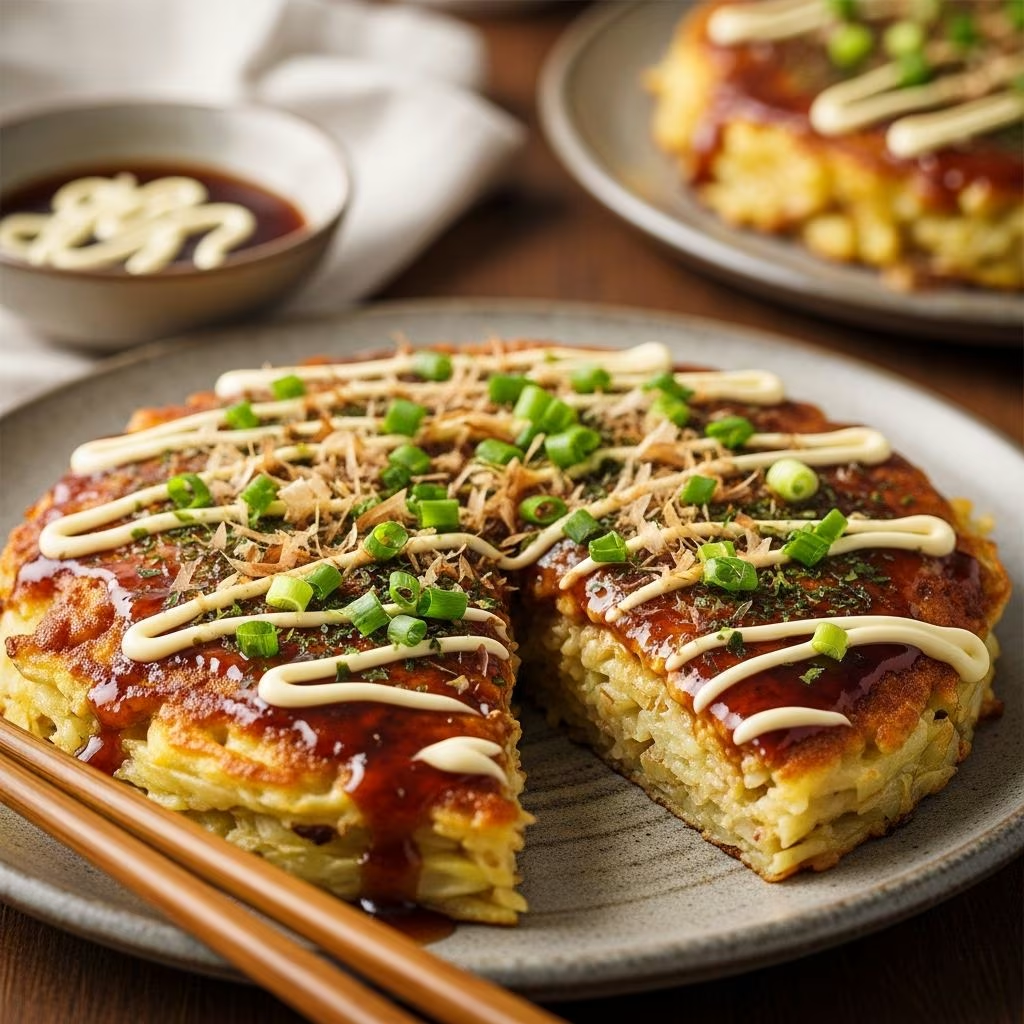
Okonomiyaki stands as one of Japan’s most cherished comfort foods, a savory pancake that invites endless creativity. Translating to “cook as you like,” this dish originated in Osaka and Hiroshima, where street vendors and home cooks alike mix cabbage, batter, and proteins into golden, crispy delights. Topped with tangy sauces, creamy mayo, and dancing bonito flakes, okonomiyaki captures the essence of Japanese street food while being remarkably adaptable for home kitchens worldwide.
The Allure of Okonomiyaki: A Culinary Canvas
At its core, okonomiyaki revolves around a simple batter enriched with shredded cabbage, which provides structure and a subtle crunch. Unlike Western pancakes, these are hearty, filled with vegetables, meats, or seafood, and grilled to perfection on a hot griddle. The Osaka-style version mixes everything into the batter for a thick, uniform pancake, while Hiroshima-style layers ingredients for distinct textures. Both approaches emphasize fresh ingredients and personal flair, making it ideal for family meals or casual gatherings.
Its popularity stems from versatility—vegetarians can load it with mushrooms and tofu, while omnivores add pork belly or shrimp. The name encourages experimentation, turning every pancake into a unique creation. In Japan, specialized okonomiyaki flour ensures fluffiness, but all-purpose flour works beautifully with a few tweaks.
Essential Ingredients for Authentic Batter
Building the perfect batter is key to okonomiyaki’s signature texture: crispy edges, fluffy interior, and cabbage that holds it all together. Start with **1 cup all-purpose or cake flour** for lightness, combined with **1-1.5 tsp baking powder** to promote rise. Grated **mountain yam (nagaimo)**—about 5-6 oz—adds slipperiness and aeration; substitute with milk plus extra baking powder if unavailable.
Liquid components include **1 cup dashi broth** for umami depth (vegan options exist), **2-4 eggs** for binding, and a pinch of salt and sugar. The star is **shredded green cabbage** (½ head, finely chopped), which bulks up the pancake without sogginess—drain it well after chopping. Add **¼ cup pickled red ginger** for zing and **½ cup tenkasu** (tempura scraps) for crunch; substitute rice flour bits if needed.
- Cabbage: Finely shred 3-4 cups; use a food processor for speed.
- Proteins: Sliced pork belly (½ lb), shrimp, squid, or bacon for classic taste.
- Add-ins: Scallions, bean sprouts, or kimchi for extra layers.
Step-by-Step Guide to Flawless Okonomiyaki
Preparation takes about 20 minutes, cooking 10-15 per pancake. Rest the base batter (flour, yam, dashi) in the fridge for 30-60 minutes to relax gluten and boost fluffiness.
- Mix base batter: Whisk flour, baking powder, salt, sugar, grated yam, and dashi until smooth. Refrigerate.
- Prep veggies: Shred cabbage, chop scallions (3-4), mince ginger. Spin-dry cabbage to avoid watery batter.
- Combine: Fold in eggs, tenkasu, ginger, and cabbage. Batter should be thick, cabbage-dominant.
- Heat griddle: Use a cast-iron skillet or electric griddle at medium-high (350-400°F). Brush with oil.
- Cook: Scoop 1-1½ cups batter per pancake, flatten to ¾-inch thick. Layer pork slices on top. Cook 4-5 minutes until golden, flip, cook 3-4 more. Cover briefly for steaming if needed.
- Rest and serve: Let sit 2 minutes off heat for crispiness.
For Hiroshima-style, layer batter, cabbage, noodles, egg, and protein separately on the griddle.
Signature Sauces and Toppings
No okonomiyaki is complete without its glossy toppings. **Okonomiyaki sauce** (or tonkatsu-style) blends **4 Tbsp ketchup, 2 Tbsp oyster sauce (or vegetarian alternative), 3½ Tbsp Worcestershire, 1 Tbsp sugar**. Simmer until thickened. Drizzle generously for sweet-savory balance.
**Japanese mayo** (Kewpie-style): Mix 1 cup mayo, 1 Tbsp each sugar and rice vinegar for tang. Finish with **katsuobushi** (bonito flakes) that shimmer from heat, **aonori** seaweed, and extra ginger or scallions.
| Topping | Description | Quantity per Pancake |
|---|---|---|
| Okonomiyaki Sauce | Tangy, thick glaze | 2-3 Tbsp |
| Mayo | Creamy, rich | Zigzag pattern |
| Bonito Flakes | Smoky, dancing garnish | Handful |
| Aonori | Seaweed crunch | 1 tsp |
Creative Variations for Every Palate
Okonomiyaki’s charm lies in customization. For **vegetarian**, swap pork for mushrooms, zucchini, or corn; use panko for extra bind. **Seafood lovers** add squid rings or shrimp, minced raw for even cooking.
Try **vegan** with egg substitutes like JUST Egg, vegan dashi, and plant-based mayo. **Spicy twist**: Incorporate kimchi or sriracha into batter. Kids’ version: Cheese and sweet corn for mild appeal.
- Osaka Classic: All-mixed cabbage and pork.
- Hiroshima Layered: With yakisoba noodles and fried egg.
- Moda (Mountain): Extra yam for fluff.
Experiment with flours: Cake flour for tenderness, okonomiyaki flour for authenticity.
Troubleshooting Common Pitfalls
Soggy pancakes? Drain cabbage thoroughly and don’t overcrowd the griddle. Batter too thin? Add more cabbage or flour. Not flipping easily? Use a thin metal spatula and ensure high heat for crust formation.
For crispier edges, cook uncovered longer. If no tenkasu, fry batter scraps first. Resting batter overnight maximizes flavor.
Health Benefits and Nutritional Notes
Cabbage provides fiber, vitamins C and K, making okonomiyaki nutrient-dense. Proteins add satiety, while controlled oil keeps it balanced. A single pancake (with pork) offers ~400-500 calories, rich in veggies. Opt for lean proteins and less sauce for lighter fare.
Pairing Suggestions and Serving Ideas
Serve hot with Japanese iced tea or beer. Side with miso soup or pickled veggies. Family-style: Set up a topping bar for interactive dinners.
Frequently Asked Questions (FAQs)
What is okonomiyaki?
A savory Japanese pancake meaning “cook as you like,” featuring cabbage batter with customizable fillings.
Can I make okonomiyaki without mountain yam?
Yes, substitute ½ cup milk + 1 tsp baking powder for similar texture.
What’s the best flour for okonomiyaki?
Okonomiyaki or takoyaki flour is ideal; all-purpose or cake flour works well too.
How do I get the bonito flakes to dance?
The residual heat creates air currents; pile them high right after cooking.
Is okonomiyaki gluten-free?
Not traditionally; use gluten-free flour and check sauces for Worcestershire.
References
References
- Binging With Babish Okonomiyaki Recipe — Andrew Rea. Accessed 2026. https://andrew-rea-c8g3.squarespace.com/recipes/okonomiyaki
- Okonomiyaki Recipe — Just One Cookbook. Accessed 2026. https://www.justonecookbook.com/okonomiyaki/
- Okonomiyaki Recipe — Love and Lemons. Accessed 2026. https://www.loveandlemons.com/okonomiyaki/
- Okonomiyaki Savory Japanese Pancakes — Andrew Zimmern. Accessed 2026. https://andrewzimmern.com/recipes/okonomiyaki-savory-japanese-pancakes/