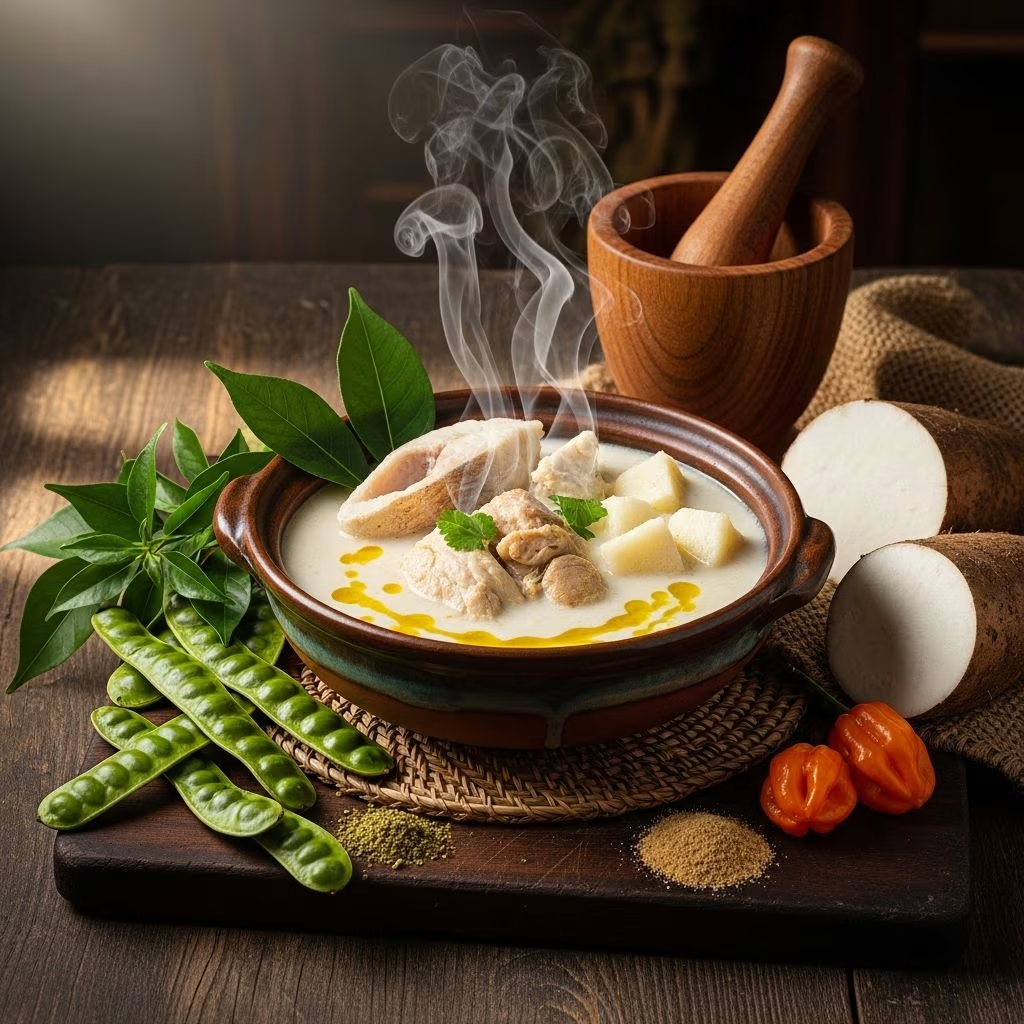
Ofe nsala represents one of West Africa’s most cherished culinary traditions, particularly among the Igbo communities of southeastern Nigeria. This distinctive white soup derives its characteristic creamy appearance and rich flavor from a harmonious blend of pounded yam, aromatic herbs, and carefully selected proteins. The dish exemplifies how simple ingredients, when combined with proper technique and understanding of traditional cooking methods, transform into a sophisticated and deeply satisfying meal.
Understanding the Essence of White Soup
The foundation of ofe nsala lies in its unique preparation method and ingredient composition. Unlike soups that derive their color from tomatoes or other vegetables, white soup achieves its pale, creamy appearance through the incorporation of pounded yam as a thickening agent. This starch-based thickener serves multiple purposes: it creates the soup’s signature consistency, adds nutritional substance, and helps bind the various flavors together into a cohesive whole.
The soup’s popularity extends beyond its visual appeal. The cooking process requires patience and attention to detail, as each component must be introduced at precisely the right moment to achieve optimal flavor development and texture. The result is a dish that feels simultaneously light and substantial, making it suitable for various occasions from casual family dinners to more formal celebrations.
Essential Components: Building Your Ingredient Foundation
Creating authentic ofe nsala begins with selecting high-quality ingredients that form the backbone of this traditional preparation. The following components work together to establish the soup’s characteristic profile:
- Protein Foundation: Catfish serves as the traditional protein choice, though chicken, goat meat, beef, or dried fish can substitute based on availability and preference. Using multiple protein sources creates a more complex flavor profile.
- Starchy Thickener: Fresh yam, prepared by boiling and pounding until smooth, provides the creamy texture that defines this dish. The quality of yam processing directly impacts the final soup’s consistency.
- Aromatic Seasonings: Ground crayfish, uziza seeds, and dawadawa (fermented locust beans) create the characteristic savory depth that distinguishes white soup from other preparations.
- Leaf Garnishes: Utazi and uziza leaves contribute subtle bitter notes and fresh herbal qualities that balance the soup’s richness.
- Spice Elements: Scotch bonnet peppers, traditional soup spices, and ogiri okpei (fermented seasoning) introduce heat and umami complexity.
- Complementary Flavoring: Salt, onion, and seasoning cubes fine-tune the overall taste profile according to personal preference.
Comprehensive Preparation Technique
The cooking process for ofe nsala follows a logical sequence that ensures each ingredient develops its full potential before combining with other components.
Stage One: Protein Development
The initial cooking phase focuses on rendering and softening the chosen proteins. Season your selected meats or fish with onion, salt, and seasoning cubes, then place them in a wide cooking pot with sufficient water to cover. Bring the mixture to a rolling boil and maintain this temperature for approximately twenty-five minutes, allowing the proteins to become tender and begin releasing their flavors into the cooking liquid. This creates a flavorful broth that serves as the foundation for subsequent additions.
Stage Two: Yam Preparation and Processing
While proteins are cooking, prepare your yam for incorporation. Peel firm, fresh yam carefully, cut it into uniform cubes approximately the size of a small fist, and set aside. Once the proteins have reached the desired tenderness, add the yam cubes along with any additional proteins such as dried fish or stockfish that benefit from longer cooking times. Allow this mixture to cook for approximately ten to fifteen minutes until the yam becomes completely soft and easily breaks apart when pressed.
Remove the fully cooked yam from the pot and transfer it to a mortar or blender. Add a small amount of water—ideally some of the cooking liquid—and process the yam until it becomes a completely smooth paste without any lumps or grainy texture. This smooth consistency prevents lumpiness in the final soup and ensures even distribution throughout the broth.
Stage Three: Flavor Layer Integration
With the proteins still cooking in their aromatic broth, begin incorporating the complex flavor layers that distinguish ofe nsala from simpler soup preparations. Blend ground crayfish with uziza seeds and any available traditional soup spices, creating a concentrated flavor powder. Dissolve fermented seasonings like ogiri okpei or dawadawa in a small amount of water before adding to the pot, preventing clumping and ensuring even distribution.
These flavor components should cook together for approximately two minutes, allowing their aromatics to disperse throughout the broth before the next addition.
Stage Four: Thickener Introduction
This critical stage requires attention and care. Add the pounded yam to the simmering broth in small portions, stirring continuously to ensure complete dissolution. Adding the yam gradually prevents lumping and allows proper incorporation into the liquid. The soup will gradually transform from a thin broth into a creamy, thick consistency as the yam dissolves and releases its starch. Continue cooking for eight to ten minutes while stirring frequently, allowing the yam to fully incorporate and achieve the desired thickness.
Stage Five: Finishing Touches
Once the pounded yam has completely dissolved and the soup has reached your preferred consistency, add freshly chopped utazi leaves sparingly—these possess a strong bitter flavor that should complement rather than dominate. A small amount suffices; taste as you add to find your ideal balance. Introduce any remaining fresh leaves and allow the soup to simmer gently for one to two minutes. Taste the final preparation and adjust seasonings as necessary before serving.
Consistency Considerations and Personal Preference
The thickness of ofe nsala varies based on individual preference and ingredient availability. Some cooks prefer a slightly fluid consistency that pours easily into bowls, while others create a thicker preparation that resembles porridge. This variation depends on the amount of pounded yam incorporated and the quantity of cooking liquid retained. Start conservatively with yam additions and gradually increase until reaching your desired thickness, remembering that the soup continues to thicken slightly as it cools.
Serving Traditions and Accompaniments
Ofe nsala traditionally accompanies specific carbohydrate-based side dishes that complement its creamy texture and rich flavor:
- Pounded yam provides the most traditional accompaniment, creating a harmonious pairing of similar textures and flavors
- Fufu offers a lighter alternative with comparable starchiness
- Eba, made from cassava meal, provides a firmer texture contrast
- Semolina creates a different textural experience while maintaining compatibility with the soup’s flavor profile
- Some preparations are enjoyed standalone without accompaniment
Common Preparation Variations
While core principles remain consistent, regional variations and family traditions influence specific preparations. Some cooks incorporate additional proteins like snails or multiple meat types, while others emphasize particular spices based on local availability. These variations reflect the living nature of traditional cuisine, adapting to available ingredients while maintaining essential characteristics.
Frequently Asked Questions
What causes lumps in ofe nsala?
Lumpy texture typically results from adding pounded yam too quickly or in insufficient liquid. The solution involves adding yam gradually in small portions while stirring continuously, ensuring thorough dissolution before adding more.
Can I use alternative thickening agents?
Yes, achi (cassava starch) can substitute for pounded yam, though it requires mixing with water before addition to prevent lumpiness. The flavor profile differs slightly from yam-based versions.
How do I achieve the ideal white color?
The pale, cream-colored appearance depends on using light-colored yam varieties and avoiding dark-colored proteins like beef in large quantities. The cooking liquid clarity also contributes to the final color.
What role does ogiri okpei play?
This fermented locust bean product introduces deep umami and savory complexity. Dissolving it in water before addition ensures even distribution throughout the soup.
Can I prepare ofe nsala in advance?
Yes, the soup stores well in the refrigerator for several days and can be gently reheated with additional water if thickening occurs during storage. Freezing is also possible, though texture may require adjusting after thawing.
Key Techniques for Success
Mastering ofe nsala requires understanding several crucial techniques that separate adequate preparations from truly exceptional ones. Temperature control throughout the cooking process ensures proper ingredient development without burning or scorching. Patience during the yam dissolution phase prevents frustrating lumping that compromises the eating experience. Proper ingredient sequencing allows each component to contribute its maximum flavor while avoiding overpowering any single element.
The skill lies not in following rigid rules but in understanding the principles underlying each step. Once these foundations are clear, cooks can confidently adjust ingredients and proportions based on personal preferences, available materials, and creative inspiration.
References
- Ofe Nsala (Nsala Soup) — All Nigerian Recipes. 2024. https://www.allnigerianrecipes.com/soups/ofe-nsala/
- Nsala Soup (White Soup): How to Cook Ofe Nsala — Royac Shop. 2024. https://www.royacshop.com/2072-nsala-soup-white-soup-how-to-cook-ofe-nsala.html
- Nsala Soup | How To Make Ofe Nsala From Igboland — All Nigerian Foods. 2024. https://allnigerianfoods.com/nsala-soup/
- Ofe Nsala – White Soup Recipe (VIDEO) — Sisi Jemimah. 2024. https://sisijemimah.com/2015/09/10/ofe-nsala-white-soup-recipe/
- OFE NSALA SOUP aka WHITE SOUP RECIPE — Sisi Yemmie. 2024. https://sisiyemmie.com/2016/11/ofe-nsala-soup-aka-white-soup.html