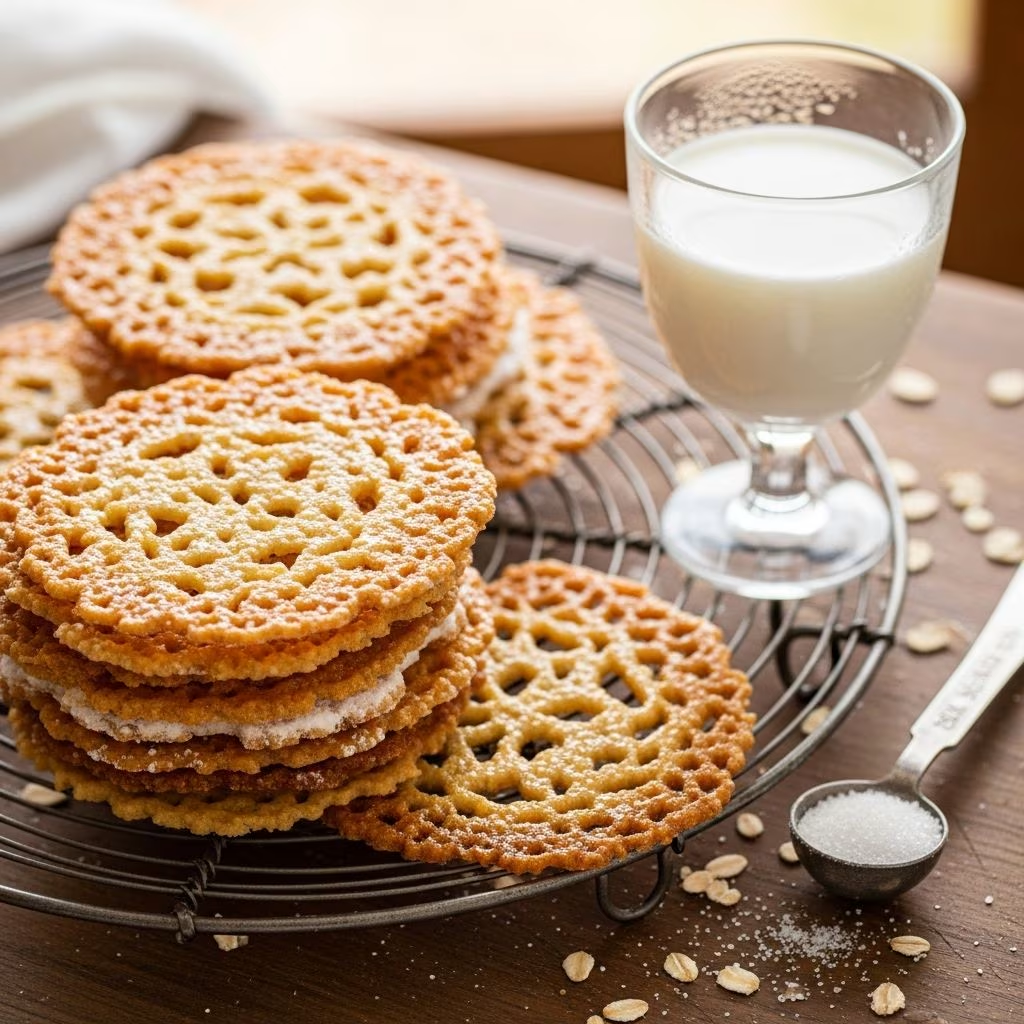
Oatmeal lace cookies represent a timeless dessert that combines simplicity with elegance. These thin, delicate wafers feature an intricate lacework pattern that forms naturally during baking, creating a visually stunning treat that looks far more complicated than it actually is. The beauty of these cookies lies in their straightforward ingredient list and quick preparation time, making them accessible to bakers of all skill levels.
Understanding the Character of Lace Cookies
The distinctive appearance of oatmeal lace cookies comes from the way ingredients interact during the baking process. When butter and brown sugar are heated together and combined with rolled oats, they create a mixture that spreads significantly as it bakes. This spreading action causes the oats to separate and create those characteristic gaps and transparent sections that give the cookie its lacy appearance. The texture ranges from crispy to chewy depending on baking time and personal preference.
What makes these cookies particularly appealing is their versatility. They pair beautifully with ice cream, complement afternoon tea, or serve as an elegant gift when packaged thoughtfully. The subtle sweetness and buttery flavor profile make them approachable for various occasions, whether casual family gatherings or formal entertaining.
Essential Ingredients for Success
The foundation of exceptional oatmeal lace cookies begins with quality ingredients. Understanding the role each component plays helps ensure consistent results.
- Butter: Unsalted butter allows for better control of the overall saltiness. Using butter at room temperature ensures proper mixing and incorporation with the sugar.
- Brown Sugar: The molasses content in brown sugar provides deeper flavor and moisture compared to white sugar. Packing the brown sugar when measuring ensures accurate proportions.
- Rolled Oats: Traditional rolled oats work best, though quick oats can be substituted. Avoid instant oatmeal, as the fine texture produces different results.
- All-Purpose Flour: A small amount of flour helps bind the mixture while maintaining the delicate texture the cookies are known for.
- Egg: One large egg acts as a binder and adds structure to the dough.
- Vanilla Extract: Pure vanilla extract enhances the overall flavor profile.
- Salt: A modest amount of salt balances sweetness and enhances other flavors.
- Baking Powder: This leavening agent contributes to the light, airy texture.
Step-by-Step Preparation Method
Creating perfect oatmeal lace cookies requires attention to detail and understanding each preparation stage.
Preparing Your Workspace
Begin by preheating your oven to 375°F (190°C). Line multiple baking sheets with parchment paper or silicone baking mats. Because these cookies spread considerably during baking, having several prepared sheets ready ensures smooth workflow. If you lack multiple sheets, it is perfectly acceptable to reuse slightly cooled sheets between batches.
Combining Wet and Dry Components
In a large saucepan or mixing bowl, combine the softened butter and packed brown sugar. Heat the mixture over medium heat, stirring frequently until the butter completely melts and the mixture becomes smooth and uniform. Once melted, remove from heat and allow to cool slightly before proceeding. This step is crucial—adding eggs to an excessively hot mixture risks scrambling them.
In a separate bowl, combine the rolled oats, flour, salt, and baking powder. Mix these dry components thoroughly to ensure even distribution of the leavening agent. Once the butter and sugar mixture has cooled slightly, add the dry ingredients and stir until the oats are completely coated with the butter-sugar mixture.
Final Mixture Assembly
Add the egg and vanilla extract to the oat mixture and stir until fully incorporated. The resulting batter should have a slightly thin, soupy consistency—this is the desired texture. If the mixture seems too thick, it has not spread properly during baking.
Baking Technique and Timing
Proper baking technique directly impacts the final result. Using a teaspoon measure, drop small portions of batter onto prepared baking sheets. Leave at least two inches between each cookie to allow for spreading. The cookies will increase substantially in size during baking, so adequate spacing is essential to prevent them from merging together.
Bake for 5 to 7 minutes, depending on your oven’s characteristics and desired crispness level. Watch the cookies closely during the final minutes of baking. The edges should turn golden brown while the centers may still appear slightly pale. This contrast indicates proper doneness. Remove the baking sheet from the oven and allow the cookies to cool on the sheet for approximately 30 seconds. This brief cooling period allows them to set slightly, making removal easier. Using your fingers or a thin spatula, carefully transfer the cookies to a wire rack to cool completely.
Texture Variations and Customization Options
The beauty of oatmeal lace cookies lies in the ability to adjust texture according to personal preference.
| Preferred Texture | Baking Approach | Result |
|---|---|---|
| Extra Crispy | Bake until edges are deep golden brown | Shatteringly crisp throughout |
| Chewy | Remove while edges are light golden | Soft centers with slightly crispy edges |
| Medium | Bake until edges are medium golden brown | Balanced crispy and chewy texture |
Common Challenges and Solutions
Even experienced bakers encounter occasional difficulties with these cookies. Understanding common issues and their solutions helps troubleshoot problems.
Cookies Spreading Too Much: If cookies merge together or spread excessively, reduce the amount of butter slightly in future batches, or increase oven temperature by 25°F. Additionally, ensure batter portions are uniform in size.
Cookies Not Spreading Enough: Thin, lacy appearance requires proper spreading. Verify that batter has the correct consistency (slightly soupy). If mixture seems too thick, the cookies will not develop the characteristic lace pattern.
Uneven Browning: Rotate baking sheets halfway through baking to promote even heat exposure. Oven hot spots can cause some cookies to brown faster than others.
Cookies Breaking During Removal: Allow adequate cooling time on the baking sheet before transferring. If cookies seem too fragile, return them to the oven for 30 additional seconds to firm up slightly.
Storage and Shelf Life
Properly stored oatmeal lace cookies maintain their quality for several days. Transfer completely cooled cookies to an airtight container, separating layers with parchment paper to prevent sticking. Store at room temperature away from direct sunlight and humidity sources. The cookies will remain crispy for up to one week in sealed containers.
For longer storage, freeze the baked cookies in freezer-safe containers for up to three months. Alternatively, freeze unbaked dough portions in an airtight container and bake fresh cookies as desired. Thaw dough to room temperature before baking, though no adjustment to baking time is necessary.
Serving Suggestions and Pairings
These versatile cookies complement numerous beverages and desserts. Serve alongside hot tea, coffee, or hot chocolate for a refined afternoon treat. The delicate texture and subtle sweetness make them ideal accompaniments to fresh berries, whipped cream, or ice cream. Consider sandwiching two cookies together with your favorite filling—chocolate ganache, caramel, or buttercream all work beautifully.
For gift-giving, arrange cookies in clear cellophane bags tied with decorative ribbon, or present them in elegant boxes lined with tissue paper. The beautiful lacy appearance makes them visually impressive without additional embellishment.
Frequently Asked Questions
Can I use steel-cut oats instead of rolled oats?
Steel-cut oats have a different texture and will not produce the same results. Stick with rolled or quick oats for authentic lace cookies. Steel-cut oats remain too chunky and do not spread evenly.
What if my oven runs hot or cold?
Every oven has unique characteristics. If your oven runs hot, reduce baking time by 1-2 minutes. If it runs cold, increase baking time slightly. Keep detailed notes of your adjustments for future batches.
Can I add flavorings like cinnamon or nutmeg?
Yes, spice additions work well. Add 1/2 to 1 teaspoon of cinnamon or a quarter teaspoon of nutmeg to the dry ingredients. These warm spices complement the oatmeal beautifully.
Is it necessary to use parchment paper?
While parchment paper makes removal easier and prevents sticking, silicone baking mats work equally well. Greasing regular baking sheets is not recommended, as it can cause the cookies to brown unevenly on the bottom.
How many cookies does this recipe yield?
Depending on portion size, the recipe typically produces 24 to 36 cookies. Using a standardized teaspoon measure ensures consistency batch to batch.
Nutritional Considerations
These cookies contain natural sweetness from brown sugar and the nuttiness of oats. While not low in sugar or fat, they offer whole grain benefits from the rolled oats. Each cookie provides fiber from the oats and satisfying buttery flavor that makes small portions feel indulgent. Enjoy them as an occasional treat as part of a balanced diet.
Elevating Your Cookie Game
Once comfortable with the basic recipe, experiment with variations. Substitute half the brown sugar with honey for a different sweetness profile. Try adding chopped nuts, dried fruit, or dark chocolate chips for additional texture and flavor. A pinch of sea salt sprinkled on top before baking adds sophisticated complexity.
The foundation of excellent oatmeal lace cookies begins with understanding the science behind their creation and respecting the importance of precise measurements and technique. With these insights and methods, you can confidently create elegant, professional-quality cookies that impress family and friends. The straightforward nature of this recipe belies the sophisticated results, making it an excellent addition to any baker’s collection.
References
- Oatmeal Lace Cookies Recipe — Mrs. Fields. Accessed April 2026. https://www.mrsfields.com/blogs/blog/recipe-lacy-oatmeal-cookies
- Chewy Oatmeal Lace Cookies: Easy, 7-Ingredient Recipe — Chels Sweets. Accessed April 2026. https://chelsweets.com/oatmeal-lace-cookies/
- Oatmeal Lace Cookies Recipe — Bonni Bakery. Accessed April 2026. https://bonnibakery.com/swedish-oatmeal-cookies/
- Brown Sugar Oatmeal Lace Cookies — Life Currents. Accessed April 2026. https://lifecurrentsblog.com/brown-sugar-oatmeal-lace-cookies/
- Oatmeal Lace Cookies Recipe — Add a Pinch. Accessed April 2026. https://addapinch.com/oatmeal-lace-cookies-recipe/