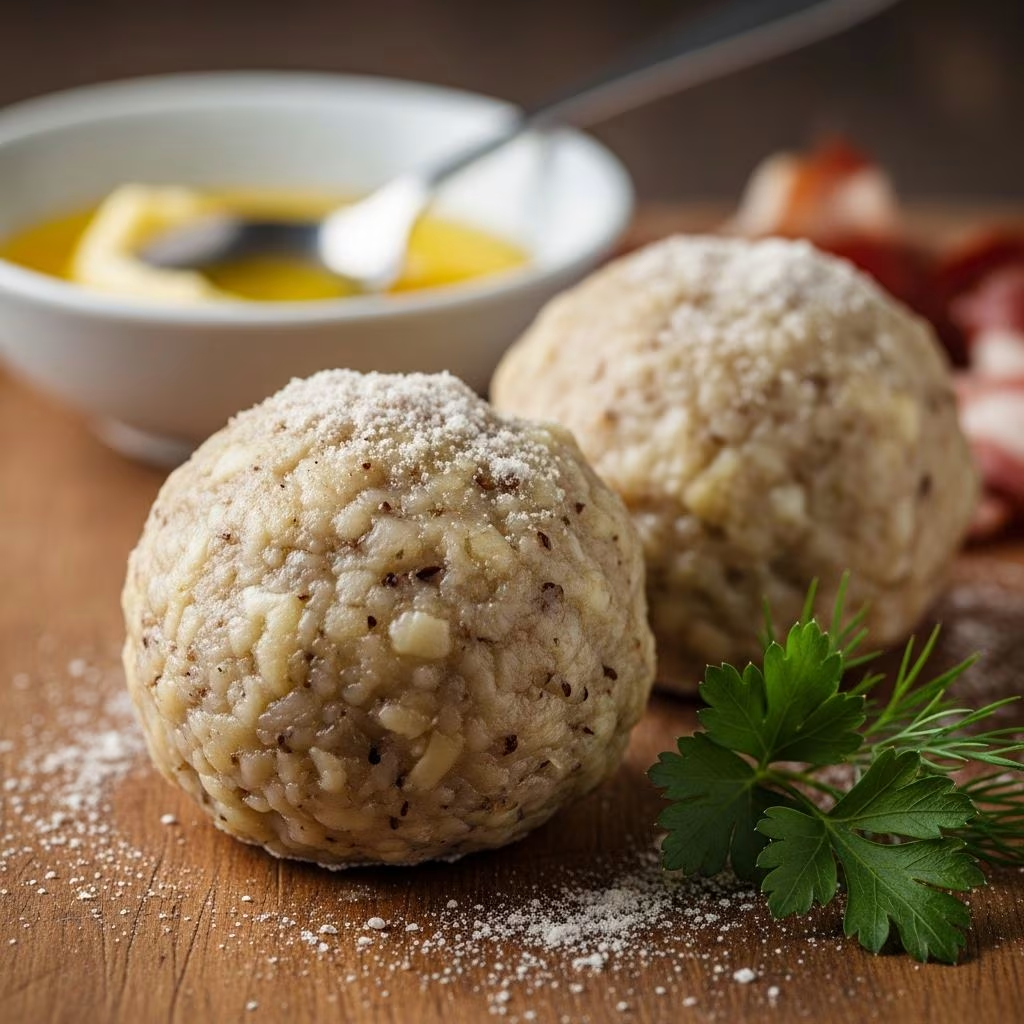
Norwegian potato dumplings, commonly called **klubb** or **raspeballer**, represent a cornerstone of Scandinavian comfort food. These dense, satisfying balls made primarily from grated potatoes hold a special place in Norwegian culinary heritage, often enjoyed during family gatherings or as a hearty winter meal.
The Origins and Cultural Role of Klubb
Rooted in Norway’s agrarian past, klubb emerged as a practical dish using abundant potatoes, a staple crop introduced in the 18th century. Families relied on this simple preparation to create filling meals from basic ingredients, boiling the dumplings in salted water or broth for sustenance during long, cold seasons. Regional names like komle, komper, or potetballer highlight variations across Norway, but the core method remains consistent: blending raw and sometimes cooked potatoes with flour to form resilient dough.
Historically served with salted meats or pork, klubb provided essential carbohydrates and paired well with preserved proteins, making it ideal for rural diets. Today, it graces festive tables, especially on Thursdays in some regions, symbolizing home-cooked warmth and tradition.
Essential Ingredients for Authentic Klubb
The beauty of klubb lies in its minimalism, relying on high-starch potatoes for structure. Key components include:
- Potatoes: A mix of raw grated (for moisture and binding) and boiled mashed (for smoothness), typically russet or red varieties.
- Flours: Barley flour for nutty flavor and wheat or all-purpose for elasticity; ratios vary but aim for 1-2 cups per pound of potatoes.
- Fillings: Cubed ham, pork, or smoked sausage for savory contrast.
- Seasonings: Salt to enhance potato flavor; optional baking powder for lighter texture.
- Serving staples: Melted butter, salt, pepper, or syrup for drizzling.
Proportions adapt to potato moisture—drier spuds need less flour. Always select starchy types to prevent crumbling.
Step-by-Step Recipe for Classic Pork-Filled Klubb
This yields 8-12 dumplings, serving 4-6 people. Preparation takes 30 minutes, cooking 45 minutes.
Ingredients
| Ingredient | Quantity |
|---|---|
| Russet potatoes (raw, peeled, shredded) | 4 medium (about 2 lbs) |
| All-purpose flour | 2-3 cups (adjust for dough firmness) |
| Egg | 1 large |
| Salt | 1-2 tsp |
| Ham or pork cubes | 4-8 oz, cut into 1-inch pieces |
| Melted butter | 5 tbsp |
Instructions
- Bring a large pot of salted water to a gentle simmer (not full boil to avoid breaking dumplings).
- Grate raw potatoes finely, squeezing excess liquid with a towel for firmer dough.
- In a bowl, combine grated potatoes, egg, salt, and flour. Knead into a stiff, bread-like dough—add flour gradually until it holds shape without sticking.
- Portion dough into golf-ball sizes, press a pork cube into center, and seal smoothly.
- Gently drop into simmering water. Simmer 30-45 minutes, nudging occasionally to prevent sticking. Dumplings float when done and feel firm.
- Remove with slotted spoon, slice to check uniform gray interior (raw potato turns gray when cooked).
- Serve hot, split open, topped with butter, salt, and pepper.
Tip: For first-timers, test one small dumpling to perfect dough consistency.
Regional Variations Across Norway
Norway’s diverse landscapes inspire klubb adaptations:
- Western Norway (Raspeballer): Often uses barley flour and broth from pork knuckle; paired with rutabaga mash and sausage.
- Family heirlooms: Some grind potatoes and ham together with graham flour for denser texture.
- Modern twists: Spring versions incorporate grated vegetables like carrots for color and lightness.
- Southern styles: Simpler, flour-heavy dough boiled in water, emphasizing potato purity.
These differences reflect local grains and meats, but all prioritize a chewy, potato-forward bite.
Mastering Texture: Common Mistakes and Fixes
Achieving the ideal chewy-yet-tender klubb requires precision:
| Issue | Cause | Solution |
|---|---|---|
| Dumplings disintegrate | Too wet dough or vigorous boil | Squeeze potato water; simmer gently |
| Too dense/hard | Excess flour | Measure by feel—dough like firm bread |
| Sticking to pot | Not stirred initially | Loosen after 5 minutes with spoon |
| Raw center | Undercooked | Simmer 40+ minutes; check by slicing |
Grating over a bowl catches starch, which strengthens dough naturally. Cold water-dipped spoons ensure smooth shapes that hold.
Pairing and Serving Suggestions
Klubb shines with contrasting flavors:
- Classic: Salted pork or ham broth, butter, and lingonberry jam.
- Sweet-savory: Maple or corn syrup drizzle over buttered halves.
- Vegetarian: Skip meat, serve with sour cream and herbs.
- Sides: Rutabaga-carrot mash with nutmeg, pickled veggies, or green salad.
For meals, accompany with boiled ham heated in dumpling water, infusing subtle flavor. Leftovers reheat well in broth, staying moist.
Nutritional Profile and Dietary Adaptations
One dumpling (100g) offers roughly 200 calories, high carbs (40g), moderate protein (5g from potatoes/flour), and fiber. Potatoes provide potassium and vitamin C.
- Gluten-free: Swap wheat with barley or potato starch.
- Vegan: Omit egg and pork; use plant butter.
- Lower-carb: Increase meat filling, reduce potato.
Its satiating quality makes it suitable for active lifestyles, echoing its historical role.
Preserving Tradition in Modern Kitchens
Though simple, klubb connects generations. Home cooks pass down tweaks—like grandma’s ham grinding—for unique flavors. Experiment with fillings like cheese or veggies, but honor the potato base. In diaspora communities, it evokes nostalgia, bridging old-world tastes with new tables.
Freezing uncooked dough balls extends shelf life; thaw before boiling. This dish’s versatility ensures its endurance in evolving cuisines.
Frequently Asked Questions (FAQs)
What if my klubb falls apart?
Ensure dough is stiff and water simmers lowly. Add more flour next time.
Can I bake instead of boil?
Boiling is traditional for texture; baking yields drier results—not recommended.
How do I store leftovers?
Refrigerate up to 2 days; reheat in simmering broth.
Raw vs. cooked potatoes—which is best?
Both: raw for structure, cooked for smoothness. Pure raw works but may be denser.
Is barley flour necessary?
No, but it adds authentic nutty taste; substitute all-purpose.
References
- Klubb Recipe – Norwegian Potato Dumplings — Ramshackle Pantry. 2023. https://ramshacklepantry.com/klubb-recipe-norwegian-potato-dumplings/
- Grandma Adeline’s Norwegian Potato Dumplings — Daytona Danielsen. 2022. https://daytonadanielsen.com/grandma-adelines-norwegian-potato-dumplings/
- Raspeballer (Norwegian Potato Dumplings) — Scandinavian Cookbook. 2023. https://scandinaviancookbook.com/raspeballer-norwegian-potato-dumplings/
- Potato Dumplings | Recipe | The Norwegian Cookbook — Visit Norway (Matprat.no). 2024. https://www.visitnorway.com/things-to-do/food-and-drink/the-norwegian-cookbook/recipe-raspeballer-potato-dumplings/
- Raspeballer (Norwegian Potato Dumplings) — YouTube/Scandinavian Cookbook. 2023. https://www.youtube.com/watch?v=2NFNabRkF04
- Potato Dumplings with Spring Vegetables (Raspeballer) — North Wild Kitchen. 2023. https://northwildkitchen.com/raspeballer-spring-vegetables/