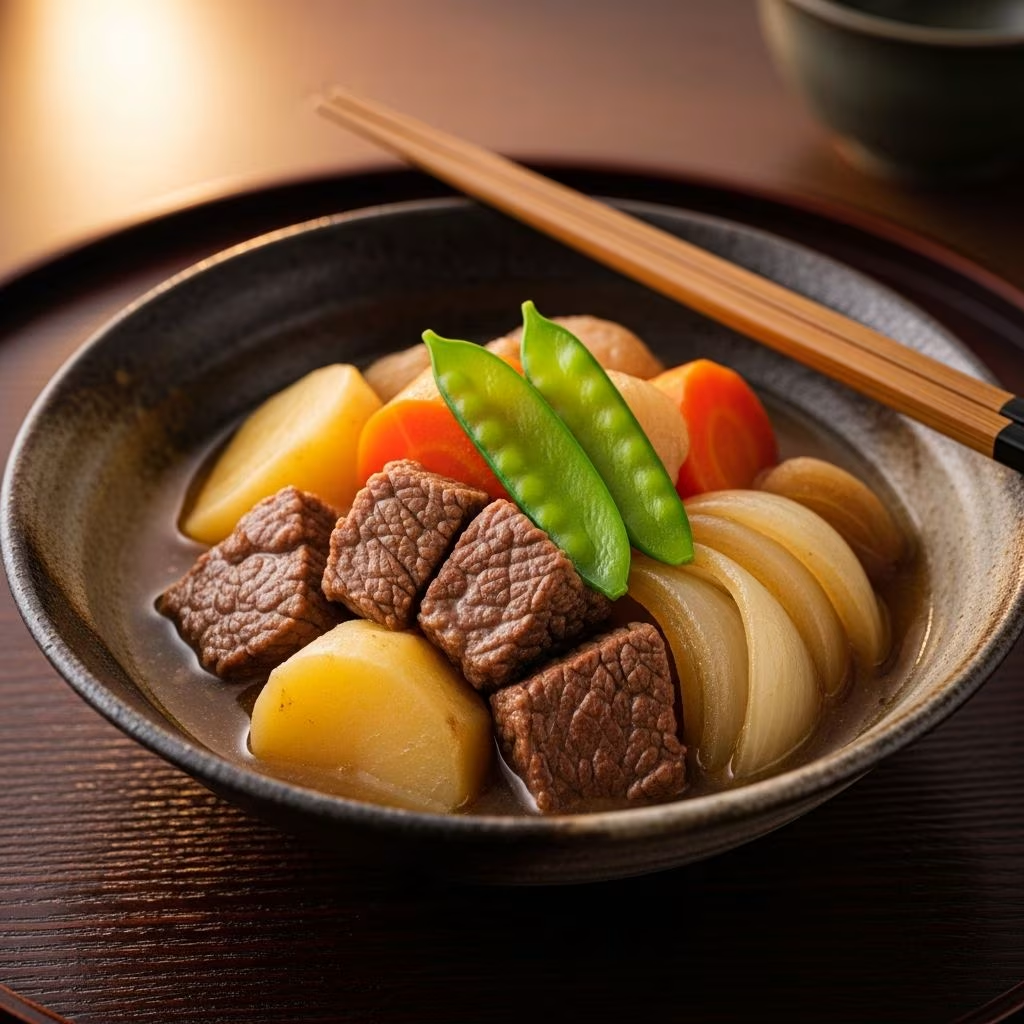
Nikujaga stands as one of Japan’s most cherished home-cooked dishes, combining simple ingredients into a profoundly satisfying meal. This stew, translating directly to “meat and potatoes,” captures the essence of everyday Japanese comfort food with its balance of tender beef, starchy potatoes, and subtly sweet broth.
The Origins and Cultural Significance of Nikujaga
Nikujaga emerged in the late 19th century during Japan’s Meiji era, a time of rapid Western influence. Legend credits its invention to Imperial Japanese Navy personnel who adapted British beef and potato stews to local tastes, swapping heavy gravies for lighter soy-based seasonings. Over decades, it evolved into a staple nimono—a simmered dish—symbolizing maternal love and family gatherings across households.
Today, Nikujaga embodies washoku, Japan’s UNESCO-recognized culinary tradition, emphasizing seasonal produce and harmonious flavors. Families prepare it weekly, especially in cooler months, as its flavors deepen overnight, making leftovers a highlight.
Essential Ingredients for Authentic Nikujaga
The beauty of Nikujaga lies in its accessibility, relying on pantry staples transformed through patient simmering. Core components include:
- Thinly sliced beef: Ribeye or chuck (about ½ lb or 200-250g) for melt-in-your-mouth tenderness; pork belly offers a fattier alternative.
- Potatoes: Yukon Gold or Russet (3-5 medium, 450-600g), cut into chunks for creamy texture without disintegration.
- Onions and carrots: 1-2 onions wedged and 1 carrot sliced into rolls, adding natural sweetness and color.
- Shirataki noodles: Optional 200g package of konnyaku noodles for low-calorie bulk and subtle chew.
- Seasonings: Soy sauce (3-4 Tbsp), mirin (3-4 Tbsp), sake (2 Tbsp), sugar (1-2 Tbsp), and dashi stock (2-3 cups) create the glossy, umami-rich broth.
Garnishes like blanched snow peas or ito konnyaku elevate presentation, injecting vibrant green against the stew’s earthy tones.
Step-by-Step Guide to Preparing Nikujaga
Cooking Nikujaga demands minimal active time—around 20-30 minutes—plus resting for flavor infusion. Follow these precise steps for perfection.
- Prep vegetables: Peel and cut potatoes into 1-2 inch chunks, soaking in water to remove excess starch. Slice carrots into decorative rolls (≤2cm thick) and onions into wedges.
- Prepare proteins: Rinse shirataki noodles and parboil 2-3 minutes to eliminate any odor; drain. Cut beef into bite-sized pieces if needed.
- Sauté base: Heat oil in a Dutch oven over medium. Cook onions until translucent (3-4 minutes), add beef, and stir until just browned.
- Add potatoes and liquid: Toss in potatoes and carrots, coating with pan fats. Pour in dashi, sake, mirin, and sugar; bring to a boil while skimming foam.
- Simmer with drop lid: Reduce to low, add soy sauce, shirataki, and place an otoshibuta (drop lid—parchment or foil substitute works). Cook 15-20 minutes until potatoes pierce easily with a skewer.
- Rest and finish: Turn off heat; let stand 30-60 minutes. Reheat gently, garnishing with blanched greens before serving.
Total time: 15 min prep, 20 min cook, 45 min rest. Serves 4.
Pro Tips for Perfect Nikujaga Every Time
- Potato technique: Mentori—lightly rounding chunk edges—prevents crumbling and ensures even cooking.
- Drop lid essential: It presses ingredients into broth without muddling flavors; improvise with foil if unavailable.
- Resting phase: Critical for flavor melding; tastes best reheated next day.
- Skim diligently: Removes impurities for clear, glossy broth.
- Balance sweetness: Adjust sugar/mirin ratio; start low to avoid cloying results.
Nutritional Profile and Health Benefits
Nikujaga offers balanced nutrition: potatoes provide potassium and vitamin C, beef delivers protein and iron, while vegetables contribute fiber. A serving (about 1.5 cups) clocks in at roughly 350-450 calories, with low fat if lean beef is used. Shirataki adds volume without calories, aiding portion control.
| Nutrient | Per Serving | % Daily Value |
|---|---|---|
| Calories | 400 | 20% |
| Protein | 20g | 40% |
| Carbs | 50g | 18% |
| Fat | 12g | 15% |
| Sodium | 800mg | 35% |
Data approximated from standard recipes; soy sauce boosts sodium, so low-sodium versions suit restricted diets.
Creative Variations on Classic Nikujaga
Adapt Nikujaga seasonally:
- Pork version: Swap beef for pork belly; richer, fattier profile.
- Vegetarian twist: Use mushrooms or tofu instead of meat, vegetable dashi.
- Spicy kick: Add ichimi togarashi or ginger juice post-simmer.
- Instant Pot method: Sauté, pressure cook 5 minutes, natural release 10.
- Regional styles: Western Japan favors pork and sweeter broth; east uses beef.
Pairing Suggestions and Serving Ideas
Serve Nikujaga hot in deep bowls over steamed rice, accompanied by pickled vegetables (tsukemono) for contrast. Beverages: Green tea, sake, or light beer. For bento, cool completely and pack with rice balls.
Frequently Asked Questions (FAQs)
What if I can’t find shirataki noodles?
Substitute glass noodles or omit; they add texture but aren’t essential.
Can I make Nikujaga in advance?
Yes, refrigerate up to 3 days; flavors intensify. Freeze portions for 1 month.
What’s the best potato variety?
Yukon Gold for creaminess; avoid waxy types that hold shape too firmly.
Is a drop lid necessary?
Highly recommended for even cooking; foil on pot lid approximates it.
How do I reduce sodium?
Use low-sodium soy, more dashi, less seasoning; taste iteratively.
Why Nikujaga Captures Hearts Worldwide
Beyond simplicity, Nikujaga’s appeal stems from nostalgia—evoking childhood meals—and versatility for modern kitchens. Its one-pot nature minimizes cleanup, while customizable elements welcome experimentation. Whether for weeknight dinners or potlucks, this stew delivers profound comfort.
References
- Nikujaga (Japanese Meat and Potato Stew) (Video) 肉じゃが — Just One Cookbook. 2023-05-15. https://www.justonecookbook.com/nikujaga/
- Japanese Meat and Potato Stew (Nikujaga) — RecipeTin Japan. 2022-10-20. https://japan.recipetineats.com/japanese-meat-and-potato-stew-nikujaga/
- Nikujaga (Japanese Meat and Potato Stew) 肉じゃが — Okonomi Kitchen. 2024-01-12. https://www.okonomikitchen.com/nikujaga-japanese-meat-and-potato-stew/
- Nikujaga — Nakatomi Test Kitchen. 2023-08-05. https://nakatomitestkitchen.com/nikujaga/
- Nikujaga (Japanese Meat and Potato Stew) — Kikkoman Corporation. 2021-11-10. https://www.kikkoman.com/en/cookbook/washoku/nikujaga.html
- Authentic Nikujaga (Japanese Meat & Potato Stew) — Sudachi Recipes. 2024-03-22. https://sudachirecipes.com/nikujaga-recipe/