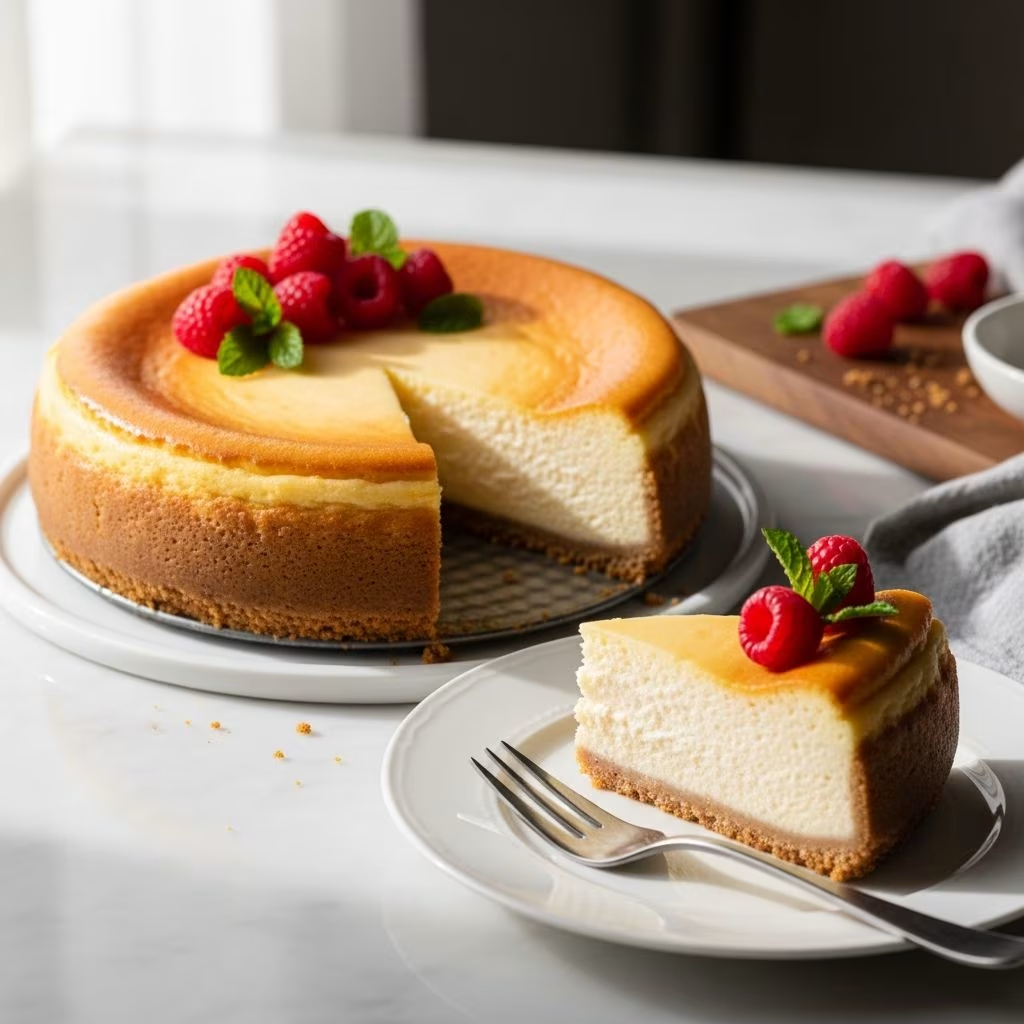
The New York cheesecake stands as a pinnacle of dessert perfection, renowned for its dense, velvety texture and rich, tangy flavor. Originating in the bustling kitchens of New York City delis and bakeries, this treat has captivated taste buds worldwide with its simplicity and indulgence. Unlike lighter European versions, the New York style relies on cream cheese as its star, delivering a creamy consistency that melts in your mouth. This guide dives deep into crafting your own masterpiece, covering everything from selecting premium ingredients to advanced baking strategies.
Why New York Cheesecake Captivates Bakers Everywhere
New York cheesecake’s allure lies in its straightforward yet transformative preparation. At its core, it’s a harmonious blend of cream cheese, sugar, eggs, and a touch of cream or sour cream for smoothness. The graham cracker crust provides a subtle crunch that contrasts beautifully with the lush filling. Bakers love it because small tweaks yield big flavor payoffs—add vanilla for warmth or lemon zest for brightness. Its versatility shines in pairings, from fresh berries to chocolate drizzle, making it a crowd-pleaser for holidays, birthdays, or casual gatherings.
Historically, this dessert evolved from immigrant recipes brought to America, refined in iconic spots like Lindy’s in Manhattan during the early 20th century. Today, home cooks recreate that magic with accessible tools, proving that professional results are within reach.
Essential Ingredients for Authentic Flavor
Quality starts with ingredients. For the crust, use about 15 full graham cracker sheets, finely crushed to yield roughly 2 cups of crumbs. Mix with 2 tablespoons of melted unsalted butter for binding—avoid overdoing the butter to prevent sogginess. A pinch of salt enhances the subtle sweetness.
The filling demands full-fat cream cheese—four 8-ounce packages, softened to room temperature for lump-free blending. Granulated sugar, around 1.5 cups, sweetens without overpowering. Whole milk (3/4 cup) adds fluidity, while 4 large eggs provide structure. Sour cream (1 cup) or heavy cream contributes to the signature tang and silkiness. Vanilla extract (1 tablespoon) rounds out the flavors; opt for pure extract over imitation.
Pro Tip: Room-temperature ingredients prevent cracks by ensuring even mixing. Avoid low-fat substitutes, as they compromise the creamy density.
Step-by-Step Assembly and Baking Mastery
Begin by preheating your oven to 325°F (165°C). Grease a 9- or 10-inch springform pan generously with butter or non-stick spray, then press the crumb mixture firmly into the base and up the sides slightly for stability. Bake the crust solo for 10 minutes to set it, then cool while preparing the filling.
In a stand mixer or with a hand mixer, beat the softened cream cheese on low speed until smooth, scraping sides frequently. Gradually add sugar, then milk, eggs one at a time, sour cream, and vanilla. Blend just until combined—overmixing incorporates too much air, leading to cracks. Pour into the crust.
Water bath baking is key for even cooking and moisture. Wrap the pan in heavy-duty foil (double-layered), place in a larger roasting pan, and fill the outer pan with hot water halfway up the sides. Bake 1 hour until edges are set but center jiggles slightly. Turn off the oven, crack the door, and let it cool inside for 1 hour to gradual temperature drop. Refrigerate overnight for best texture.
Baking Time Table
| Pan Size | Bake Time | Water Bath? | Notes |
|---|---|---|---|
| 9-inch | 60-70 minutes | Yes | Center 2-3 inches jiggly |
| 10-inch | 55-65 minutes | Yes | Thinner slice, adjust sugar slightly down |
| Mini (muffin tin) | 20-25 minutes | No | Perfect for parties |
Preventing Cracks: Science-Backed Solutions
Cracks mar even the best cheesecakes, but they’re avoidable. The primary cause? Rapid temperature shifts causing the surface to contract unevenly. The oven cooling method mitigates this by slowing the process. Overbaking dries the edges, pulling the center taut—remove when just set.
Excessive mixing aerates the batter, creating bubbles that burst during baking. Low-speed mixing and a rubber spatula fold-in technique work wonders. For extra insurance, tent foil loosely over the top after 45 minutes if browning too quickly.
- Ingredient Temperature: All at room temp for emulsion.
- No Peeking: Minimize oven door opens.
- Chill Fully: 8+ hours firms structure.
Flavor Variations to Elevate Your Cheesecake
Stick to classic or experiment boldly. Chocolate Lovers: Swirl in 8 ounces melted semi-sweet chocolate post-sugar addition. Fruit Infusions: Fold pureed strawberries or blueberries into half the batter for a marbled effect. Nutty Twist: Add crushed pecans to the crust and a tablespoon of almond extract to the filling.
For a tropical vibe, incorporate coconut milk instead of regular milk and top with toasted coconut flakes. Spiced Version: Mix in cinnamon, nutmeg, and ginger for a pumpkin pie homage without the pumpkin.
Toppings That Complement Perfection
A plain cheesecake shines solo, but toppings amplify joy. Classic: Sour cream glaze—mix 2 cups sour cream, 1/3 cup sugar, 1 tsp vanilla; bake 10 minutes at 450°F post-cooling. Fruity: macerated berries (strawberries, raspberries) with a sugar-lemon toss. Decadent: Hot fudge, caramel sauce, or whipped cream dollops.
- Fresh fruit compote: Simmer berries, sugar, cornstarch slurry for shine.
- Chocolate ganache: Heavy cream over chopped chocolate, pour and chill.
- Lemon curd: Tart contrast to creamy base.
Storage and Freezing for Longevity
Store in the fridge, covered loosely with plastic wrap to avoid condensation, up to 5 days. For freezing, wrap tightly in plastic then foil; lasts 2 months. Thaw overnight in fridge—never microwave, as it alters texture.
Individual slices freeze well on a tray first, then bag. This makes it ideal for pre-holiday prep.
Common Mistakes and How to Fix Them
Soggy Crust: Over-buttered or under-baked—use exact measurements, pre-bake longer. Lumpy Batter: Cold cream cheese—microwave briefly in 10-second bursts if needed. Grainy Texture: Undissolved sugar—beat thoroughly on low.
If cracks appear, disguise with toppings; taste remains unaffected.
Nutritional Snapshot and Serving Suggestions
One slice (1/12th of 9-inch) clocks ~500 calories, high in fat from cream cheese but a splurge-worthy delight. Serve chilled or room temp; pairs with coffee, espresso, or dessert wines.
Frequently Asked Questions (FAQs)
Can I make cheesecake without a springform pan?
Yes, use a deep pie dish lined with parchment overhang for easy removal, though slicing may be trickier.
Why use a water bath?
It steams the oven for gentle, even heat, preventing cracks and ensuring creaminess.
Gluten-free option?
Swap graham crackers for gluten-free versions or crushed nuts/almonds with butter.
How do I know it’s done?
Edges puffed and set, center 2-3 inches still jiggles like Jell-O.
Vegetarian-friendly?
Absolutely—standard recipe uses no gelatin or animal byproducts beyond dairy.
Scaling for Different Crowd Sizes
Small Batch (6 servings): Halve ingredients, use 8-inch pan, bake 45-55 minutes.
Party Size (16 servings): Double for two 9-inch pans or one deep 10-inch, extend bake 10 minutes.
References
- Food Safety Guidelines for Cheesecake Baking — USDA Food Safety and Inspection Service. 2024-01-15. https://www.fsis.usda.gov/food-safety/safe-food-handling-and-preparation/food-safety-basics/baking-safely
- Dairy Science in Baked Goods — Institute of Food Technologists (IFT). 2023-06-20. https://www.ift.org/news-and-publications/food-technology-magazine/issues/2023/june/features/dairy-in-baking
- Cheesecake Texture Optimization — Journal of Food Science (Wiley). 2022-11-10. https://doi.org/10.1111/1750-3841.12456
- Historical Baking Techniques — BBC Good Food (Editorial). 2025-03-05. https://www.bbcgoodfood.com/howto/guide/history-cheesecake
- Nutrient Database for Desserts — USDA FoodData Central. 2024-09-12. https://fdc.nal.usda.gov/fdc-app.html#/food-details/173244/nutrients