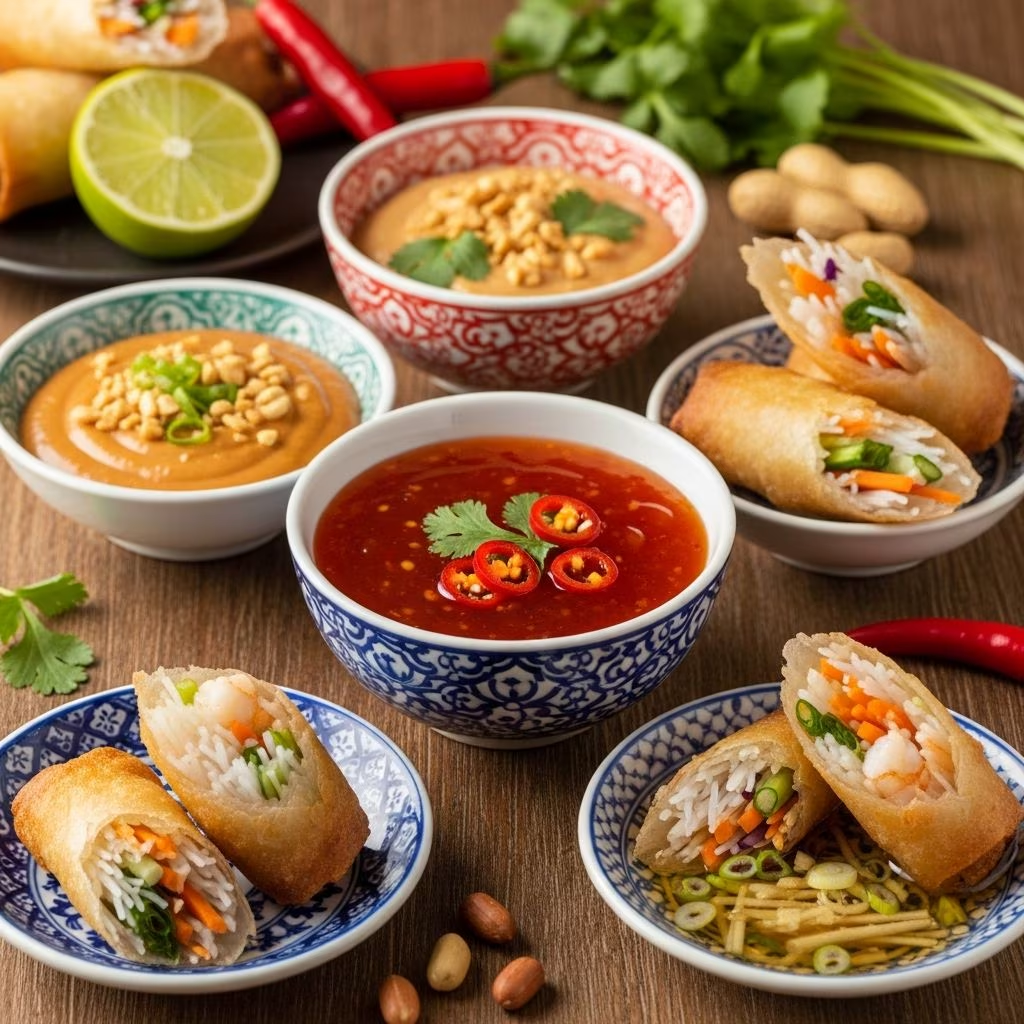
Authentic Thai cuisine thrives on bold contrasts of flavors, and no element captures this better than Nam Jim Po Piah, the quintessential dipping sauce for crispy spring rolls. This clear, glossy condiment balances sweetness, acidity, saltiness, and optional heat, transforming simple fried rolls into a symphony of taste. Whether you’re hosting a dinner party or craving street-food vibes at home, mastering this sauce opens doors to endless culinary creativity.
The Essence of Nam Jim Po Piah
Nam Jim Po Piah, often simply called Thai spring roll sauce, originates from Thailand’s vibrant street food culture. It’s designed to complement the crunchy texture and savory filling of po piah—fresh or fried spring rolls—by providing a slick, adhesive quality that clings to every bite. Unlike thicker Western dips, this sauce is light and translucent, allowing the roll’s flavors to shine while adding its own harmonious profile.
At its core, the sauce achieves perfection through a delicate interplay of ingredients: water forms the base, sugar brings sweetness, vinegar or lime juice delivers tang, and salt ties it all together. Fresh additions like chilies, carrots, and peanuts introduce texture and aroma, making each dip an adventure. This versatility extends beyond spring rolls; it’s equally at home with grilled meats, fresh vegetables, or even noodle dishes.
Classic Recipe: Simple Stovetop Version
Preparing Nam Jim Po Piah is straightforward, requiring just minutes on the stove. This foundational recipe yields about 1.5 cups, enough for 20-30 spring rolls.
Ingredients
- 1 cup water
- 1/4 cup rice vinegar (or white vinegar for a sharper edge)
- 1/2 cup granulated sugar
- 1/2 teaspoon salt
- 1-2 Thai chilies, finely sliced (adjust for heat)
- 1 small carrot, grated
- 2 tablespoons crushed roasted peanuts
Step-by-Step Directions
- Combine base liquids: In a small saucepan, mix water, rice vinegar, sugar, and salt. Heat over medium, stirring until sugar fully dissolves into a clear syrup—about 2-3 minutes.
- Simmer to thicken: Bring to a gentle boil, then reduce heat and simmer for 5-7 minutes. The mixture will reduce slightly and gain a sticky sheen as it cools.
- Cool and infuse: Remove from heat and let cool for 10 minutes. Stir in sliced chilies for heat infusion.
- Final touches: Just before serving, mix in grated carrot and crushed peanuts for crunch and freshness. Taste and adjust sweetness or salt if needed.
Serve at room temperature in small bowls alongside hot spring rolls. The sauce thickens naturally upon cooling, creating the perfect dipping consistency.
Variations to Suit Every Palate
Thai sauces are highly adaptable, reflecting regional preferences and personal taste. Here are three popular twists on Nam Jim Po Piah.
Sweet-and-Spicy Peanut Boost
Enhance the classic with extra peanuts blended into a smoother paste. Add 1/4 cup peanut butter during simmering for creaminess, ideal for softer fresh rolls.
Citrusy Lime Infusion
Swap vinegar for fresh lime juice post-simmer to brighten the profile. Incorporate lime zest for aromatic oils, mimicking coastal Thai versions.
Fiery Garlic-Chili Mash
For heat lovers, pound 4 garlic cloves and 5 bird’s eye chilies into a paste, then stir in after cooling. This nods to bolder nam jim styles.
| Variation | Key Change | Best Pairing |
|---|---|---|
| Sweet-and-Spicy Peanut | Add peanut butter | Fresh vegetable rolls |
| Citrusy Lime | Lime juice + zest | Grilled shrimp |
| Fiery Garlic-Chili | Pounded paste | Fried pork rolls |
Essential Tools and Ingredient Swaps
You don’t need fancy equipment—a basic saucepan and measuring tools suffice. For authenticity, a mortar and pestle shines when crushing peanuts or chilies, releasing essential oils.
Substitutions keep it accessible:
– Rice vinegar: Apple cider vinegar or diluted lemon juice.
– Granulated sugar: Palm or brown sugar for deeper molasses notes.
– Peanuts: Cashews or sesame seeds for nut-free options.
– Thai chilies: Jalapeños or red pepper flakes.
Pro tip: Use filtered water to avoid off-flavors from tap minerals.
Pairing Perfection: Beyond Spring Rolls
While spring rolls are the star, Nam Jim Po Piah elevates many dishes. Drizzle over rice paper rolls stuffed with shrimp and herbs. Pair with moo ping—grilled pork skewers—or satay for a sticky glaze. It’s transformative on fried tofu, fresh cucumber slices, or even as a noodle bowl drizzle.
- Fried appetizers: Complements golden tempura veggies or calamari.
- Grilled proteins: Balances fatty chicken or beef skewers.
- Fresh salads: Adds zing to papaya or mango slaws.
Storage and Make-Ahead Strategies
This sauce stores beautifully, making it party-friendly. Refrigerate in an airtight jar for up to 2 weeks; the flavors deepen over time. Reheat gently or serve cold—stir in fresh garnishes like carrots each time to maintain crunch.
Freezing tip: Portion into ice cube trays for single-use dips, thawing as needed. Avoid metal containers to prevent acidic reactions.
Nutrition Snapshot
Per 2-tablespoon serving (classic recipe): Approximately 60 calories, 15g sugar, negligible fat/protein. It’s naturally vegan and gluten-free, with minimal sodium if salt is moderated.
| Nutrient | Amount | % Daily Value |
|---|---|---|
| Calories | 60 | 3% |
| Sugar | 15g | – |
| Sodium | 150mg | 7% |
Frequently Asked Questions
Can I make it without sugar?
For a low-sugar version, use stevia or monk fruit, but simmer longer to achieve viscosity. Taste frequently to balance.
Why is my sauce not thickening?
Simmer longer or reduce liquid volume. Cornstarch slurry (1 tsp in water) can help, added at the end.
Is it spicy?
Adjust chilies freely—omit for mild, multiply for fire. Thai chilies pack heat, so start small.
How do I achieve restaurant shine?
The gloss comes from dissolved sugar; ensure full melt before simmering.
Vegetarian-friendly?
Yes, fully plant-based. Skip peanuts for allergies.
Advanced Twists: Fusion Ideas
Experiment boldly: Infuse with ginger for Asian fusion, or add hoisin for Chinese-Thai hybrid. For umami depth, a dash of soy sauce works wonders. These tweaks maintain the sweet-sour core while innovating.
Incorporate into marinades—thin with water and coat chicken before grilling. Or blend into mayo for a creamy spring roll aioli.
Cultural Context and Tips from Thai Kitchens
In Thailand, sauces like Nam Jim Po Piah are pounded fresh for vibrancy, using mortar techniques that bruise herbs just right. Street vendors customize on-site, tasting and tweaking per customer. At home, replicate by prepping garnishes separately to preserve texture.
Balance is key: Aim for equal parts sweet and sour, with salt as the anchor. Test on your tongue—Thai philosophy favors harmony over extremes.
Troubleshooting Common Pitfalls
- Too watery: Extend simmer time by 2-3 minutes.
- Overly vinegary: Counter with extra sugar, added gradually.
- Lacks depth: Toast peanuts first or add minced garlic.
With practice, you’ll craft a signature version that rivals Bangkok’s best.
References
- Thai Spring Roll Dipping Sauce Recipe — Hungry in Thailand. 2023. https://hungryinthailand.com/thai-spring-roll-dipping-sauce/
- Nam Jim Sauce (Simple Thai dipping sauce) — 3CatsFoodie. 2022. https://3catsfoodie.com/nam-jim-sauce/
- Nam Jim – Thai Dipping Sauce — Love from The Chef. 2023. https://www.lovefromchef.com/nam-jim-thai-sauce/
- Thai Dipping Sauce – Nam Jim Jaew — RecipeTin Eats. 2021. https://www.recipetineats.com/thai-dipping-sauce-nam-jim-jaew/
- Thai Chili Dipping Sauce | Nam Jim Jaew — Cooking with Nart. 2022. https://www.cookingwithnart.com/thai-dipping-sauce-nam-jim-jaew/