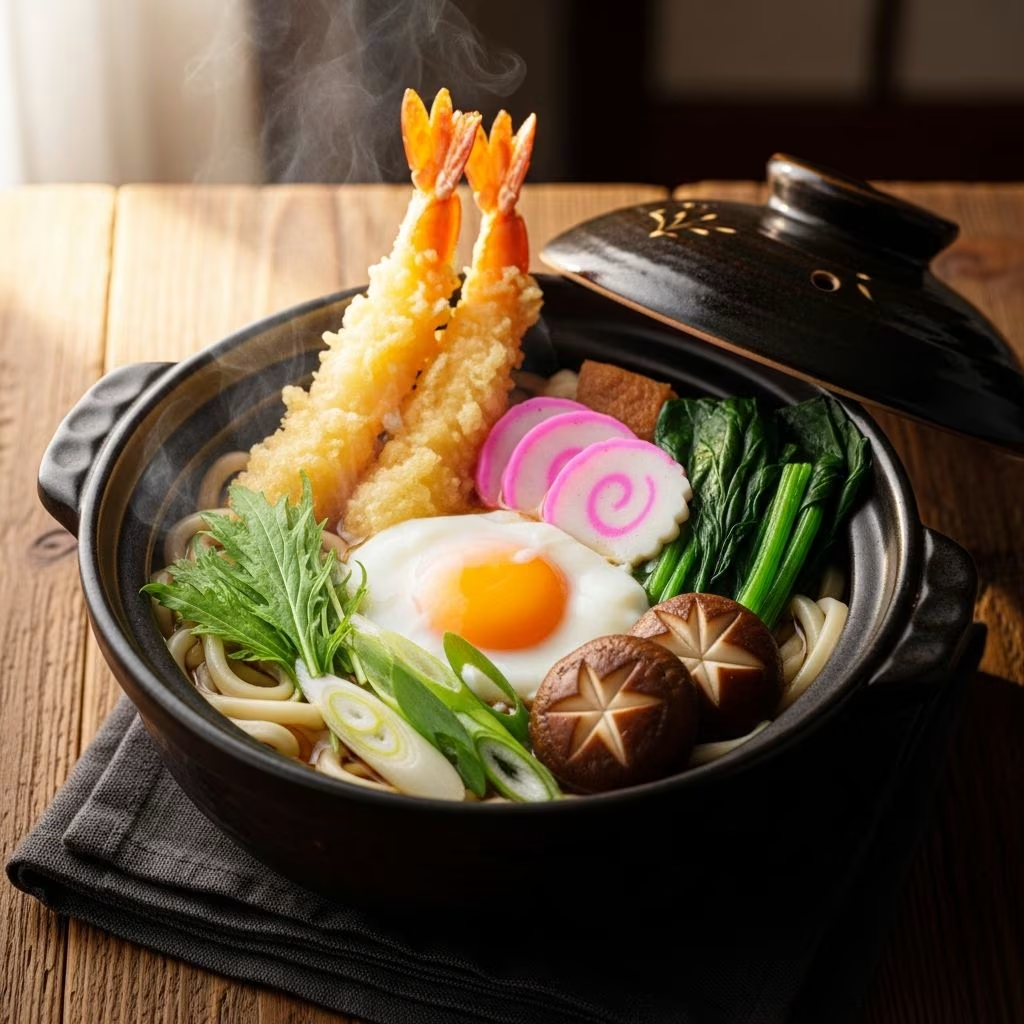
Immerse yourself in the soul-warming embrace of **Nabeyaki Udon**, a beloved Japanese dish that transforms simple ingredients into a symphony of flavors and textures. This one-pot meal features thick, chewy udon noodles simmered in a rich dashi broth alongside tender proteins, crisp vegetables, and a perfectly poached egg. Traditionally prepared in individual clay pots known as donabe, it evokes the essence of home cooking during chilly evenings.
The Allure of Nabeyaki Udon in Japanese Culture
Nabeyaki Udon stands out as a quintessential comfort food in Japan, particularly cherished during winter months. The name ‘Nabeyaki’ translates to ‘pot-cooked,’ highlighting its preparation method in a single vessel directly at the table. This style allows diners to witness the gentle simmering of ingredients, building anticipation as aromas fill the air.
Originating from regions like Tokyo, this dish draws from the nabe (hot pot) tradition, where communal cooking fosters warmth and togetherness. Unlike stir-fried or chilled udon variants, Nabeyaki emphasizes slow infusion of flavors in broth, making it ideal for cold weather. Home cooks appreciate its versatility—adaptable to available ingredients while staying true to umami-rich roots.
Essential Ingredients for Authentic Flavor
Crafting Nabeyaki Udon begins with high-quality components that balance savory, sweet, and fresh notes. The foundation is **dashi**, a clear broth made from kombu seaweed and bonito flakes, providing subtle oceanic depth.
- Dashi Broth Base: 3-4 cups, enhanced with mirin (2 Tbsp), soy sauce (2 Tbsp), and salt (1 tsp) for seasoning.
- Udon Noodles: Frozen, fresh, or dried (about 200-300g per serving); parboil for optimal chewiness.
- Proteins: Chicken thigh (40-50g, bite-sized), shrimp (2-4 pieces), kamaboko fish cake (2-3 slices).
- Vegetables: Spinach or komatsuna (1/4 bunch, blanched), shiitake mushrooms (2-3, sliced), carrots (thin rounds), scallions (thinly sliced).
- Egg: 1 per serving, cracked in last for soft poaching.
- Optional Toppings: Tempura shrimp, aburaage (fried tofu), shichimi togarashi for heat.
These elements create harmony: chewy noodles absorb the broth, proteins add heartiness, and veggies provide color and crunch.
Step-by-Step Guide to Cooking Nabeyaki Udon
Preparation takes about 20-30 minutes, with cooking in 15 minutes. Use individual donabe pots (or small Dutch ovens) for authenticity.
- Prepare Dashi: Simmer kombu in water for 10 minutes, add bonito flakes, steep 2 minutes, then strain. Season with mirin, soy sauce, and salt.
- Prep Ingredients: Blanch spinach, slice carrots into flowers if desired, cut mushrooms, chicken, and fish cake. Devein shrimp.
- Assemble in Pot: Divide broth among pots. Add udon, chicken, shrimp, veggies (except greens), and mushrooms. Bring to simmer over medium heat.
- Cook Proteins: Cover and simmer 5-8 minutes until chicken is cooked (internal temp 165°F). Skim foam.
- Add Egg and Finish: Crack egg into each pot, add spinach and scallions. Cover 1-2 minutes for runny yolk. Turn off heat.
Serve immediately with chopsticks and spoons, garnished with shichimi.
Donabe: The Heart of Nabeyaki Udon Experience
The **donabe** clay pot is indispensable, retaining heat evenly and imparting a subtle earthy flavor. Available in various sizes, select 1-person pots (about 1-quart) for personal servings. Season new donabe by boiling rice water inside to prevent cracking.
Tabletop cooking enhances the ritual—pots bubble on portable burners, encouraging shared meals. For beginners, stainless steel works, but lacks the pot’s thermal magic.
Customizing Your Nabeyaki Udon
Adapt for dietary needs while preserving essence:
| Variation | Substitutions | Tips |
|---|---|---|
| Vegetarian | Skip chicken/shrimp; use aburaage, extra mushrooms, vegan dashi. | Simmer tofu 2 minutes longer for flavor absorption. |
| Spicy Kick | Add shichimi or rayu chili oil. | Sprinkle post-cook to control heat. |
| Seafood Focus | Clams or scallops instead of chicken. | Cook shellfish until shells open. |
| Gluten-Free | Rice noodles, tamari for soy. | Check labels for cross-contamination. |
Experiment seasonally: spring peas, autumn mushrooms.
Nutritional Profile and Health Benefits
A single serving (about 500g) offers balanced nutrition: ~500-600 calories, 25g protein from chicken/egg/fish cake, complex carbs from udon (60g), and vitamins A/C/K from veggies. Dashi provides minerals like iodine; mirin aids digestion.
- High Protein: Supports muscle repair.
- Low Fat: Heart-healthy with lean proteins.
- Antioxidants: Shiitake and greens boost immunity.
Portion control keeps it light; pair with salad for fullness.
Common Mistakes and Pro Tips
Avoid these pitfalls for perfection:
- Overcooking noodles: Parboil separately if needed.
- Crowding pot: Limit ingredients to prevent dilution.
- Boiling egg too long: Aim for 60-90 seconds.
- Weak broth: Use quality dashi packets if homemade is unavailable.
Pro Tip: Prep mise en place for seamless assembly. Freeze extra dashi in ice cubes.
Pairing Suggestions and Serving Ideas
Elevate with Japanese sides: sunomono salad, pickled radish, or green tea. For drinks, sake or barley tea complements umami.
Serve family-style by scaling up to a large nabe, or individually for intimacy.
Frequently Asked Questions (FAQs)
What is Nabeyaki Udon?
A hot pot udon dish cooked in donabe with dashi, noodles, toppings like egg and veggies.
Can I make it without a donabe?
Yes, use small saucepans or skillets; results are similar but less authentic.
How do I store leftovers?
Refrigerate up to 2 days; reheat gently to avoid mushy noodles.
Is it vegan-friendly?
Easily: omit egg/meat, use plant-based dashi.
What’s the best udon type?
Frozen san-udon for chewiness; avoid instant.
Conclusion: Warm Your Soul with Nabeyaki Udon
Mastering Nabeyaki Udon brings Japanese kitchen joy home. Its simplicity belies profound satisfaction—gather ingredients, fire up the pot, and savor tradition.
References
- Nabeyaki Udon Recipe — Japanese Cooking 101. Accessed 2026. https://japanesecooking101.com/nabeyaki-udon-recipe/
- Nabeyaki Udon (Video) 鍋焼きうどん — Just One Cookbook. Accessed 2026. https://www.justonecookbook.com/nabeyaki-udon/
- Nabeyaki Udon — Happy Donabe Life. Accessed 2026. https://happydonabelife.com/recipes/nabeyaki-udon/
- Best Nabeyaki Udon Recipe — Delish. Accessed 2026. https://www.delish.com/cooking/recipe-ideas/a35047520/nabeyaki-udon-recipe/
- How to Make Authentic Nabeyaki Udon at Home — Just One Cookbook (YouTube). Accessed 2026. https://www.youtube.com/watch?v=ss6M2BS7i3A