Understanding the Foundation of Piccata Cooking
Piccata represents a classical Italian cooking technique that emphasizes bright, acidic flavors combined with rich, buttery elements. Traditionally prepared with veal or chicken, this preparation method translates beautifully to vegetables, particularly mushrooms, which possess a naturally robust umami character that complements the sharp, tangy sauce components.
The name piccata derives from the Italian word “piccato,” referring to the technique of pounding thin cutlets and cooking them quickly in a hot pan. When adapted for fungi-based preparations, the core principle remains: achieve textural contrast between caramelized exteriors and tender interiors while layering complex flavor profiles through careful sauce construction.
Selecting and Preparing Your Mushroom Varieties
Mushroom selection significantly influences the final dish’s character. Different species contribute unique flavor profiles and textural properties to the finished preparation.
- Portobello mushrooms deliver meaty texture and earthy depth, ideal for creating substantial “cutlet”-like presentations
- Shiitake varieties offer concentrated umami flavors with firm flesh that maintains structure during cooking
- Oyster mushrooms provide delicate, slightly sweet notes and can be flattened into large medallions using simple equipment
- Mixed varieties create complexity by combining different flavor notes and textural elements in a single preparation
- Hen of the woods contributes subtle earthiness with an interesting branched structure that adds visual appeal
Proper mushroom preparation begins with gentle cleaning using a damp cloth rather than water immersion, which causes excessive moisture absorption. Slice specimens uniformly to ensure consistent cooking times across all pieces. Thickness should balance between maintaining structural integrity during sautéing and allowing adequate surface browning. Thicker cuts—approximately one-quarter inch—develop better caramelization than thinner alternatives.
The Critical Searing Process
Achieving perfectly browned mushrooms requires understanding their moisture-release properties and heat management. Mushrooms naturally contain significant water content, which must evaporate to enable browning through the Maillard reaction—the chemical process responsible for developing complex, savory flavors.
Begin by heating a large sauté pan over medium-high heat with a combination of olive oil and butter. This mixture prevents butter from burning while providing the rich flavor butter contributes. Once the fat reaches proper temperature, add mushroom pieces in a single layer without crowding the pan. Overcrowding lowers temperature and steams mushrooms rather than searing them.
Allow mushrooms to sit undisturbed for two to three minutes, enabling water evaporation and initiating browning. Resist the urge to stir constantly; periodic tossing encourages even color development. Cook until mushrooms achieve deep golden-brown coloring on all sides—typically eight to ten minutes depending on thickness and mushroom variety.
A crucial timing consideration: avoid salting mushrooms during the searing phase. Salt draws out additional moisture, creating steamed rather than seared results. Season after browning is complete to preserve textural quality.
Building the Piccata Sauce
Once mushrooms develop proper color, transfer them temporarily to a clean plate. Using the same pan with its flavorful browned bits—called fond—create the sauce foundation by adding minced garlic and finely chopped shallots. Sauté these aromatics for approximately two minutes until fragrant but not browned, which would introduce bitterness.
Deglaze the pan with dry white wine, scraping the fond from the pan bottom using a wooden spoon. This technique, known as deglazing, dissolves accumulated flavor compounds into the liquid. Allow the wine to reduce by approximately half its volume, concentrating flavors and cooking off harsh alcohol notes. This reduction typically requires one to two minutes of simmering.
Season the reducing wine with kosher salt, freshly ground black pepper, and red pepper flakes according to taste preference. The acidic wine environment permits seasoning adjustments throughout cooking without the risk of over-salting that occurs with other preparation methods.
Introduce cold butter cut into small pieces, stirring continuously until fully incorporated. This technique, called monter au beurre in classical French cooking terminology, creates an emulsified sauce with silky texture and rich mouthfeel. Add approximately two tablespoons of butter per two cups of liquid sauce.
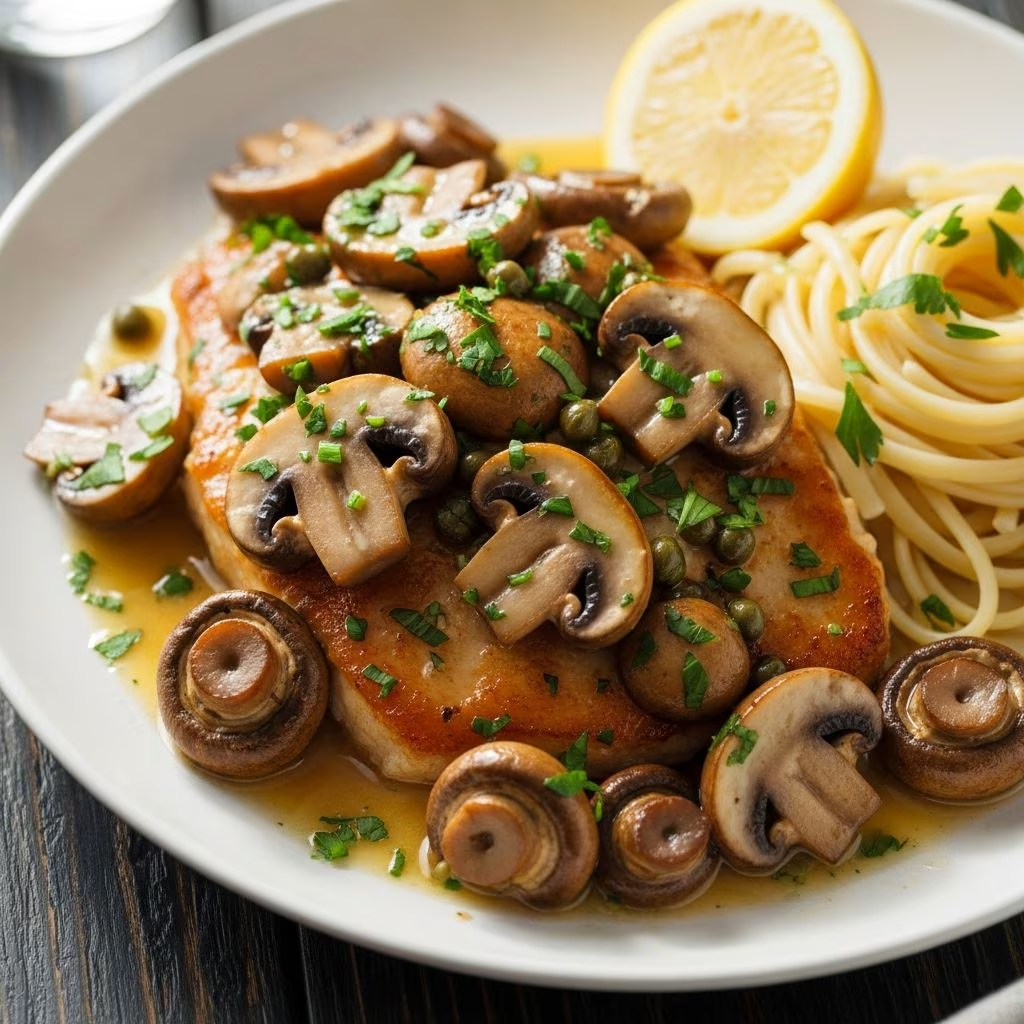
Incorporate capers—the pickled flower buds of Capparis spinosa plants—which contribute briny, acidic complexity. Add fresh lemon juice, tasting carefully to balance brightness against richness. The sauce should taste bright and acidic without overpowering other elements. Typically, juice from half to one whole lemon suffices for four servings.
Return the seared mushrooms to the pan, gently stirring to coat thoroughly with sauce. Simmer for approximately two minutes, allowing flavors to meld and mushrooms to absorb sauce elements without becoming soggy.
Composition Variations and Serving Strategies
While traditional piccata plates feature the mushroom-sauce combination atop pasta, numerous serving options accommodate different dietary preferences and ingredient availability.
| Starch Option | Flavor Profile | Preparation Time |
|---|---|---|
| Spaghetti or linguine | Neutral; allows sauce flavors to dominate | 10-12 minutes |
| Rice (white or brown) | Slightly sweet; absorbs sauce well | 15-45 minutes depending on type |
| Roasted potatoes | Earthy; adds substance | 25-30 minutes |
| Wilted spinach or greens | Bitter-sweet; lighter preparation | 3-5 minutes |
| Creamed polenta | Rich, luxurious; heavy | 30 minutes |
Fresh flat-leaf parsley serves as both garnish and flavor component, its bright, herbaceous quality balancing rich butter and briny capers. Add the majority of chopped parsley during the final two minutes of cooking, reserving some for finishing garnish to preserve color and texture.
Technique Refinement and Common Challenges
Mushroom-based piccata presents several technical considerations that distinguish it from poultry versions. Unlike chicken or veal, mushrooms continue absorbing liquid even after cooking completion. This characteristic requires careful timing to prevent sauce-logged results.
If mushrooms appear dry during searing, increase oil quantity slightly, allowing additional evaporation time rather than adding liquid. Mushrooms readily absorb oil and moisture, requiring generous fat quantity compared to meat preparations.
For sauce consistency adjustments, reserve pasta cooking water before draining. Starch-laden pasta water emulsifies into sauce, simultaneously thickening and lightening texture. Adding small quantities of this water permits fine-tuned consistency control without requiring additional reduction time.
Color development proves visually appealing and indicates proper technique execution. Pale mushrooms suggest insufficient heat or overcrowding during searing. Dark, nearly blackened specimens indicate proper browning has occurred, contributing complex, caramelized flavors.
Flavor Enhancement and Customization
While the classic piccata formula—lemon, capers, butter, mushrooms—requires no modification, several additions elevate the dish according to personal preference or ingredient availability.
Artichoke hearts contribute subtle earthiness and interesting textural contrast. Add them simultaneously with mushrooms or incorporate pre-cooked varieties during the final sauce-building stage. Kalamata or green olives introduce complementary brininess when smashed or halved and added with capers.
Heavy cream or plant-based alternatives create luxurious mouthfeel without dramatically altering flavor profiles. Add two to three tablespoons per four servings, incorporating after acid elements to prevent curdling.
Fresh herbs beyond parsley—including basil, oregano, or tarragon—layer herbaceous complexity. Add delicate herbs at plate finish; hardy varieties tolerate cooking without flavor loss.
Frequently Asked Questions
- Can mushroom piccata be prepared in advance? Partially yes. Sear mushrooms and prepare sauce separately up to four hours ahead. Combine only immediately before serving to prevent mushrooms from absorbing excess liquid and becoming waterlogged.
- What mushroom types work best for beginners? Portobello and cremini mushrooms provide reliable results with forgiving cooking tolerances. Their substantial size prevents small pieces from disappearing into sauce.
- How do I prevent a greasy final dish? Use adequate heat during searing so fat is used for browning rather than steaming. Properly rendered fat contributes mouthfeel; excess fat indicates insufficient heat during cooking.
- Can I substitute butter with alternative fats? Yes, though results vary. Olive oil lacks emulsifying properties, creating thinner sauce. Vegan butter approximates traditional results when selecting brands specifically formulated for cooking.
- What wine varieties work best? Dry white wines—Sauvignon Blanc, Pinot Grigio, or Vermentino—provide acidity without oak influence that might overpower delicate mushroom flavors.
Nutritional Considerations and Dietary Adaptations
Mushroom-based preparations offer inherent nutritional advantages over traditional piccata versions. Fungi provide important micronutrients including B vitamins, selenium, and copper while contributing minimal calories. A typical four-serving portion yields approximately 200-250 calories depending on starch accompaniment.
The lemon-capers preparation requires minimal sodium while providing beneficial acids that support mineral absorption. Capers contribute antioxidants despite small serving quantities.
Vegan adaptations substitute plant-based butter and skip cheese accompaniment, maintaining flavor integrity while meeting dietary restrictions. The core technique remains unchanged, with mushroom umami providing satiety equivalent to traditional meat-based versions.
Those managing sodium intake should rinse capers thoroughly before incorporating them, reducing salt content by approximately thirty percent while preserving briny flavor character.
References
- Mushroom Piccata Pasta Recipe — Delish. 2023. https://www.delish.com/cooking/recipe-ideas/a41396126/mushroom-piccata-pasta-recipe/
- Wild Mushroom Piccata — Souper Jenny. 2022. https://www.souperjennyatl.com/followingsouperjenny/2022/6/7/recipe-wild-mushroom-piccata
- Oyster Mushroom Piccata — Laura’s Vegan Table. Accessed 2026. https://laurasvegantable.com/recipes/oyster-mushroom-piccata/
- Vegan Mushroom Piccata Sauce — Tried and True Recipe. Accessed 2026. https://www.triedandtruerecipe.com/vegan-mushroom-piccata-sauce/
- Mushroom Piccata with Artichokes — Mr Organic. Accessed 2026. https://mr-organic.com/recipes/mushroom-piccata-with-artichokes/