Understanding Mojo Pork: Origins and Culinary Significance
Mojo pork represents a beloved preparation method rooted in Caribbean and Latin American cuisine, distinguished by its vibrant blend of citrus, garlic, and aromatic herbs. This cooking technique transforms a simple pork roast into a dish brimming with complex flavors and tender texture. The mojo preparation method draws inspiration from traditional marinades used throughout the Caribbean, where the combination of fresh citrus juices, particularly orange and lime, creates a marinade that penetrates deep into the meat fibers over time.
The beauty of this preparation lies in its balance between simplicity and sophistication. While the ingredient list remains relatively modest, the layering of flavors creates a depth that impresses even the most discerning palates. The acidity from citrus juices works as a natural tenderizer, breaking down muscle fibers and connective tissue while infusing the meat with bright, refreshing notes that complement the richness of pork. Combined with the earthiness of cumin and oregano, plus the pungent bite of fresh garlic, this marinade creates a sensory experience that transports diners to sun-drenched Caribbean shores.
Essential Components for Your Mojo Marinade
Creating an authentic mojo marinade requires understanding how each ingredient contributes to the overall flavor profile. The foundation begins with high-quality extra virgin olive oil, which serves as both a flavor component and a vehicle for carrying other aromatics into the meat. The oil’s fat-soluble compounds help distribute the flavors evenly throughout the pork.
Key Marinade Ingredients and Their Functions
- Fresh Citrus Juices: Orange and lime juices form the acidic backbone of the marinade. The orange provides sweetness and brightness, while lime adds sharp acidity and a subtle herbaceous quality. Together, they create an environment that tenderizes the meat while infusing it with citrus flavor.
- Garlic: Fresh garlic cloves contribute pungency and umami depth. When minced or processed, garlic releases sulfur compounds that become more aromatic and complex as they interact with the oil and citrus over time.
- Fresh Herbs: Cilantro, oregano, and mint provide aromatic complexity. Cilantro offers a fresh, slightly citrusy note; oregano contributes warm, slightly minty earthiness; and mint adds cool, refreshing undertones that balance the heavier pork flavors.
- Spices: Ground cumin provides warm, slightly nutty notes that anchor the lighter citrus and herb flavors, preventing the marinade from tasting too acidic or one-dimensional.
- Zest: Orange zest intensifies the citrus flavor beyond what juice alone can provide, adding concentrated oils and aromatic compounds.
Selecting and Preparing Your Pork
The choice of pork cut dramatically influences your final result. Pork shoulder, whether boneless or bone-in, serves as the optimal selection for mojo preparation. This cut contains sufficient marbling and connective tissue to remain moist during extended cooking, while also developing rich, savory notes as the fat renders. The shoulder’s structure allows the marinade to penetrate multiple layers of muscle and fat, distributing flavors throughout the meat.
Avoid leaner cuts such as tenderloin, loin, or leg, as these cuts lack the fat content necessary to stay juicy during the extended roasting time required for proper flavor development. A pork shoulder weighing 4 to 5 pounds provides adequate size for family gatherings while remaining manageable for home cooks.
Before marinating, trim any thick exterior fat deposits, leaving a thin layer approximately 1/4 inch thick. This layer will render during cooking, basting the meat and creating a flavorful crust. Pat the pork dry with paper towels to help the marinade adhere more effectively to the meat surface.
The Marinating Process: Timing and Technique
Successful mojo pork begins with proper marinating technique. Prepare the marinade by combining all liquid and aromatic ingredients in a food processor and blending until herbs and garlic are finely minced but not pureed. This creates a semi-chunky marinade with visible herb pieces that will adhere to the meat surface.
For optimal flavor development, marinate the pork for a minimum of overnight, though up to 36 hours produces even more pronounced results. During this extended time, enzymatic activity from the acidic marinade breaks down muscle proteins, while the flavors gradually permeate the meat. Place the pork in a large, food-safe plastic bag or covered container, pour the marinade over the meat, and massage the marinade into the surface. Ensure the pork is fully submerged in the liquid when possible, or at minimum, massage marinade over all exposed surfaces.
For additional flavor penetration, consider using a meat injector to distribute marinade into the interior of the pork. Inject approximately 2 to 3 tablespoons of marinade into multiple locations throughout the meat, spacing injections about 2 inches apart. This technique dramatically accelerates flavor development in the meat’s interior layers.
Roasting Methodology and Temperature Control
Remove the marinated pork from refrigeration approximately one hour before roasting to allow the meat to reach room temperature. This promotes even cooking throughout the roast and prevents the exterior from overcooking while the interior remains underdone.
Preheat your oven to 425°F (220°C). Transfer the pork to a roasting pan positioned on a wire rack, which allows hot air to circulate beneath the meat and promotes even browning. Reserve the remaining marinade for basting and sauce preparation. Season the exterior liberally with salt and pepper, then place in the preheated oven.
During the initial 30-minute period at high temperature, the pork develops a flavorful brown crust through the Maillard reaction. This browning process creates complex savory compounds that add depth to the final dish. After 30 minutes, reduce oven temperature to 375°F (190°C) and continue roasting for 1.5 to 2 hours, depending on roast size and your oven’s characteristics.
Baste the pork with reserved marinade and pan drippings every 30 minutes during the lower-temperature roasting phase. This continuous basting keeps the exterior moist, adds additional flavor, and encourages browning. The pork reaches ideal doneness when an instant-read thermometer inserted into the thickest portion reads 160°F (71°C), ensuring the meat is fully cooked while maintaining a tender, juicy texture.
Creating Pan Gravy from Roasting Juices
The pan drippings represent liquid gold in pork cookery, containing concentrated flavors from both the meat and the marinade. After removing the pork from the oven and placing it on a cutting board to rest, strain the pan drippings through a fine-mesh sieve into a measuring cup. This removes herbs and solid particles while preserving the flavorful liquid.
Allow the strained liquid to rest for several minutes, during which time fat will rise to the surface. Skim off excess fat, reserving only 2 tablespoons for creating a roux. If your pan drippings yield less than 1 cup, supplement with chicken or vegetable stock until you reach the desired volume for gravy.
In a small saucepan, combine the reserved fat with 2 tablespoons of all-purpose flour, stirring over medium heat for 2 to 3 minutes. This creates a roux that will thicken the gravy. Gradually add the reserved pan drippings and stock, stirring constantly to prevent lumps from forming. Continue cooking for 5 to 7 minutes until the gravy reaches a consistency similar to heavy cream. Finish with fresh citrus juice—lime or orange—and adjust seasoning with salt and pepper to taste.
Resting and Carving for Maximum Tenderness
Before carving, allow the roasted pork to rest for 15 to 20 minutes at room temperature. During this crucial period, the muscle fibers relax and reabsorb the meat’s internal juices, ensuring maximum tenderness and juiciness with each slice. Carving too immediately after roasting causes these juices to run onto the cutting board, leaving the meat dry.
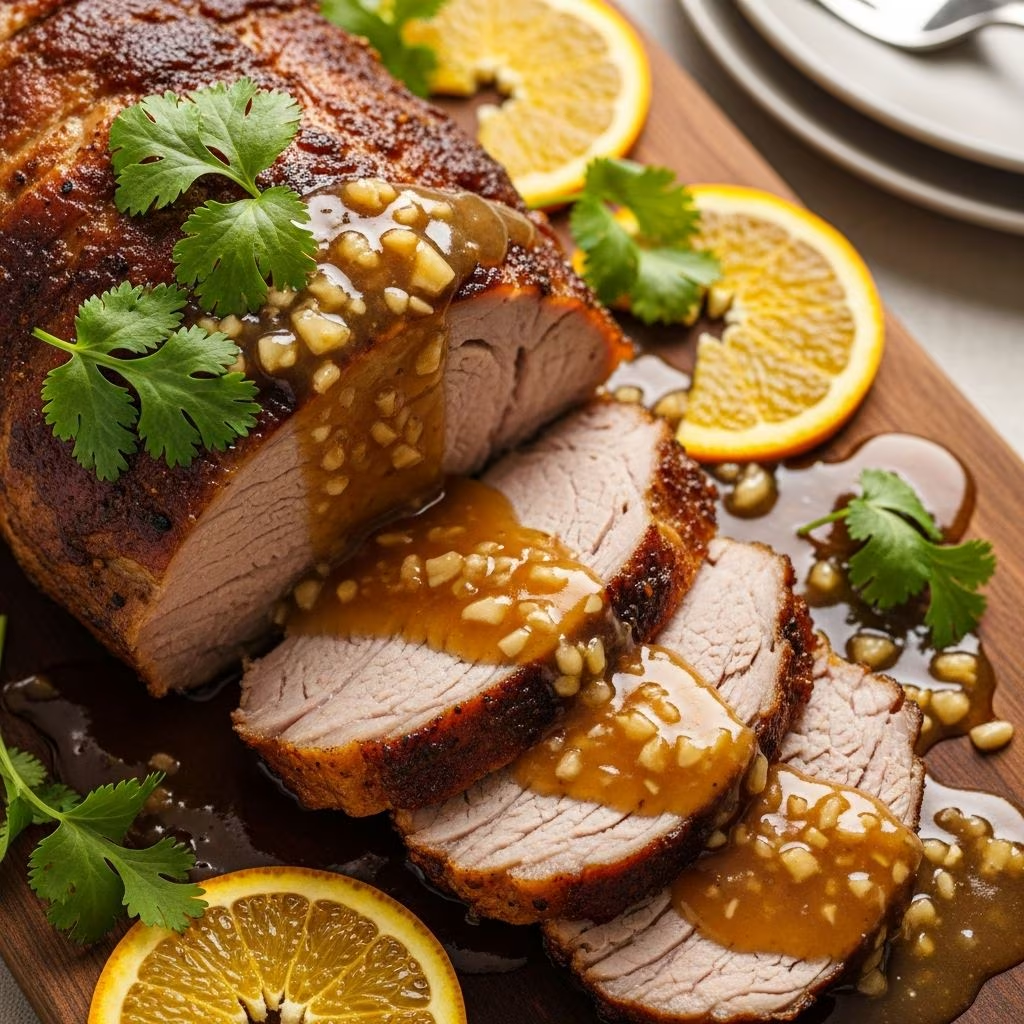
Use a sharp carving knife and slice the pork against the grain, which shortens the muscle fibers and creates more tender pieces. Arrange sliced pork on a serving platter and drizzle with the warm pan gravy, or serve the gravy separately in a small bowl for guests to apply as desired.
Complementary Side Dishes and Serving Suggestions
Mojo pork pairs beautifully with traditional Caribbean and Latin American sides. Consider serving with black beans and rice, which provide earthy, nutty notes that balance the citrus brightness of the pork. A fresh pineapple salsa adds tropical sweetness and additional acidity that complements the mojo flavors. Cuban-style green salad with avocado and citrus vinaigrette rounds out the meal with fresh vegetables and light acidity.
For a more contemporary presentation, serve alongside cilantro-lime rice, roasted root vegetables, or a simple green salad dressed with lime vinaigrette. The key to successful pairing involves choosing sides that either echo the citrus and herb flavors of the mojo marinade or provide contrasting textures and flavors that round out the meal.
Storage and Reheating Guidelines
Leftover mojo pork maintains quality for up to 4 days when properly stored in an airtight container in the refrigerator. The flavor actually deepens during storage as the mojo marinade continues to infuse into the meat. Reheat gently in a low oven (300°F) covered with foil until warmed through, approximately 15 to 20 minutes. Alternatively, slice the cold pork and serve at room temperature with room-temperature or chilled pan gravy.
Leftover pork transforms beautifully into other dishes: shred it for Cuban sandwiches, chop it for tacos, or use it as a protein in salads or grain bowls. The versatility of mojo pork makes it an excellent choice for meal preparation and entertaining.
Frequently Asked Questions
What size pork roast should I prepare for a specific number of guests?
Plan for approximately 6 to 8 ounces of pork per person before cooking. A 4-pound pork shoulder serves 6 to 8 people generously when accompanied by substantial sides. For smaller groups, a 2.5 to 3-pound pork shoulder serves 4 to 5 people adequately.
Can I prepare mojo pork in a slow cooker instead of an oven?
Yes, slow cooker preparation is possible and produces tender results. Brown the pork first in a hot skillet to develop a crust, then transfer to the slow cooker with reserved marinade. Cook on high for 6 to 7 hours or low for 8 to 10 hours until the meat reaches 160°F internally. However, slow cooking prevents crust development and produces different textural results compared to traditional oven roasting.
Should I use fresh or dried herbs in the mojo marinade?
Fresh herbs provide superior flavor and are strongly recommended, but dried herbs may substitute in emergencies. Use approximately one-third the quantity of dried herbs compared to fresh, as dried herbs are more concentrated. Add dried herbs early during marinade preparation to allow time for rehydration and flavor release.
How far in advance can I prepare the mojo marinade?
Prepare the mojo marinade up to 48 hours in advance and store covered in the refrigerator. The flavors do not develop fully in the marinade alone; development occurs when the marinade contacts the pork. Therefore, prepare the marinade and immediately combine it with the pork for optimal results.
What if my pan gravy is too thin or too thick?
If gravy is too thin, continue simmering over medium heat to evaporate excess moisture. If gravy is too thick, whisk in additional stock or water one tablespoon at a time until desired consistency is achieved. Never add flour or cornstarch directly without first creating a slurry with cold liquid to prevent lumping.
Troubleshooting Common Issues
Dry Pork: Pork becomes dry from overcooking past the 160°F mark. Use an accurate meat thermometer and remove the roast immediately upon reaching target temperature. Resting is crucial; never skip this step.
Bland Flavor: Insufficient marinating time or inadequate salt content produces bland results. Ensure marinating extends minimum 12 hours, and taste the marinade before adding pork—it should taste properly seasoned and flavorful.
Tough Exterior: Oven temperature that’s too high creates a thick, tough crust. Ensure oven temperature is accurate using an oven thermometer, as many home ovens run hotter than displayed settings.
Conclusion
Mojo pork roast with pan gravy represents an accessible yet impressive dish that delivers restaurant-quality results at home. By understanding the role of each marinade ingredient, selecting appropriate pork cuts, and mastering the roasting technique, any cook can create a stunning centerpiece that transports diners to the vibrant flavors of the Caribbean. The addition of a rich pan gravy elevates the dish from simple to sophisticated, while leftover versatility ensures this recipe earns regular rotation in home dinner menus.
References
- The Maillard Reaction: A Chemical Perspective — Institute of Food Technologists. 2024. https://www.ift.org/
- Safe Internal Temperatures for Pork Products — United States Department of Agriculture Food Safety and Inspection Service. 2024. https://www.fsis.usda.gov/food-safety/safe-food-handling-and-preparation/meat/pork-products-safely
- Protein Denaturation and Meat Cookery — Journal of Culinary Science & Technology. 2023. https://www.tandfonline.com/toc/rcst20/current
- Caribbean Cuisines and Traditional Cooking Methods — Smithsonian Folklife Festival Documentation. 2023. https://www.si.edu/
- Citric Acid in Food Preparation and Meat Tenderization — Food Chemistry Research Database. 2024. https://www.elsevier.com/books/food-chemistry/carocho/978-0-12-819950-6