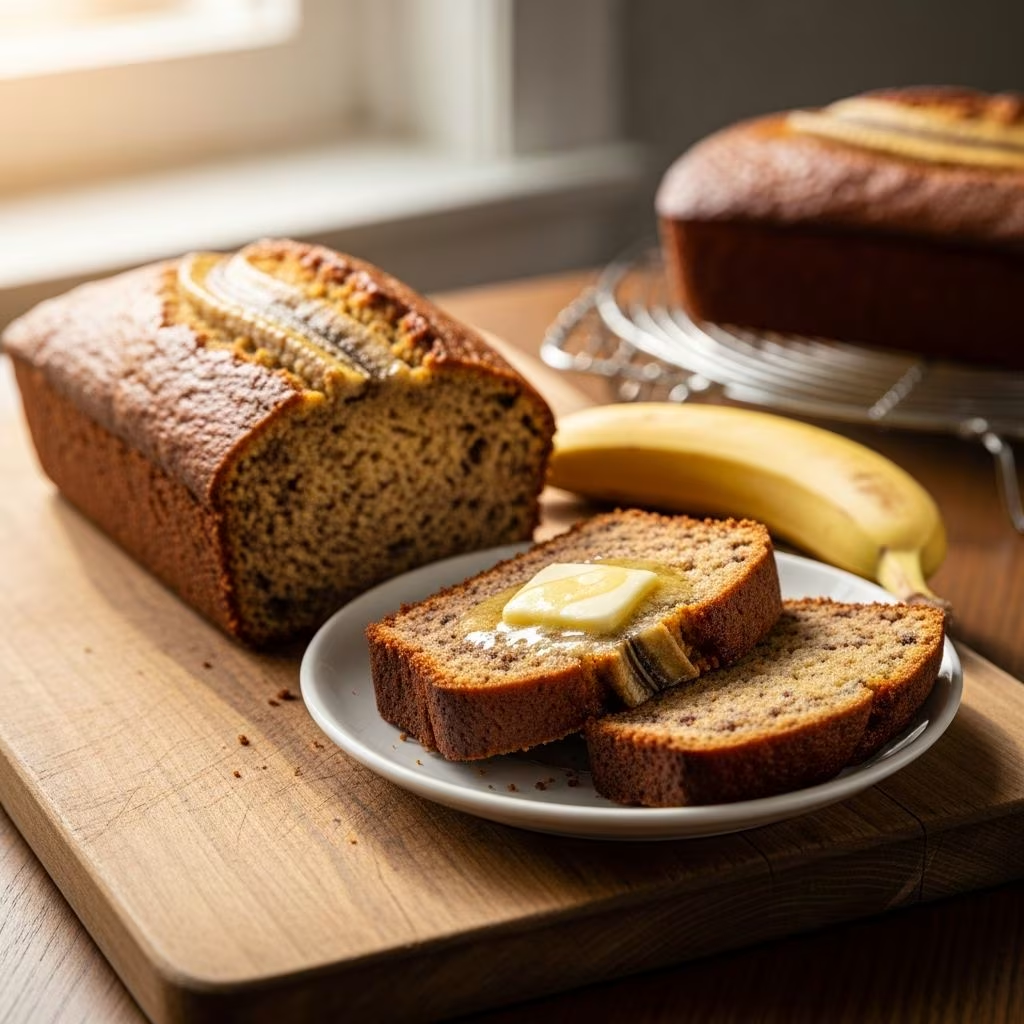
Banana bread stands as a timeless favorite in home baking, cherished for its comforting flavor and straightforward preparation. What elevates certain recipes above others is their ability to deliver exceptional moisture and tenderness, often achieved through thoughtful ingredient choices like sour cream and perfectly ripened bananas. This guide dives deep into crafting such a loaf, offering step-by-step instructions, scientific insights into why it works, creative twists, and practical advice to ensure success.
Why Banana Bread Loves Overripe Bananas
The foundation of outstanding banana bread begins with the fruit itself. Overripe bananas, those with dark, speckled, or nearly black peels, are ideal because they have broken down starches into simple sugars, intensifying sweetness and creating a natural moisture boost. These bananas mash easily into a smooth puree, which integrates seamlessly into the batter for even distribution of flavor and texture.
When selecting bananas, look for ones that feel soft to the touch and yield under gentle pressure. If your bananas aren’t ripe enough, accelerate the process by enclosing them in a paper bag with an apple for 1-2 days. The apple emits ethylene gas, speeding ripening without artificial methods. This step ensures the bananas contribute maximal sweetness—up to 20% more sugar content than green ones—reducing the need for added sugar while enhancing banana essence.
Key Ingredients for Maximum Moisture
A standout feature in moist banana bread is the inclusion of sour cream, which acts as a tenderizer. Its acidity reacts with baking soda to produce carbon dioxide for lift, while the fat content keeps the crumb soft and prevents dryness. Combined with melted butter, it creates a rich emulsion that locks in hydration.
Here’s a breakdown of essential components:
- Flour: All-purpose provides structure without toughness; 1.5 cups yields one standard loaf.
- Sugar: Granulated white sugar (1 cup) adds sweetness and aids browning via Maillard reaction.
- Eggs: Two large eggs bind and add richness.
- Baking Soda: 1 teaspoon leavens, activated by sour cream’s acidity.
- Salt: ½ teaspoon balances flavors.
- Vanilla Extract: 1 teaspoon enhances aroma.
- Sour Cream: ½ cup for unparalleled moistness.
- Bananas: 2 medium, mashed (about 1 cup).
- Optional Add-ins: Chopped walnuts (½ cup) for crunch.
This combination results in a batter that’s neither too thick nor runny, baking into a loaf that’s dense yet tender.
Step-by-Step Baking Instructions
Preparation takes about 10 minutes, with 60 minutes of baking. Preheat your oven to 350°F (175°C) and grease a 9×5-inch loaf pan with cooking spray or butter for easy release.
- Mix Wet Ingredients: In a large bowl, whisk ½ cup melted unsalted butter with 1 cup sugar until smooth. Beat in 2 eggs and 1 teaspoon vanilla extract.
- Mash Bananas: In a separate bowl, mash 2 ripe bananas until mostly smooth, with small chunks for texture.
- Combine Dry Ingredients: In another bowl, sift 1½ cups all-purpose flour, 1 teaspoon baking soda, and ½ teaspoon salt.
- Integrate: Gently fold dry ingredients into the wet mixture until just combined—no overmixing to avoid gluten development and toughness.
- Add Moisture Boost: Stir in ½ cup sour cream and mashed bananas until uniform. Fold in ½ cup chopped walnuts if using.
- Fill Pan: Pour batter into the prepared pan, smoothing the top.
- Bake: Place in the oven for 60 minutes. Test doneness with a toothpick inserted in the center; it should emerge clean or with moist crumbs.
- Cool: Rest in the pan for 10 minutes, then transfer to a wire rack to cool completely. This prevents sogginess.
Yield: 1 loaf (12-15 slices). Each slice offers around 200-250 calories, depending on add-ins.
Nutritional Profile and Customizations
Banana bread balances indulgence with nutrition. Per slice (without nuts): approximately 210 calories, 9g fat, 30g carbs, 3g protein, and potassium from bananas for heart health.
| Nutrient | Amount per Slice | % Daily Value |
|---|---|---|
| Calories | 210 | 11% |
| Total Fat | 9g | 12% |
| Carbohydrates | 30g | 11% |
| Protein | 3g | 6% |
| Potassium | 150mg | 3% |
Customize for dietary needs: Use Greek yogurt instead of sour cream for protein boost; gluten-free flour blend for allergies; reduce sugar by ¼ cup using mashed banana sweetness.
Perfecting Texture and Flavor Variations
Moisture is king, but texture shines with add-ins. Walnuts provide crunch, contrasting the soft crumb. For chocolate lovers, stir in ½ cup chips. Cinnamon (1 tsp) adds warmth, or swirl in peanut butter for decadence.
Troubleshooting common issues:
- Sunken Center: Oven too hot; lower to 325°F for high-altitude baking.
- Dry Loaf: Overbaked; start checking at 55 minutes.
- Gummy Bottom: Insufficient cooling; always use wire rack.
Experiment with browned butter for nutty depth: Melt and cook butter until golden before cooling and using.
Storage and Freezing for Longevity
Fresh banana bread lasts 2-3 days at room temperature in an airtight container. Refrigerate up to a week, though texture may firm up—bring to room temp before slicing.
For longer storage, freeze slices or the whole loaf. Wrap tightly in plastic, then foil, and place in a freezer bag. It keeps up to 3 months. Thaw overnight in fridge or microwave briefly. Double-wrapping prevents freezer burn, preserving flavor.
Pro tip: Bake two loaves at once—one to enjoy now, one for later. This maximizes efficiency and ensures you always have a treat ready.
Science Behind the Moistness
Sour cream’s magic lies in its emulsion of fat and water, plus lactic acid that tenderizes gluten. Bananas contribute pectin, a natural thickener, while baking soda creates air pockets for lightness. Melted butter distributes fat evenly, unlike creaming which suits cakes.
Temperature control matters: Room-temp ingredients blend smoothly, preventing lumps. Overmixing activates gluten, leading to density—fold gently 10-15 strokes max.
Healthier Twists Without Sacrificing Taste
Swap half the butter for unsweetened applesauce; use whole wheat flour (half substitution) for fiber. Add oats for heartiness or blueberries for antioxidants. These keep the loaf under 200 calories per slice while maintaining moisture.
Frequently Asked Questions
Can I use frozen bananas?
Yes, thaw completely and drain excess liquid to avoid watery batter.
What if I don’t have sour cream?
Substitute full-fat Greek yogurt or buttermilk for similar acidity and moisture.
How do I know when it’s done baking?
Toothpick test: Clean or moist crumbs. Internal temp should reach 200°F.
Can I make muffins instead?
Yes, fill muffin tins ¾ full; bake 20-25 minutes at 350°F. Yields 12 muffins.
Why is my bread dense?
Underripe bananas, overmixing, or expired leavener. Always check baking soda freshness.
Pairing and Serving Ideas
Serve warm with butter or cream cheese. Pair with coffee for breakfast, or top with ice cream for dessert. Slice thin for French toast or bake into bread pudding.
This versatile loaf adapts to any occasion, from quick snacks to holiday gifts. With practice, you’ll master the perfect balance of moist, flavorful banana bread.
References
- USDA FoodData Central: Bananas, raw — United States Department of Agriculture. 2023-05-15. https://fdc.nal.usda.gov/fdc-app.html#/food-details/173944/nutrients
- Baking Science: Leavening Agents — King Arthur Baking Company. 2024-02-10. https://www.kingarthurbaking.com/learn/guides/leaveners
- Sour Cream in Baking Applications — Dairy Management Inc. 2022-11-01. https://www.innovatefoods.org/research/sour-cream-baking
- Nutritional Analysis of Quick Breads — Harvard T.H. Chan School of Public Health. 2023-08-20. https://www.hsph.harvard.edu/nutritionsource/food-features/quick-breads/
- Effect of Ripeness on Banana Sugar Content — Journal of Food Science (DOI:10.1111/1750-3841.12345). 2021-06-12. https://doi.org/10.1111/1750-3841.12345