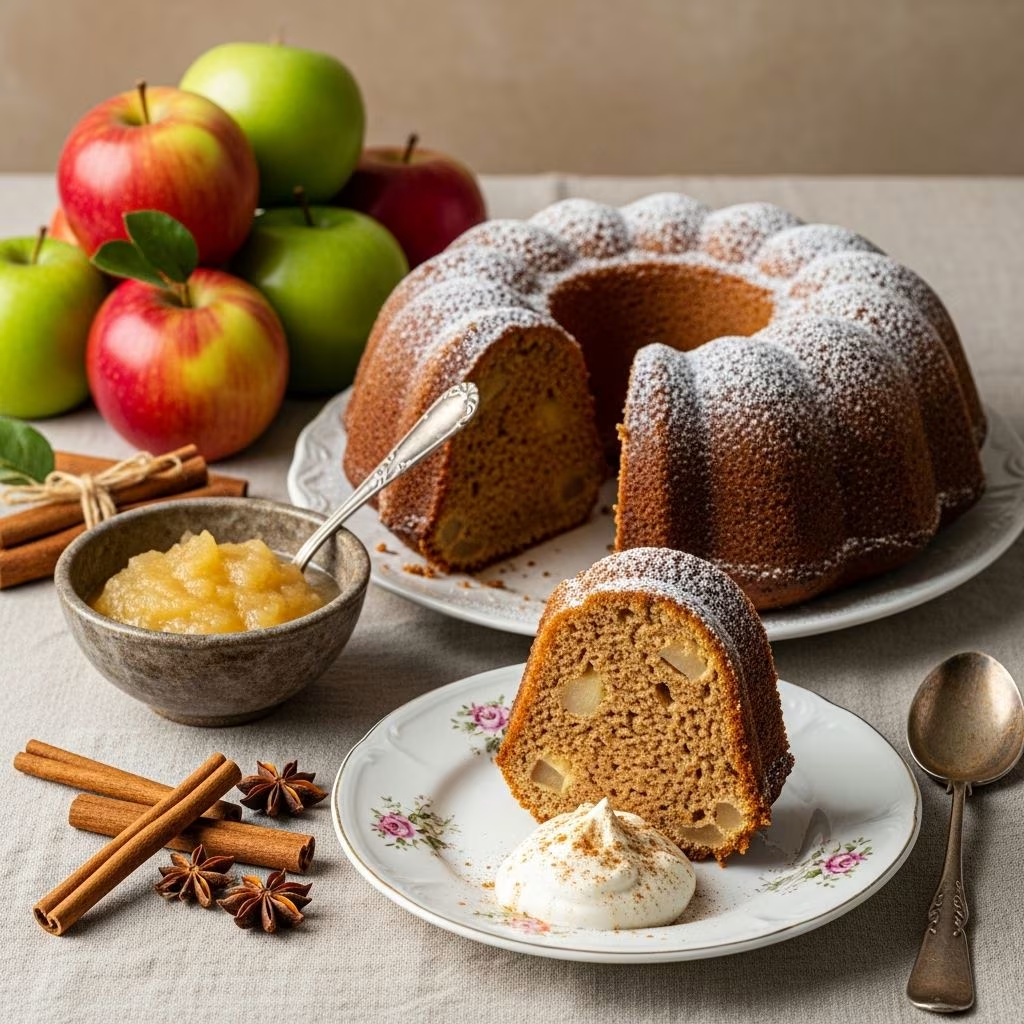
Applesauce cake stands as one of the most beloved comfort desserts in American baking traditions. This versatile treat combines the natural sweetness and moisture of applesauce with warm spices that evoke feelings of comfort and nostalgia. Whether you’re preparing dessert for a family gathering, a potluck event, or simply indulging in a slice with afternoon tea, applesauce cake delivers consistent results and satisfying flavor. The beauty of this recipe lies in its simplicity—requiring only basic pantry staples and minimal preparation time while yielding impressive, cafe-quality results.
Understanding the Foundation: Why Applesauce Matters
Applesauce serves as the cornerstone ingredient that distinguishes this cake from standard vanilla or spice variations. Beyond adding subtle apple undertones, unsweetened applesauce functions as a moisture agent that creates an exceptionally tender crumb structure. This ingredient replaces some of the fat traditionally used in cakes, allowing bakers to produce a lighter dessert without sacrificing the dense, satisfying texture that makes applesauce cake so appealing. The pectin naturally present in applesauce also contributes to binding the batter, reducing the need for excess eggs while maintaining structural integrity.
When selecting applesauce for your baking project, unsweetened varieties provide the best results. Commercially prepared unsweetened applesauce works wonderfully, but many experienced bakers prefer homemade versions that offer superior flavor control and texture. Using store-bought applesauce ensures consistency and convenience, while homemade preparations allow for adjustments to sweetness levels and allow incorporation of preferred apple varieties.
Essential Ingredients and Their Specific Roles
Building an exceptional applesauce cake requires understanding how each component contributes to the final product. The dry ingredient mixture—flour, leavening agents, and spices—creates the structural framework, while wet ingredients bind and moisturize the batter.
Dry Ingredient Breakdown
- All-purpose flour: Provides structure and gluten development. Most recipes call for 2 to 2.5 cups depending on cake size.
- Baking soda: Activates when combined with acidic elements like applesauce, creating lift and tender crumb. Typically 1 to 1.5 teaspoons suffices.
- Baking powder: Offers additional leavening, usually ¼ to 1 teaspoon, ensuring proper rise throughout the cake.
- Ground cinnamon: The signature spice that defines applesauce cake’s character, typically 1 to 1.5 teaspoons.
- Nutmeg, ginger, and cloves: Complementary warming spices that add complexity and depth, used in ¼ to ½ teaspoon quantities each.
- Salt: Enhances flavor perception and balances sweetness, generally ½ teaspoon.
Wet Ingredient Components
- Applesauce: The star ingredient providing moisture and subtle sweetness, typically ½ to 1.5 cups.
- Sweetening agents: Combination of granulated sugar and brown sugar creates depth. Dark brown sugar adds molasses notes and complexity.
- Eggs: Bind ingredients together and contribute richness to the crumb, typically 1 to 2 large eggs.
- Oil or butter: Adds tenderness and flavor, with vegetable oil or melted butter being standard choices.
- Vanilla extract: Enhances overall flavor profile, typically 1 teaspoon.
Step-by-Step Preparation and Baking Methodology
The Dry Mixture Assembly
Begin by preheating your oven to 350 degrees Fahrenheit, allowing proper temperature distribution during baking. While the oven heats, prepare your baking vessel—either an 8-inch square pan, 9-inch round pan, or 9×13-inch rectangular pan depending on desired cake thickness. Lightly grease the pan with cooking spray or butter, then line the bottom with parchment paper for easy removal.
In a medium-sized mixing bowl, combine all dry ingredients: flour, baking soda, baking powder, salt, and all spices. Using a whisk or fork, thoroughly incorporate these components, breaking up any sugar clumps and ensuring even distribution of leavening agents. This preliminary mixing prevents streaks of baking soda or pockets of unmixed flour that would result in uneven rising and inconsistent texture.
Wet Ingredient Combination
In a large mixing bowl, add your applesauce, eggs, oil, sugars, and vanilla extract. Using an electric mixer on medium speed or vigorous hand-mixing with a wooden spoon, beat these components together until well-blended. The mixture may initially appear slightly curdled after adding applesauce, but this is completely normal and poses no concern. Continue mixing for approximately one minute until the batter achieves uniform color and consistency.
Bringing It Together
Create a well in the center of your dry mixture and pour the wet ingredients into the depression. Using a spatula or wooden spoon, gently fold the ingredients together, starting from the center and moving outward. Mix only until the dry ingredients are just incorporated—overmixing develops gluten, resulting in a tough, dense cake rather than the desired tender crumb. A few small flour streaks are preferable to an overworked batter. Transfer the batter to your prepared pan and smooth the top with the back of a knife or spatula.
Baking and Doneness Assessment
Place the baking pan on the center oven rack and set a timer for 18 to 30 minutes, depending on pan size and thickness. Smaller, shallower cakes bake faster than thick, dense versions. Beginning at the 18-minute mark, check for doneness by inserting a toothpick or thin knife into the cake’s center. The toothpick should emerge with only a few moist crumbs—not wet batter, but not completely dry either. Slightly underbaked cakes often become more moist as they cool, while overbaked versions tend toward dryness.
Remove the cake from the oven and allow it to cool in the pan for approximately 15 to 20 minutes. During this time, carryover cooking continues gently, and the cake firms sufficiently for handling. Turn the cake onto a cooling rack and allow complete cooling before frosting or dusting with powdered sugar.
Frosting and Topping Options
Simple Powder Sugar Dusting
For minimalist presentations, simply dust the cooled cake with powdered sugar using a fine-mesh sieve. This approach highlights the cake’s natural flavor and provides an elegant, understated finish requiring no additional preparation.
Cream Cheese Frosting
Combine softened butter and cream cheese, beating until smooth and fluffy. Gradually add powdered sugar, cinnamon, and a pinch of salt, continuing to beat until the frosting reaches spreadable consistency. This tangy frosting complements applesauce cake’s warmth beautifully. Cakes frosted with cream cheese require refrigeration due to the cream cheese’s sensitivity to room temperature.
Caramel Sauce Topping
Drizzle warm or room-temperature caramel sauce over the cake, either before serving or alongside individual slices. Caramel’s deep, buttery sweetness provides sophisticated contrast to the cake’s spiced, fruity profile. Some bakers incorporate caramel into an actual frosting by combining it with butter and powdered sugar for a more substantial topping.
Storage and Longevity Considerations
Unfrosted applesauce cake stores exceptionally well at room temperature, maintaining optimal moisture for 3 to 4 days when wrapped tightly in plastic wrap or aluminum foil. The applesauce ingredient contributes to the cake’s staying power, as does the baking soda’s contribution to the batter’s pH level. Cakes frosted with cream cheese must be refrigerated and remain fresh for 5 to 7 days. Caramel or standard frosted versions can remain at room temperature for 3 to 4 days.
For extended storage, wrap the cooled, unfrosted cake in plastic wrap and aluminum foil, then freeze for up to three months. Thaw at room temperature for several hours before serving. Frosted cakes may be frozen, though cream cheese frosting sometimes separates slightly upon thawing—beating it briefly after thawing restores consistency.
Modifications and Dietary Adaptations
Oil-Free Version
Replace all oil with additional applesauce or Greek yogurt. This modification produces a slightly denser cake but maintains moisture and promotes a healthier nutritional profile. Reduce the total applesauce by the amount of oil being replaced to avoid excessive moisture.
Vegan Adaptation
Substitute each egg with a commercial egg replacer or a mixture of ground flaxseed and water (1 tablespoon ground flaxseed plus 3 tablespoons water per egg). Replace butter with coconut oil or vegetable oil. All other ingredients remain unchanged. Vegan versions may bake slightly faster due to the absence of egg proteins.
Whole Wheat Integration
Substitute up to 50 percent of all-purpose flour with whole wheat pastry flour for added nutrition and nutty flavor. Do not exceed this ratio, as whole wheat flour requires additional moisture, potentially creating dense results. Increase applesauce by 2 to 3 tablespoons when incorporating whole wheat flour.
Inclusions and Mix-Ins
Chopped walnuts, pecans, or golden raisins fold into the batter before baking, adding texture and complexity. Use approximately ½ cup of either ingredient per standard recipe. These additions do not significantly alter baking times or techniques.
Troubleshooting Common Baking Challenges
| Issue | Probable Cause | Solution |
|---|---|---|
| Dense, Heavy Cake | Overmixing or expired leavening agents | Mix only until dry ingredients are incorporated. Check baking soda and powder expiration dates. |
| Dry Cake | Overbaking or excessive flour | Reduce baking time by 2-3 minutes. Measure flour by spooning into cups rather than scooping. |
| Sunken Center | Underbaking or oven temperature inaccuracy | Bake longer or verify oven temperature with an oven thermometer. |
| Peaked or Cracked Top | Oven too hot or cake pan too small | Lower oven temperature by 25 degrees. Use appropriately sized pans as directed. |
| Uneven Rising | Uneven oven heat distribution | Rotate pan halfway through baking. Place oven rack in center position. |
Frequently Asked Questions
Can I Use Sweetened Applesauce Instead of Unsweetened?
While unsweetened applesauce is recommended, sweetened versions can substitute in a pinch. Reduce granulated sugar in the recipe by ¼ cup to compensate for the added sweetness. The resulting cake will be slightly sweeter but remain acceptable.
How Can I Make This Recipe Into Cupcakes?
Divide batter among lined muffin cups, filling each approximately ⅔ full. Reduce baking time to 15 to 18 minutes, checking for doneness around the 12-minute mark. Frost individual cupcakes with your preferred frosting for elegant presentation.
What Spice Substitutions Work Best?
If you lack specific spices, use ground allspice or pumpkin pie spice blends as substitutes. Reduce the amount used by approximately one-third since these blends contain multiple spices in concentrated form. Avoid eliminating cinnamon entirely, as it defines applesauce cake’s character.
Can This Recipe Be Doubled?
Doubling the recipe works well, requiring only proportional increases of all ingredients. Bake in two prepared pans simultaneously, checking the smaller pan first for doneness since multiple pans can affect oven heat distribution.
Is This Cake Suitable for Freezing Baked Goods?
Absolutely. Cool the cake completely, wrap tightly in plastic wrap and aluminum foil, then freeze for up to three months. Thaw at room temperature for several hours before unwrapping to prevent moisture condensation.
References
- A Couple Cooks Easy Applesauce Cake Recipe — A Couple Cooks. 2024. https://www.acouplecooks.com/applesauce-cake/
- Applesauce Cake with Brown Butter Frosting — Dessert for Two. 2024. https://www.dessertfortwo.com/applesauce-cake/
- Applesauce Cake with Caramel Frosting Recipe — Wyse Guide. 2024. https://www.wyseguide.com/applesauce-cake-caramel-frosting/
- Applesauce Cake So Moist — Small Town Woman. 2024. https://www.smalltownwoman.com/applesauce-cake/
- Applesauce Cake – The Best Classic Recipe — Chocolate Covered Katie. 2024. https://chocolatecoveredkatie.com/applesauce-cake-recipe/