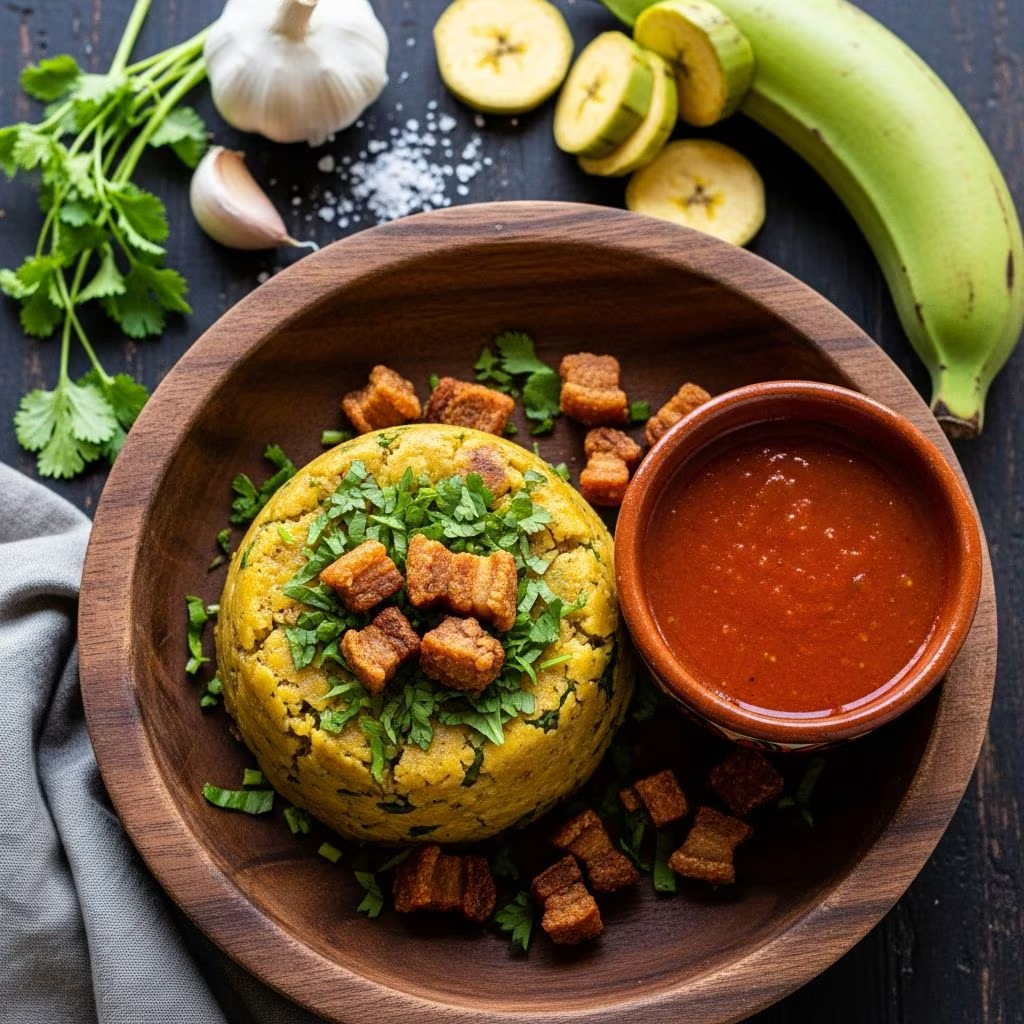
Mofongo stands as one of Puerto Rico’s most cherished culinary creations, a versatile dish crafted from green plantains that embodies the island’s vibrant food heritage. This mashed delight, often infused with garlic and crispy pork elements, serves as both a hearty side and a flavorful base for proteins.
The Roots and Evolution of Mofongo
Mofongo traces its beginnings to a fusion of indigenous Taíno practices and African influences brought by enslaved people from regions like Angola. The Taíno pounded starchy roots in stone mortars called pilones, creating dough-like mixtures, while African fufu involved mashing plantains or yams with fats for texture. Spanish colonists introduced sofrito—a sautéed blend of onions, garlic, herbs, and peppers—that enriched these foundations, transforming them into the mofongo known today.
Green plantains, abundant in Puerto Rico, form the core, distinguishing mofongo from sweeter ripe versions used elsewhere. Over centuries, it evolved from a simple staple to a canvas for creativity, appearing in homes, street stalls, and upscale restaurants across the Caribbean diaspora.
Core Ingredients That Define Authentic Mofongo
At its heart, mofongo relies on a handful of staple items, each contributing distinct flavor and texture.
- Green Plantains: Unripe for firmness; they hold shape when fried and mashed.
- Chicharrones or Pork Rinds: Provide crunch and savory depth; bacon substitutes for vegetarian options.
- Garlic: Fresh cloves smashed for pungent aroma.
- Cooking Fat: Oil, butter, or lard for frying and binding.
- Salt: Enhances all flavors.
Variations incorporate sofrito, broth, or spices, but these essentials ensure tradition.
Mastering the Traditional Preparation Method
Authentic mofongo demands precision in frying and mashing to achieve its signature bumpy texture—not a smooth puree.
- Peel and Slice Plantains: Select very green ones; cut into 1-inch thick rounds to promote even cooking.
- Initial Fry or Boil: Heat oil to 350°F and fry until golden, about 6-10 minutes, or boil in salted water for 10-15 minutes until fork-tender.
- Prepare Flavor Base: Crush garlic and chicharrones into coarse crumbs.
- Second Fry (Optional): Refry boiled plantains briefly for extra crispness, a technique from older recipes.
- Mash Together: Combine hot plantains with garlic, pork rinds, and fat using a mortar, pestle, or masher. Add broth if dry; form into balls or domes.
Serve immediately to preserve the pork’s crispiness.
Classic Ingredient Breakdown Table
| Component | Quantity (Serves 4) | Role |
|---|---|---|
| Green Plantains | 3-4 | Base starch |
| Chicharrones | 1 cup (4 oz) | Crunch and umami |
| Garlic Cloves | 4-5 | Aroma and bite |
| Oil/Butter | 2 cups for frying + 1 tbsp | Frying and binding |
| Salt | To taste | Seasoning |
Garlic Sauce: The Perfect Accompaniment
No mofongo is complete without a drizzle of ajo criollo or garlic sauce, amplifying its flavors.
- Blend 2 garlic cloves, 1/3 cup oil, green onion, lime juice, cumin seeds, red pepper flakes, and salt.
- Alternative: Mash garlic with olive oil, cilantro, and vinegar for freshness.
This zesty topping cuts through the richness, often served alongside stews.
Innovative Variations to Elevate Your Mofongo
While traditional reigns supreme, chefs experiment endlessly.
- Seafood Mofongo: Stuff with shrimp or calamari in tomato broth.
- Vegetarian Twist: Swap pork for bacon bits or mushrooms; use vegan butter.
- Trifongo: Mix plantains with cassava and yautía for varied texture.
- Double-Fried Style: Fry twice for superior crispness, per vintage methods.
- Stuffed Mofongo: Fill domes with chicken, beef, or vegetables.
These adaptations maintain essence while suiting modern palates.
Pairing Mofongo with Meats and Sides
Mofongo shines as a base for saucy proteins. Popular matches include:
- Pernil (roast pork) or lechón for fatty contrast.
- Pollo guisado (stewed chicken) or carne mechada (shredded beef).
- Seafood stews like camaron guisado.
- Simple broth for sopping up flavors.
Accompany with tostones, arroz con gandules, or ensalada de coditos for a full Puerto Rican feast.
Pro Tips for Mofongo Success
- Choose the greenest plantains; greener yields firmer results.
- Work quickly post-frying to retain heat for mashing.
- Moisten hands for shaping to prevent sticking.
- Double-fry for authenticity in some regions.
- Store leftovers loosely covered; reheat by frying to revive crunch.
Nutrition Snapshot and Dietary Notes
A single mofongo ball (about 150g) offers roughly 300 calories, high in potassium from plantains and protein from pork. It’s naturally gluten-free but watch sodium from chicharrones. Vegans can adapt fully plant-based.
Frequently Asked Questions (FAQs)
What makes plantains ideal for mofongo?
Green plantains are starchy and low-sugar, providing structure unlike sweet ripe bananas.
Can I make mofongo without frying?
Yes, boil then pan-sauté as in some recipes, reducing oil use.
How do I achieve the dome shape?
Pack into a small bowl or cup, then invert onto a plate.
Is mofongo spicy?
Traditionally not, but sauces can add heat via peppers.
What’s the difference between mofongo and tostones?
Tostones are twice-fried flat slices; mofongo mashes them into balls.
Why Mofongo Captures Hearts Globally
Its simplicity belies profound taste layers, bridging cultures and inviting personalization. From Puerto Rican tables to international menus, mofongo symbolizes resilience and flavor innovation.
References
- Mofongo with Garlic Sauce (Puerto Rican Plantains) — Steph Gaudreau. 2023. https://www.stephgaudreau.com/mofongo-garlic-sauce/
- Traditional Puerto Rican Mofongo (25 Minutes!) — Salima’s Kitchen. 2023. https://salimaskitchen.com/mofongo/
- A Brief History of Puerto Rico’s Beloved Mofongo — Smithsonian Magazine. 2021-05-27. https://www.smithsonianmag.com/travel/a-brief-history-of-puerto-ricos-beloved-mofongo-180979947/
- The Surprising Culinary History of a Humble Puerto Rican Favorite — Atlas Obscura. 2023. https://www.atlasobscura.com/articles/trifongo-recipe