When the demands of modern life leave little room for elaborate meal preparation, comfort food dishes that deliver both flavor and simplicity become invaluable additions to any home cook’s repertoire. One such dish that has gained significant popularity in recent years is Mississippi chicken spaghetti—a creative fusion that marries the beloved flavors of Mississippi pot roast with the universal appeal of pasta. This innovative take on comfort cooking transforms a traditional braised meat dish into a creamy, tangy pasta experience that requires minimal hands-on time yet produces maximum satisfaction.
Understanding the Mississippi Flavor Profile
The foundation of this dish rests upon the distinctive characteristics that make Mississippi pot roast a cherished Southern classic. The flavor combination centers on four primary taste dimensions: the savory depth of au jus gravy, the sharp tanginess of pepperoncini peppers, the herbaceous notes of ranch seasoning, and the rich mouthfeel contributed by generous amounts of butter and cream cheese. When these elements are introduced to tender chicken breast and combined with pasta, they create a sauce that clings to each strand, delivering a complex yet harmonious blend of flavors that appeals to both traditional comfort food enthusiasts and those seeking something slightly different from standard cream-based pasta dishes.
The acidity from the pepperoncini provides a crucial counterbalance to the richness of the butter and cream cheese, preventing the overall dish from becoming one-dimensional or overly heavy. This careful equilibrium of flavors explains why this particular combination has resonated with home cooks across various culinary backgrounds and regions.
Essential Ingredients and Their Functions
Creating this dish successfully requires understanding how each ingredient contributes to the final result. The primary protein—chicken breast—serves as a neutral canvas that absorbs and carries the surrounding flavors while providing the dish with substance and satisfaction. The choice of chicken breast over other cuts is deliberate, as this leaner portion becomes increasingly tender during the slow cooking process while remaining structurally intact for shredding.
The au jus mix packets, commonly found in grocery store seasoning aisles, deliver concentrated beef or pork flavoring along with necessary salt and umami depth. These packets eliminate the need for lengthy stock preparation or complex seasoning layering. Ranch seasoning introduces garlic, onion, and herbal notes that create additional complexity and make the dish recognizable even to those unfamiliar with Mississippi-inspired cuisine.
Butter functions as more than a mere flavoring agent in this recipe. Beyond its taste contribution, butter emulsifies with other ingredients to create a glossy, cohesive sauce that achieves the desired creamy texture without relying solely on cream cheese. The fat also facilitates the absorption and distribution of flavors throughout the cooking process.
Cream cheese, added during the final assembly stages, provides both richness and thickening properties. Its lower melting point compared to other cheeses allows it to integrate smoothly into the hot sauce without forming clumps or becoming grainy. Pepperoncini peppers contribute their signature vinegary bite along with a subtle heat that awakens the palate without overwhelming sensitive eaters.
The Slow Cooker Method: Simplicity Through Technology
The slow cooker preparation method represents one of the most significant advantages of this particular dish. The process begins with the simplest possible step: placing raw chicken breast directly into the crock pot without any preliminary browning or searing. This departure from classical cooking techniques might seem unusual, yet it reflects the modern evolution of comfort food cooking where convenience and accessibility take precedence without sacrificing quality.
Following the chicken placement, the au jus mix is sprinkled evenly across the meat. The ranch seasoning powder follows, coating the chicken with its aromatic blend. An entire stick of butter—typically divided between placing half on top of the chicken and half reserved for later incorporation—allows the cooking liquid to develop rich, savory undertones as the butter melts into the surrounding ingredients.
The pepperoncini peppers, along with their brine, are then distributed throughout the pot. The slight acidity of the brine works in conjunction with the peppers themselves to create the characteristic tanginess that defines this dish. The crock pot lid is then positioned, and the machine is set to work its transformative magic.
Cooking parameters typically range from two hours on high heat to four hours on low heat, depending on individual crock pot models and the thickness of the chicken breasts. The extended cooking time allows the chicken to reach complete tenderness while the flavors meld and intensify. Approximately thirty minutes before serving, or once the chicken has reached the desired tenderness, the meat is removed from the pot, shredded into manageable pieces, and returned to the cooking liquid.
The Critical Assembly Phase
The final assembly of this dish requires attention and sequential steps to achieve optimal results. Once the chicken has been shredded and reintroduced to the crock pot, the cream cheese is added directly to the hot liquid. The residual heat from the simmering mixture gradually softens and incorporates the cream cheese, creating a smooth, cohesive sauce as everything is stirred together.
Separately, spaghetti pasta is prepared according to package directions in a traditional pot of boiling salted water. Some cooks prefer to cook the pasta slightly less than the package recommends, accounting for the additional cooking that will occur when the hot pasta combines with the slow cooker mixture. The pasta water is reserved before draining—this starchy liquid becomes an essential final ingredient that adjusts the sauce consistency and helps the noodles achieve the ideal texture.
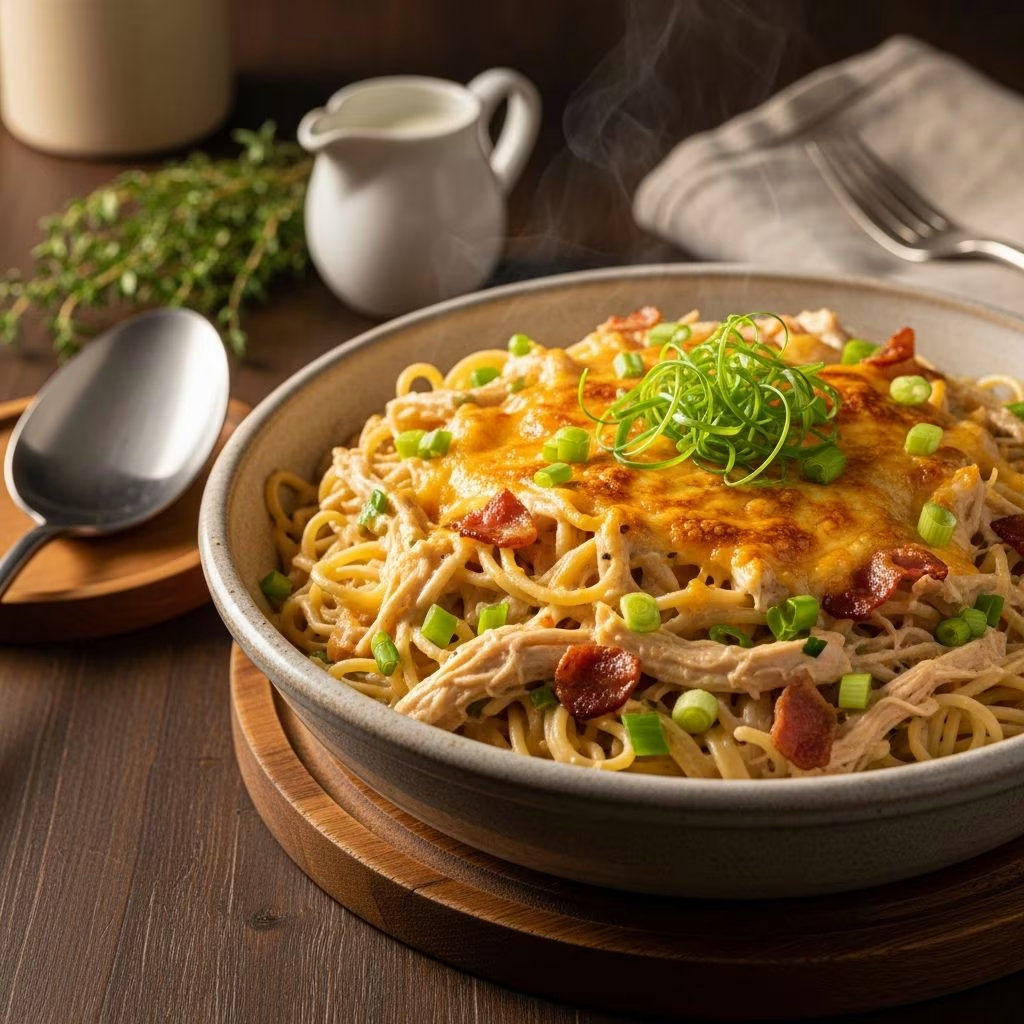
The drained pasta is then transferred to the crock pot, where it joins the chicken and sauce. A portion of the reserved pasta water is added gradually, allowing the cook to control the final consistency. The mixture is folded together gently, ensuring that the pasta becomes evenly coated with the creamy sauce without breaking the delicate strands.
Flavor Enhancement and Final Touches
Upon reaching the desired consistency, additional cheese can be incorporated according to personal preference. Many variations utilize mozzarella cheese, which melts slightly when stirred into the hot pasta mixture, adding another layer of creamy richness. Other cooks prefer to reserve cheese for individual serving bowls, allowing each diner to customize their portion.
Fresh garnishes applied immediately before serving can significantly elevate the finished dish. Sliced green onions or spring onion greens provide a fresh, slightly allium note that contrasts beautifully with the richness of the sauce. Freshly cracked black pepper adds visual interest and a subtle spice dimension. Some interpretations include fresh herbs such as parsley, which adds color and a bright flavor note that complements the tanginess of the pepperoncini.
Storage and Make-Ahead Considerations
One substantial advantage of this dish extends beyond the ease of preparation into the realm of storage and future meals. The completed Mississippi chicken spaghetti freezes exceptionally well, making it an ideal candidate for batch cooking and meal planning. The creamy sauce actually benefits from freezing and thawing, as the flavors continue to develop and intensify during storage.
For optimal results, the dish should be cooled to room temperature before being transferred to freezer-safe containers. When ready to enjoy frozen portions, gentle reheating on the stovetop over low to medium heat allows the sauce to return to its original consistency. A small amount of cream, milk, or pasta water can be added during reheating if the sauce has thickened excessively during storage.
Recipe Variations and Customization Options
The beauty of this dish lies in its adaptability to various dietary preferences and ingredient availabilities. Cooks who prefer reduced heat can simply decrease the quantity of pepperoncini peppers or their brine while maintaining the overall structure. Those seeking additional vegetables might incorporate drained artichoke hearts, sun-dried tomatoes, or spinach, which integrate seamlessly into the creamy sauce.
For individuals following dietary restrictions, this recipe accommodates modifications with surprising ease. Gluten-free pasta substitutes work equally well, absorbing the sauce just as effectively as traditional wheat-based noodles. Dairy-free cream cheese alternatives have improved significantly and can replace traditional cream cheese without dramatically altering the final result, though some adjustment to the quantity may be necessary to achieve the preferred consistency.
Equipment Considerations and Practical Tips
The size of the slow cooker used for this recipe matters considerably. A smaller four-quart slow cooker may not accommodate the full quantity of ingredients comfortably, while a larger six-quart model provides adequate space for the pasta to be folded in without excessive overflow or crowding. The shape of the slow cooker also influences cooking times slightly, with oval-shaped models distributing heat more evenly than round alternatives.
For those without access to a slow cooker, this recipe can be adapted to stovetop preparation. The chicken can be poached gently in simmering water with the au jus mix and seasonings for approximately twenty to thirty minutes until fully cooked through. The remainder of the preparation follows similar steps, with the final sauce creation occurring directly in the cooking pot.
Frequently Asked Questions
Can I use chicken thighs instead of chicken breast?
Yes, chicken thighs work well in this recipe and may even provide additional richness and flavor. However, reduce the cooking time slightly, as thighs become tender more quickly than breast meat. Check doneness at the one-and-a-half to two-hour mark rather than waiting the full recommended time.
What should I do if my sauce is too thin?
If the final sauce lacks the desired thickness, several options exist. A slurry made from cornstarch and cold water can be stirred in gradually while heating the mixture gently. Alternatively, allowing the crock pot to remain on high heat with the lid removed for fifteen to twenty minutes allows excess moisture to evaporate.
Can this dish be prepared without a slow cooker?
Absolutely. Poach chicken breast in simmering seasoned water for twenty to thirty minutes, then follow the remaining steps on the stovetop. Cook the pasta separately and combine as directed, adjusting sauce consistency as needed with reserved pasta water.
How long can leftovers be stored?
Refrigerated leftovers maintain quality for three to four days in airtight containers. Frozen portions remain suitable for up to three months. Thaw frozen portions overnight in the refrigerator before reheating gently on the stovetop.
Why This Dish Resonates with Modern Cooks
Mississippi chicken spaghetti has emerged as a favorite among modern home cooks for compelling reasons beyond mere novelty. The dish respects the reality of contemporary schedules by requiring minimal hands-on time while still delivering sophisticated, recognizable flavors. The ingredient list remains accessible, with most items readily available in standard grocery stores without specialty shopping required.
The versatility of this preparation allows it to function across various dining contexts—casual family weeknight dinners, potluck contributions, and even scaled-up versions for entertaining. The combination of familiar comfort food elements (pasta, creamy sauce, chicken) with the unexpected Mississippi flavor profile creates a dish that feels both comforting and interesting.
For those seeking to expand their cooking repertoire without investing substantial time or acquiring unusual ingredients, Mississippi chicken spaghetti offers an accessible entry point into more adventurous flavor combinations. The success of this dish typically translates to increased confidence and willingness to experiment further with fusion cuisine and unexpected ingredient pairings.
References
- AllRecipes Mississippi Chicken Spaghetti Recipe — AllRecipes. Accessed April 2026. https://www.allrecipes.com/mississippi-chicken-spaghetti-recipe-11785800
- Slow Cooker Food Safety Guidelines — United States Department of Agriculture Food Safety and Inspection Service. Updated 2024. https://www.fsis.usda.gov/food-safety/safe-food-handling-and-preparation/food-safety-basics/slow-cookers-and-food-safety
- Pasta Cooking and Starch Science — University of California Division of Agriculture and Natural Resources. 2023. https://ucanr.edu