The intersection of Japanese culinary tradition and modern cooking science has created one of the most compelling ways to prepare salmon. By leveraging the deep, savory qualities of miso paste, home cooks and professional chefs alike can achieve a level of flavor complexity that seems to require minimal technical skill. This comprehensive guide explores the multifaceted approach to creating miso-marinated salmon, breaking down the why behind the technique alongside practical implementation strategies.
Understanding Fermented Pastes in Modern Cooking
Miso represents a cornerstone of Japanese cuisine, created through the careful fermentation of soybeans, salt, and koji mold over extended periods. This ancient preservation method transformed into a fundamental ingredient that delivers profound umami characteristics—the fifth taste sensation that activates specific taste receptors on the tongue. Unlike salt alone, which creates simple saltiness, miso contributes layered savory notes alongside subtle sweetness and complexity that develops during the fermentation timeline.
The chemistry behind fermentation produces amino acids, particularly glutamates, which are the primary compounds responsible for umami perception. When these compounds encounter proteins like those found in salmon, they create flavor synergies that feel greater than their individual components. This is why miso-marinated preparations taste so much more developed than unadorned fish, even when the marinade application period remains relatively brief.
Varieties of Miso and Their Flavor Profiles
Not all miso pastes function identically in culinary applications. The fermentation duration, ingredient ratios, and production methods create distinct flavor categories that perform differently when paired with salmon.
- White Miso: The shortest-fermented variety, typically aged three to eight weeks, produces a pale color and sweeter, more delicate flavor profile. This type works excellently when you want the salmon’s natural qualities to remain prominent, with miso acting as a subtle enhancement rather than a dominant force.
- Yellow Miso: A moderate fermentation period creates a balanced flavor that bridges sweet and savory without overwhelming either direction. This represents an excellent starting point for those new to miso marinades, offering accessibility without sacrificing complexity.
- Red Miso: Extended aging of two to three years produces a deeper color and more assertive, saltier flavor with certain funky notes. This variety suits bold preparations and stands up well to rich side dishes or smoking applications.
- Barley Miso: Created with barley rather than exclusively soybeans, this variation offers a slightly lighter, more nuanced character with hints of earthiness that complement fish preparations beautifully.
Building Your Marinade Foundation
The basic structure of a miso marinade extends beyond paste alone. While miso provides the primary flavor vehicle, complementary ingredients unlock additional dimensions and improve the marinade’s ability to penetrate the fish’s surface.
Liquid Components: Incorporating a liquid base helps distribute the miso evenly and prevents the paste from sitting on the fish surface without penetrating. Sake, mirin, or water serve this purpose effectively. Sake, a fermented rice wine, adds subtle sweetness and alcohol that can help tenderize the fish. Mirin contributes a gloss-like finish and additional sweetness that caramelizes during cooking. Water remains the most neutral option when you want other flavors to dominate.
Secondary Flavor Elements: Ginger, garlic, and scallions add aromatic complexity that prevents the miso from becoming one-dimensional. A small quantity of these ingredients—approximately one tablespoon of minced ginger and one teaspoon of minced garlic per quarter cup of miso—provides noticeable enhancement without overshadowing the miso’s contribution.
Sweetness Modulation: While miso contains some inherent sweetness, especially lighter varieties, additional sweeteners create caramelization during the cooking process. A teaspoon of honey or agave into the marinade encourages browning on the fish’s surface, creating a flavorful crust through the Maillard reaction.
Preparation and Application Methods
How you apply the marinade significantly impacts the final result. The most effective approach involves creating a cohesive paste that adheres to the salmon’s surface rather than running off immediately.
Mixing Strategy: Combine your miso base with liquid components, stirring until you achieve a smooth consistency without lumps. If using whole spices rather than minced versions, strain them out after infusing for one to two hours, allowing their flavors to transfer without visible pieces remaining in the marinade.
Surface Application: Pat the salmon dry with paper towels before applying the marinade. Moisture on the fish’s surface prevents proper adhesion and dilutes the miso paste. Apply the marinade generously to the flesh side, spreading it in an even layer approximately one-quarter inch thick. The skin side requires minimal coverage since you’re primarily interested in flavoring the flesh.
Containment Vessels: Glass dishes or food-grade plastic containers work equally well for holding marinating fish. The container should be just large enough to hold the salmon without excessive empty space, which reduces oxidation and allows the marinade to maintain contact with the fish’s surface.
Timing and Temperature Considerations
The duration of marination significantly affects flavor intensity and final texture. Unlike acidic marinades that can overwhelm protein structure if left too long, miso’s enzymatic action operates on a gentler timeline.
| Marination Duration | Flavor Intensity | Best Applications | Texture Impact |
|---|---|---|---|
| 4-6 hours | Light to moderate | Delicate presentations, first-time preparations | Minimal change |
| 8-12 hours | Moderate to strong | Standard preparations, most recipes | Slight moisture loss |
| 16-24 hours | Strong to intense | Bold presentations, smoking applications | Noticeably firmer texture |
| Beyond 24 hours | Very intense | Advanced preparations only | Potential over-salting |
Refrigeration remains essential throughout the marinating period. Keeping the fish at forty degrees Fahrenheit or below prevents bacterial proliferation while allowing enzymatic action to proceed. Remove the salmon from refrigeration approximately fifteen minutes before cooking, allowing it to approach room temperature for more even heat distribution during cooking.
Cooking Methods for Miso-Marinated Salmon
Different cooking techniques yield distinct results when starting with miso-marinated fish. The miso paste’s sugars caramelize at varying rates depending on heat intensity and cooking method.
Oven Baking: Preheating your oven to four hundred twenty-five degrees Fahrenheit allows you to cook the salmon gently while encouraging the miso to develop a light brown crust. This method typically requires twelve to eighteen minutes depending on thickness, and provides reliable, consistent results. The dry heat of the oven caramelizes the miso without burning it, creating a slightly sweet, savory exterior.
Stovetop Searing: A well-heated cast-iron or stainless steel skillet can sear the miso-marinated salmon skin-side down first, developing browning through direct heat contact. After two to three minutes, flip the fish and reduce heat to medium, allowing the flesh side to cook through while the already-seared skin side remains protected from further browning.
Broiling: Positioning marinated salmon under a preheated broiler creates intense, direct heat that caramelizes the miso rapidly. Watch carefully to prevent burning, as broiler intensity varies significantly between ovens. This method typically requires six to ten minutes depending on fish thickness and broiler distance.
Smoking: Cold-smoking miso-marinated salmon before hot-smoking adds complexity without requiring traditional smoking equipment. The miso creates a protective barrier against the smoke’s harshest elements while adding savory depth.
Complementary Ingredients and Serving Strategies
While the miso marinade creates the foundation of flavor, surrounding ingredients elevate the complete plate experience. Consider these pairing principles when designing your preparation.
- Acidic Components: A small squeeze of fresh citrus—lime or lemon—brightens the miso’s richness and prevents the dish from feeling heavy. Apply this acid just before serving rather than during cooking to maintain its sharp character.
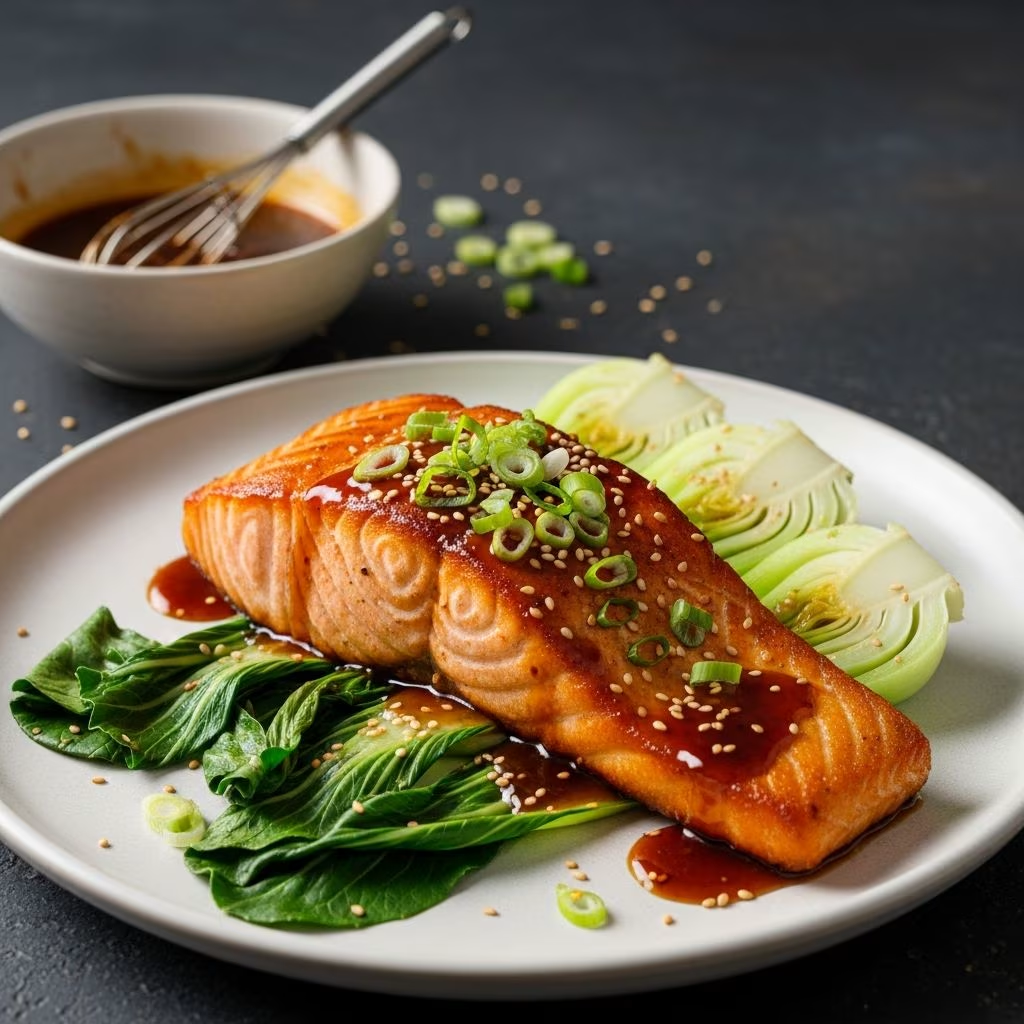
- Vegetable Pairings: Steamed or roasted asparagus, bok choy, or broccolini echo the umami qualities of the miso without competing for dominance. These vegetables benefit from the same cooking environment as the salmon.
- Grain Foundations: Jasmine rice, sushi rice, or quinoa absorb the miso-infused juices that accumulate as the salmon cooks. This prevents sauce waste while adding textural variety to the plate.
- Sauce Applications: A simple reduction of mirin and sake creates a glaze that can be drizzled around the salmon without diluting the miso crust you’ve carefully developed.
Common Challenges and Solutions
Over-Salting: Miso contains significant salt content. If your marinade tastes overly salty during preparation, reduce the miso quantity or increase liquid components proportionally. Remember that salt perception increases during cooking as moisture evaporates from the fish.
Burning During Cooking: If your oven temperature feels too high or cooking time too long, the miso crust may char excessively. Lower the oven temperature by twenty-five degrees and check the fish’s doneness more frequently. The fish interior should be opaque and flake easily when properly cooked, regardless of crust appearance.
Uneven Marination: Fish with varying thicknesses may marinate unevenly, with thinner sections becoming over-flavored while thicker portions remain under-marinated. Consider portioning fish into similar-sized pieces before marinating to ensure consistent results.
Make-Ahead Strategies and Storage
Preparing miso-marinated salmon in advance streamlines weeknight cooking. Combine the marinade components up to three days in advance, storing in an airtight container. Marinate the salmon itself up to twenty-four hours ahead, removing it from refrigeration thirty minutes before cooking for optimal results.
Leftover cooked salmon keeps well for three to four days refrigerated in an airtight container. Rather than reheating and drying out the fish, consider using it in cold applications like salads or grain bowls, where moisture retention matters less.
Frequently Asked Questions
- Can I use frozen salmon for this preparation?
- Yes, though thawing the salmon properly is essential. Place frozen salmon in the refrigerator overnight rather than using warm water or countertop thawing, which promotes bacterial growth. Once thawed, proceed with marinating as directed.
- What if I cannot find white miso specifically?
- Use whatever miso variety you can source, adjusting the marinade’s other components to balance flavor. Red miso requires less quantity due to its intensity; yellow miso works as a direct substitute for white miso in similar quantities.
- Does the skin remain on during marinating?
- Yes, keeping the skin attached protects the flesh from over-marinating while providing a structural container for the miso paste. The skin helps hold moisture during cooking, resulting in a moister final product.
- Can this marinade work with other fish varieties?
- Absolutely. White fish like halibut or cod responds well to miso marinades, though the cooking time may require adjustment based on thickness. Thinner fillets cook more quickly than salmon steaks.
- How far in advance can I apply the marinade?
- Most preparations reach their peak flavor intensity between eight and twenty-four hours. Beyond thirty-six hours, salt concentration becomes potentially overwhelming, though personal preference varies.
References
- Umami: Unlocking the Secrets of the Fifth Taste — University of California, San Diego, Department of Biomedical Sciences. https://www.ucsd.edu
- Fermentation and Food Safety Guidelines — United States Food and Drug Administration (FDA). https://www.fda.gov/food/foodborne-pathogens/fermentation-food-safety
- Japanese Miso: Fermentation Science and Culinary Applications — Journal of Food Science and Technology. 2023. https://doi.org/10.1007/s13197-023-05850-9
- Protein Chemistry in Fish and Seafood Preparation — Institute of Food Technologists. https://www.ift.org
- Maillard Reaction in Cooking: Chemistry and Flavor Development — Food Chemistry Journal. 2022. https://doi.org/10.1016/j.foodchem.2022.132891