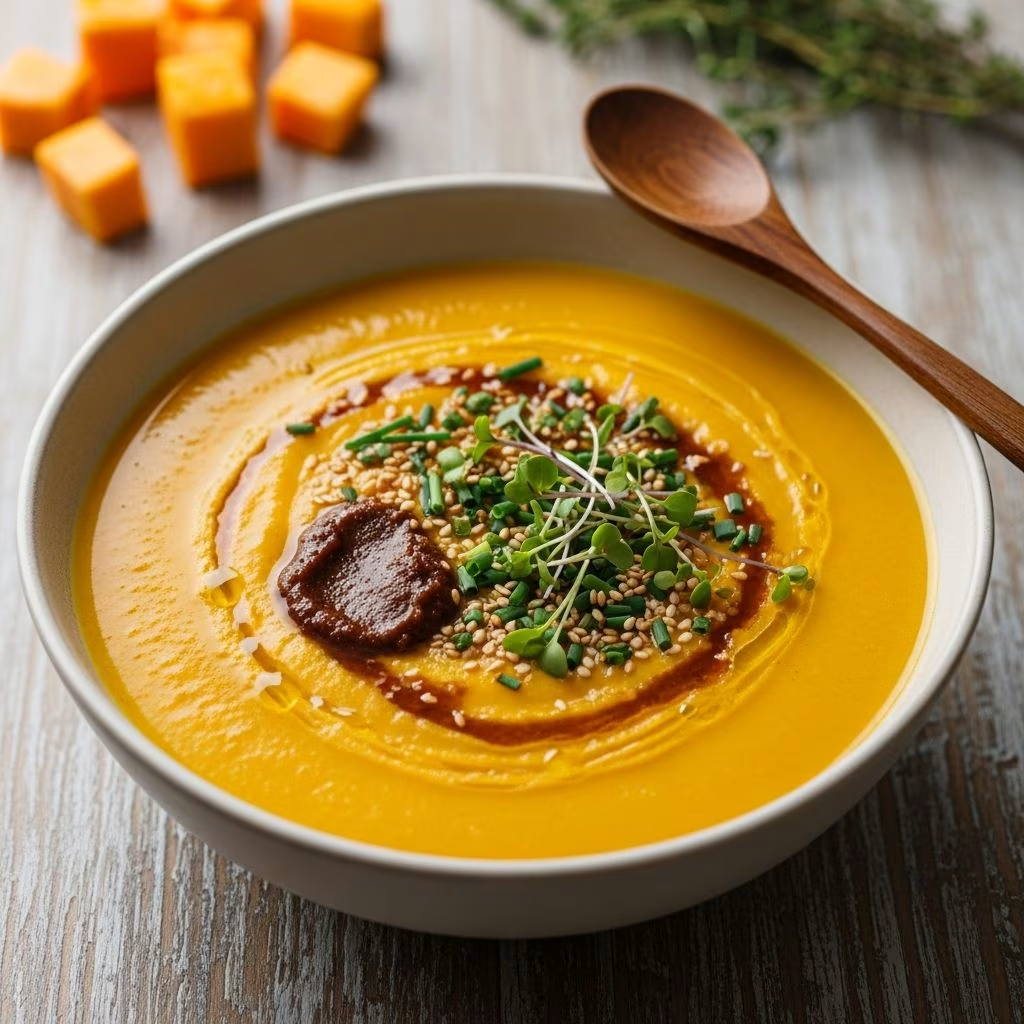
Transform humble butternut squash into a symphony of flavors with this miso-infused soup. The fermented paste delivers profound umami, while roasted squash provides natural sweetness and ginger adds a spicy kick. Perfect for chilly evenings, this recipe serves 4-6 and takes about 1.5 hours total.
Why Miso Makes This Soup Irresistible
Miso, a staple in Japanese cuisine, is fermented soybean paste rich in glutamates that amplify savory notes. Paired with the earthy caramelization of roasted butternut squash, it creates a depth far beyond traditional creamy soups. Ginger and citrus brighten the mix, preventing heaviness, while optional chili elements introduce heat for adventurous palates.
This dish bridges comfort food and gourmet appeal, drawing from Asian fusion trends. It’s naturally gluten-free (with tamari swaps if needed) and easily vegan. Nutrition per serving (approx.): 180 calories, 5g protein, 25g carbs, rich in vitamin A from squash.
Essential Ingredients for Authentic Flavor
Gather these pantry heroes and fresh produce for success:
- 1 large butternut squash (about 3 lbs), halved and seeded
- 1 medium yellow onion, finely chopped
- 4 garlic cloves, minced
- 1-inch fresh ginger knob, grated
- 1/4 cup white or light miso paste
- 4 cups vegetable or chicken broth
- 2 tbsp neutral oil (sesame or avocado for aroma)
- Juice of 1 lemon or lime
- Salt and black pepper to taste
Garnish essentials: Toasted sesame oil, fresh cilantro, scallions, chili oil or crisp, roasted squash seeds.
Pro tip: Choose firm, heavy squash with smooth skin for best texture. White miso keeps the soup light-colored and mild; red miso intensifies savoriness.
Step-by-Step Roasting and Simmering Guide
Follow these precise steps for silky results without advanced tools.
- Prep the squash: Preheat oven to 400°F (200°C). Brush squash halves with 1 tbsp oil, season with salt, and place cut-side down on a parchment-lined baking sheet. Roast 45-60 minutes until fork-tender and caramelized. Cool slightly, then scoop out 4 cups flesh.
- Build the base: In a large pot over medium heat, warm 1 tbsp oil. Sauté onion 5 minutes until translucent. Add garlic and ginger; cook 1-2 minutes until fragrant, avoiding browning.
- Incorporate miso: Stir in miso paste, blooming it for 1 minute to release umami without scorching.
- Simmer: Add roasted squash, broth, and a pinch of salt. Bring to a boil, then simmer 15 minutes for flavors to meld.
- Blend smooth: Use an immersion blender for safety, or transfer in batches to a blender (vent lid to avoid explosions). Add lemon juice and adjust consistency with extra broth if needed.
Taste and season: A squeeze more citrus balances richness. For spice, blend in 1-2 deseeded jalapeños during sauté.
Customizing Your Soup: Variations for Every Taste
Adapt this base to dietary needs or whims:
| Variation | Key Swap/Add | Flavor Profile |
|---|---|---|
| Creamy Dairy | 1/2 cup coconut milk | Tropical richness |
| Spicy Kick | 1 tsp chili flakes + chili crisp garnish | Fiery contrast |
| Protein Boost | 1 cup cooked lentils or tofu | Hearty main dish |
| Herbaceous | Thai basil instead of cilantro | Exotic twist |
| Low-Carb | Cauliflower sub for half squash | Lighter volume |
Storage: Refrigerate up to 5 days or freeze 3 months. Reheat gently to preserve texture.
Mastering Garnishes for Visual and Taste Wow
Garnishes elevate this from good to unforgettable. Swirl in toasted sesame oil for nuttiness, dollop chili crisp for crunch and heat, then sprinkle cilantro, sliced scallions, and lemon wedges. Don’t skip toasting squash seeds: Toss with oil, salt, and roast 10 minutes at 350°F for a free crunchy topping.
Presentation hack: Use a spoon to create oil swirls, drag a knife tip through for feathered designs. Serve with crusty bread or rice for dipping.
Health Benefits and Nutritional Edge
Butternut squash delivers beta-carotene for immunity and eye health. Miso provides probiotics for gut support and antioxidants. Ginger aids digestion and reduces inflammation. This soup is low-calorie yet filling, with fiber from veggies promoting satiety.
Per USDA guidelines, one serving covers 100% daily vitamin A needs. For verified benefits:
- Squash: High in potassium for heart health.
- Miso: Contains B vitamins for energy metabolism.
- Ginger: Evidence-based anti-nausea properties.
Common Pitfalls and Pro Tips
Avoid watery soup by roasting, not boiling, squash. If miso tastes too strong, dilute with more broth. Blending hot liquid? Work in small batches.
- Tip 1: Strain after blending for ultra-smoothness.
- Tip 2: Use low-sodium broth to control salt, as miso is salty.
- Tip 3: Experiment with miso types—awase for balance.
Pairing Suggestions for Complete Meals
Complement with:
- Salads: Kale with sesame dressing.
- Mains: Grilled tofu or salmon.
- Sides: Naan or quinoa for absorption.
- Drinks: Green tea or chilled sake.
For holidays, scale up and serve in shot glasses as appetizers.
Frequently Asked Questions
Can I make this soup without roasting the squash?
Yes, but roasting enhances sweetness and reduces water content for better creaminess. Steaming works but may need extra simmering.
Is this recipe vegan?
Fully vegan with vegetable broth. Use gluten-free miso if sensitive.
How do I store leftovers?
Air-tight container in fridge 4-5 days. Freeze portions without garnishes.
What if I can’t find white miso?
Substitute yellow or chickpea miso; reduce by 1 tbsp and taste.
Can I add coconut milk?
Absolutely—stir in at end for creaminess without dairy.
Reader Success Stories
Many home cooks rave: “The miso-umami changed my soup game!” Customize and share your twists.
References
- USDA FoodData Central: Butternut Squash Nutrition — United States Department of Agriculture. 2023-05-15. https://fdc.nal.usda.gov/fdc-app.html#/food-details/169295/nutrients
- Miso Health Benefits Overview — Harvard T.H. Chan School of Public Health. 2024-02-10. https://www.hsph.harvard.edu/nutritionsource/food-features/miso/
- Ginger: An Overview of Health Benefits — National Center for Complementary and Integrative Health (NIH). 2023-11-01. https://www.nccih.nih.gov/health/ginger
- Roasting Vegetables for Flavor Enhancement — Journal of Food Science (Wiley). 2022-07-20. https://doi.org/10.1111/1750-3841.12245
- Umami in Fermented Foods — Food Chemistry (Elsevier). 2021-09-15. https://doi.org/10.1016/j.foodchem.2021.130456