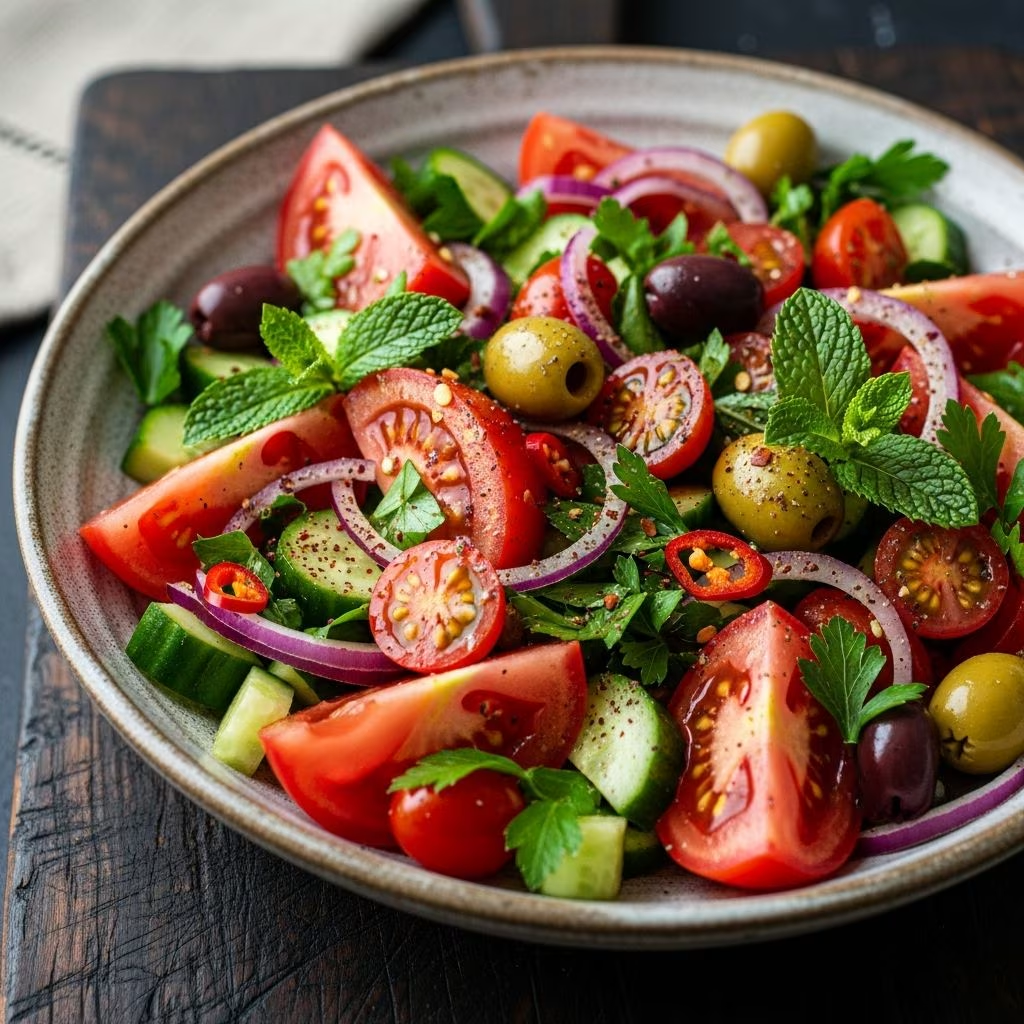
Tomato salads from the Middle East stand out for their simplicity and bold taste, combining ripe summer produce with pantry staples like olive oil and lemon juice. These dishes, often called Israeli salad, Jerusalem salad, or Shirazi salad, feature finely chopped vegetables tossed in vibrant dressings enhanced by spices such as sumac and za’atar. Perfect as a side to grilled meats or a light meal on its own, they embody the region’s emphasis on fresh, seasonal ingredients.
Core Ingredients That Define the Dish
The foundation of any Middle Eastern tomato salad is high-quality, ripe tomatoes, ideally diced into uniform small cubes for even flavor distribution. Persian or English cucumbers add crunch without excess water, while red onions or green onions provide a sharp bite that balances the sweetness of the tomatoes.
Herbs play a starring role: fresh parsley and mint deliver earthy and cooling notes. Some recipes incorporate garlic or bell peppers for extra depth. The dressing typically relies on extra virgin olive oil and fresh lemon juice, seasoned with salt, black pepper, and unique Middle Eastern touches like sumac for tanginess or cumin for warmth.
- Tomatoes: 4-6 medium, firm yet ripe, chopped into ½-inch pieces.
- Cucumbers: 2-4 Persian varieties, seeds removed if needed, finely diced.
- Onions: ½ red onion or 3 green onions, thinly sliced.
- Herbs: ¼-½ cup each of chopped parsley and mint.
- Dressing basics: 2-3 tbsp olive oil, 2 tbsp lemon juice, salt, pepper.
- Spices (optional): 1 tsp za’atar, ½ tsp sumac, pinch of cumin or chili flakes.
Essential Preparation Techniques for Perfect Texture
Success with these salads hinges on precise chopping: aim for bite-sized, uniform pieces to ensure every forkful has balanced flavors. Seed the tomatoes and cucumbers to prevent a watery salad—gently scoop out the centers with a spoon.
Prepare the dressing first by whisking olive oil, lemon juice, minced garlic (if using), and spices in a small bowl. This allows flavors to meld. Toss the vegetables lightly to avoid bruising delicate herbs, and taste for seasoning just before serving. For best results, let the salad sit for 10-30 minutes in the fridge to marinate.
Step-by-Step Basic Recipe
- Dice 4 tomatoes and 3 Persian cucumbers into ½-inch cubes. Place in a large bowl.
- Finely chop ½ red onion, ¼ cup parsley, and ¼ cup mint. Add to the bowl.
- In a separate bowl, mix 2 tbsp olive oil, 2 tbsp lemon juice, ½ tsp salt, ¼ tsp black pepper, and 1 tsp za’atar.
- Pour dressing over vegetables and toss gently. Adjust with more lemon or salt as needed.
- Chill for 15 minutes and serve fresh.
This yields 4-6 servings in under 20 minutes, with about 60 calories per portion.
Regional Variations Across the Middle East
Middle Eastern tomato salads vary by country, reflecting local ingredients and traditions. In Israel and Palestine, the chopped salad (often with cucumbers) is a mealtime staple, sometimes including bell peppers.
Lebanese versions emphasize mint and sweet onions, while Persian Shirazi salad uses lime instead of lemon and dried mint for a sour profile. Palestinian Jerusalem salad might add green onions and focus on equal parts tomato and cucumber.
| Variation | Key Additions | Unique Spice |
|---|---|---|
| Israeli Salad | Cucumbers, bell pepper | Sumac |
| Shirazi (Persian) | Red onion, dried mint | Lime juice |
| Lebanese Tomato | Fresh mint, garlic powder | Za’atar |
| Palestinian | Green onions, parsley | Black pepper |
Health Benefits and Nutritional Profile
These salads are nutrient-dense: tomatoes provide lycopene, an antioxidant linked to heart health, while cucumbers offer hydration and fiber. Herbs like parsley supply vitamins A, C, and K, and olive oil delivers healthy monounsaturated fats.
A typical serving (1 cup) contains roughly 50-80 calories, 4g fat, 6g carbs, 2g protein, and negligible sugar. The lemon juice aids vitamin C absorption, making it ideal for digestion and immunity.
Pairing Ideas and Serving Suggestions
Serve alongside falafel, hummus, or shawarma for a complete mezze spread. It’s excellent with pita bread to scoop up the juices or as a topping for grilled chicken and fish.
- Main dishes: Kebabs, kofta, or stuffed grape leaves.
- Vegetarian: With tabbouleh or baba ganoush.
- Summer BBQ: Refreshing contrast to charred meats.
For advanced twists, marinate overnight or grill vegetables lightly before chopping.
Storage, Make-Ahead, and Troubleshooting Tips
Best eaten fresh, but store in an airtight container in the fridge for up to 2 days. Drain excess liquid before serving. Avoid freezing, as textures suffer.
Common issues: Too watery? Seed veggies thoroughly. Lacking flavor? Use riper tomatoes and fresh herbs. Make ahead by prepping veggies separately from dressing.
Customizing for Dietary Needs
Vegan and gluten-free by nature. For low-carb, skip any bread pairings. Add feta or olives for a Greek fusion, or chickpeas for protein.
Frequently Asked Questions (FAQs)
What makes Middle Eastern tomato salad different from Greek salad?
It skips feta and olives, focusing on finer chops, lemon-olive oil dressing, and spices like za’atar instead of oregano.
Can I use regular cucumbers instead of Persian?
Yes, but peel and seed them to reduce moisture.
How do I make it spicier?
Add chili flakes, fresh jalapeño, or pomegranate molasses for heat and sweetness.
Is sumac necessary?
No, but it adds a lemony tang. Substitute with more lemon juice or vinegar.
Best tomatoes to use?
Roma, vine, or heirloom for flavor and firmness.
Advanced Twists and Seasonal Adaptations
In summer, incorporate watermelon or radishes for crunch. Winter versions use cherry tomatoes and preserved lemon. Experiment with pomegranate seeds for jewel-like bursts or roasted garlic for smokiness.
These salads highlight the Middle East’s culinary philosophy: let fresh ingredients shine with minimal intervention. Whether for a quick lunch or festive gathering, they deliver joy in every bite.
References
- Middle Eastern tomato parsley salad — Greenbowl2soul. 2023. https://greenbowl2soul.com/middle-eastern-tomato-parsley-salad/
- Middle Eastern Tomato Salad — Kalyn’s Kitchen. 2022. https://kalynskitchen.com/recipe-favorites-middle-eastern-tomato/
- Israeli Salad-(Chopped Cucumber Tomato Salad) — A Fork’s Tale. 2023. https://www.aforkstale.com/israeli-salad/
- Middle Eastern Salad — Courtney’s Sweets. 2022. https://www.courtneyssweets.com/middle-eastern-salad/
- Jerusalem Salad (Palestinian Cucumber Tomato Salad) — Urban Farm and Kitchen. 2023. https://urbanfarmandkitchen.com/jerusalem-salad-palestinian-cucumber-tomato-salad/
- Middle Eastern tomato and red onion salad with za’atar — Zen and Za’atar. 2023. https://zenandzaatar.com/tomato-and-red-onion-salad/