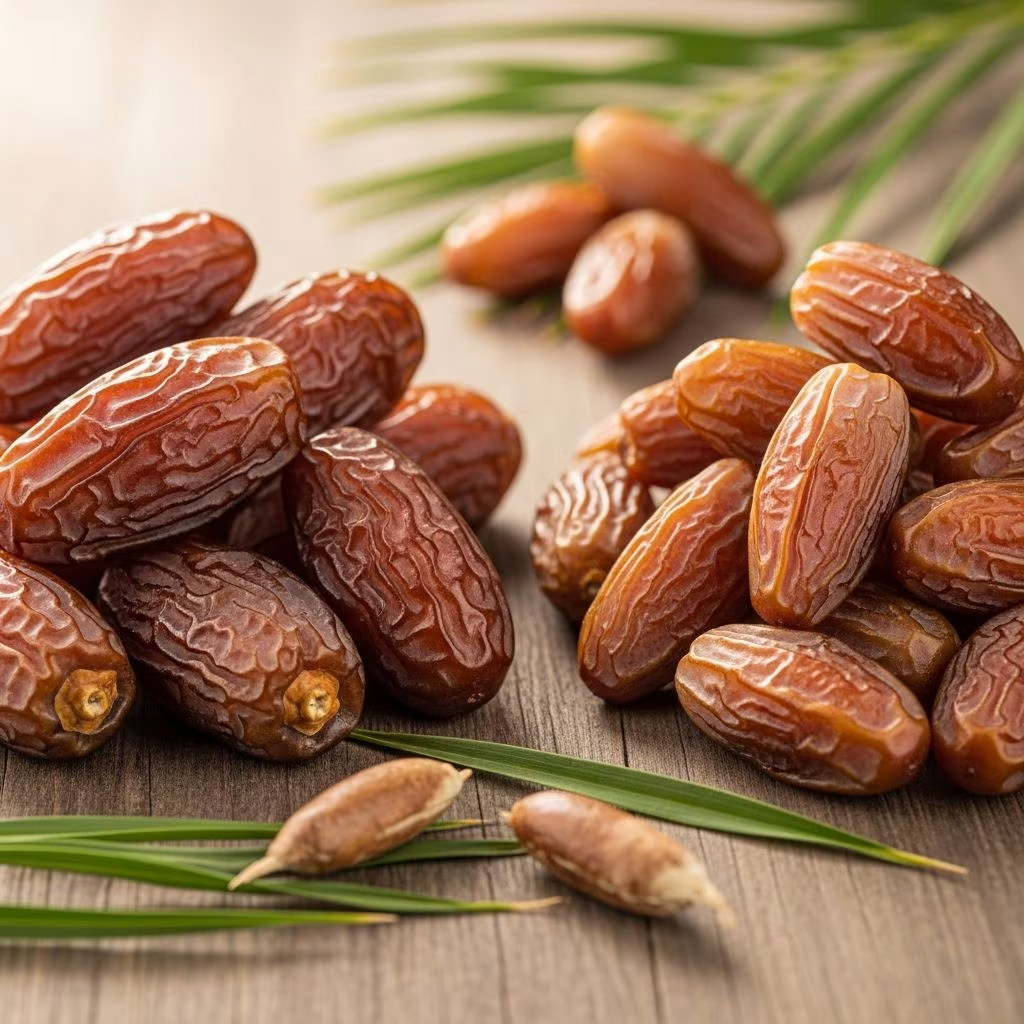
Medjool and Deglet Noor dates stand out as two of the most popular varieties of this ancient fruit, each offering unique qualities that make them staples in kitchens worldwide. Medjool dates captivate with their large size, soft texture, and intense sweetness, while Deglet Noor dates impress with their firm consistency, milder flavor, and versatility in recipes. This guide delves into their differences, helping you choose the right type for your needs, whether for snacking, baking, or health-focused meals.
Origins and Cultivation of Popular Date Varieties
Dates have been cultivated for millennia in North Africa and the Middle East, with Medjool dates tracing their roots primarily to Morocco. These premium dates thrive in arid climates, developing their signature moisture and richness due to specific growing conditions. In contrast, Deglet Noor dates hail from Algeria, introduced to regions like California around 1900, where they adapted well to local soils.
Medjool dates are typically harvested fresh and not fully dried, preserving their plumpness, whereas Deglet Noor dates are often processed as drier fruits, contributing to their longevity and firmness. Both varieties benefit from hand-pollination and careful harvesting to maintain quality, but Medjool’s scarcity and labor-intensive production make them pricier.
Physical Characteristics: Size, Color, and Texture
One of the most noticeable distinctions lies in appearance. Medjool dates are notably larger, often measuring 1-2 inches long, with a lighter caramel color and a soft, chewy interior that almost melts in the mouth. Their skin is thin and easy to peel, revealing a juicy flesh.
Deglet Noor dates, on the other hand, are smaller, darker amber-brown, and firmer to the touch, resembling a nutty caramel in texture. This firmness makes them less prone to sticking together and ideal for handling in bulk.
| Feature | Medjool Dates | Deglet Noor Dates |
|---|---|---|
| Size | Large (1-2 inches) | Smaller (0.5-1 inch) |
| Color | Lighter caramel | Darker amber-brown |
| Texture | Soft, chewy, moist | Firm, drier |
| Skin | Thin, peelable | Smooth, intact |
Flavor Profiles and Culinary Versatility
Medjool dates deliver a honey-like sweetness with rich, caramel notes, making them perfect for indulgent snacking or as a natural sweetener in smoothies and desserts. Their moisture enhances raw preparations, like stuffing with nuts or cheese.
Deglet Noor dates offer a subtler, nutty taste with less overt sweetness, suiting them for savory dishes, baking, and cooking where they hold shape without overpowering other ingredients. Use them in salads, tagines, or energy bars for balanced flavor.
- Medjool best for: Snacks, raw desserts, smoothies, natural syrups.
- Deglet Noor best for: Baking, savory recipes, date bars, granola.
Nutritional Breakdown and Health Benefits
Both date types are nutrient-dense, providing natural energy from carbohydrates, fiber for digestion, and minerals like potassium for heart health. Per 100g, Deglet Noor dates edge out with slightly higher calories at around 282 kcal compared to Medjool’s 277 kcal, due to their compact dryness. Medjool dates contain more natural sugars (66.5g vs 63.4g), fructose-dominant for that sweet profile.
Fiber content favors Deglet Noor at 8g per 100g versus 6.7g in Medjool, aiding satiety and blood sugar control. Potassium is abundant in both (696mg in Medjool, 656mg in Deglet Noor), supporting muscle function. Medjool offers more calcium (64mg), while Deglet Noor provides iron (1.0mg).
| Nutrient (per 100g) | Medjool | Deglet Noor |
|---|---|---|
| Calories | 277 kcal | 282 kcal |
| Sugars | 66.5g | 63.4g |
| Fiber | 6.7g | 8g |
| Potassium | 696mg | 656mg |
| Iron | 0.9mg | 1.0mg |
| Calcium | 64mg | 39mg |
Health perks include improved digestion from fiber, reduced muscle cramps via potassium, and antioxidant support. Deglet Noor’s lower glycemic impact and higher fiber make it preferable for diabetes management or weight control, though both shine when paired with proteins or fats.
Selecting the Best Dates at the Market
When buying Medjool dates, look for plump, unblemished fruits with a glossy sheen and no crystallization on the skin, indicating freshness. Avoid shriveled or overly dry ones. For Deglet Noor, seek uniform amber color, firmness without hardness, and intact skins free of mold or pests.
Opt for bulk bins or resealable packages from reputable suppliers. Organic options minimize pesticide exposure. Check for country of origin—Moroccan Medjools or Californian Deglet Noors often signal quality. Price reflects Medjool’s premium status, typically double that of Deglet Noor.
- Fresh Medjool: Moist, heavy for size, minimal sugar coating.
- Quality Deglet Noor: Firm, shiny, no off odors.
Optimal Storage Practices for Longevity
Medjool dates’ high moisture requires refrigeration in an airtight container, lasting up to 6 months, or freezing for a year. Avoid room temperature storage to prevent fermentation. Deglet Noor dates, being drier, store well in pantry cool, dry spots for months, or refrigerated for extended freshness.
Always check for spoilage signs like mold or off smells. For both, portion into small batches to minimize air exposure. Thaw frozen dates at room temperature for best texture.
Recipe Ideas Featuring Medjool Dates
Stuffed Medjool Dates: Pit large Medjools and fill with almond butter, goat cheese, or walnuts for an elegant appetizer. Drizzle with balsamic glaze.
Medjool Date Smoothie: Blend 4 pitted Medjools with banana, almond milk, and cocoa for a creamy, naturally sweetened drink.
Chocolate Medjool Bites: Process Medjools with nuts and coconut into balls, dip in melted dark chocolate, and chill.
Creative Uses for Deglet Noor Dates
Date Bars: Chop Deglet Noor dates, mix with oats, nuts, and cinnamon, press into a pan, and bake for chewy bars.
Savory Tagine: Simmer chopped Deglet Noors with chicken, onions, and spices for a Moroccan-inspired stew balancing sweet and savory.
Granola Clusters: Fold chopped dates into oat-nut mixture, bake low and slow for crunchy clusters.
Health and Dietary Considerations
Despite natural sugars, dates’ fiber moderates blood sugar. Deglet Noor may suit lower-sugar diets, while Medjool provides quick energy for athletes. Both are vegan, gluten-free, and cholesterol-free. Consume in moderation—3-5 pieces daily—to avoid excess calories. Consult professionals for specific conditions like diabetes.
Frequently Asked Questions
Which date is healthier, Medjool or Deglet Noor?
Both are nutritious; Deglet Noor offers more fiber for digestion, Medjool more calcium. Choose based on needs.
Can I substitute one for the other in recipes?
Yes, but adjust for moisture—Medjools add sweetness, Deglet Noor structure. Soak Deglet Noor if needed for softness.
How long do these dates last?
Medjool: 1 month pantry, 6 months fridge; Deglet Noor: 6+ months pantry.
Are dates good for weight loss?
Their fiber promotes fullness; pair with protein for best results, in controlled portions.
Where do Medjool dates come from?
Primarily Morocco, also grown in the US and Middle East.
References
- Deglet vs Medjool Dates: What’s the Real Difference? — Ayoubs.ca. N/D. https://ayoubs.ca/blogs/news/deglet-vs-medjool-dates
- Dates (Deglet Noor) vs Medjool Dates; A Comparison — Bump2BabyNutrition.com. N/D. https://bump2babynutrition.com/dates-deglet-noor-vs-medjool-dates-a-comparison/
- Deglet Noor vs Medjool Dates: Comparison of Characteristics — AurumDates.com. N/D. https://aurumdates.com/deglet-noor-vs-medjool-dates/
- Comparison chart of dates — BrownDateGarden.com. N/D. https://www.browndategarden.com/comparison.htm
- Medjool vs Deglet Noor Dates – A Complete Comparison — DolceFrutti.com. N/D. https://dolcefrutti.com/blogs/dates/medjool-vs-deglet-noor-dates-complete-comparison