Mediterranean cuisine offers a remarkable balance of flavors that transform simple ingredients into memorable dining experiences. One such dish that exemplifies this culinary philosophy combines tender, aromatic meatballs with a sophisticated grain-based side featuring the contrasting textures and tastes of toasted nuts and sweet dried fruit. This complete meal showcases how thoughtful spice selection and ingredient pairing can elevate an everyday protein into restaurant-quality fare suitable for both weeknight dinners and formal entertaining.
Understanding the Flavor Foundation
The foundation of this dish rests upon the careful selection of warm spices that define Mediterranean and Middle Eastern cooking traditions. Ground cumin serves as the primary aromatic component, offering an earthy warmth that complements beef exceptionally well. When combined with other complementary spices, cumin creates depth without overwhelming the palate, allowing each component of the dish to maintain its individual character while contributing to a cohesive whole.
The meatball mixture incorporates multiple layers of garlic—both raw and cooked preparations—to provide complexity. Finely grated garlic integrates seamlessly into the meat mixture, distributing its sharp, pungent qualities evenly throughout each bite. Smashed garlic cloves, by contrast, create distinct pockets of intense flavor, adding textural and gustatory interest to the final preparation.
Essential Ingredients and Their Roles
Creating meatballs that maintain their shape while remaining tender requires understanding how each component contributes to the final texture and flavor:
- Ground beef: The primary protein base, providing richness and savory depth while offering enough fat content to prevent dryness during cooking
- Panko breadcrumbs: These Japanese-style breadcrumbs remain coarser than traditional varieties, creating a lighter crumb structure and more tender finished meatballs
- Egg binder: Acts as the adhesive that holds the mixture together, enabling meatballs to maintain their shape without becoming dense or compact
- Crumbled feta: Introduces a tangy, salty element that brightens the richness of the beef while adding subtle complexity
- Spice blend: Cumin and additional seasonings create the characteristic Mediterranean flavor profile
The Pilaf Component: Balancing Sweet and Savory
The accompanying pilaf represents an equally important element of this dish, requiring equal attention and care in execution. Unlike simple steamed rice, pilaf preparation involves toasting grains before adding liquid, a technique that develops nutty flavor compounds and creates a more interesting texture. The addition of golden raisins introduces natural sweetness that counterbalances the savory meatballs, while pistachios provide both visual appeal through their natural green color and textural contrast through their firm, slightly crunchy bite.
The interplay between sweet, salty, and savory elements in the pilaf demonstrates fundamental principles of sophisticated cooking. Golden raisins plump and soften during cooking, releasing subtle sweetness throughout the grain mixture. Pistachios, whether left whole or roughly chopped, maintain their structural integrity while lending an earthy, slightly herbaceous note that complements rather than competes with the primary flavors.
Preparation Techniques for Optimal Results
Forming and Cooking Meatballs
The texture and appearance of finished meatballs depend significantly on proper handling and cooking technique. Combining ingredients gently prevents the development of excess gluten from the breadcrumbs, which would result in dense, tough meatballs. Using damp hands when shaping prevents the mixture from sticking while ensuring uniform size, which promotes even cooking throughout the batch.
Meatballs can be cooked through various methods, each producing slightly different results. Baking on a sheet pan allows fat to drip away while the meatballs brown evenly, reducing the oil required for preparation. Pan-frying in a small amount of oil creates a browned crust while maintaining moisture within. Combination methods—starting meatballs in a hot pan to develop color, then finishing in a preheated oven—often produce the most desirable results, combining browned exteriors with tender interiors.
Building the Pilaf Base
Toast the rice grains in butter or oil before adding liquid to develop their inherent nutty flavors. This additional step, often overlooked in everyday cooking, creates remarkable depth that distinguishes pilaf from standard boiled rice. The grains should appear slightly translucent and smell fragrant as they toast, indicating that browning has begun without the grains burning.
Golden raisins and pistachios should be added toward the end of the cooking process, allowing them to warm through while maintaining their distinct textures. Raisins added too early may disintegrate, while those added too late may remain unpleasantly firm. Pistachios, being more delicate, should never be cooked for extended periods, as their oils may turn rancid and their color may darken unattractively.
Ingredient Quality and Selection
| Ingredient | Quality Markers | Selection Tips |
|---|---|---|
| Ground Beef | Bright red color, no gray areas, freshly ground when possible | Choose 80/20 ratio for balanced fat content; avoid pre-ground beef older than one day |
| Panko Breadcrumbs | Coarse texture, no moisture clumping, fresh aroma | Japanese brands typically offer superior quality; store in airtight containers |
| Feta Cheese | Creamy white color, slight tanginess without overwhelming saltiness | Greek or Bulgarian varieties offer better texture than domestic crumbles |
| Golden Raisins | Plump appearance, slight moisture, natural golden color | Avoid discolored or hardened raisins; check expiration dates |
| Pistachios | Vibrant green interiors, no rancid smell, natural split shell | Unsalted varieties work best for savory applications; roasted adds depth |
Flavor Development Through Technique
Building layers of flavor throughout the cooking process creates a more interesting and complex final dish. Beginning with aromatic vegetables, if incorporated, develops a flavorful base upon which other elements build. Blooming spices in fat before adding other ingredients releases their essential oils and intensifies their aromatic qualities, a technique particularly valuable when working with cumin and similar ground spices.
Deglazing pans after browning meatballs captures flavorful browned bits that adhere to cooking surfaces, incorporating them back into sauces or pilaf preparation. This step, known as deglazing, transforms what might otherwise be waste into concentrated flavor that enriches the entire dish. A splash of broth or water, combined with gentle scraping, releases these browned bits into a flavorful liquid that can be incorporated into the pilaf or served as a sauce.
Frequently Asked Questions
Can this dish be prepared in advance?
Yes, meatballs can be formed and refrigerated up to 24 hours before cooking, allowing flavors to meld and develop. The pilaf can be prepared separately and reheated gently before serving. For optimal texture, reheat pilaf with a small amount of broth or water to restore moisture lost during storage.
What beverage pairings complement this meal?
Mediterranean wines with moderate acidity work particularly well, as their characteristics mirror the dish’s flavor profile. White wines with herbal notes complement the cumin and garlic, while lighter red wines echo the savory qualities of the beef. Non-alcoholic options might include sparkling water with lemon or herbal teas served chilled.
How can the spice profile be adjusted for different preferences?
Cumin can be reduced slightly for those sensitive to its intensity, or complemented with additional warm spices such as cinnamon or nutmeg in small quantities. Garlic can be decreased if its strength proves overwhelming. The feta cheese provides inherent saltiness, so additional salt should be added judiciously to prevent excessive seasoning.
Are there suitable substitutions for main ingredients?
Ground lamb offers a richer alternative to beef while maintaining Mediterranean authenticity. Ground turkey or chicken provides leaner options, though these may require slightly different cooking times. Feta can be replaced with goat cheese or other tangy varieties. Pistachios might be substituted with almonds, though this alters the flavor profile somewhat.
Serving Suggestions and Presentation
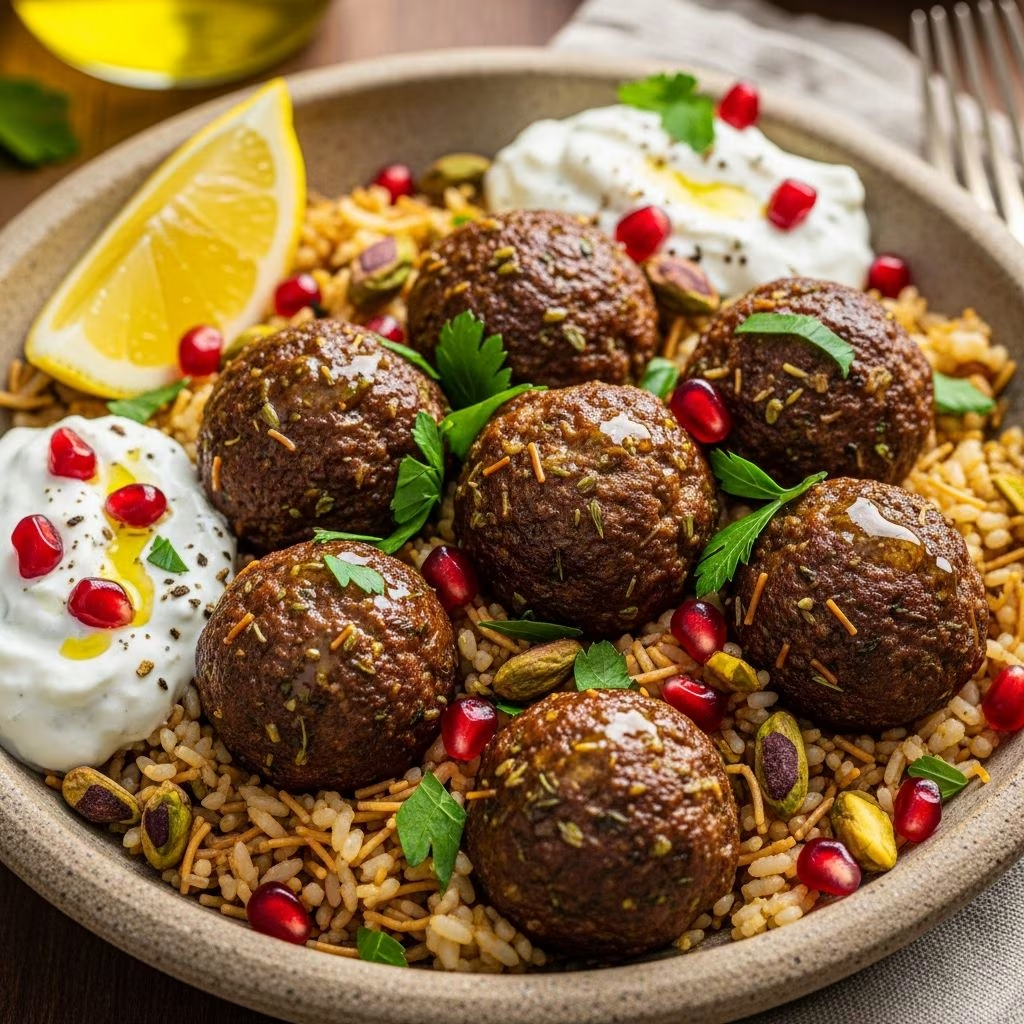
Present meatballs atop the pilaf to showcase both components attractively. Additional crumbled feta sprinkled over the finished dish adds visual interest and reinforces the Mediterranean theme. Fresh herbs such as parsley or mint provide brightness and aromatic lift that enhances the overall dining experience.
Serving this complete meal on a single plate simplifies plating while allowing the distinct components to remain visually separate and identifiable. The pale pilaf provides a neutral backdrop that allows the browned meatballs to command visual attention, while flecks of green pistachio and golden raisins add textural interest to what might otherwise be a monochromatic presentation.
Scaling and Batch Cooking
This recipe scales readily for entertaining, as both components can be prepared in larger quantities without significantly altering technique or timing. Doubling the recipe requires proportionally more cooking space and time but follows identical procedures. Meatballs can be refrigerated after cooking and gently reheated in a low oven, making this dish ideal for make-ahead entertaining scenarios.
Storing cooked meatballs and pilaf separately in airtight containers preserves quality and allows flexible meal planning. Meatballs maintain their texture and flavor for up to four days when properly refrigerated, while pilaf can be stored for similar durations. Freezing is possible for both components, though pilaf may require moisture restoration during reheating.
Final Thoughts on Mediterranean Cooking
This dish exemplifies how Mediterranean cooking philosophy emphasizes quality ingredients treated with respect and technique. Rather than relying on complicated methods or numerous components, the dish depends on thoughtful ingredient selection, proper preparation timing, and an understanding of how individual flavors interact. The resulting meal satisfies both as everyday fare and as an impressive presentation for guests, demonstrating the versatility that characterizes this culinary tradition.
References
- Spiced Meatballs with Golden Raisin-Pistachio Pilaf — Bon Appétit Magazine. February/March 2026. https://www.bonappetitmag.com
- Umami Recipe Database — Umami Recipes. 2026. https://www.umami.recipes