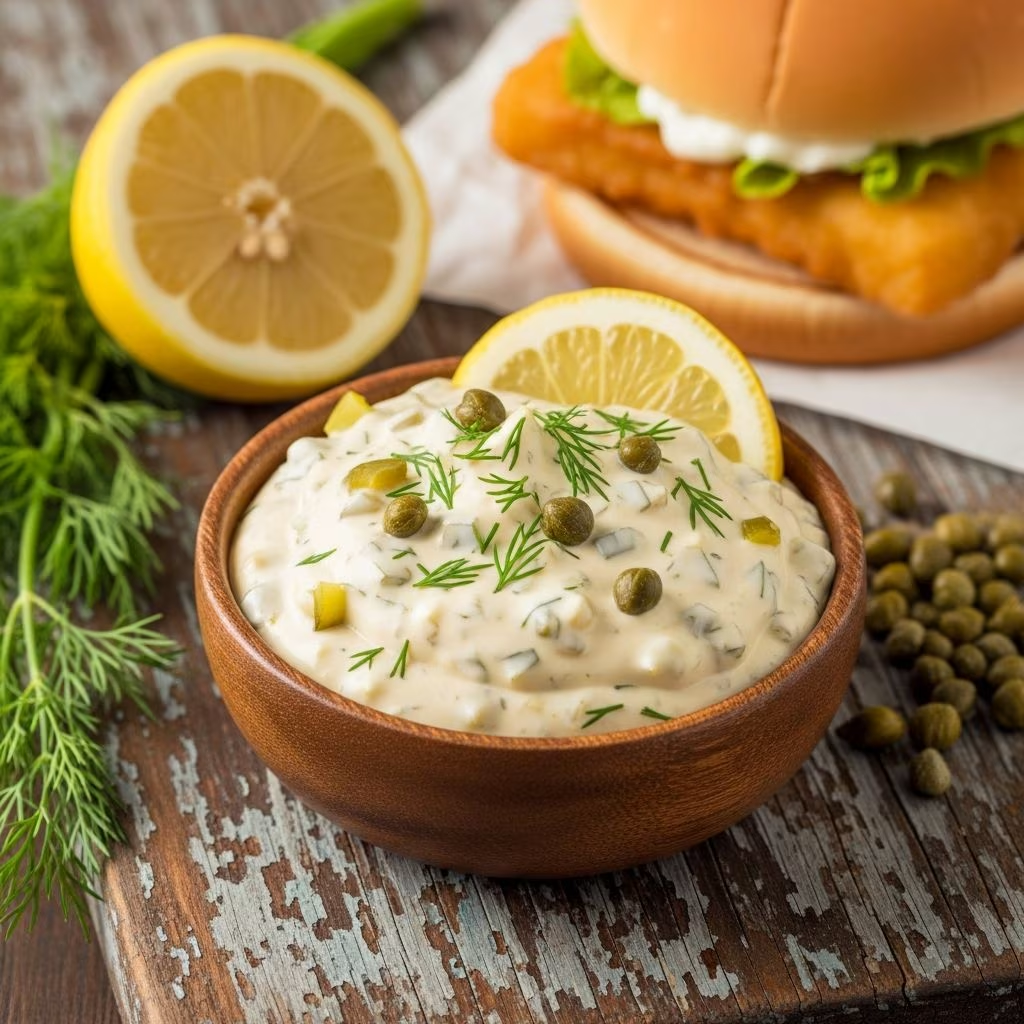
The distinctive tartar sauce served with McDonald’s Filet-O-Fish sandwich has captivated fast-food enthusiasts for decades. This creamy, tangy condiment enhances the crispy fish patty and soft bun with its unique flavor profile. While many people purchase extra sauce packets at the restaurant, creating an identical version at home is entirely possible with common kitchen ingredients. This guide explores the process of making your own McDonald’s-inspired tartar sauce, offering both straightforward methods and creative variations for culinary experimentation.
Understanding the Original Formula
McDonald’s tartar sauce contains a surprisingly long list of commercial ingredients designed for mass production and shelf stability. The official ingredient list includes soybean oil, pickle relish, calcium chloride, spice extractives, polysorbate 80, egg yolks, water, onions, distilled vinegar, sugar, spice, salt, xanthan gum, potassium sorbate, and parsley. Many of these components serve functional purposes—emulsifiers like polysorbate 80 maintain consistency, while preservatives ensure longevity in storage and distribution.
However, replicating this commercial version doesn’t require mastering complex food chemistry. The essence of the sauce—its flavor and texture—can be achieved through a minimal ingredient approach that focuses on the core components that deliver taste impact. Understanding what makes the sauce special allows home cooks to simplify the formula without sacrificing the familiar McDonald’s experience.
The Streamlined Ingredient Approach
The simplest copycat recipe requires only five basic ingredients that most households already stock. This minimalist method prioritizes convenience and speed while maintaining authentic flavor characteristics.
Essential Components
- Mayonnaise — Forms the creamy base and provides the sauce’s signature texture. One cup serves as the foundation for the entire batch.
- Dill pickle relish — Delivers the tangy, briny notes that define tartar sauce. Two teaspoons creates the right balance of flavor without overpowering.
- White onion — Adds subtle sharpness and depth. Three teaspoons of finely minced onion integrate smoothly without creating chunks.
- Fresh lemon juice — Brightens the overall profile with citrus undertones. A half teaspoon prevents the sauce from tasting flat or heavy.
- Granulated sugar — Provides sweetness that balances acidity and mimics the commercial version’s flavor complexity. One teaspoon creates the desired taste profile.
Preparation Method for Maximum Efficiency
The beauty of this copycat recipe lies in its remarkable simplicity. Unlike many sauces requiring cooking techniques or specialized equipment, this version comes together in minutes with just a mixing bowl and spoon.
Step-by-Step Instructions
- Measure one cup of mayonnaise into a small bowl, ensuring it’s at room temperature for easier blending.
- Add the minced white onion, making sure pieces are small enough to distribute evenly throughout the sauce.
- Incorporate the dill pickle relish, stirring thoroughly to break up any clumps and distribute the flavor uniformly.
- Add the fresh lemon juice, mixing well to prevent separation and ensure the citrus flavor permeates the entire batch.
- Sprinkle in the sugar and stir vigorously until fully dissolved and the mixture reaches a uniform consistency.
- Taste and adjust seasonings as desired, adding extra lemon juice for tanginess or sugar for sweetness.
This entire process requires approximately two minutes of active preparation time. The result is a sauce that closely resembles the McDonald’s version in both appearance and taste, ready for immediate use or storage.
Advanced Techniques for Enhanced Results
While the basic recipe delivers satisfying results, several techniques can elevate the sauce to new levels of sophistication and authenticity. These methods require minimal additional effort but produce noticeably superior outcomes.
Incorporating Capers for Complexity
Capers—small, brined flower buds with a distinctive salty and slightly tangy flavor—add a layer of sophistication absent from the basic recipe. Adding twelve minced capers to the mixture introduces complexity that mirrors certain gourmet tartar sauces. The capers should be thoroughly minced to distribute their flavor evenly and prevent overpowering individual bites.
The Blender Method for Creaminess
For an exceptionally smooth and luxurious texture, combine half the ingredients in a blender or food processor before hand-mixing the remainder. This approach involves adding half the pickle relish, all capers, one tablespoon of onion, mayonnaise, a teaspoon of dried parsley, and a quarter teaspoon of sugar to the blender. Processing until completely smooth creates a creamy base. Subsequently stirring in the remaining pickle relish and onion by hand results in a sauce with varied texture—smooth body with distinct pickle pieces for visual appeal and texture variation.
Extended Refrigeration for Flavor Development
Allowing the sauce to refrigerate for at least two hours before serving permits flavors to meld and intensify. This resting period allows the onion and pickle relish to soften slightly while their flavors permeate the mayonnaise base. Many experienced cooks recommend making the sauce a day in advance, claiming the flavors develop more fully and the overall taste becomes closer to the McDonald’s original.
Homemade Pickle Relish Option
For those seeking maximum control over ingredients and willing to invest additional effort, creating custom pickle relish elevates the entire sauce. This approach begins with whole dill pickles or sliced dill pickles, which are finely chopped into relish-sized pieces. Some recipes suggest thickening the pickle brine by mixing in a small amount of cornstarch and bringing the mixture to a boil, which concentrates flavors and creates a relish with superior texture and taste intensity. Using this homemade relish instead of store-bought versions produces a tartar sauce with noticeably fresher pickle flavor.
Storage and Shelf Life Considerations
Properly stored homemade tartar sauce maintains quality for extended periods. Transferring the sauce to an airtight container and refrigerating it preserves freshness for approximately two weeks. The mayonnaise base resists spoilage due to its acidic ingredients and oil content, creating an inhospitable environment for bacterial growth. However, always observe the sauce for signs of discoloration or off-flavors before consuming, as individual ingredient quality affects longevity.
Culinary Applications Beyond Fish Sandwiches
While this sauce was designed to complement McDonald’s Filet-O-Fish, its versatility extends to numerous dishes. Serve it alongside homemade fish and chips, fish tacos, fried shrimp, or breaded scallops. The sauce also complements vegetable tempura, fried zucchini, and even as a dip for French fries or vegetable sticks. Adventurous cooks experiment with using it as a base for sandwich spreads, mixing it with additional seasonings for unique dipping sauces, or incorporating it into fish-based casseroles.
Comparative Analysis: Homemade Versus Commercial
| Aspect | Homemade Version | McDonald’s Original |
|---|---|---|
| Preparation Time | 2-5 minutes | Instant (pre-made) |
| Ingredient Count | 5-8 ingredients | 15+ ingredients |
| Cost Per Serving | Economical | Higher per packet |
| Flavor Intensity | Customizable | Standardized |
| Texture | Variable (depends on method) | Consistent |
| Preservatives | None required | Multiple additives |
Flavor Customization Options
The basic recipe serves as a foundation for personalization. Individuals preferring extra tanginess can increase lemon juice to three-quarters teaspoon or add a splash of distilled vinegar. Those favoring sweetness can raise sugar content to one and a half teaspoons. Fresh parsley (a quarter teaspoon chopped) adds herbaceous notes, while a pinch of cayenne pepper introduces subtle heat. Experimenting with variations allows each cook to develop a sauce matching their precise taste preferences while maintaining the fundamental McDonald’s character.
Frequently Asked Questions
Can I make this sauce without mayonnaise?
While mayonnaise provides the essential creamy base, alternatives like Greek yogurt or sour cream can be substituted. However, these replacements alter the flavor profile noticeably, producing a tangier result that differs from the McDonald’s version.
How long does homemade tartar sauce last?
Properly refrigerated sauce maintains quality for approximately two weeks. Always verify appearance and smell before use, and discard if any off-odors develop.
Is this sauce suitable for freezing?
Freezing homemade tartar sauce is not recommended, as mayonnaise-based sauces separate and develop undesirable texture when thawed. Fresh preparation yields superior results.
Can I reduce the recipe for smaller portions?
The recipe scales easily. Divide all ingredients proportionally—half the quantities produces three servings instead of six.
What type of onion works best?
White onions provide the mildest, cleanest flavor. Red onions introduce slight color variation and more assertive taste. Yellow onions offer a middle ground but can sometimes overpower the delicate balance.
Should I use sweet or dill pickle relish?
Dill pickle relish most closely approximates the McDonald’s flavor profile. Sweet relish produces a noticeably different taste that, while pleasant, diverges from the original formula.
Conclusion: Mastering the Art of Tartar Sauce
Creating McDonald’s-style tartar sauce at home represents an achievable culinary goal requiring minimal ingredients and technical skill. Whether pursuing the simplest five-ingredient version or experimenting with advanced techniques and customizations, this sauce delivers authentic flavor and remarkable versatility. The process democratizes restaurant-quality condiments, allowing individuals to enjoy signature fast-food flavors without leaving home. By understanding ingredient functions and employing suggested techniques, anyone can produce tartar sauce equaling or surpassing the commercial original.
References
- McDonald’s Tartar Sauce Copycat Recipe — Mashed. 2024. https://www.mashed.com/444436/mcdonalds-tartar-sauce-copycat-recipe/
- McDonald’s Tartar Sauce Copycat Recipe — Sweet and Savory Meals. 2024. https://sweetandsavorymeals.com/mcdonalds-tartar-sauce-copycat-recipe/
- Copy Cat McDonald’s Filet ‘o Fish Sandwich & Tartar Sauce Recipe — An Affair from the Heart. 2024. https://anaffairfromtheheart.com/copy-cat-mcdonalds-tartar-sauce-fish-sandwich/