For decades, mayonnaise has served as the convenient scapegoat for summertime foodborne illness outbreaks. When guests fall ill after a picnic or potluck, the first suspicion invariably falls on the creamy condiment slathered across sandwiches and mixed into salads. This widespread belief has become so ingrained in popular culture that many people refuse to leave mayonnaise-based dishes at room temperature for even short periods, convinced that doing so invites bacterial disaster. However, the scientific evidence tells a strikingly different story—one that absolves commercial mayonnaise of blame in most food poisoning cases and redirects our attention toward the actual culprits behind summer foodborne illness.
The Historical Origins of the Mayonnaise Misconception
The perception of mayonnaise as a dangerous food product has deep roots in historical food safety practices and a fundamental misunderstanding of how this condiment is formulated. In earlier decades, before widespread food processing regulations and pasteurization techniques became standard, mayonnaise—particularly homemade versions made with raw eggs—genuinely posed a legitimate risk for Salmonella contamination. This historical reality became embedded in the collective consciousness of food safety advocates and home cooks alike. What began as a legitimate concern evolved into a modern myth that persists despite significant changes in commercial food manufacturing.
The confusion intensified because potato salad, chicken salad, and other mayonnaise-containing dishes were involved in numerous documented foodborne illness outbreaks throughout the twentieth century. However, detailed investigations of these incidents consistently revealed that mayonnaise itself was rarely the source of contamination. Instead, the real problems stemmed from improper handling of the supporting ingredients—potatoes, eggs, meat products—combined with inadequate temperature control and cross-contamination during preparation.
The Protective Chemistry of Commercial Mayonnaise
Modern commercially produced mayonnaise functions as a remarkably stable and inhospitable environment for bacterial growth, thanks to its specific chemical composition. Manufacturers deliberately formulate mayonnaise with substantial quantities of acidic ingredients, primarily vinegar and lemon juice, creating a low pH environment that hostile to the survival and reproduction of foodborne pathogens. This acidification serves dual purposes: it preserves the product and actively eliminates pathogenic microorganisms that might otherwise thrive in a more neutral pH environment.
Research examining the survival of major foodborne pathogens in mayonnaise documented that organisms including Salmonella, E. coli O157:H7, Listeria monocytogenes, Staphylococcus aureus, and Yersinia enterocolitica all die when exposed to commercial mayonnaise. The acidity does not merely inhibit growth; it actively kills these bacteria. This protective characteristic means that commercial mayonnaise, when kept in reasonable conditions, is remarkably resistant to spoilage compared to many other food products.
Beyond acidity, commercial mayonnaise manufacturers employ pasteurized eggs in their formulation, completely eliminating the raw egg risk that once made homemade versions dangerous. Pasteurization heats eggs to temperatures sufficient to eliminate Salmonella and other heat-sensitive pathogens without significantly compromising the product’s flavor or functionality. This single manufacturing practice removes the primary historical risk factor associated with mayonnaise-based foodborne illness.
Why Refrigeration Remains Important Despite Safety
Despite the protective qualities of commercial mayonnaise’s acidity, manufacturers universally recommend refrigeration after opening. This recommendation, however, relates more to product quality than to food safety concerns. Mayonnaise gradually breaks down when exposed to warmth, developing an increasingly oily consistency and losing its desired texture and flavor profile. Refrigeration preserves these sensory qualities far more effectively than temperature stability preserves safety.
The distinction between safety and quality represents an important clarification in food handling practices. A jar of opened mayonnaise left at room temperature poses minimal microbiological risk—the acidic environment continues preventing bacterial growth—but the product’s palatability deteriorates. Understanding this difference allows food handlers to make informed decisions about storage based on actual risk rather than assumptions rooted in historical myths.
The Real Threats in Mixed Salads and Combination Dishes
When mayonnaise transforms from a simple condiment into a component of complex salads, the food safety situation changes substantially. Potato salad, chicken salad, pasta salad, and similar dishes combine mayonnaise with ingredients that fundamentally alter the overall pH and safety profile of the final product.
Low-acid vegetables and proteins—including cooked potatoes, pasta, poultry, and hard-boiled eggs—contain minimal inherent acidity. When these ingredients mix with mayonnaise, their neutral or slightly acidic nature dilutes the protective acidification that makes pure mayonnaise so resistant to bacterial growth. The resulting combination creates what food safety professionals term a time/temperature control for safety (TCS) food: a product capable of supporting bacterial growth if subjected to improper storage conditions.
The bacteria most commonly responsible for outbreaks associated with these salads include Staphylococcus aureus and Clostridium perfringens. These organisms thrive when salads remain in the temperature danger zone—between 41°F and 135°F—for extended periods. A potato salad left on a picnic table for several hours provides ideal conditions for these bacteria to multiply to concentrations capable of causing illness in consumers.
Temperature Control as the Primary Defense
Food safety regulations, including the Minnesota Food Code and guidelines from the FDA, establish clear temperature parameters for foods requiring temperature control for safety. These foods must maintain temperatures at or below 41°F or above 135°F to prevent bacterial multiplication to dangerous levels. This simple principle, though straightforward, represents the most critical factor in preventing foodborne illness at picnics and outdoor gatherings.
The practical implications are significant: a potato salad removed from refrigeration for a two-hour outdoor event faces minimal risk if kept in an ice-filled cooler maintaining temperatures below 41°F. Conversely, the identical salad sitting on an unrefrigerated buffet table for the same duration experiences dramatic increases in bacterial populations, regardless of its mayonnaise content. The mayonnaise remains chemically stable; the newly created environment around it becomes dangerous.
Cross-Contamination and Unsafe Food Handling Practices
Beyond temperature control, cross-contamination represents a significant and often overlooked pathway for foodborne pathogens to enter mayonnaise-based dishes. Cross-contamination occurs when utensils, hands, or food contact surfaces transfer bacteria from raw foods—particularly raw poultry, beef, or seafood—to ready-to-eat foods or condiments.
Consider a common picnic scenario: a serving spoon used to dispense raw hamburger meat is then used to serve potato salad. Any bacteria present on the raw meat transfer to the salad through the shared utensil. Alternatively, someone handling raw chicken prepares salads without thoroughly washing their hands, introducing pathogenic organisms through direct contact. In these situations, the mayonnaise’s protective acidity cannot prevent illness because the contamination occurs after the salad preparation, bypassing the mayo’s protective environment.
Preventing cross-contamination requires systematic food handling practices: maintaining separate utensils and cutting surfaces for raw and cooked foods, washing hands thoroughly with soap and warm water after handling raw products, and ensuring that raw foods never contact ready-to-eat items or their serving utensils.
Homemade Mayonnaise: A Different Risk Profile
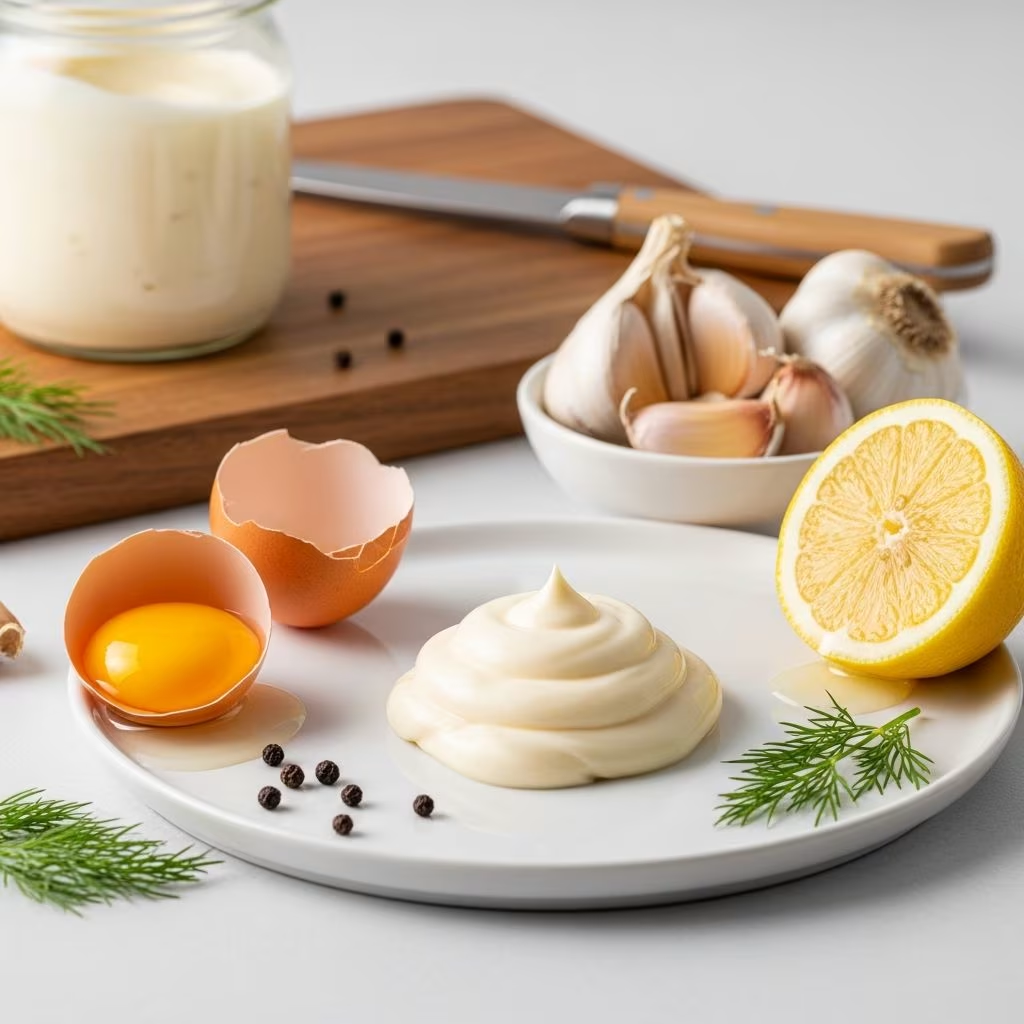
The safety distinction between commercial and homemade mayonnaise deserves particular emphasis. Homemade versions, especially those prepared with raw eggs and without adequate acidification, present genuine food safety risks that commercial products do not. Raw eggs may harbor Salmonella, and without sufficient vinegar or lemon juice, homemade mayo lacks the protective acidity barrier that makes commercial varieties safe.
Home cooks preparing mayonnaise should source recipes incorporating both pasteurized egg products and adequate acid content—typically vinegar or lemon juice—to approximate the safety profile of commercial products. Even with these precautions, homemade mayonnaise requires prompt consumption or refrigeration, as recipes may not contain sufficient acid to reliably prevent all pathogenic growth. Refrigeration becomes not merely a quality concern but a genuine safety measure for homemade preparations.
Standard of Identity and Commercial Mayonnaise Regulation
Commercial mayonnaise in the United States falls under strict regulatory requirements known as the Standard of Identity (SOI), established by the FDA in 1939. These standards define exactly what constitutes mayonnaise and mandate specific formulation requirements. The SOI requires that mayonnaise contain minimum levels of oil and egg yolk, and these requirements indirectly ensure adequate acidification through established manufacturing practices. This regulatory framework represents one reason why commercial mayonnaise maintains such reliable safety characteristics—the formula is not left to manufacturer discretion but defined by law.
Distinguishing Between Real and Imagined Food Safety Risks
Understanding actual food safety threats requires recognizing that illnesses attributed to picnic and potluck foods rarely originate from mayonnaise itself. Instead, documented outbreaks trace to:
- Improper cooking temperatures for meat, poultry, and seafood products
- Extended time at room temperature without adequate refrigeration
- Cross-contamination from raw to ready-to-eat foods
- Contaminated water or inadequate handwashing facilities
- Pre-existing contamination of raw ingredients like produce or eggs
- Improperly canned home products (as occurred in a 2015 botulism outbreak linked to incorrectly canned potatoes used in potato salad)
A notable exception involved potato salad made with potatoes that had been improperly canned using a boiling water bath rather than pressure canning. This 2015 incident resulted in 29 illnesses and two deaths—the largest botulism outbreak in 40 years—but the hazard originated from defective canning practices, not from mayonnaise.
Practical Guidelines for Safe Food Preparation and Storage
Food safety professionals recommend several evidence-based practices that effectively prevent foodborne illness:
- Maintain cold chain integrity: Keep all TCS foods—including mayonnaise-containing salads—at 41°F or below until immediately before serving
- Use appropriate serving temperatures: Hot foods should maintain 135°F or above during service
- Limit time at room temperature: Never leave TCS foods unrefrigerated for more than two hours (one hour if ambient temperature exceeds 90°F)
- Eliminate cross-contamination: Use separate utensils, cutting boards, and preparation surfaces for raw and cooked foods
- Practice hand hygiene: Wash hands thoroughly with soap and warm water, particularly after handling raw foods
- Cook to proper temperatures: Use a food thermometer to verify that hamburger reaches 160°F and poultry reaches 165°F internal temperature
- Prepare foods in advance when possible: Marinate proteins in refrigeration, not at room temperature
The Broader Context of Summer Foodborne Illness
Summer gatherings present unique food safety challenges beyond mayonnaise concerns. Outdoor venues often lack reliable refrigeration, hand-washing facilities may be limited or absent, and the combination of warm temperatures and crowded conditions creates ideal circumstances for foodborne pathogens to spread. Additionally, food preparers at picnics and potlucks rarely receive formal food safety training, and time pressures often lead to shortcuts in proper food handling procedures.
Addressing these risks requires focus on the actual hazards present—temperature control, cross-contamination prevention, and adequate cooking—rather than misguided concerns about mayonnaise stability. Resources spent removing mayonnaise-containing dishes from summer menus represent resources not directed toward the genuine prevention measures that would meaningfully reduce illness rates.
Conclusion: Redirecting Food Safety Attention
The persistent myth that mayonnaise represents a primary foodborne illness risk in summer foods reflects historical concerns that no longer apply to modern commercial products. Current scientific evidence, regulatory standards, and decades of food safety research demonstrate that commercially produced mayonnaise is a remarkably stable and protective food ingredient. The acidification and pasteurization that characterize commercial manufacturing eliminate both the raw egg risk and create an actively hostile environment for pathogenic bacteria.
The real food safety challenges at picnics and outdoor gatherings involve temperature control, cross-contamination prevention, and proper cooking practices. Redirecting public attention and food safety education toward these genuine risks, rather than perpetuating myths about mayonnaise, represents a more evidence-based and effective approach to preventing summer foodborne illness outbreaks.
References
- Foodborne Pathogens in Mayonnaise — Food Safety Research Foundation. 2000. https://www.fda.gov/food/foodborne-pathogens-and-illness
- Minnesota Food Code: Temperature Control Requirements — Minnesota Department of Health. 2024. https://www.health.state.mn.us/diseases/foodborne/index.html
- Homemade Mayonnaise and Food Safety Risks — NC State University Food Safety Research. 2018. https://news.ncsu.edu/2018/05/summer-food-safety-myths/
- FDA Standard of Identity for Mayonnaise — U.S. Food and Drug Administration. 1939. https://www.fda.gov/regulatory-information/cfsan-recall-enforcement-reports