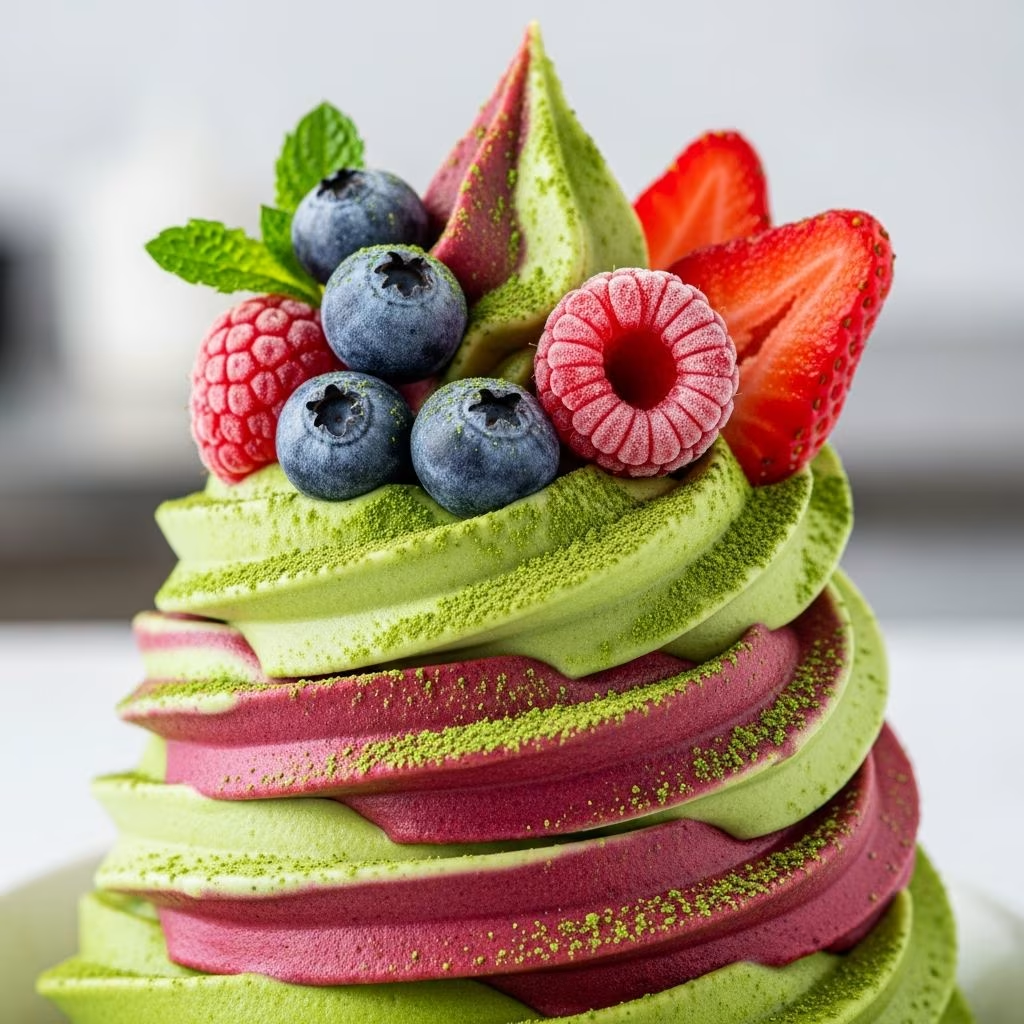
Frozen yogurt represents one of the most versatile canvas for culinary creativity, offering a lighter alternative to traditional ice cream while maintaining rich, indulgent satisfaction. When combined with the earthy complexity of matcha and the bright tartness of fresh berries, this frozen treat becomes a sophisticated dessert that appears restaurant-quality yet requires minimal equipment or expertise to prepare.
Understanding the Appeal of This Modern Frozen Treat
The combination of matcha and berry-infused frozen yogurt has gained considerable popularity among home cooks seeking to create elegant desserts without extensive culinary training. Unlike conventional ice cream preparations that demand specialized equipment or hours of churning, this approach uses simple blending techniques and relies on the natural creamy texture of Greek yogurt as its foundation. The addition of a hardened matcha-white chocolate shell introduces textural contrast and visual drama, transforming what could be an ordinary dessert into a memorable dining experience.
Greek yogurt serves as the primary base ingredient because of its inherent thick consistency, high protein content, and tanginess that balances the sweetness of added ingredients. When frozen, these characteristics translate into a smooth, spoonable texture that mimics soft-serve ice cream without requiring constant stirring or specialized machinery.
Essential Components and Their Functions
Building the Frozen Base
The foundation of this dessert depends on quality ingredients selected for both flavor and texture. Whole-milk Greek yogurt provides the creamy foundation, while frozen berries contribute natural acidity, color, and subtle fruit undertones. The choice between strawberries and raspberries affects the final flavor profile—strawberries offer sweeter, more familiar notes, whereas raspberries deliver pronounced tartness that cuts through richer elements.
Granulated sugar balances the acidic components while encouraging proper freezing consistency. A minimal salt addition enhances overall flavor complexity without creating noticeable saltiness. Heavy cream or coconut cream (for dairy-free preparations) enriches the texture, though this addition remains optional depending on desired intensity.
The Matcha Shell Component
White chocolate serves as the binding agent for the decorative shell topping. When melted with coconut oil, it achieves the precise fluidity necessary for coating the frozen yogurt surface while maintaining its ability to harden quickly upon contact with the cold base. Matcha powder dissolves into this mixture, imparting its distinctive grassy, slightly bitter character that contrasts elegantly with the sweetness of white chocolate and the tartness of the frozen yogurt beneath.
The Preparation Journey: Step-by-Step Instructions
Phase One: Creating the Frozen Foundation
Begin by assembling all ingredients near your blender for efficient workflow. Add the Greek yogurt, frozen berries, sugar, salt, and cream (if using) into the blender vessel. The order of ingredient addition rarely matters significantly, though placing heavier components at the bottom can occasionally assist blending efficiency.
Blend the mixture with consistent, medium-high speed until achieving a texture resembling thick milkshake—one that can be eaten with a spoon rather than sipped through a straw. This consistency indicates proper incorporation of all components with uniform distribution of berry flavor throughout. Frozen fruit pieces should completely break down into the yogurt base, creating a homogeneous, creamy mixture.
If the blender struggles or components fail to incorporate smoothly, use a spatula or tamper to push ingredients toward the blade. Patience during this phase prevents overworking the blender while ensuring complete texture development.
Phase Two: The Brief Freezing Window
Transfer the blended mixture into either the original yogurt container or a freezer-safe dish, depending on serving preference. Spreading the mixture into a shallow container rather than a deep one accelerates freezing and allows for more precise texture control.
Allow the mixture to freeze for approximately thirty minutes. This timeframe produces the ideal soft-serve consistency—frozen enough to hold structure yet soft enough to maintain a spoonable texture. Extending freezing time beyond two hours results in progressively icier, less pleasant textures as moisture crystallizes.
Phase Three: Preparing the Matcha Shell
While the frozen yogurt base reaches the appropriate consistency, prepare the matcha shell topping. In a microwave-safe bowl, combine chopped white chocolate and coconut oil. Microwave in short twenty to thirty-second intervals, stirring thoroughly between each burst to prevent scorching and ensure even melting. This gradual approach prevents the chocolate from becoming grainy or separated.
Once fully melted, whisk the matcha powder into the warm chocolate mixture until completely smooth and homogeneous. Lumps of matcha powder affect both appearance and texture of the final shell. Allow this mixture to cool for approximately five minutes—warm liquid will fail to harden properly on the frozen surface, while excessively hot mixture may partially melt the frozen yogurt base.
Phase Four: Assembly and Service
Remove the frozen yogurt from the freezer. If using a container rather than a bowl, transfer the mixture to a serving dish for visual presentation and easier shell application. Drizzle the slightly cooled matcha mixture over the surface in thin streams, creating an attractive pattern.
Allow two to three minutes for the shell to harden completely. The white chocolate and coconut oil combination creates a firm but crisp coating that cracks dramatically when cracked with a spoon—a satisfying textural and auditory experience. Serve immediately to enjoy the optimal contrast between the cold, soft frozen yogurt and the crackling shell topping.
Variations and Adaptations
Flavor Modifications
While the original combination serves as an excellent baseline, numerous adaptations accommodate various palates and dietary requirements. Alternative berry selections including blueberries, blackberries, or mixed berry combinations each contribute distinct flavor characteristics. Citrus zest additions brighten the overall profile, while vanilla extract enhances creaminess.
Dietary Considerations
Greek yogurt varieties ranging from traditional dairy to plant-based alternatives each produce slightly different results. Coconut cream substitutes heavy cream for entirely dairy-free preparations without compromising texture or richness. Dark chocolate coating options reduce sweetness levels for those preferring less sugary desserts.
Common Challenges and Solutions
| Challenge | Potential Cause | Solution |
|---|---|---|
| Grainy, icy texture | Excessive freezing time | Reduce freezing duration to 30-45 minutes |
| Shell fails to harden | Mixture too warm or insufficient coconut oil | Cool shell mixture longer; add more coconut oil |
| Lumpy matcha powder | Powder not whisked sufficiently | Sift matcha before adding; whisk vigorously |
| Too sweet overall | Excess sugar in recipe | Reduce sugar to 1.5 tablespoons; use tart berries |
Ingredient Quality and Selection Tips
The success of this dessert depends significantly on ingredient quality. Select Greek yogurt brands with minimal additives and stabilizers for cleaner flavor profiles. Frozen berries should contain no added sugar or preservatives—single-ingredient frozen fruit collections represent the optimal choice.
Matcha powder deserves particular attention, as lower-grade powders contain bitter, astringent notes that overwhelm other flavors. Culinary-grade matcha specifically intended for beverages and desserts produces superior results compared to ceremonial grades (which suit traditional tea preparation) or bargain-basement options lacking flavor complexity.
Frequently Asked Questions
Can this recipe be prepared in advance?
The frozen yogurt base can be prepared several hours ahead and stored in the freezer. The matcha shell coating should be applied immediately before serving to achieve maximum crispness and visual impact. Frozen yogurt stored longer than twenty-four hours develops ice crystals and becomes progressively less pleasant in texture.
Does this recipe work with non-dairy yogurt alternatives?
Yes, non-dairy Greek yogurt alternatives function adequately, though results may vary slightly in texture and richness compared to dairy versions. Coconut-based yogurts produce the most similar creamy results.
Can the recipe be scaled for multiple servings?
This recipe multiplies easily for four servings by quadrupling all ingredients. Prepare in batches rather than attempting single large-batch blending for optimal texture control.
What storage recommendations exist for leftover matcha shell mixture?
Leftover matcha-white chocolate mixture stores in an airtight container at room temperature for up to one week, though it may require gentle reheating before reuse.
Serving Suggestions and Presentation Ideas
Serve this dessert in shallow bowls that showcase both the layers and the dramatic shell topping. Garnish with fresh berries, toasted coconut flakes, or a light dusting of additional matcha powder for visual sophistication. Pair with complementary beverages including green tea, light sparkling wine, or simple herbal infusions.
This dessert suits summer entertaining, providing an elegant conclusion to casual dinner gatherings without requiring advance preparation stress. The theatrical shell-cracking moment engages guests and creates memorable sensory experiences beyond simple taste satisfaction.
References
- Nutritional Benefits of Greek Yogurt — U.S. Department of Agriculture (USDA) FoodData Central. 2024. https://fdc.nal.usda.gov/
- Frozen Berry Storage and Quality — National Center for Home Food Preservation, University of Georgia. 2023. https://nchfp.uga.edu/
- Matcha Powder: Composition and Culinary Applications — Journal of Food Composition and Analysis, Academic Research. 2023. https://www.sciencedirect.com/journal/journal-of-food-composition-and-analysis
- Chocolate Tempering and Coating Techniques — Institute of Culinary Education Research Database. 2024. https://www.iceculinary.edu/