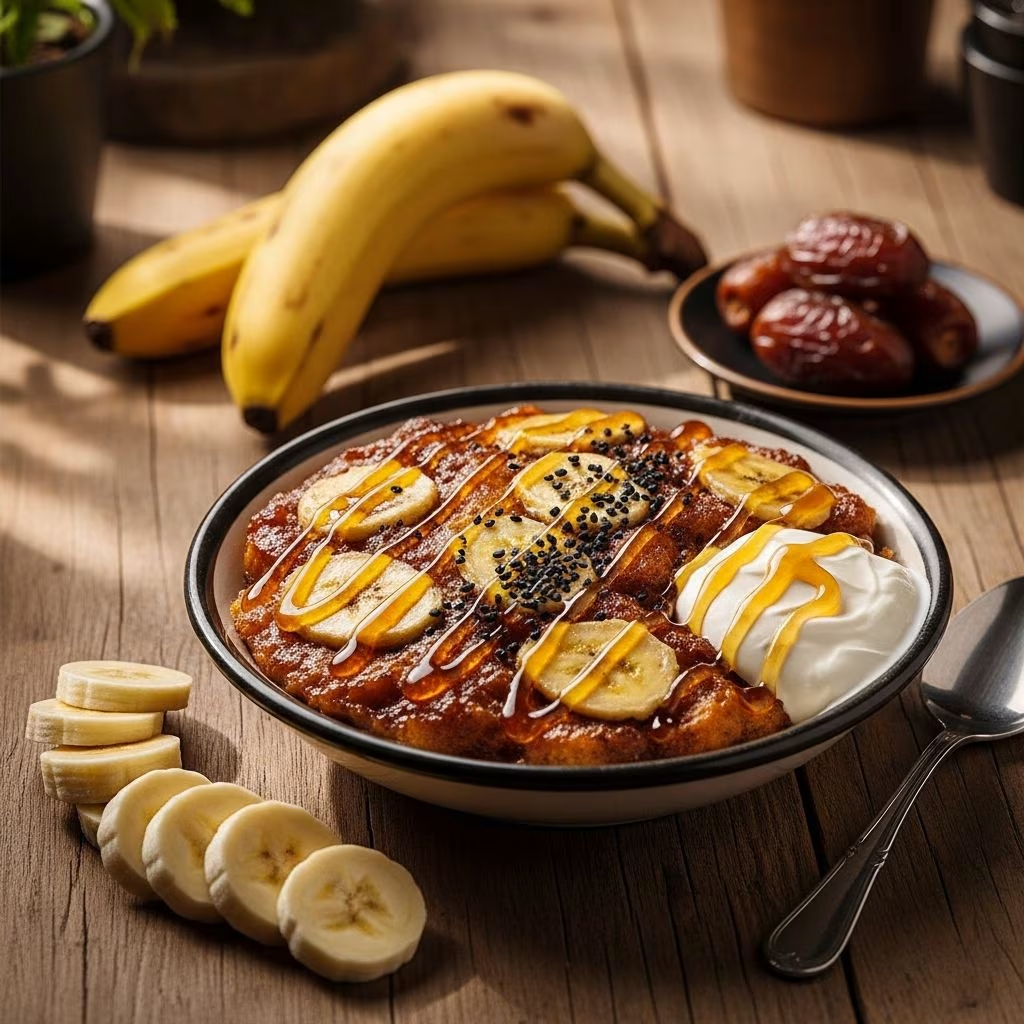
Masoub stands as a cherished dish from Yemen, extending its appeal across Saudi Arabia and the UAE. This uncomplicated yet flavorful creation combines everyday ingredients into a pudding-like treat that serves as both a hearty breakfast and a satisfying dessert. At its core, Masoub features mashed ripe bananas blended with coarsely ground whole wheat flatbread, enriched by honey’s natural sweetness and cream’s velvety texture.
Origins and Cultural Significance
Rooted in Yemeni culinary traditions, Masoub—sometimes called Malakia—reflects the resourcefulness of Arabian Peninsula cooking. It transforms humble staples like overripe bananas and local flatbreads into something indulgent. Families often prepare it fresh in the morning, grinding bread on-site for optimal texture, as noted in traditional settings where hot bread is rolled and processed immediately.
In regions like Yemen and Saudi Arabia, Masoub embodies communal eating. It’s commonly shared at breakfast tables, providing quick energy from bananas’ natural sugars and bread’s sustaining fibers. Variations highlight regional twists: some incorporate dates for chewiness, while others drizzle extra honey or add nuts for crunch. Its popularity underscores a preference for dishes that balance sweet, creamy, and earthy notes without elaborate preparation.
Key Ingredients Breakdown
The beauty of Masoub lies in its minimalism. Here’s a detailed look at what makes it work:
- Ripe Bananas: Use 3-4 very ripe ones per 4 servings. Their soft texture mashes easily, releasing sweetness that needs no added sugar.
- Whole Wheat Flatbread: 2-4 loaves (pita or Arabic bread works). Ground coarsely, it absorbs flavors while retaining a subtle nuttiness.
- Honey: 1/4 cup or to taste. Provides golden sweetness and a glossy finish.
- Cream: Qishta, clotted cream, heavy cream, or whipped cream (1 can or 1 pint). Adds richness and binds everything.
- Ghee or Butter: 4 teaspoons, optional for extra depth.
- Toppings: Sliced almonds, golden raisins, shredded mild cheddar, or caramelized banana slices for contrast.
This combination yields a 1:1 ratio of banana to bread by volume, ensuring neither overwhelms the other.
Step-by-Step Preparation Guide
Making Masoub takes under 30 minutes. Follow these steps for authentic results:
- Prepare Bananas: Peel 4 very ripe bananas and mash them thoroughly in a large bowl using a fork. Aim for a smooth but slightly chunky consistency to maintain some texture.
- Grind Bread: Tear 4 whole wheat flatbreads into pieces. Pulse in a food processor or use a meat grinder for a coarse crumb. Match the volume to the mashed bananas.
- Combine Base: Fold ground bread into bananas until evenly mixed. Stir in 4 teaspoons melted ghee or butter, half the cream, and 1/4 cup honey. Taste and adjust sweetness.
- Assemble and Top: Transfer to a serving dish. Smooth the top and layer with remaining cream, raisins, almonds, honey drizzle, and optional cheddar cheese.
- Serve Warm: Microwave for 30 seconds or warm gently on stovetop. For luxury, caramelize banana slices in butter first and scatter on top.
Serves 4 generously. Pro tip: Freshly ground hot bread elevates texture, mimicking street-side preparations.
Variations Across the Arabian Peninsula
Masoub adapts seamlessly to local tastes. Consider these popular twists:
| Variation | Region/Influence | Key Additions |
|---|---|---|
| Classic Yemeni | Yemen | Fried flatbread, qishta cream, dates |
| Saudi Style | Saudi Arabia | Whipped cream, cheddar cheese, almonds |
| UAE Breakfast | UAE | Extra honey, raisins, optional nuts |
| Caramelized Edition | Modern Twist | Browned bananas, butter, heavy cream |
Experiment with whole wheat pita or even sliced bread for convenience. Some skip cheese, but its salty contrast pairs surprisingly well with sweetness.
Nutritional Profile and Health Benefits
Masoub offers balanced nutrition. Per serving (1/4 recipe):
- Calories: ~350-450 (varies with toppings)
- Carbs: High from bananas and bread, providing sustained energy.
- Potassium: Abundant from bananas, supporting heart health.
- Fats: From cream and ghee, in moderation for satiety.
- Fiber: Whole wheat bread aids digestion.
Opt for less honey and low-fat cream to lighten it up. It’s naturally gluten-containing but can use gluten-free flatbread alternatives.
Pairing Suggestions and Serving Ideas
Masoub shines solo but pairs beautifully with Arabic coffee or mint tea to cut richness. Serve in individual bowls for breakfast or a large platter for gatherings. For dessert, chill slightly and add fresh fruits.
Seasonal twist: In summer, incorporate chilled cream; winter calls for warm, ghee-infused versions.
Common Mistakes and Pro Tips
Avoid these pitfalls:
- Over-Grinding Bread: Keep it coarse for texture.
- Under-Ripe Bananas: They lack sweetness and mash poorly.
- Skipping Taste Test: Honey varies; adjust per batch.
Pro tips: Use room-temperature ingredients for smooth mixing. Grind bread just before use to prevent sogginess.
Frequently Asked Questions (FAQs)
What is Masoub made of?
Masoub is primarily mashed ripe bananas, ground whole wheat flatbread, honey, and cream, topped with nuts, raisins, or cheese.
Is Masoub sweet or savory?
It’s sweetly fruity with optional savory cheese topping for balance.
Can I make Masoub vegan?
Yes—use plant-based cream, maple syrup instead of honey, and coconut oil for ghee.
How long does Masoub keep?
Best fresh, but refrigerate up to 24 hours. Reheat gently.
Where did Masoub originate?
Yemen, popular in Saudi Arabia and UAE for breakfast.
Why Masoub Deserves a Spot in Your Kitchen
This dish proves simplicity yields profound flavor. Its versatility—from quick breakfast to festive dessert—makes it timeless. Next time you have overripe bananas, skip the usual banana bread and try Masoub for an exotic, comforting alternative.
References
- Masoub (Yemeni banana bread pudding) – Chef in disguise — Chef in Disguise. 2016-06-27. https://chefindisguise.com/2016/06/27/masoub-yemeni-banana-bread-pudding/
- Arabic Breakfast Recipe: Masoub, a Saudi Arabian Banana — Culture At Z. N/A. https://cultureatz.com/masoub-banana-arabic-breakfast-recipe/
- Masoub/Malikia: Banana and Bread Pudding-like dessert — Taste Buds. N/A. https://tastebuds.livejournal.com/59238.html
- Yemeni banana bread (masoub) recipe — SBS Food. N/A. https://www.sbs.com.au/food/the-cook-up-with-adam-liaw/recipe/yemeni-banana-bread-masoub/ashrwuax7