Masala urad dal represents one of the most beloved preparations in North Indian cuisine, offering a harmonious blend of creamy texture and complex spice profiles. This traditional dish transforms humble black lentils into a sophisticated comfort food through the careful application of cooking techniques and aromatic seasonings. Understanding the nuances of this recipe allows home cooks to recreate restaurant-quality results in their own kitchens.
Understanding Urad Dal Varieties and Selection
The foundation of any exceptional masala urad dal begins with selecting the appropriate type of urad dal. Whole urad dal (sabut urad dal) forms the cornerstone ingredient for this preparation, as it maintains its structural integrity while developing a naturally creamy consistency during cooking. This variety differs from split urad dal, which lacks the outer skin and produces a different texture profile.
When shopping for urad dal, you will encounter three main classifications. Whole urad dal retains its dark outer skin, creating the most luxurious creaminess. Split urad dal with skin (chilka) offers a middle ground between texture and cooking time. Split urad dal without skin (dhuli) cooks more quickly but produces a less creamy final product. For traditional masala urad dal, whole urad dal consistently delivers superior results due to its ability to release starches gradually, creating that signature velvety mouthfeel.
Quality matters significantly when selecting your dal. Purchase from reputable sources that maintain fresh inventory, as older dal may contain small stones or debris. Store purchased dal in airtight containers away from moisture and strong odors to preserve its quality for extended periods.
Essential Ingredients and Their Roles
The Protein Base
The foundation of masala urad dal relies on one cup of whole black lentils, which expand and develop flavor as they cook. Soaking these lentils overnight or for at least four hours reduces cooking time and improves digestibility. This preparatory step hydrates the legume, allowing more even cooking and better absorption of spices.
Fat and Flavor Foundation
Ghee or oil serves as the primary cooking medium and flavor carrier. Ghee, the clarified butter used extensively in Indian cooking, imparts a rich, nutty undertone that elevates the entire dish. However, vegetable oil, mustard oil, or olive oil provide excellent alternatives depending on dietary preferences and desired flavor intensity. The choice of fat influences the final taste significantly—ghee delivers traditional richness, while mustard oil contributes a rustic, peppery note.
Aromatic Building Blocks
Cumin seeds form the first layer of aromatics, releasing their essential oils when heated in hot ghee. A medium onion, finely chopped, provides sweetness and depth when sautéed until translucent. Fresh ginger and garlic paste (approximately 1.5 teaspoons) contributes warming, pungent notes that develop as the dal cooks. Green chilies add fresh heat and brightness, though quantity depends on personal spice tolerance.
The Tomato Component
Tomato puree, approximately half a cup, creates the aromatic base (masala) that characterizes this dish. Store-bought tomato puree offers convenience and consistent texture, though fresh tomatoes can be blended for a more natural approach. Some recipes incorporate tomato paste for intensified flavor concentration.
Dry Spice Blend
The spice combination includes:
- Coriander powder (1 teaspoon): Adds warm, slightly sweet notes
- Turmeric powder (1/4 teaspoon): Provides earthy warmth and golden color
- Red chili powder (1/4 to 1/2 teaspoon): Contributes heat and color intensity
- Garam masala (1/4 teaspoon): Brings complex warmth from cardamom, cinnamon, and cloves
- Sea salt (3/4 teaspoon adjusted to taste): Balances and enhances all other flavors
Preparation Techniques and Cooking Methods
Pre-Cooking Preparation
Begin by thoroughly washing the urad dal under cool running water until the water runs clear. This removes dust, debris, and excess starch that would otherwise cloud the cooking liquid. Soak the cleaned dal in sufficient water to cover completely, allowing it to absorb moisture overnight or for a minimum of four hours. After soaking, drain and rinse once more before cooking.
Building the Masala Base
Heat ghee in a pressure cooker or heavy-bottomed pot over medium heat until shimmering. Add cumin seeds and allow them to crackle briefly, releasing their volatile oils. Immediately introduce the chopped onion and green chili, stirring frequently until the onion becomes soft and golden rather than translucent. This deeper cooking of the onion develops more complex sugars and caramelized flavors.
Once the onion reaches the desired texture, add ginger-garlic paste and cook for approximately one minute, stirring constantly to prevent burning. Pour in the tomato puree and continue cooking for two to three minutes, stirring frequently. The mixture should darken slightly and thicken as excess moisture evaporates.
Introducing Spices
Add the coriander powder, turmeric, red chili powder, and salt to the tomato mixture. Stir vigorously for thirty seconds, coating all ingredients with spice powder. This brief cooking period allows the spices to bloom in the hot fat, developing deeper flavor compounds without allowing them to scorch.
Pressure Cooking Method
Add the soaked and drained urad dal to the spiced masala base, stirring to combine thoroughly. Pour in approximately three cups of water and stir to distribute the dal evenly. Close the pressure cooker lid and place over medium-high heat. Allow the cooker to reach full pressure, then cook for approximately ten whistles before reducing heat to low-medium and cooking for an additional ten to fifteen minutes. Total pressure cooking time typically ranges from twenty to twenty-five minutes.
Allow the pressure to release naturally rather than using the quick-release valve, as this gradual pressure reduction helps maintain the dal’s creamy structure. Opening the cooker prematurely can result in partially cooked lentils.
Stovetop Alternative
For those without pressure cookers, prepare the masala base identically but use a heavy-bottomed pot instead. After adding the dal and water, bring to a boil over high heat, then reduce to medium-low. Cover partially and simmer for approximately forty-five minutes to one hour, stirring occasionally and adding water as needed to prevent sticking. The dal should break down gradually, creating a creamy consistency.
Achieving the Ideal Texture and Consistency
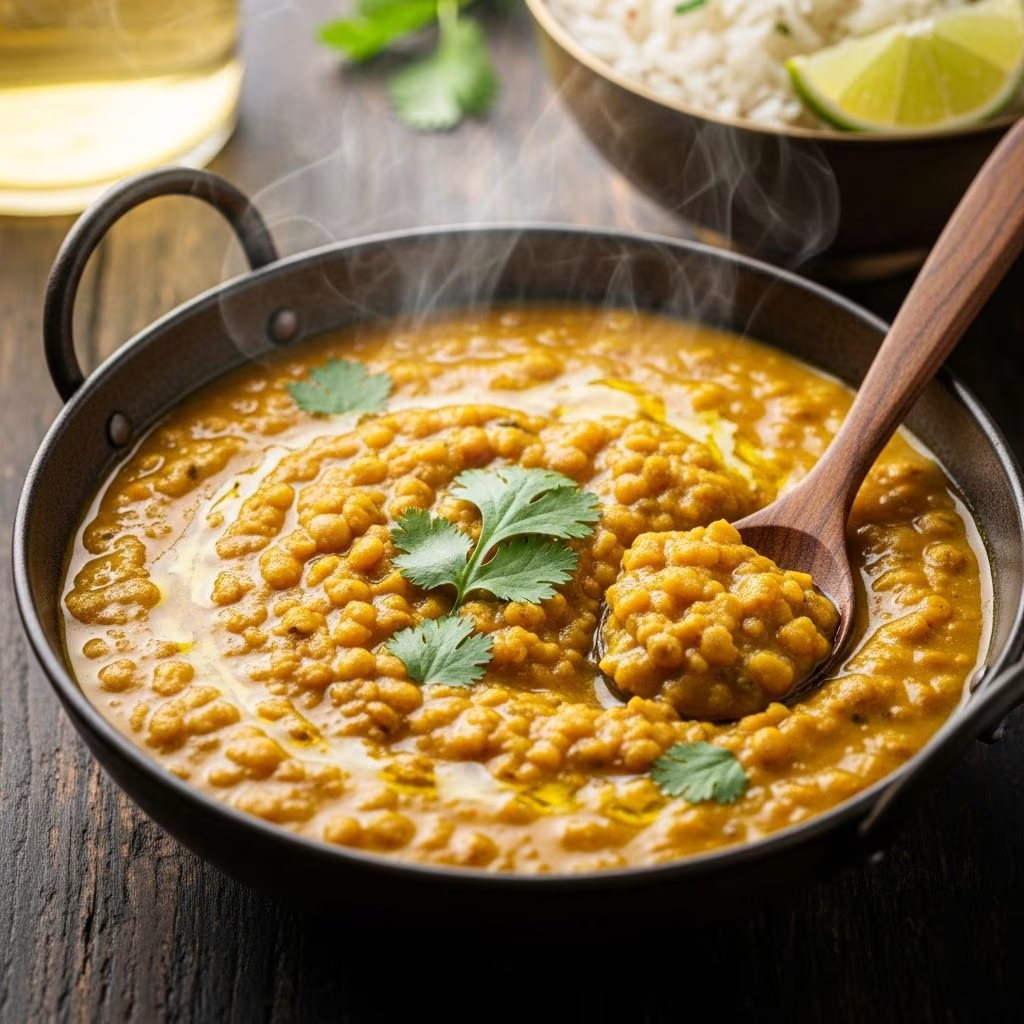
Once pressure has fully released or the dal has finished simmering, open the lid carefully and assess the texture. The dal should appear partially broken down, with some whole lentils remaining visible while others have begun to disintegrate into the cooking liquid. Using the back of a spatula or wooden spoon, gently crush some of the cooked lentils against the side of the pot, creating a creamy texture while maintaining some structural integrity.
At this stage, add the garam masala (an additional quarter teaspoon) and fresh cilantro (two to three tablespoons chopped). Turn the heat to low-medium and allow the dal to simmer for approximately five minutes, permitting the flavors to meld and integrate. Taste the preparation and adjust salt as needed, as cooking may have concentrated flavors or absorbed salt into the lentils.
The consistency should resemble a thick soup rather than a stew—creamy and spoonable but not overly thick. If the dal appears too thick, add water gradually (one quarter cup at a time) until reaching the desired consistency. Conversely, if too thin, simmer uncovered for additional minutes to evaporate excess liquid.
Flavor Customization and Variations
Spice Level Adjustment
The heat intensity can be easily modified based on personal preference and guest considerations. Reduce red chili powder to one-eighth teaspoon for milder preparations, or increase to three-quarters teaspoon for those who enjoy significant heat. Kashmiri red chili powder provides color and mild heat without overwhelming intensity, making it ideal for balanced flavor.
Enrichment Options
Many cooks add butter or cream during the final minutes of cooking to create an even more luxurious version reminiscent of dal makhani. A tablespoon or two of butter, stirred in just before serving, imparts richness without requiring extended cooking time. Heavy cream (one to two tablespoons) can be drizzled on top at serving time for restaurant-style presentation.
Whole Spice Enhancement
For more complex flavor development, some recipes employ whole spices including bay leaves, cinnamon sticks, black cardamom, and cloves. These aromatics should be added during the masala preparation phase and can be removed before serving or left in the dish depending on preference.
Serving Suggestions and Accompaniments
Masala urad dal traditionally pairs with steamed basmati rice, allowing the creamy dal to coat each grain and balance the rice’s subtle flavor. Indian breads including roti, naan, or paratha also complement the dish wonderfully, providing vehicles for enjoying the rich sauce.
For presentation, serve in shallow bowls and garnish with:
- Fresh cilantro leaves for brightness and herbaceousness
- A dollop of ghee or butter for richness
- Thinly sliced fresh ginger for texture and heat
- Chopped green onions for mild onion flavor and visual appeal
- A squeeze of fresh lemon juice for acidity that cuts through richness
Storage and Make-Ahead Considerations
Masala urad dal improves with time as flavors continue developing, making it excellent for advance preparation. Store cooled dal in airtight containers in the refrigerator for up to four days. When reheating, add a small amount of water or broth to restore the ideal consistency, as the dal may thicken as it sits. Gently simmer over low heat, stirring occasionally to prevent sticking.
The dal can also be frozen for up to three months. Transfer to freezer-safe containers, leaving slight headspace for expansion. Thaw overnight in the refrigerator before reheating, adjusting consistency as needed with added liquid.
Nutritional Profile and Health Benefits
Urad dal serves as an excellent plant-based protein source, containing approximately twenty-five grams of protein per cooked cup. The combination of lentils with turmeric and other spices creates an anti-inflammatory preparation valued in traditional Indian medicine systems. The high fiber content supports digestive health while promoting satiety.
Pairing dal with rice creates a complete amino acid profile, as lentils provide complementary proteins to grains. This combination formed the nutritional foundation of traditional Indian diets for centuries.
Frequently Asked Questions
Why is my dal too thick?
Thickness often results from insufficient water during cooking or extended simmering that evaporates liquid. Add water gradually in quarter-cup increments while stirring, heating gently until reaching desired consistency.
Can I use split urad dal instead of whole?
Yes, though results differ slightly. Split dal cooks faster (approximately thirty minutes) and produces a less creamy texture. Reduce cooking time accordingly and monitor carefully to prevent overcooking.
Is masala urad dal vegan-friendly?
Absolutely. Simply substitute ghee with vegetable oil or coconut oil, and omit any butter or cream enrichments. The dal develops excellent flavor from spices and aromatics alone.
How can I prevent the dal from sticking to the pot bottom?
Use a heavy-bottomed pot that distributes heat evenly. Stir occasionally during cooking, and ensure adequate water throughout the process. If using a pressure cooker, ensure proper liquid levels before sealing.
What if I forgot to soak the dal overnight?
Soak for a minimum of four hours in room temperature water, or use hot water and soak for one to two hours. Extended pressure cooking (add five to ten minutes) can accommodate under-soaked dal, though results may be less consistent.
References
- Urad Dal Recipe (Maa ki Dal) — Cook With Manali. Accessed April 2026. https://www.cookwithmanali.com/urad-dal-recipe/
- Urad Dal (Black Dal) — Swasthi’s Recipes. Accessed April 2026. https://www.indianhealthyrecipes.com/urad-dal-black-dal/
- Masala Urad dal: buttery deliciousness — The Flavor Bells. Accessed April 2026. https://theflavorbells.com/masala-urad-dal/
- Creamy & Rustic Langarwali Dal (Amritsari dal) Recipe — The Belly Rules The Mind. Accessed April 2026. https://thebellyrulesthemind.net/langar-wali-amritsari-spicy-urad-dal-recipe/
- Masala White Urad Dal Recipe (Vegan) — Kitchen and Other Stories. Accessed April 2026. https://kitchenandotherstories.com/masala-white-urad-dal/