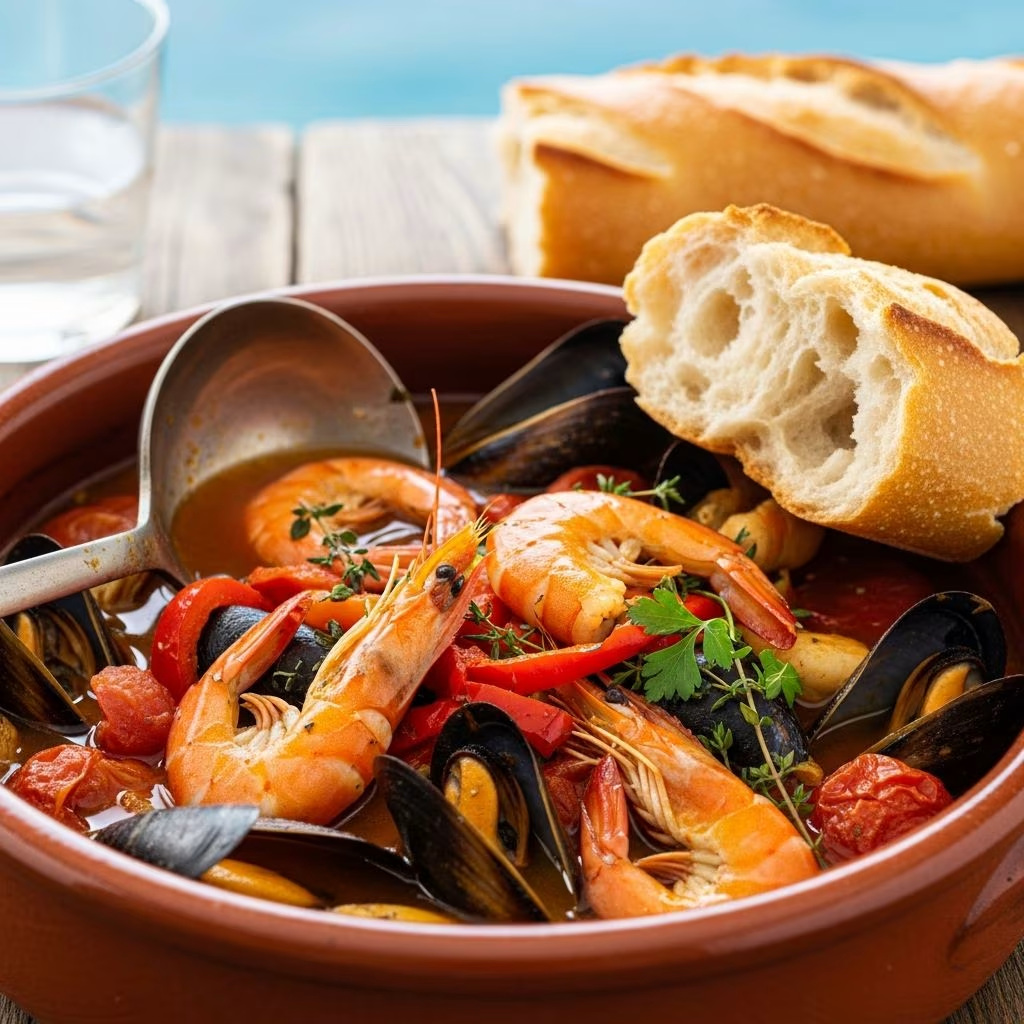
The coastal city of Marseille has long been celebrated for its vibrant culinary traditions, where fresh seafood and aromatic Mediterranean ingredients converge to create dishes of remarkable depth and character. One of the most iconic preparations from this region is the **Marseille-style shrimp stew**, a sophisticated yet approachable dish that captures the essence of French provincial cooking. This recipe represents more than just a meal; it embodies centuries of maritime heritage and the art of transforming simple ingredients into something extraordinary.
The beauty of this particular stew lies in its balance of flavors. The natural sweetness of fennel combines with the subtle bitterness of saffron, while wine and tomatoes provide acidity and depth. Fresh jumbo shrimp serve as the protein foundation, their delicate texture providing contrast to the robust sauce. Paired with rouille—a garlic-infused mayonnaise—spread on toasted bread, this dish delivers a complete sensory experience that feels both luxurious and comforting.
Understanding the Historical and Cultural Context
Marseille’s location on the Mediterranean coast has shaped its food culture profoundly. For centuries, local fishermen have brought their daily catches to markets where home cooks and restaurant chefs alike select the finest specimens. The shrimp stew represents an evolution of traditional bouillabaisse, adapted for smaller households and modern dining preferences. Rather than the elaborate multi-fish version requiring rare ingredients and specialized knowledge, this rendition focuses on quality shrimp prepared in a sauce that celebrates Provençal aromatics.
The dish reflects the region’s historical trade connections. Saffron, one of the recipe’s signature ingredients, arrived in southern France through centuries of Mediterranean commerce. The wine and olive oil speak to local production, while orange zest hints at historical citrus cultivation in the region. This stew is, in many ways, a edible history book of Marseille’s commercial and culinary evolution.
Essential Ingredients and Their Functions
Success with this recipe begins with understanding each ingredient’s role in the final composition:
- Jumbo Shrimp: These large specimens provide substantial texture and require just 5 minutes of cooking, preventing overcooking while allowing the meat to remain tender. The size also makes this a knife-and-fork dish rather than a finger food.
- Fennel Bulb: When finely chopped and softened in oil, fennel develops a subtle anise character that distinguishes this stew from other seafood preparations. It adds both sweetness and aromatic complexity.
- Saffron Threads: This precious spice contributes not just flavor but also a distinctive golden hue. Crumbled threads release their essence more effectively than pre-ground saffron.
- Orange Zest: Bitter and fragrant, orange zest provides brightness that prevents the sauce from becoming too heavy. The zest is discarded before serving, having imparted its essence during cooking.
- Clam Juice: This ingredient adds umami depth and salinity without requiring fresh clams. It creates a more complex broth than water alone.
- Dry White Wine: A crisp white wine adds acidity and complexity. Cooking it down concentrates its flavors rather than leaving raw alcohol notes.
- Canned Whole Tomatoes: These provide consistent quality year-round and break down into a velvety sauce when simmered properly.
Preparing the Rouille Accompaniment
The rouille represents the stew’s essential companion, and many diners would argue it’s equally important as the main dish. This traditional Provençal spread combines garlic, mayonnaise, and spices into a luxurious condiment that acts as both flavor enhancer and textural contrast.
Rouille Preparation Method: Begin by mincing 2 garlic cloves finely and mashing them with a pinch of salt in a small bowl. The salt acts as an abrasive to break down the garlic into a paste. Gradually whisk in half a cup of mayonnaise, ensuring the mixture remains smooth and emulsified. Add one teaspoon of fresh lemon juice for brightness, half a teaspoon of paprika for color and subtle smokiness, and a pinch of cayenne pepper for gentle heat. The final step involves whisking in one tablespoon of extra-virgin olive oil, which adds richness and helps achieve the proper consistency. Prepare this ahead of time, allowing flavors to meld while you focus on the stew itself.
Building the Base: Vegetables and Aromatics
The foundation of exceptional stew begins with proper vegetable preparation. Finely chop one medium fennel bulb after removing the core, and prepare one medium yellow onion the same way. Proper chopping size matters—pieces should be roughly uniform to ensure even cooking and consistent texture throughout the dish.
Heat three tablespoons of high-quality extra-virgin olive oil in a large, deep skillet over moderately high heat. The oil should shimmer but not smoke, indicating proper temperature. Add the prepared fennel and onion, seasoning lightly with salt and freshly ground black pepper. Cook while stirring occasionally for approximately 7 minutes. The vegetables should become translucent and tender, beginning to release their natural sugars. This step is crucial—rushing it prevents the fennel from developing its characteristic sweetness.
Next, add 4 minced garlic cloves, three 1-inch strips of orange zest, and a pinch of ground cloves. Stir constantly for about 30 seconds to 1 minute, allowing the garlic to become fragrant without browning. The ground cloves add a subtle warmth that complements the other aromatics perfectly.
Deglazing and Building Sauce Depth
Pour in half a cup of dry white wine, stirring to deglaze the pan. The acidic wine dissolves the flavorful browned bits adhering to the pan’s bottom—these fond particles contain concentrated flavor essential to the final result. Allow the wine to cook for approximately 5 minutes, during which time most of it will evaporate, leaving behind concentrated flavor and reducing the harshness of raw alcohol.
Add one cup of bottled clam juice, one cup of canned whole tomatoes (chopped), and one quarter teaspoon of saffron threads that have been crumbled to release their essence. Pour in one cup of water and bring the mixture to a boil. Once boiling, lower the heat to achieve a gentle simmer and cook uncovered for about 10 minutes, allowing the sauce to reduce by approximately half. This reduction concentrates flavors and creates a silkier consistency. Taste the sauce and adjust seasoning with additional salt and freshly ground black pepper as needed.
Cooking the Shrimp to Perfection
Add 1.5 pounds of jumbo shrimp—peeled and deveined—to the simmering sauce. Cover the skillet and cook over moderate heat for approximately 5 minutes, turning the shrimp once halfway through cooking. The shrimp will turn from translucent gray to opaque pink, indicating doneness. Overcooked shrimp become tough and rubbery, so precision timing is essential. Immediately remove from heat once the shrimp reach the desired doneness.
Before serving, discard the strips of orange zest that flavored the sauce. This prevents bitter notes and provides visual clarity to the final dish.
Serving and Presentation Techniques
Slice one half baguette into half-inch thick pieces and toast them until golden and crispy. Spread each toast with the prepared rouille. Ladle the hot stew into shallow bowls, ensuring each portion receives several shrimp and adequate sauce. Arrange the rouille-topped toasts alongside, allowing diners to dip them into the stew or place them directly in the bowl. This interactive presentation element adds to the dining experience.
Ingredient Substitutions and Variations
While this recipe delivers authentic results, certain modifications accommodate dietary preferences or ingredient availability:
| Original Ingredient | Suitable Alternatives | Notes |
|---|---|---|
| Clam juice | Chicken or vegetable stock, seafood stock | Maintains similar body and umami depth |
| White wine | Dry vermouth, additional stock plus vinegar | Preserves acidity and complexity |
| Jumbo shrimp | Scallops, firm fish, mussels, mixed seafood | Adjust cooking times based on protein size |
| Mayonnaise-based rouille | Aioli with egg yolk base, Greek yogurt version | Maintains garlic flavor and richness |
Frequently Asked Questions
Can this stew be made ahead of time?
Yes, prepare the sauce through the reduction step up to one day in advance. Refrigerate in an airtight container. Reheat gently over medium heat before adding the shrimp and cooking just before serving. This prevents overcooking the seafood while allowing flavors to develop.
What wine should I use for this recipe?
Choose a crisp, dry white wine with good acidity—Sauvignon Blanc, Pinot Grigio, or Chablis work well. Avoid heavily oaked or sweet wines. Select something you would enjoy drinking, as the wine’s character influences the final flavor profile.
How do I know when the sauce has reduced properly?
The sauce should coat the back of a spoon and drip off slowly. When drawn across the spoon with your finger, it should leave a distinct trail. Visual volume reduction should be approximately 50 percent from the starting amount.
Can I use frozen shrimp?
Yes, but thaw them completely before cooking. Pat them dry with paper towels to remove excess moisture, which ensures proper browning and prevents the stew from becoming watery. Use raw frozen shrimp rather than pre-cooked varieties for better texture and flavor.
What if I can’t find saffron threads?
While authentic results require saffron, turmeric can approximate the color though not the flavor. Use approximately one-eighth teaspoon of turmeric. Alternatively, source saffron online from reputable suppliers specializing in specialty spices.
Flavor Development and Cooking Science
Understanding the chemical processes occurring during preparation helps refine technique. When fennel and onion soften over moderate heat, their cell walls break down, releasing sugars that caramelize slightly, creating depth. Garlic develops different flavor compounds depending on cooking time—brief heating creates pungency, while extended cooking produces sweetness and mellow notes. The saffron threads require gentle heat to dissolve their color and flavor compounds into the surrounding liquid, which occurs naturally through simmering.
Wine reduction concentrates its flavor compounds while alcohol evaporates. This process takes time—rushing by using high heat causes unpleasant sulfur notes to persist. The tomatoes break down into the sauce, creating a naturally thickened consistency without added flour or cream, allowing the pure flavors of ingredients to dominate.
Wine Pairing Recommendations
Serve this stew with a chilled Provençal rosé wine, which echoes the dish’s Mediterranean origin while complementing its delicate seafood and aromatic profile. Alternatively, a light Côtes de Provence white wine provides similar regional harmony. For non-wine drinkers, sparkling cider or a Mediterranean-style non-alcoholic beverage works well.
Conclusion: Mastering Mediterranean Elegance
This Marseille-style shrimp stew represents accessible elegance—a dish impressive enough for entertaining yet straightforward enough for weeknight dinner. The careful layering of flavors, precise timing, and quality ingredients combine to create something greater than the sum of its parts. Once you understand the fundamental techniques, you possess knowledge applicable to numerous other French and Mediterranean preparations. Whether you’re seeking to expand your culinary repertoire or simply craving authentic coastal cuisine, this recipe delivers consistently excellent results.
References
- Marseille Style Shrimp Stew Recipe — RecipeZazz. https://www.recipezazz.com/recipe/marseille-style-shrimp-stew-17807
- Marseille Style Shrimp Stew — il Fustino. https://ilfustino.com/blogs/recipes/marseille-style-shrimp-stew
- Marseille-Style Shrimp Stew — Inspired Cuisine. https://inspiredcuisine.ca/recipe/marseille-style-shrimp-stew/
- The Marseille-Style Shrimp Stew — Foods Around The World. https://foodsaroundtheworld.com/recipe/the-marseille-style-shrimp-stew-2/
- Marseille-Style Shrimp Stew: A Culinary Journey — YouTube. https://www.youtube.com/watch?v=-mErFNEIR5E