Understanding This Iconic Atlantic Canadian Condiment
Maritime donair sauce represents one of Atlantic Canada’s most distinctive culinary contributions, a unique condiment that has become synonymous with the region’s food culture. This creamy, sweet, and tangy sauce defies traditional sauce categories, combining elements of dessert-like sweetness with savory garlic undertones. Unlike conventional condiments that follow established flavor profiles, donair sauce occupies a distinctive niche in North American gastronomy, creating an instantly recognizable taste that captures the essence of Halifax and the broader Maritimes.
The sauce emerged as a defining element of Maritime donair wraps, which differ significantly from Middle Eastern gyros or shawarma despite superficial similarities. Where Mediterranean cuisines employ tzatziki or yogurt-based accompaniments, Maritime food culture developed this innovative sweetened condensed milk base that transforms the dining experience entirely. The contrast between the rich, creamy base and the sharp vinegar notes creates a flavor complexity that belies the ingredient simplicity.
Core Components and Ingredient Selection
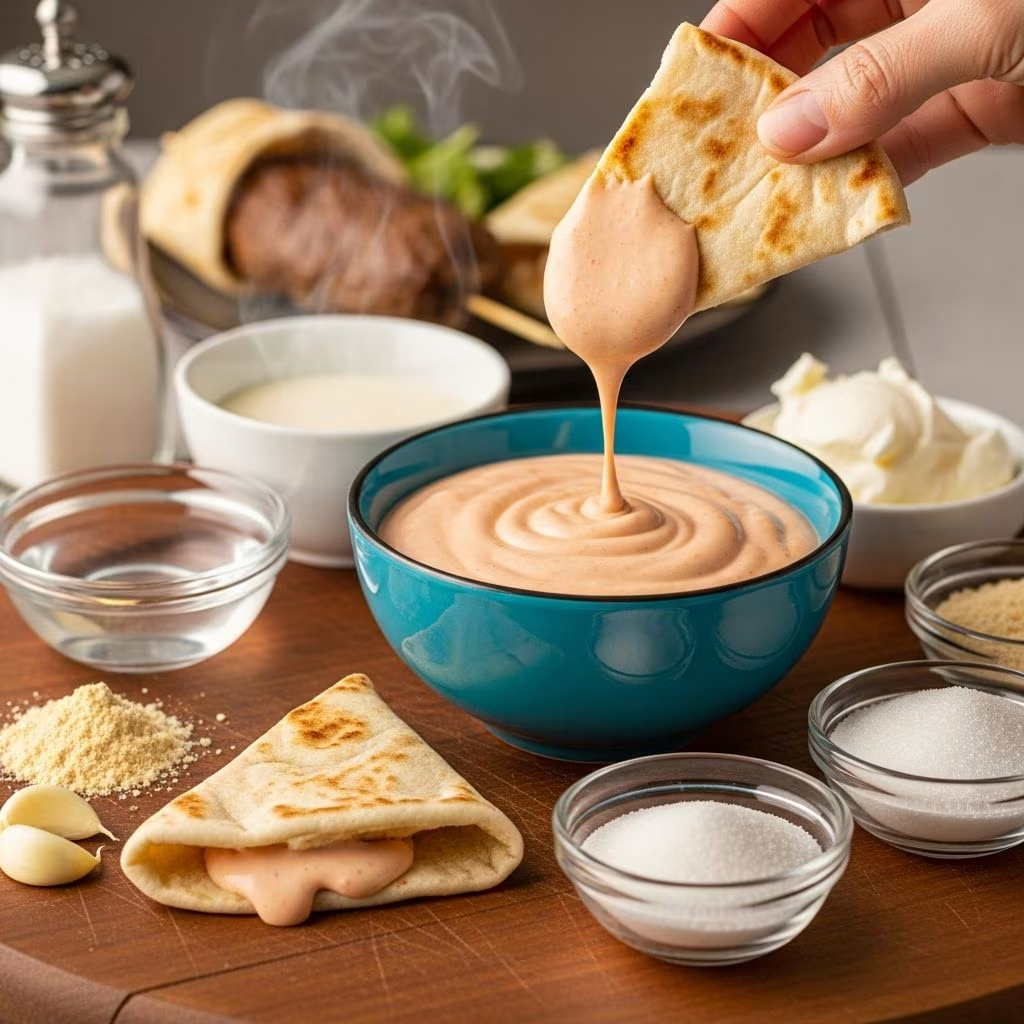
The foundation of authentic Maritime donair sauce relies on surprisingly minimal ingredients, yet ingredient quality and selection significantly impact the final result. The primary component that defines this sauce is sweetened condensed milk, which provides the creamy texture and subtle sweetness that distinguishes it from other condiments. This ingredient, typically sourced from brands like Eagle Brand, creates the essential richness that makes the sauce distinctive.
White vinegar serves as the critical counterbalance, introducing the acidic sharpness that cuts through the milk’s sweetness and prevents the sauce from becoming cloying. The vinegar activates a chemical interaction with the milk proteins, creating the characteristic thickening process that transforms liquid ingredients into a cohesive sauce. Garlic powder contributes savory depth, completing the flavor trinity that defines this Maritime staple. The salt component provides essential flavor enhancement, though many recipes minimize this element to avoid overpowering the delicate garlic notes.
| Ingredient | Typical Quantity | Function | Notes |
|---|---|---|---|
| Sweetened Condensed Milk | 1 can (300ml) | Base and thickening agent | Primary ingredient; cannot be substituted |
| White Vinegar | 1/4 to 1/3 cup | Acidic sharpness and thickening | Added gradually for texture control |
| Garlic Powder | 1/2 to 1 teaspoon | Savory depth and flavor | Use pure garlic powder, not garlic salt |
| Salt | 1/8 teaspoon or to taste | Flavor enhancement | Adjust based on preference |
Alternative Formulations and Variations
While the sweetened condensed milk version represents the modern standard, traditional Maritime preparations sometimes employ evaporated milk as an alternative base. This substitution requires recipe adjustment, specifically increasing vinegar quantity to approximately four tablespoons and amplifying garlic powder to maintain flavor intensity. The evaporated milk version produces a distinctly different texture and flavor profile, as evaporated milk lacks the added sweetness of condensed varieties, resulting in a more savory sauce.
Some regional variations incorporate additional ingredients that expand the sauce’s complexity. Certain preparations include onion powder alongside garlic powder, creating a more rounded savory character. These enhanced versions sometimes add additional sugar when using evaporated milk bases, essentially recreating the sweetness profile of condensed milk variations. Commercial producers often supplement homemade formulations with modified cornstarch and other stabilizers, though traditional home preparations rely entirely on the natural chemical interactions between milk and vinegar.
The Science Behind Sauce Formation
The transformation from liquid ingredients into thick, creamy sauce involves fascinating food chemistry that occurs naturally when vinegar meets sweetened condensed milk. The acidic environment created by vinegar causes milk proteins to denature and bind together, a process known as curdling. Rather than creating an undesirable result, this controlled curdling generates the exact textural properties that define authentic Maritime donair sauce. Understanding this process proves essential for achieving proper consistency.
The gradual addition of vinegar allows for precise texture control, preventing oversaturation that could make the sauce excessively thick or grainy. Temperature plays a significant role in this chemical interaction, with room-temperature ingredients responding more predictably than cold components straight from refrigeration. The mixing method—whether utilizing a hand whisk, fork, or stand mixer—influences how evenly the curdling process occurs, with slower, more deliberate mixing generally producing superior results.
Step-by-Step Preparation Method
Initial Setup: Begin by pouring one can of sweetened condensed milk into a clean bowl, ensuring adequate space for vigorous mixing. Having all measured ingredients prepared and within reach prevents unnecessary delays during the critical mixing phase.
Ingredient Combination: Add the garlic powder and salt directly to the condensed milk, stirring gently to distribute these dry ingredients evenly throughout the base. This preliminary mixing ensures even flavor distribution before the vinegar introduction changes the sauce’s texture.
Vinegar Introduction: Rather than adding vinegar all at once, introduce it gradually in small amounts—typically one tablespoon at a time. The key distinction between successful and unsuccessful batches lies in this gradual addition method. After each vinegar addition, allow the mixture to rest briefly without stirring, permitting the curdling process to begin naturally.
Mixing Progression: After a brief rest period of approximately three minutes, begin stirring gently using side-to-side motions with a whisk or fork. Avoid vigorous circular whisking patterns that can create graininess or prevent smooth texture development. Continue adding vinegar in stages until achieving the desired consistency.
Texture Refinement: The sauce will visibly thicken as mixing progresses and chemical reactions occur between ingredients. Some recipes suggest using a stand mixer for more consistent results, though hand-whisking allows greater control and sensory feedback regarding texture development.
Refrigeration and Maturation: Although the sauce can be served immediately, optimal flavor development occurs after overnight refrigeration. This resting period allows flavors to integrate fully and the sauce to achieve maximum thickness as the chemical reactions complete at cool temperatures.
Troubleshooting Common Preparation Issues
Overly Thin Consistency: If the final sauce remains too runny, additional resting time in refrigeration typically resolves this issue. The thickening process continues during cold storage as the curdling reaction progresses. If needed, small additional vinegar increments can be incorporated during gentle stirring.
Grainy or Separated Texture: Graininess typically results from overly aggressive mixing or too-rapid vinegar addition. Remedy this by allowing the sauce to rest undisturbed for several hours, which may allow the mixture to re-emulsify naturally.
Insufficient Garlic Flavor: Since garlic powder intensity diminishes over time, particularly when the sauce sits for extended periods, adding fresh garlic powder just before serving can revitalize the flavor profile if the sauce has been stored for days.
Pairing Possibilities and Service Applications
While traditionally associated with Maritime donair wraps—spiced beef filled in pita bread—this sauce enhances numerous dishes throughout Atlantic Canadian cuisine. Garlic fingers, thick-cut potato wedges topped with cheese and herbs, reach their full potential when accompanied by this distinctive sauce for dipping. Pizza, particularly cheese-heavy varieties, pairs remarkably well with the sauce’s sweet-savory complexity.
Modern culinary experimentation has expanded its applications beyond traditional contexts. The sauce functions effectively as a salad dressing component, particularly for heartier greens that can support its robust flavor. Some restaurants incorporate it into sandwich spreads or use it as a pizza drizzle before cooking. The versatility extends to unexpected applications like vegetable dips or even as a condiment for roasted meats.
Temperature considerations affect serving presentation and eating experience. Room-temperature sauce maintains the best flavor intensity, while refrigerated versions offer different textural properties that some consumers prefer. The sauce can be gently warmed without separating, though high heat should be avoided to preserve the delicate emulsion.
Storage, Shelf Life, and Make-Ahead Strategies
Properly prepared Maritime donair sauce stores reliably in the refrigerator for extended periods, typically maintaining quality for one to two weeks when stored in an airtight container. The acidic vinegar content naturally preserves the sauce, preventing bacterial growth that might compromise safety. Many home cooks prepare double batches, reserving portions for future use during busy periods.
Freezing presents a viable storage option, though the textural changes during thaw differ from fresh preparations. The frozen-then-thawed sauce may separate slightly initially but reintegrates with gentle stirring. Freezing preserves the sauce for several months when stored in appropriate freezer-safe containers.
Container selection influences storage success, with glass or food-grade plastic containers proving superior to reactive materials. The sauce’s acidic nature can interact with certain metals, so avoiding direct contact with aluminum or reactive surfaces preserves both the sauce and container integrity.
Frequently Asked Questions
Can I substitute evaporated milk for sweetened condensed milk?
Yes, though adjustments are necessary. Use the same volume of evaporated milk but increase vinegar to approximately four tablespoons and boost garlic powder to one full teaspoon. The resulting sauce will taste more savory with less inherent sweetness.
Why does my sauce separate or appear grainy?
This typically results from adding vinegar too quickly or mixing too vigorously. Allow the current batch to rest undisturbed in the refrigerator for several hours, which may allow the mixture to stabilize naturally.
How thick should the sauce be?
Optimal consistency resembles thick sour cream—thick enough to cling to a fork but still capable of being drizzled or spread. Individual preference varies, with some consumers preferring thinner consistency and others wanting maximum thickness.
Does this sauce contain dairy-free options?
Traditional recipes depend fundamentally on milk-based ingredients. Coconut milk or other plant-based condensed alternatives may theoretically substitute, though the vinegar reaction may differ, potentially affecting texture and flavor profiles significantly.
How long can I store prepared sauce?
Refrigerated sauce maintains quality for one to two weeks in an airtight container. Freezing extends storage for several months, though texture may change slightly upon thawing.
Can I make this sauce without a mixer?
Absolutely. A fork or hand whisk works effectively, though requires more patience and arm strength than mechanical mixing. The key remains adding vinegar gradually and using gentle side-to-side mixing motions rather than vigorous circular whisking.
Regional Significance and Cultural Context
Maritime donair sauce transcends mere condiment status within Atlantic Canadian culture, representing regional identity and culinary tradition. Halifax, Nova Scotia, particularly claims this sauce as foundational to local food heritage, with the donair sandwich becoming an unofficial regional symbol. The sauce’s existence defines the Maritime donair experience, distinguishing it from broadly similar international meat wraps.
Commercial establishments throughout Atlantic Canada have standardized their formulations, with Mr. Donair and comparable regional chains incorporating modified starches and preservatives for consistency and extended shelf life. Home cooks maintain traditional formulations that emphasize ingredient simplicity and flavor authenticity, preserving culinary methods passed through generations.
Conclusion
Mastering Maritime donair sauce requires understanding minimal ingredients and their chemical interactions rather than complex technique development. The sauce’s elegance lies in its simplicity—sweetened condensed milk, white vinegar, garlic powder, and salt combine through straightforward methods to create something far more complex than individual components suggest. Whether prepared for traditional donair wraps, contemporary culinary applications, or simple dipping purposes, this Atlantic Canadian staple rewards home cooks with immediate gratification and reliable results. The sauce exemplifies how regional cuisines develop distinctive identities through ingredient availability and cultural preferences, transforming humble components into memorable culinary experiences that define place and community.
References
- Maritime Donair Sauce Recipe — Maritime Glutton. Accessed April 2026. https://www.maritimeglutton.com/maritime-donair-sauce/
- Donair Sauce Recipe and Commercial Ingredient Analysis — JAHZ Kitchen. Accessed April 2026. https://jahzkitchen.com/donair-sauce/
- How to Make Maritime Donair Sauce Recipe — Dished. YouTube. Accessed April 2026. https://www.youtube.com/watch?v=sLYsBF1cwj8
- Donair Sauce Guide — Andy’s East Coast Kitchen. Accessed April 2026. https://theeastcoastkitchen.com/donair-sauce/
- How to Make Homemade Donair Sauce — Dishes & Dust Bunnies. Accessed April 2026. https://dishesanddustbunnies.com/make-homemade-donair-sauce/