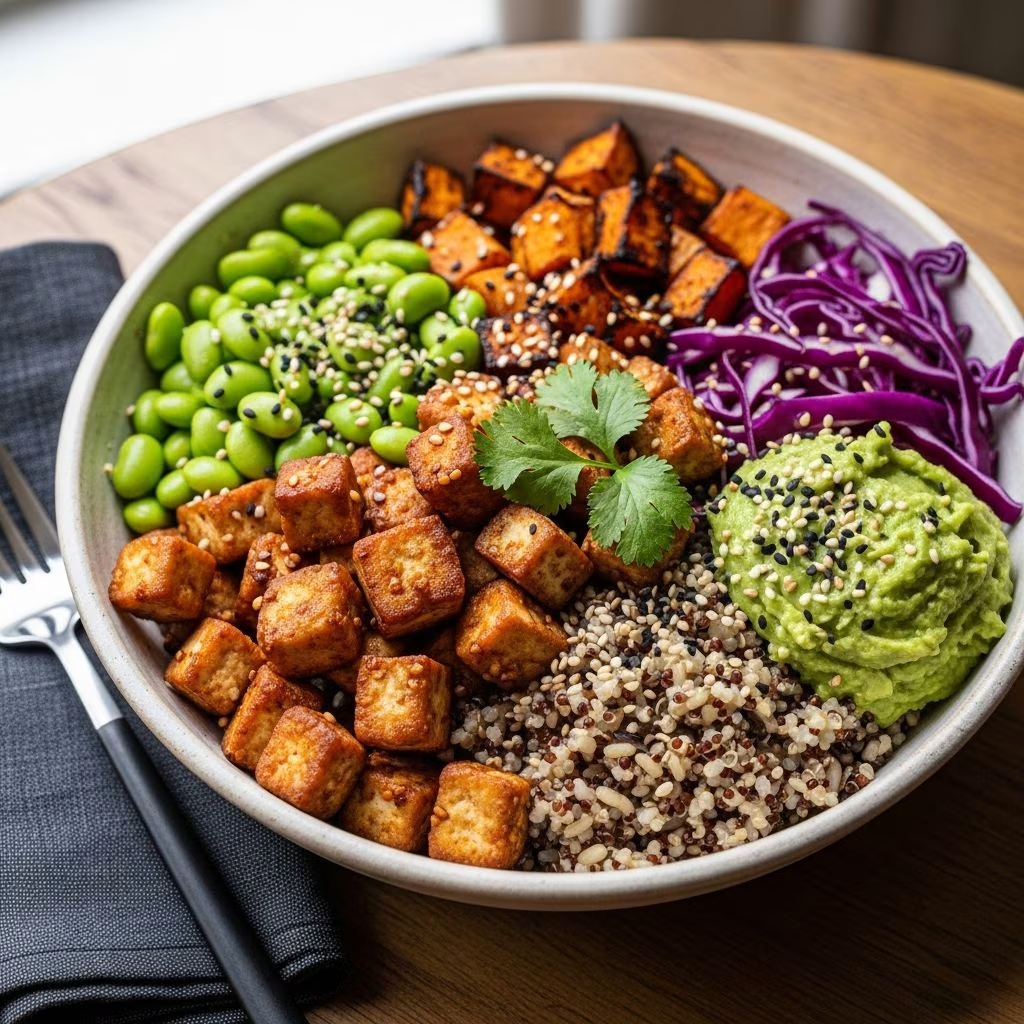
Creating balanced, nutrient-dense meals that satisfy both your palate and nutritional needs has become increasingly important for health-conscious home cooks. One approach that delivers on both fronts involves combining plant-based proteins with whole grains and roasted vegetables in thoughtfully composed bowls. This preparation method celebrates the natural flavors of each component while creating textural contrast and visual appeal on the plate.
The combination of marinated tofu, chewy farro grains, and caramelized Brussels sprouts represents a modern approach to vegetarian cooking that moves beyond simple side dishes. Instead of treating each ingredient as separate entities, this method integrates them through complementary seasonings and cooking techniques to create a cohesive dining experience.
Understanding Your Primary Ingredients
The Foundation: Extra-Firm Tofu
Extra-firm tofu serves as the protein anchor in this dish, offering a neutral canvas for bold flavors. Unlike softer varieties, extra-firm tofu maintains its structure through cooking methods like pan-searing and baking, developing a golden exterior while preserving a tender interior. The key to success lies in removing excess moisture before cooking, which allows the tofu to brown properly and absorb marinades more effectively.
Tofu’s versatility stems from its ability to absorb surrounding flavors while providing approximately 15-20 grams of protein per serving, making it nutritionally comparable to many animal proteins. When treated with the same respect given to other proteins in the kitchen—through proper seasoning, cooking technique, and presentation—tofu transforms from a misunderstood ingredient into a genuinely delicious component of any meal.
The Grain: Farro’s Nutty Character
Farro, an ancient hulled wheat variety, brings substantial texture and nutty flavor to grain bowls. Unlike refined grains, farro retains its bran layer, contributing fiber, minerals, and a slightly chewy bite that complements softer components. When cooked properly, farro maintains individual grain definition rather than becoming mushy, creating pleasant texture variation throughout each bite.
Semi-pearled farro, which has some but not all of its outer layer removed, offers a middle ground between whole grain nutrition and reduced cooking time. Most farro varieties cook in 15-30 minutes, making them practical for weeknight meal preparation while still delivering substantial nutritional benefits including manganese, phosphorus, and B vitamins.
The Vegetables: Brussels Sprouts’ Transformation
Brussels sprouts undergo a remarkable transformation through roasting, developing caramelized exteriors and sweet, tender interiors that contrast beautifully with their raw cabbage-like bitterness. High-heat roasting (typically 400-425 degrees Fahrenheit) creates the Maillard reaction, the chemical process responsible for browning and developing complex flavors.
Preparing Your Components: A Sequential Approach
Initiating the Grain Preparation
Beginning with grains makes logical sense since they require the longest cooking time. Place farro in a medium saucepan with water in roughly a 1:1.5 ratio by volume—approximately 1 cup farro to 1.5 cups water. Bring to a boil over high heat, then immediately reduce to a gentle simmer and cover partially with a lid. This method allows steam to circulate while preventing excessive evaporation. Simmer for 15-30 minutes depending on your farro variety, until the grains become tender but retain slight firmness. The water should be mostly absorbed. Once cooked, transfer to a shallow bowl to cool, allowing the grains to separate slightly as they rest.
Preparing Tofu for Marinating
While grains cook, address the tofu. Remove it from its packaging and drain any liquid. Wrap the block in clean kitchen towels or paper towels and gently press to remove excess moisture—this step significantly impacts browning capability. Using a sharp knife, slice the tofu block horizontally into two substantial rectangular pieces approximately one inch thick. This geometry maximizes surface area for browning while maintaining structural integrity.
Create a simple marinade by combining peeled and finely grated fresh ginger, tamari or low-sodium soy sauce, and warm spices like cumin or coriander. Ginger provides brightness and warmth while soy sauce adds umami depth. Place pressed tofu pieces in a shallow dish and pour the marinade over them, ensuring both sides contact the flavoring liquid. Allow 30 minutes to several hours for absorption, occasionally turning the pieces gently.
Roasting the Brussels Sprouts
Halve Brussels sprouts through their stem, preserving the core that holds leaves together. Toss with vegetable oil and kosher salt, distributing evenly across a rimmed baking sheet in a single layer with cut-sides down. This presentation maximizes contact with the hot sheet surface, promoting the crucial browning step. Roast at 425 degrees Fahrenheit for approximately 20-25 minutes. Halfway through cooking, remove the sheet and toss the sprouts to ensure even browning on all sides. In the final stages, finish with fresh lemon zest and juice, along with chopped fresh herbs like parsley or cilantro.
Cooking Techniques That Maximize Flavor
Pan-Searing the Marinated Tofu
Heat vegetable oil in a large non-stick skillet over medium-high heat until shimmering. Carefully place marinated tofu pieces into the hot pan, allowing them to cook undisturbed for 4-5 minutes. This patience permits the exterior to develop a golden-brown crust through the Maillard reaction. Flip carefully and repeat on the second side. Properly executed pan-searing creates textural contrast—a crispy, flavorful exterior encasing a tender, creamy interior. The entire process requires approximately 10-12 minutes.
The Role of Temperature Control
Temperature management distinguishes successful cooking from disappointing results. Too-low heat prevents proper browning, while excessive heat burns the exterior before the interior cooks through. Medium-high heat for tofu and 425 degrees for vegetables represents a balance that develops flavor while maintaining structural integrity and nutritional value.
Creating Complementary Flavor Profiles
Building Layers Through Garnishes
The final assembly transforms individual components into a cohesive whole through strategic garnishing. Chopped fresh herbs—cilantro, parsley, or scallions—add brightness and complexity. Toasted nuts or seeds provide additional textural contrast and healthy fats. A squeeze of fresh lemon or lime juice brightens all flavors while cutting through richness from oils.
Seasoning Strategies
Proper seasoning at each stage builds complexity rather than applying all salt and spices at the end. Salt the Brussels sprouts before roasting so it seasons them throughout cooking. Season the cooking liquid for grains with kosher salt to flavor them internally. The tofu marinade concentrates flavors through direct contact. This sequential approach ensures no single component overwhelms the others.
Nutritional Considerations and Benefits
| Component | Protein (g) | Fiber (g) | Key Nutrients |
|---|---|---|---|
| Extra-firm tofu (4 oz) | 10-12 | 1-2 | Iron, calcium, magnesium |
| Cooked farro (1 cup) | 7 | 8 | B vitamins, manganese, phosphorus |
| Roasted Brussels sprouts (1 cup) | 3 | 3 | Vitamin C, K, folate |
This combination provides approximately 20-25 grams of protein, substantial fiber for digestive health, and micronutrients including iron, calcium, and vitamins C and K. The diversity of plant sources ensures a complete amino acid profile supporting various bodily functions.
Practical Guidance for Implementation
Equipment Essentials
- Medium saucepan with lid for grain cooking
- Large non-stick skillet for tofu preparation
- Rimmed baking sheets for roasting vegetables
- Sharp knife for precision cutting
- Shallow dish for marinading
- Kitchen towels for pressing moisture from tofu
Timing Considerations
Begin with grains since they require the longest cooking time. While farro simmers, press tofu and prepare the marinade. Approximately 10-15 minutes before grains finish, place Brussels sprouts in the oven. Pan-sear tofu during the final stages of vegetable roasting. This sequencing ensures all components reach peak temperature and texture simultaneously.
Scaling and Storage
This preparation method scales easily for meal preparation or entertaining. Cooked farro stores in refrigerated containers for five days, maintaining texture and flavor. Roasted vegetables remain fresh for 4-5 days. Pan-seared tofu is best consumed within 2-3 days. Assemble bowls as needed from stored components, adding fresh herbs and dressing immediately before serving to preserve vibrancy and prevent sogginess.
Frequently Asked Questions
- Can I substitute different grains for farro?
- Absolutely. Quinoa, brown rice, millet, or barley all work well, though cooking times vary. Quinoa cooks faster (15 minutes) while brown rice requires longer (45 minutes). Choose based on your schedule and flavor preferences.
- How can I ensure tofu browns properly?
- Proper moisture removal is essential—press the tofu thoroughly before cooking. Use sufficient oil in your skillet and avoid moving pieces around excessively. Let them sit undisturbed for several minutes to develop the crucial golden crust.
- Are there alternatives to soy sauce in the marinade?
- Tamari offers a gluten-free option with similar umami depth. Coconut aminos provides a slightly sweeter profile. Miso paste mixed with water creates rich, fermented flavors while reducing sodium content.
- Can I prepare this dish ahead of time?
- Yes, but assemble the final bowl close to serving time. Store each component separately and combine just before eating. This preserves texture contrast and prevents the grain from absorbing excess liquid from the vegetables.
- What dressings complement this bowl?
- Sesame-ginger dressing, miso-lime vinaigrette, or tahini-based preparations all enhance these flavors. Alternatively, a simple combination of rice vinegar, sesame oil, and soy sauce creates an elegant complement without overpowering the individual components.
Elevating Your Preparation Skills
Mastering this dish involves understanding not just the what but the why behind each step. Recognizing why tofu must be pressed, how temperature affects browning, and why sequential seasoning matters transforms you from someone following instructions to a cook making informed decisions. These principles extend beyond this specific recipe, applicable to countless other dishes in your culinary repertoire.
The marriage of marinated tofu, nutty farro, and caramelized Brussels sprouts represents contemporary plant-based cooking at its finest—nourishing, delicious, and entirely achievable in a home kitchen. By understanding your ingredients, mastering fundamental techniques, and approaching each component with intention, you create meals that satisfy nutritionally, visually, and emotionally.
References
- Nutritional Composition of Plant-Based Proteins — U.S. Department of Agriculture, National Nutrient Database. 2024. https://fdc.nal.usda.gov/
- Farro: Ancient Grain Nutrition and Culinary Applications — Whole Grains Council. 2023. https://www.wholegrainscouncil.org/
- The Maillard Reaction in Food Science — Institute of Food Technologists, Food Science Magazine. 2024. https://www.ift.org/
- Tofu Production and Preparation Methods — Soy Foods Association. 2023. https://www.soyfoods.org/
- Cruciferous Vegetables and Health Benefits — Harvard School of Public Health, Nutrition Source. 2024. https://www.hsph.harvard.edu/nutritionsource/