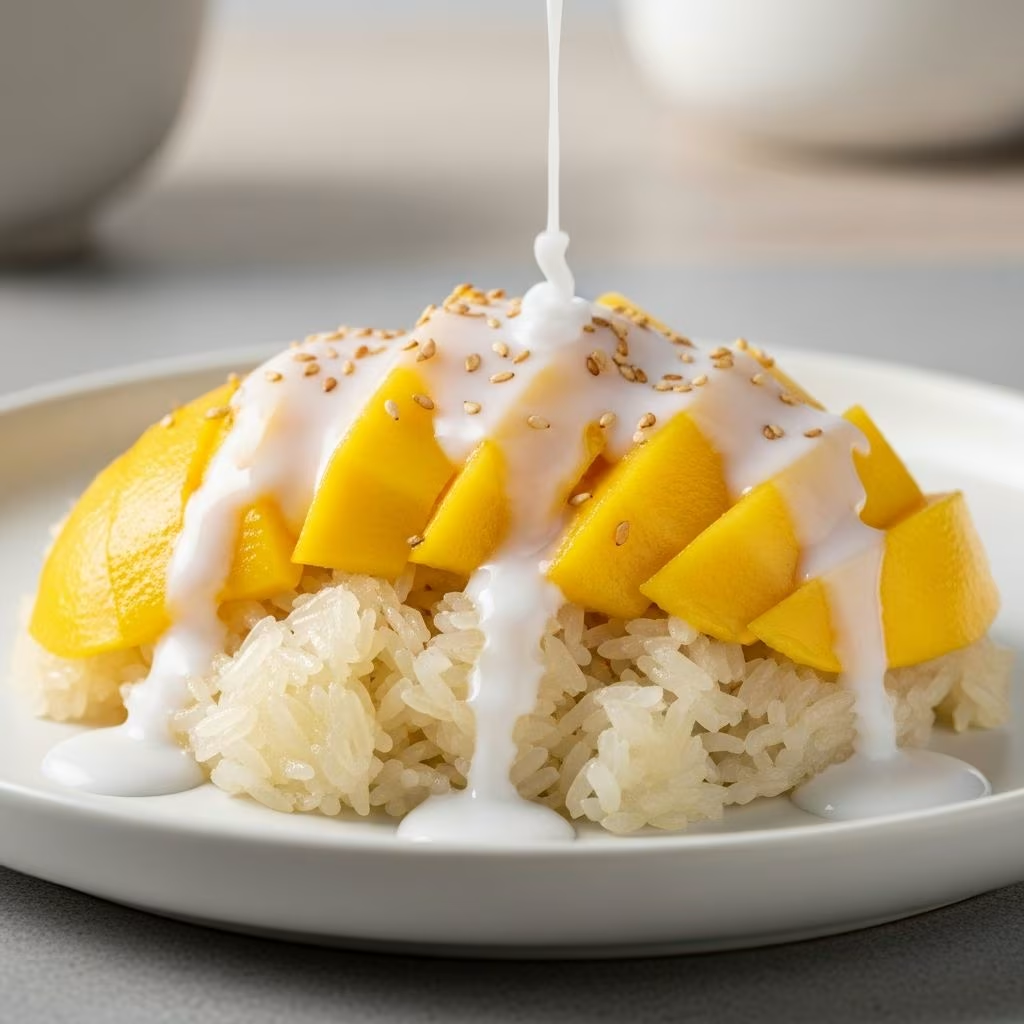
Indulge in the timeless charm of mango sticky rice, a dessert that captures the essence of Thai culinary tradition. This harmonious blend of chewy glutinous rice, velvety coconut sauce, and juicy ripe mangoes offers a symphony of sweet, salty, and creamy flavors that has enchanted palates worldwide. Originating from Thailand, where it’s known as khao niao mamuang, this treat is a street food staple and festival favorite, now easily recreated in your kitchen.
The Allure of This Classic Thai Dessert
Mango sticky rice stands out for its perfect balance of textures and tastes. The glutinous rice provides a satisfying chewiness, contrasted by the silky smoothness of fresh mango slices and the rich coconut topping. A subtle saltiness elevates the sweetness, creating depth that keeps you coming back for more. Popular across Southeast Asia, it’s especially iconic in Thailand during mango season, when ripe varieties like Ataulfo or Nam Dok Mai shine brightest.
Beyond its delicious profile, this dessert is versatile—serve it warm for comfort or chilled for refreshment. It’s naturally vegan and gluten-free, making it accessible for various dietary needs. Home cooks appreciate its simplicity, requiring just a handful of pantry staples and minimal equipment.
Essential Ingredients for Authentic Flavor
Gathering the right components is key to nailing this recipe. Focus on quality for the best results:
- Glutinous rice (1-1.5 cups): Also called sweet or sticky rice, this short-grain variety is crucial for its high starch content that creates the signature stickiness. Avoid regular rice substitutes.
- Full-fat coconut milk (1-2 cans): Opt for brands like Aroy-D for creamy texture without additives. Shake minimally to preserve the rich cream layer.
- Sugar (1/2-6 tbsp, white or palm): Granulated sugar works well; palm sugar adds authenticity and a caramel note.
- Salt (1/2-1 tsp total): Fine sea salt balances sweetness; a pinch more in the sauce enhances flavors.
- Ripe mangoes (2-4): Choose fragrant, golden-yellow fruits that yield slightly to pressure. Ataulfo mangos are ideal for their sweetness and small pits.
- Optional garnishes: Toasted sesame seeds, mung beans, or lime zest for crunch and aroma.
These ingredients yield 4 servings, with prep soaking overnight and active time around 30-45 minutes.
Step-by-Step Preparation Guide
Patience with soaking and steaming ensures tender, non-mushy rice. Follow these detailed instructions for foolproof results.
1. Soak the Glutinous Rice
Begin by rinsing 1.5 cups of glutinous rice under cold water 3-5 times until the water runs clear, removing excess starch. This prevents gumminess. Cover with water by 1-2 inches and soak for 8-10 hours or overnight. For a quicker method, use boiling water and soak 20-30 minutes. Drain thoroughly before cooking.
2. Steam the Rice Perfectly
Set up a steamer with 1 inch of boiling water. Place drained rice in a cheesecloth-lined steamer basket or metal strainer (avoid direct water contact). Steam covered for 20-30 minutes until translucent and tender. Test by pressing a grain—it should be soft but chewy.
3. Prepare the Coconut Sauce Base
In a saucepan, combine 1 cup coconut milk, 1/2 cup sugar, and 1/2 tsp salt. Heat gently to a simmer, stirring until sugar dissolves (about 3-5 minutes). Do not boil vigorously to avoid curdling. Reserve 1/4-1/2 cup for the topping sauce.
4. Infuse the Rice with Coconut
Immediately pour 3/4 of the warm coconut mixture over the hot steamed rice in a covered bowl. Let it absorb for 30-40 minutes, flipping gently midway without stirring to maintain texture. The rice will plump and glisten.
5. Thicken the Drizzling Sauce
To the reserved coconut liquid, whisk in 1 tsp rice flour or cornstarch and a pinch of salt. Simmer 1-2 minutes until it thickens slightly. Cool before serving.
6. Prep and Plate the Mangoes
Peel and slice mangoes into thin strips or cheeks, avoiding the pit. For each serving, mound rice, fan out mango beside it, drizzle with thickened sauce, and sprinkle sesame seeds.
Serve warm or at room temperature for optimal flavor melding.
Ingredient Variations and Substitutions
Adapt the recipe while preserving authenticity:
| Original | Substitution | Notes |
|---|---|---|
| Glutinous rice | Sushi rice (in pinch) | Less sticky; soak longer |
| Coconut milk | Coconut cream | Richer; dilute if needed |
| White sugar | Palm/brown sugar | Deeper flavor; melt first |
| Fresh mango | Frozen/thawed | Softer texture; drain well |
These tweaks maintain the dish’s integrity for different preferences or availability.
Pro Tips for Restaurant-Quality Results
- Rice steaming is key: Use a bamboo steamer for even cooking and subtle aroma.
- Mango ripeness matters: Squeeze gently; it should feel soft but not squishy.
- Salt timing: Add to coconut milk early for even distribution.
- Resting period: Don’t skip—allows full absorption without mush.
- Make-ahead: Prepare rice and sauce separately; assemble fresh. Refrigerate up to 2 days.
Common Mistakes and How to Avoid Them
Steer clear of pitfalls for perfection:
- Undersoaked rice: Results in hard grains. Plan ahead.
- Overstirring: Breaks starch structure, making it gummy. Flip only.
- Boiled coconut milk: Separates; heat gently.
- Unripe mango: Tart flavor clashes; wait for peak sweetness.
Nutritional Profile and Serving Suggestions
Per serving (1/4 recipe): Approximately 400-500 calories, rich in carbs from rice, healthy fats from coconut, and vitamins A/C from mango. It’s a satisfying end to meals or snack.
Pair with Thai iced tea, green tea, or fresh herbs like mint. For parties, serve in banana leaves for an authentic touch.
Frequently Asked Questions (FAQs)
Can I make mango sticky rice without soaking overnight?
Yes, the quick soak with boiling water works in 20-30 minutes, though overnight yields better texture.
Is glutinous rice the same as sushi rice?
No, glutinous is stickier due to amylopectin starch. Use it for authenticity.
How do I store leftovers?
Refrigerate in airtight container up to 2 days. Reheat gently with a splash of coconut milk.
Can this recipe be vegan?
Absolutely—it already is, using plant-based ingredients.
What if my sauce doesn’t thicken?
Simmer longer or add more cornstarch slurry. Cool to set fully.
Exploring Cultural Roots and Variations
In Thailand, mango sticky rice peaks in April-May mango season, sold wrapped in leaves by vendors. Regional twists include mung bean toppings or durian instead of mango. Globally, it’s adapted with strawberries or pineapple, but classics reign supreme.
Mastering this dessert connects you to Thai heritage while offering endless enjoyment. Experiment confidently with these guidelines.
References
- AUTHENTIC Thai Mango with Coconut Sticky Rice Recipe (with VIDEO) — Scientifically Sweet. 2023-05-15. https://scientificallysweet.com/thai-mango-with-coconut-sticky-rice/
- Sticky Rice with Mango: Easy Thai Khao Niao Mamuang Recipe — Be Inspired. 2022-11-20. https://beinspired.au/recipes/sticky-rice-with-mango/
- Easy Thai Mango Sticky Rice Recipe — Maddy’s Avenue. 2024-02-10. https://maddysavenue.com/authentic-thai-mango-sticky-rice-recipe/
- Sweet Coconut Sticky Rice with Mango — Kitchen Confidante. 2023-08-05. https://kitchenconfidante.com/sweet-coconut-sticky-rice-with-mango-recipe
- Thai Mango Sticky Rice Recipe (Khao Niaow Ma Muang) — The Forked Spoon. 2024-01-12. https://theforkedspoon.com/mango-sticky-rice/
- Mango Sticky Rice — The Foodie Takes Flight. 2023-06-18. https://thefoodietakesflight.com/mango-sticky-rice/
- Mango Sticky Rice (a Thai dessert!) — Joyous Apron. 2022-09-30. https://www.joyousapron.com/thai-mango-sweet-sticky-rice/