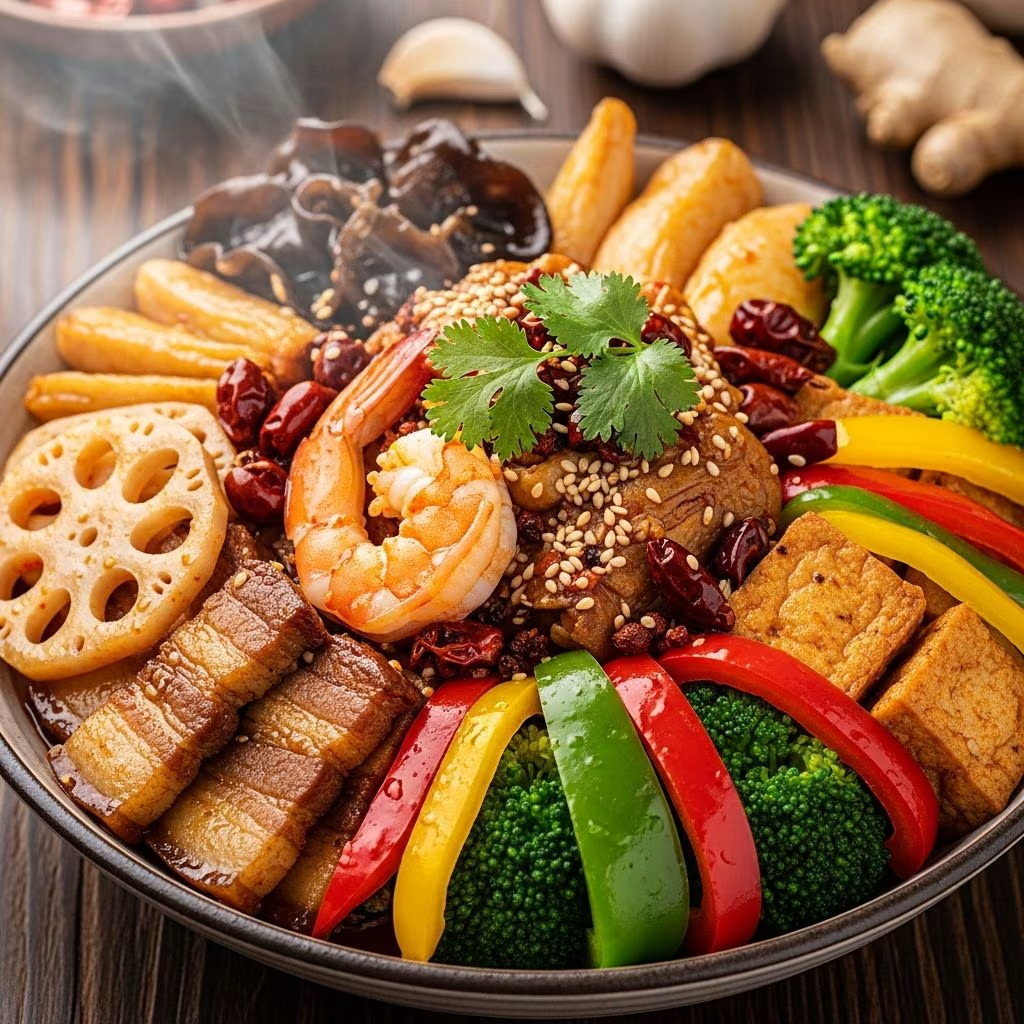
Mala xiang guo, known as the spicy numbing fragrant pot, stands as a cornerstone of modern Sichuan cuisine. This vibrant stir-fry combines a dizzying array of ingredients—vegetables, proteins, noodles, and more—all coated in a glossy, fiery mala sauce that delivers simultaneous hits of heat, numbness, and aroma. Unlike soupy hot pots, this dry version emerged in Chongqing around the early 2000s, drawing from Tujia stir-fry traditions and quickly captivating China with its bold profile.
The Essence of Mala: Heat, Numbness, and Fragrance
At its core, mala xiang guo revolves around the ‘mala’ sensation—’ma’ for the tingling numbness from Sichuan peppercorns and ‘la’ for the burning spice from chilies. ‘Xiang’ means fragrant, referring to the aromatic spices like garlic, ginger, and dried peppers, while ‘guo’ evokes the wok or pot where everything sizzles together. The result is a dish that’s not just spicy but sensorially explosive, often shared family-style over rice.
Restaurants customize sauces, but home versions rely on accessible staples like doubanjiang (fermented chili bean paste), hot pot base, Sichuan peppercorns, and Shaoxing wine. These create a rich, balanced coating that clings to every ingredient without sogginess.
Building Your Ingredient Arsenal
Customization defines mala xiang guo; choose from categories to balance textures—crunchy, chewy, soft, and tender. Aim for variety without overcrowding your wok. Here’s a breakdown:
- Vegetables (4-6 oz per type): Lotus root for starchiness, enoki mushrooms for chew, bok choy or Shanghai greens for tenderness, broccoli or cauliflower for crunch. Blanch denser ones 2-3 minutes; quick-dip greens for 1 minute.
- Proteins (6-8 oz total): Thinly sliced beef rump, pork belly, chicken thigh, shrimp, or fish balls. Sear meats briefly to retain juiciness.
- Tofu and Eggs: Tofu puffs, sheets, or boiled quail eggs absorb sauce beautifully; add 8-12 pieces.
- Noodles and Carbs: Wheat noodles, vermicelli, or glass noodles (2 servings); pre-cook al dente.
- Finishes: Roasted peanuts, cilantro, spring onions for freshness and crunch.
For low-carb adaptations, skip noodles and emphasize veggies like celtuce or taro.
Ingredient Prep Table: Timing and Techniques
| Category | Examples | Amount | Prep Method |
|---|---|---|---|
| Starchy Tubers | Lotus root, potato | 6 oz | Blanch 2-3 min |
| Leafy Greens | Bok choy, napa | 4 oz | Blanch 1 min |
| Mushrooms | Enoki, wood ear | 6 oz | Blanch 1 min |
| Crunchy Veggies | Broccoli, cauliflower | 6 oz | Blanch 2 min |
| Meats/Seafood | Beef slices, shrimp | 8 oz | Pan-sear 1-2 min |
| Tofu | Puffs, yuba | 2 oz | Blanch 1 min |
This table ensures even cooking; adjust based on your wok size.
Crafting the Signature Mala Sauce
The sauce is the soul of mala xiang guo. Start with a hot wok over medium heat. Infuse 2-3 tbsp peanut oil with 1 tsp Sichuan peppercorns and 6-8 dried chilies for 30 seconds until fragrant. Add 4 sliced garlic cloves, 1 tbsp minced ginger, and 1-2 tbsp doubanjiang; fry until oil reddens (1-2 min). Stir in 1 tbsp hot pot base (if available), fermented black beans, 1 tbsp Shaoxing wine, 1 tsp soy sauce, ½ tsp sugar, and ¼ cup stock or water for glossiness.
Pro tip: Use whole dried chilies for milder heat; halve for intensity. Homemade black bean sauce elevates authenticity, but store-bought works.
Step-by-Step Cooking Guide
- Prep All Ingredients: Slice proteins thin (freeze slightly for ease), blanch veggies in boiling water with salt, shock in ice water to crisp. Pre-cook noodles.
- Sear Proteins: High-heat wok with 1 tbsp oil; cook beef/pork 1-2 min until browned, seafood 1 min. Remove.
- Build Sauce: As above, sauté aromatics and simmer sauce 2 min until thickened.
- Combine: Add blanched veggies/tofu/noodles; toss 1-2 min to coat. Return proteins; stir 30 sec. Sprinkle wine, sugar, salt.
- Finish: Off heat, mix in cilantro, peanuts, scallions. Serve immediately.
Total time: 30-45 min for 4-6 servings. Use a wide pan to prevent steaming.
Variations for Every Palate
- Vegetarian Delight: Skip meats; load up on king oyster mushrooms, fried tofu, and glass noodles.
- Seafood Focus: Shrimp, squid, fish balls with celery and bamboo shoots for ocean vibes.
- Milder Version: Reduce chilies/peppercorns by half; add bell peppers for sweetness.
- Low-Carb: Cauliflower rice base with extra lotus root and eggplant.
Experiment with groups: one starchy, two veggies, one protein for balance.
Troubleshooting Common Pitfalls
Sauce Too Thin? Simmer longer or add cornstarch slurry.
Overly Spicy? Balance with sugar or potato slices, which absorb heat.
Soggy Textures? Blanch precisely and high-heat wok.
Not Numbing Enough? Toast peppercorns fresh; grind some for powder.
Avoid overcrowding—cook in batches if needed.
Pairing and Serving Suggestions
Serve piping hot with steamed jasmine rice to sop up sauce. Pair with cooling cucumber salad or yogurt raita for heat relief. Beer like Tsingtao cuts richness; for drinks, try chilled mung bean soup. Family-style in a large bowl encourages sharing.
Health Notes and Nutrition
Per serving (1/6 recipe): ~400 calories, high in protein from meats/tofu, fiber from veggies. Sichuan peppercorns aid digestion; chilies boost metabolism. Moderate sodium from pastes; use low-sodium soy.
Frequently Asked Questions (FAQs)
What makes mala xiang guo different from hot pot?
It’s a dry stir-fry, not soupy, emphasizing wok hei (breath of wok) and concentrated sauce.
Can I make it less spicy?
Yes, use fewer chilies, deseed them, or substitute with milder gochugaru.
Where did mala xiang guo originate?
Chongqing’s Jinyun Mountain in the early 2000s, blending Tujia and Sichuan styles.
What if I can’t find doubanjiang?
Substitute gochujang + chili flakes, but authentic flavor needs fermented bean paste.
Is it gluten-free?
Yes, with rice noodles and tamari instead of soy; check hot pot base.
Why Home-Cooked Mala Xiang Guo Beats Takeout
Control heat levels, fresh ingredients, and endless customization make it superior. It’s quicker than delivery and builds wok skills. Once mastered, it’s a gateway to Sichuan mastery.
References
- Mala Xiang Guo – Ang Sarap — Ang Sarap. 2025-10-17. https://www.angsarap.net/2025/10/17/mala-xiang-guo/
- Ma La Xiang Guo (Sichuan Mala Dry Pot, 麻辣香锅) — Omnivore’s Cookbook. N/A. https://omnivorescookbook.com/ma-la-xiang-guo/
- Ma La Xiang Guo (Spicy Numbing Stir-fry Pot) — The Woks of Life. N/A. https://thewoksoflife.com/ma-la-xiang-guo/
- Sichuan Dry Stir-Fry Hot Pot (Ma La Xiang Guo) — Asian Inspirations. N/A. https://asianinspirations.com.au/recipes/sichuan-dry-stir-fry-hot-pot-ma-la-xiang-guo/
- Easy Ma La Xiang Guo At Home (Hai Di Lao Mala Sauce) — What to Cook Today. N/A. https://whattocooktoday.com/ma-la-xiang-guo.html