Recreating the flavors of iconic fast-food sandwiches in healthier formats has become increasingly popular among those following low-carbohydrate and ketogenic diets. One innovative approach involves transforming the essential components of a well-known beef burger into a vegetable-based vessel. This adaptation maintains the savory, umami-rich taste profile while significantly reducing carbohydrate content. The result is a dish that satisfies cravings without the guilt, delivering restaurant-quality taste in a fraction of the time.
Understanding the Appeal of Vegetable-Based Vessels
Dill pickles serve as an excellent foundation for creative low-carb dishes due to their structural integrity and distinctive flavor profile. Unlike softer vegetables, pickles maintain their crunch even when hollowed out and filled with warm ingredients. The acidic brine they’re preserved in complements savory beef preparations exceptionally well. Furthermore, pickles are naturally low in carbohydrates—typically containing fewer than 1 gram of carbs per medium pickle—making them ideal for anyone monitoring carbohydrate intake.
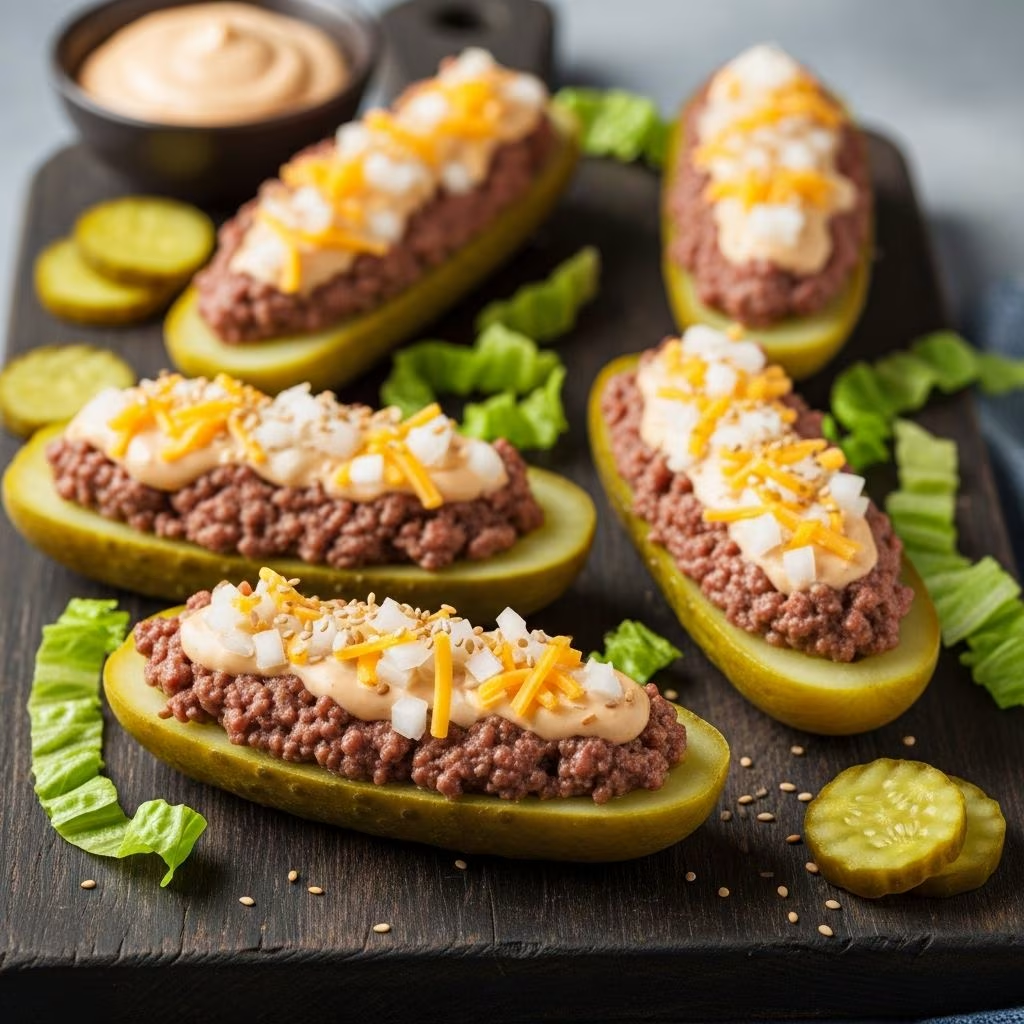
The hollow cavity of a halved pickle creates the perfect pocket for holding seasoned meat mixtures. This presentation style transforms an ordinary ingredient into an attractive serving vessel that’s both functional and visually appealing. The combination of textures—crisp pickle exterior against warm, crumbly beef filling—creates a compelling eating experience that engages multiple senses.
Essential Components and Their Roles
The Beef Foundation
Ground beef forms the protein-rich base of this dish. Using 80/20 ground beef provides adequate fat content to keep the meat moist during cooking while maintaining satisfying flavor. The beef is seasoned with traditional burger-inspired spices that evoke the taste of fast-food classics. These seasonings include garlic powder for depth, onion powder for sweetness, and ground mustard for subtle heat and complexity. The addition of Worcestershire sauce introduces umami notes that make the beef taste richer and more developed.
Browning the beef properly requires breaking it into small, uniform crumbles as it cooks. This technique increases surface area and ensures even cooking. Excess fat should be drained after cooking to prevent the final dish from becoming greasy, though some residual fat adds important flavor. The cooked beef can be combined with diced onions to introduce textural contrast and additional flavor complexity.
The Sauce Component
A high-protein special sauce distinguishes this recipe from simpler preparations. Traditional versions often rely on mayonnaise-based formulas, but incorporating cottage cheese dramatically increases protein content while maintaining creamy texture. When blended until smooth, cottage cheese creates an invisible thickening agent that no one would detect in the finished dish. This approach transforms a simple condiment into a nutritionally substantial component.
The sauce combines several flavor elements working in concert. Ketchup provides slight sweetness and umami depth. Mustard introduces sharp, pungent notes that cut through the richness of beef and dairy. Chopped pickles or dill relish add texture and reinforce the overall flavor profile. White vinegar brightens the sauce, while pickle juice contributes acidic notes and subtle cucumber flavor. Paprika and both garlic and onion powders round out the seasoning profile, creating a balanced condiment that tastes surprisingly similar to signature burger sauces found at casual dining establishments.
Preparation Methods and Techniques
Hollowing the Pickles
Preparing the pickle vessels requires care to maintain structural integrity. Using a small spoon or melon baller, scoop out the interior of each halved pickle, leaving approximately 1/4-inch walls intact. This thickness prevents the pickle from becoming too fragile during stuffing and eating. The removed pickle flesh can be chopped and incorporated into the beef mixture or reserved as a garnish, reducing waste and maximizing flavor.
Assembling the Boats
After filling each hollowed pickle half with the seasoned beef mixture, press firmly to ensure the meat settles into all corners of the cavity. Underfilled boats lack structural appeal and may feel less satisfying to eat. Top each filled pickle with diced onions for freshness and textural contrast. Optional shredded cheddar cheese adds richness and helps bind the components together. A generous drizzle of the special sauce finishes each boat, providing moisture and enhancing flavors.
Nutrition Profile and Health Considerations
| Component | Carbohydrates (approx.) | Protein (approx.) | Fat (approx.) |
|---|---|---|---|
| One Pickle Boat (unfilled) | Less than 1g | Minimal | Minimal |
| Cooked Beef Portion | 1-2g | 18-20g | 10-12g |
| Special Sauce (per serving) | 2-3g | 8-10g | 5-6g |
| Complete Boat (assembled) | 3-6g | 26-30g | 15-18g |
Each completed pickle boat typically contains between 3 and 6 grams of carbohydrates, making it suitable for strict ketogenic protocols. The protein content ranges from 26 to 30 grams per boat, making this recipe exceptionally satisfying and effective for those prioritizing protein intake. The fat content falls within acceptable ranges for most low-carb approaches, with most calories deriving from beef and sauce rather than problematic carbohydrate sources.
For individuals tracking specific micronutrients, pickles contribute sodium, potassium, and certain B vitamins. The cottage cheese component adds calcium and additional protein. Ground beef provides iron, zinc, and B12. This combination creates a nutritionally complete snack or light meal rather than an empty-calorie indulgence.
Customization Options and Variations
Protein Alternatives
While ground beef is traditional, ground turkey offers a leaner option with fewer calories. Ground lamb introduces Mediterranean flavor notes and different nutritional characteristics. Some people substitute ground chicken for even lighter preparations, though chicken lacks the robust flavor beef provides. Regardless of protein choice, cooking methods remain identical.
Sauce Modifications
For those preferring dairy-free versions, plain Greek yogurt or dairy-free yogurt can replace cottage cheese while maintaining protein content. Mayonnaise-only sauces work but provide less protein. Those with dairy allergies should avoid cheese toppings, though the dish remains delicious without them. Experimenting with different mustard varieties—whole grain, spicy brown, or Dijon—allows customization of the sauce’s flavor profile.
Topping Variations
Beyond standard toppings, bacon bits add smokiness and crunch. Caramelized onions introduce sweetness and depth. Jalapeños for those who enjoy heat or roasted red peppers for mild sweetness expand the flavor palette. Experiment with different cheese varieties such as American, Swiss, or pepper jack to discover personal preferences.
Timing and Practical Considerations
Total preparation time typically spans 15 to 20 minutes, with most time devoted to browning beef and preparing sauce. The actual assembly process moves quickly once components are ready. This makes the recipe ideal for busy weeknights when quick, satisfying meals are needed. The dish can be prepared in advance, refrigerated, and consumed cold, or reheated briefly before serving. Storage in airtight containers maintains quality for up to three days.
For entertaining, pickle boats can be assembled on a serving platter and garnished attractively. The presentation appeals to guests curious about low-carb alternatives, and the familiar burger-like flavors make them accessible to those unfamiliar with specialized diets. The small, bite-sized format encourages consumption as appetizers or party snacks.
Flavor Profile and Sensory Experience
The combination of crisp pickle exterior and warm, savory beef filling creates textural interest that keeps each bite engaging. The acidic pickle brine balances the richness of beef and sauce, preventing the dish from feeling heavy or cloying. The special sauce mimics the distinctive flavor of beloved fast-food condiments, triggering nostalgic satisfaction. Umami notes from Worcestershire sauce, mustard, and browned beef create a deeply satisfying eating experience that feels indulgent despite being nutritionally beneficial.
Frequently Asked Questions
Can this dish be made ahead?
Yes. Assemble boats up to 24 hours in advance and refrigerate in a covered container. This allows flavors to meld slightly. Reheat briefly in a microwave or low oven if desired, though many people enjoy them cold or at room temperature.
What type of pickles work best?
Large dill pickles with substantial flesh produce the best results. Avoid very thin pickles that may become too fragile when hollowed. Claussen brand pickles are frequently recommended due to their superior texture and crunch, though store-brand options work adequately.
Is this suitable for meal prep?
Absolutely. Prepare components separately and combine when ready to eat. Store cooked beef and sauce in separate containers for up to four days. This approach prevents pickles from becoming soggy while maintaining convenience.
Can the dish be made dairy-free?
Yes. Replace cottage cheese with dairy-free yogurt or mayonnaise, and omit optional cheese toppings. The dish remains delicious and maintains adequate protein content.
What serving size is appropriate?
Two to four boats constitute a satisfying meal, depending on individual caloric needs and appetite. Single boats work well as snacks or appetizers.
Why This Recipe Resonates
This creative preparation addresses a common challenge in low-carb cooking: satisfying cravings for familiar, beloved foods without violating dietary parameters. By deconstructing a well-known burger and reassembling components into a vegetable-based format, this recipe proves that dietary restrictions need not mean sacrificing taste or satisfaction. The result combines convenience, nutrition, and genuine enjoyment—three elements that define successful recipes in modern kitchens.
References
- Big Mac Pickle Boats (Low-Carb) — Healthy Little Peach. https://healthylittlepeach.com/big-mac-pickle-boats-low-carb/
- Big Mac Pickle Boat Recipe — BioIntelligent Wellness. https://biointelligentwellness.com/ideal-protein-recipe/big-mac-pickle-boat/
- Big Mac Bowl (super EASY) — This Vivacious Life. https://www.thisvivaciouslife.com/big-mac-salad-bowl/