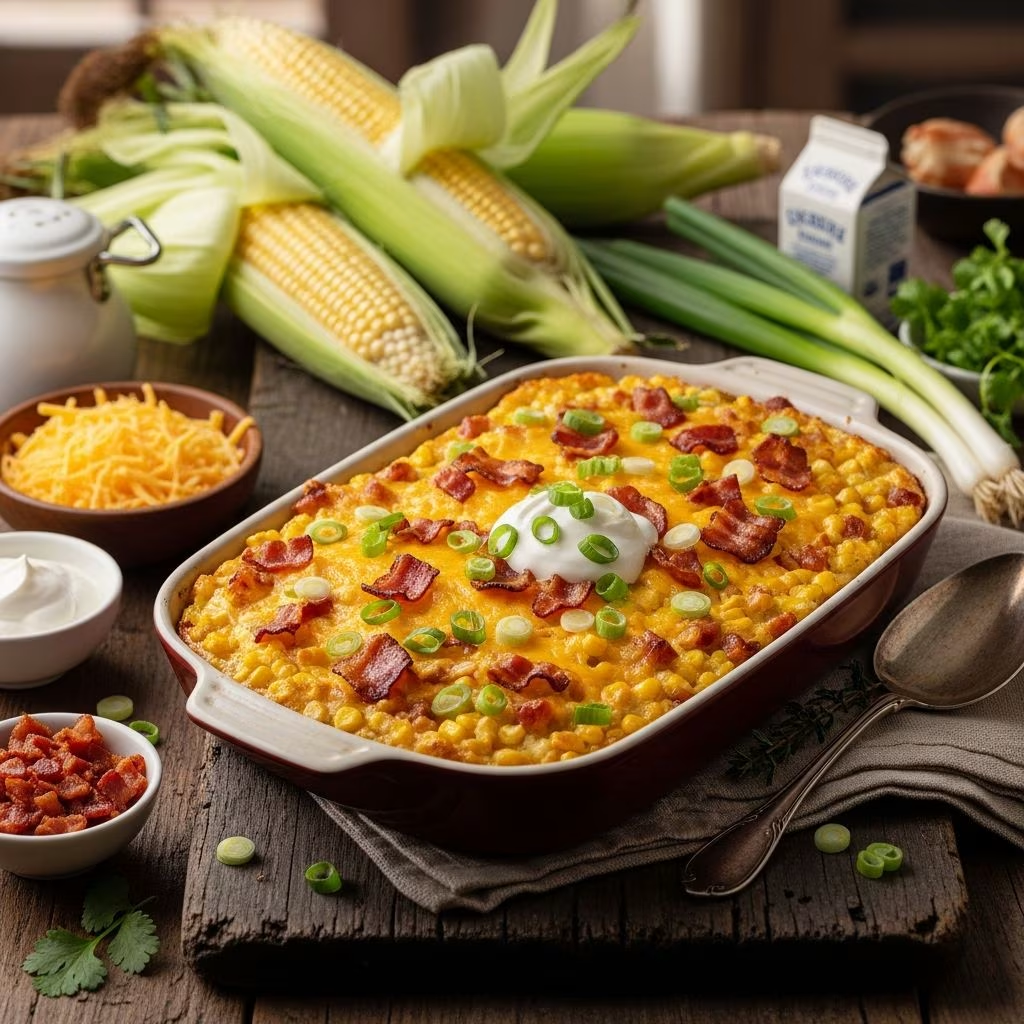
Corn pudding stands as a beloved staple at holiday gatherings and family dinners across the United States. This creamy, satisfying side dish combines the natural sweetness of corn with savory accents like bacon, cheese, and aromatic vegetables. Whether you are preparing for Thanksgiving, Easter, or a summer barbecue, understanding the fundamentals of loaded corn pudding will help you create a dish that impresses guests and brings comfort to any table.
Understanding the Foundation of Corn Pudding
At its core, corn pudding is a baked custard-style dish that showcases corn as the primary ingredient. The dish achieves its characteristic creamy texture through a combination of whole kernel corn, cream-style corn, eggs, and dairy products. Unlike corn casserole, which often relies on commercial mixes like Jiffy, traditional corn pudding derives its structure from dry ingredients like flour or cornmeal combined with binding elements such as eggs and milk.
The beauty of corn pudding lies in its versatility. Cooks can customize the recipe by adjusting the ratios of fresh to canned corn, selecting different cheese varieties, and incorporating proteins like bacon or sausage. The result is a dish that can be as simple or as elaborate as desired, making it suitable for both weeknight dinners and formal holiday celebrations.
Essential Ingredients for Maximum Flavor
Corn Selection and Preparation
The foundation of any exceptional corn pudding begins with understanding your corn options. Fresh corn kernels provide a vibrant, sweet flavor that elevates the entire dish. When fresh corn is in season, shucking corn from approximately six medium ears yields roughly three cups of kernels. During off-season months, frozen corn offers excellent quality and convenience—simply thaw and drain thoroughly before use. Canned whole kernel corn also works well, though draining excess liquid prevents unwanted moisture in the final product.
Cream-style corn is a non-negotiable ingredient for achieving the signature velvety texture corn pudding is known for. This ingredient contributes moisture, a subtle sweetness, and the creamy consistency that distinguishes pudding from coarser casseroles. Always use canned cream-style corn rather than attempting to substitute, as its specific consistency and formulation are integral to proper texture development during baking.
Dry Ingredient Components
The dry mixture typically includes all-purpose flour, cornmeal, sugar, baking powder, and salt. Some recipes incorporate additional ingredients like masa harina (corn flour) or stone-ground cornmeal for enhanced corn flavor. The ratio of flour to cornmeal affects both texture and taste—equal parts create a balanced texture, while higher cornmeal percentages intensify the corn flavor. Sugar provides sweetness and aids browning, while baking powder creates lift and a lighter crumb structure.
Dairy and Egg Components
Eggs serve as the binding agent that transforms individual ingredients into a cohesive pudding. Typically, recipes call for three to five large eggs depending on the total volume of the dish. Dairy options include sour cream, whole milk, half-and-half, or cream. Sour cream imparts tanginess and richness, while milk products contribute moisture and help achieve the custard-like consistency. The choice of dairy influences both flavor and final texture, with richer options producing denser, more luxurious results.
Flavor Enhancers and Toppings
Bacon transforms corn pudding from a simple side dish into something memorable. Thick-cut bacon provides better texture and more bacon flavor than thin-cut varieties. Cook bacon until it reaches a crispy state, then reserve about one tablespoon of the rendered fat for sautéing aromatics. The bacon fat carries flavor compounds that amplify the savory profile of the finished dish.
Cheese selection matters significantly. Sharp white cheddar offers tanginess and depth, while pepper jack adds heat and complexity. Some recipes combine multiple cheese varieties to create layered flavors. Reserve a portion of cheese for the top layer, ensuring a golden, crispy finish.
Jalapeños, either fresh or canned, introduce a subtle heat that complements corn’s sweetness. Fresh jalapeños should be seeded and finely diced to distribute flavor evenly. For milder heat, use fewer peppers or select the canned variety, which tends to be less intense than fresh.
Preparation Techniques for Optimal Results
Sautéing Aromatics Correctly
Proper preparation of onions and garlic establishes the flavor foundation for the entire dish. Begin by cooking diced onion in reserved bacon fat over medium heat for approximately seven to ten minutes, allowing natural sugars to caramelize slightly. This process develops deeper, more complex flavors than raw onion would provide. Once onions become translucent and soft, add minced garlic and cook for just thirty seconds to one minute—overcooked garlic becomes bitter and unpleasant.
Combining Wet and Dry Ingredients
The mixing process significantly influences texture. First, combine all dry ingredients in a separate bowl, whisking thoroughly to distribute baking powder evenly and eliminate lumps. In another bowl, whisk wet ingredients until smooth and fully combined. Some advanced techniques involve melting butter separately and allowing it to cool slightly before incorporating with eggs and sour cream, which prevents the heat from cooking the eggs prematurely.
When combining wet and dry components, fold rather than vigorously stir to maintain a lighter texture. Add the sautéed aromatics, corn, and cheese, stirring gently until just combined. Overmixing develops gluten in the flour, resulting in a tough, dense pudding rather than the desired creamy consistency.
Advanced Texture Modification
For a silkier, more custard-like pudding, some recipes recommend blending half the mixture on high speed for forty-five seconds before recombining with the unblended portion. This technique breaks down corn kernels partially, creating a smoother base while the remaining kernels provide textural interest. This method produces noticeably more refined results, particularly for those preferring a less coarse texture.
Baking Process and Temperature Management
Preheating the oven to 350 degrees Fahrenheit provides the ideal temperature for even cooking and browning. Transfer the prepared mixture to a greased baking dish, typically a nine-by-thirteen-inch dish or three-quart baking dish depending on recipe volume. Distribute reserved cheese and bacon pieces across the top layer for visual appeal and concentrated flavor bursts in each serving.
Baking time typically ranges from forty-five to fifty-five minutes, though variables like oven calibration and mixture density affect exact timing. The pudding is done when a knife inserted near the center comes out clean or with just a few moist crumbs. The edges should pull away slightly from the dish, and the top should achieve a golden-brown color.
Avoid opening the oven door during the first thirty minutes of baking, as temperature fluctuations can prevent proper rising and cooking. After thirty minutes, quick peeks are acceptable to monitor browning progress.
Ingredient Variations and Customizations
Protein Options Beyond Bacon
While bacon remains the classic choice, alternative proteins can create interesting variations. Diced ham provides a milder, slightly sweet protein component. Crumbled sausage adds herbaceous notes and earthiness. For vegetarian preparations, consider skipping meat entirely or substituting with smoked paprika to recreate smoky, savory notes.
Cheese Combination Strategies
Experimenting with cheese combinations opens creative possibilities. Combining sharp white cheddar with gruyere creates complex, nutty flavors. Adding jalapeño-stuffed pepper jack introduces additional heat and excitement. For a more subtle approach, use a single high-quality cheese rather than mixing varieties.
Vegetable and Seasoning Additions
Fresh chives provide mild onion flavor without the intense bite of raw onion. Diced bell peppers add sweetness and color complexity. Roasted red peppers create deeper, more developed flavor profiles. Some recipes incorporate cilantro for a fresh, herbal component. Spice options include cumin, chili powder, or garlic powder to amplify savory dimensions.
Troubleshooting Common Issues
| Problem | Cause | Solution |
|---|---|---|
| Pudding is too dry or crumbly | Insufficient moisture or over-baking | Reduce baking time by 5-10 minutes. Ensure cream-style corn is included. Check oven temperature accuracy. |
| Pudding is too wet or soupy | Too much liquid or under-baking | Bake an additional 10-15 minutes. Reduce sour cream or milk in future batches. Use well-drained corn. |
| Top is burning while interior remains underdone | Oven temperature too high or uneven heat | Cover with foil after 30 minutes. Lower oven temperature by 25 degrees. Move dish to different oven rack. |
| Texture is tough or dense | Overmixing or too much flour | Mix ingredients gently, just until combined. Measure flour accurately using proper technique. |
| Pudding doesn’t rise or is flat | Insufficient baking powder or eggs | Use fresh baking powder. Ensure correct egg quantity. Do not open oven during first 30 minutes. |
Serving and Storage Recommendations
Corn pudding reaches optimal flavor and texture when served immediately after baking while the top remains warm and crispy. Allow the pudding to cool for five to ten minutes after removing from the oven, making serving easier and preventing burns from the hot filling.
This dish complements virtually any main protein. Serve alongside roasted turkey, glazed ham, grilled chicken, or hearty beef dishes. The creamy texture and subtle sweetness provide balance to rich, savory main courses.
Leftovers can be refrigerated in an airtight container for up to three days. Reheating in a three-hundred-fifty-degree oven for ten to fifteen minutes restores warmth without drying the pudding. Alternatively, microwave individual portions for one to two minutes on medium power.
Frequently Asked Questions
Can I prepare corn pudding in advance?
Yes, the assembled mixture can be prepared up to twelve hours ahead and stored covered in the refrigerator. Baking time may increase by five to ten minutes since the mixture starts cold. Alternatively, bake the pudding completely and reheat before serving.
Can I freeze corn pudding?
Freezing is possible though texture changes slightly after thawing. Freeze the unbaked mixture for up to one month or the baked pudding for up to three months. Thaw completely before reheating. Quality is best when consumed within six weeks of freezing.
What baking dish size should I use?
Standard recipes work well in nine-by-thirteen-inch or three-quart baking dishes. Smaller dishes create a thicker pudding while larger, shallower dishes produce a thinner consistency. Adjust baking time accordingly—thicker puddings require additional time.
Can I use fresh corn exclusively?
Using only fresh corn kernels eliminates the creaminess cream-style corn provides. If avoiding canned ingredients, combine fresh corn with a simple blended corn puree made by briefly processing fresh corn with milk, though store-bought cream-style corn delivers superior results.
How do I make this dish dairy-free?
Substitute sour cream and milk with coconut cream and coconut milk, which provide similar richness and texture. Use dairy-free cheese alternatives, though results may vary. Maintain the same volume of liquid ingredients.
Conclusion: Mastering Your Corn Pudding
Creating outstanding loaded corn pudding combines understanding ingredient roles, mastering fundamental techniques, and personalizing recipes to reflect individual preferences. Success depends on using quality ingredients, following proper mixing procedures, and paying attention to baking time and temperature. Whether preparing a traditional version or experimenting with creative variations, this versatile dish offers endless possibilities for creating memorable meals. Start with established recipes, then confidently adapt based on feedback and personal taste, ultimately making this beloved comfort food your own signature contribution to any gathering.
References
- The Pioneer Woman Corn Pudding Recipe — The Pioneer Woman (Ree Drummond). Food & Cooking. https://www.thepioneerwoman.com/food-cooking/recipes/a90213/corn-pudding/
- Best Southern Corn Pudding — Not Entirely Average. Recipe Blog. https://notentirelyaverage.com/southern-corn-pudding/
- Ultimate Corn Pudding with Secret Ingredients — The Daring Gourmet. Recipe Development. https://www.daringgourmet.com/ultimate-skillet-corn-pudding/
- Loaded Corn Casserole — So Much Food. Food Blog. https://somuchfoodblog.com/loaded-corn-casserole/
- Loaded Corn Casserole Recipe — Bad Batch Baking. Recipe Resource. https://badbatchbaking.com/loaded-corn-casserole/