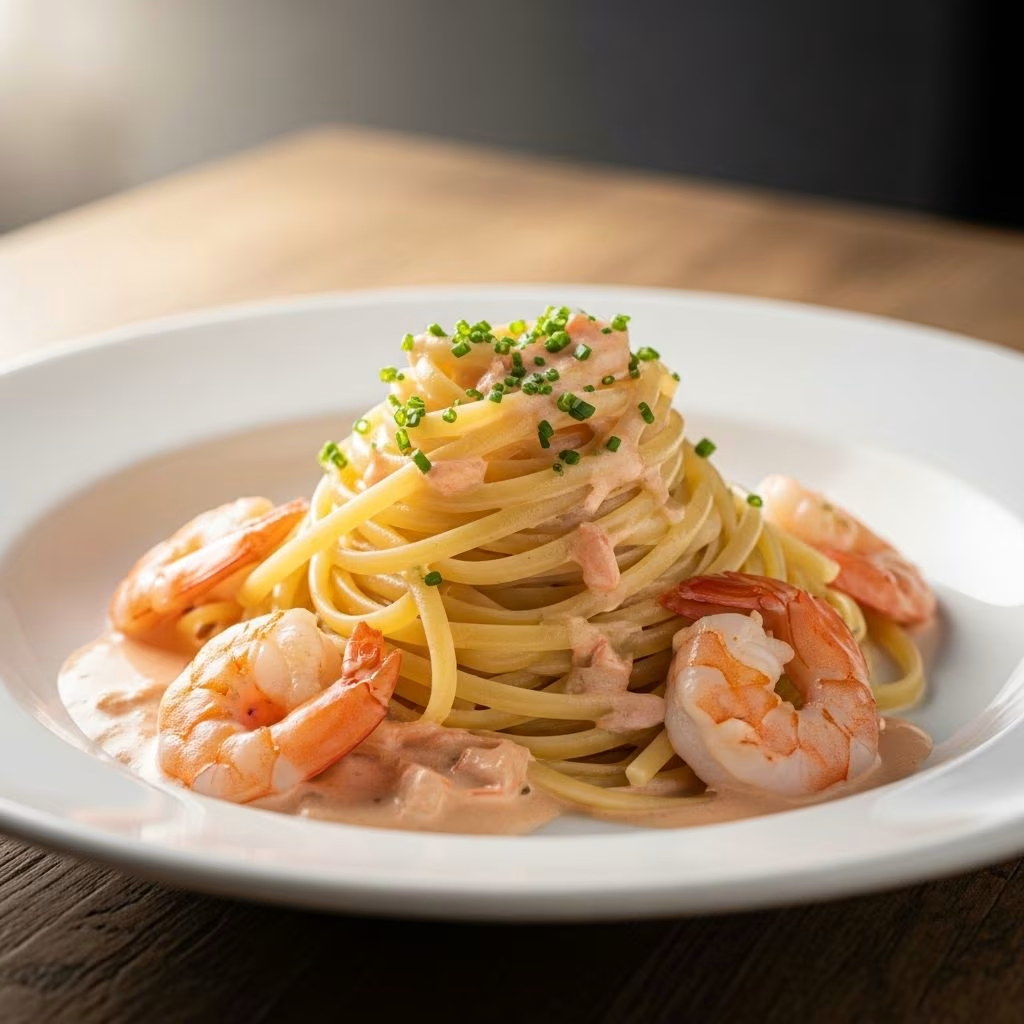
This elegant yet straightforward pasta dish combines tender linguine with a luscious sauce that gets its signature pale pink hue from a harmonious blend of tomato paste and heavy cream. Infused with the briny sweetness of shrimp, aromatic garlic, and a splash of white wine, it’s a recipe that transforms simple ingredients into a restaurant-worthy meal. Ideal for busy evenings or special occasions, it comes together in about 30 minutes, making it a staple for home cooks who crave Italian flavors without the fuss.
Why This Pink Shrimp Sauce Captivates
The magic of pink shrimp sauce lies in its balance. Tomato paste provides a subtle tang and vibrant color without overpowering the dish, while cream adds richness and smoothness. Shrimp, both pureed into the sauce for depth and left whole for texture, elevate it to seafood perfection. Unlike heavier red sauces or plain cream pastas, this version offers a light yet indulgent profile that’s versatile for pairing with crusty bread or a crisp salad.
Essential Ingredients for Success
Gathering high-quality components ensures the best results. Focus on fresh, wild-caught shrimp for superior flavor and texture. Here’s a breakdown:
- Shrimp: ¾ lb large, peeled and deveined – split between whole for cooking and pureeing.
- Garlic: 2 medium cloves, peeled and lightly crushed for gentle infusion.
- Olive oil: 2 tablespoons extra-virgin for sautéing.
- Tomato paste: 2 tablespoons, the key to the pink color and mild acidity.
- Dry white wine: ½ cup, like Pinot Grigio, to deglaze and add brightness.
- Heavy cream: 1 cup, reduced for silky body.
- Linguine: 1 lb, or any long pasta like spaghetti.
- Fresh parsley: 6-7 sprigs, chopped for freshness.
- Salt and pepper: To taste, freshly ground for pepper.
These measurements serve 4 generously. Scale up for larger groups, maintaining the sauce-to-pasta ratio for optimal coating.
Step-by-Step Cooking Guide
Timing is crucial – start the pasta water early to synchronize with the sauce. Follow these precise steps for foolproof results.
- Prep the shrimp: Divide into two portions: one for initial cooking and pureeing (about ½ lb), the other raw for final addition (¼ lb). Pat dry for better searing.
- Boil pasta water: In a large pot, bring salted water (2 tablespoons salt per gallon) to a rolling boil.
- Sauté aromatics: Heat olive oil in a wide skillet over medium. Add crushed garlic cloves and cook 3-4 minutes until golden and fragrant. Remove and discard garlic to avoid bitterness.
- Build the base: Dissolve tomato paste in white wine, then pour into the skillet. Simmer over medium-high until reduced by half, about 3 minutes, stirring occasionally.
- Cook first shrimp batch: Add the larger portion of shrimp, season with salt and pepper. Sauté 2-3 minutes until pink and opaque. Remove from heat.
- Cook linguine: Add pasta to boiling water, stirring to prevent sticking. Cook al dente per package (usually 8-10 minutes).
- Puree shrimp: Transfer cooked shrimp to a food processor with a slotted spoon. Pulse to medium-fine chop – not paste-like, for texture. Return to skillet.
- Finish the sauce: Over medium-high, add cream and reduce by half, 4-5 minutes. Stir in raw shrimp and chopped parsley (2 tablespoons). Cook 1-2 minutes until shrimp pinken. Remove from heat.
- Combine: Drain pasta, reserving ½ cup water. Toss immediately with sauce in skillet, adding pasta water if needed for silkiness. Serve hot.
Pro Tips for Perfect Texture and Flavor
- Use a food processor or blender for shrimp – a knife works but yields uneven results.
- Don’t overcook shrimp; they continue cooking off-heat.
- Fresh pasta absorbs sauce better; substitute if available.
- Reduce cream slowly to prevent separation.
- Taste before serving – adjust salt, as pasta water adds seasoning.
Customizing Your Pink Shrimp Linguine
This base recipe invites creativity. Here’s a table of variations:
| Variation | Substitution/Addition | Why It Works |
|---|---|---|
| Spicy Kick | ½ tsp red pepper flakes with garlic | Balances creaminess with heat |
| Vegetarian Twist | Mushrooms or peas for shrimp | Maintains texture and sauce body |
| Seafood Medley | Add bay scallops with raw shrimp | Enhances briny luxury |
| Citrus Boost | 1 tsp lemon zest at end | Cuts richness, brightens flavors |
| Cheesy Finish | ¼ cup grated Parmesan | Umami depth without heaviness |
These tweaks keep the dish under 30 minutes while suiting dietary needs or moods.
Pairing Suggestions for a Complete Meal
Complement with light whites like Sauvignon Blanc to match the sauce’s acidity. Start with a Caprese salad, end with tiramisu. Serve family-style for sharing.
Storing and Reheating Leftovers
Store in airtight containers up to 2 days in fridge. Reheat gently on stovetop with splash of cream or pasta water – microwave toughens shrimp. Freezes poorly due to cream separation.
Nutrition Snapshot
Per serving (¼ recipe): ~650 calories, 28g fat, 70g carbs, 32g protein. High in protein from shrimp, moderate carbs from pasta. Use whole wheat linguine for fiber boost.
Frequently Asked Questions
What makes the sauce pink?
The color comes from tomato paste blended with cream, creating a pale rose tint without full tomato dominance.
Can I use frozen shrimp?
Yes, thaw fully and pat dry. Fresh is ideal for tenderness.
Alcohol-free version?
Substitute wine with seafood stock or broth; reduce slightly longer for concentration.
Best pasta shape?
Linguine traps sauce well; fettuccine or tagliatelle also excellent.
How to scale for 2 people?
Halve all ingredients except pasta water/salt; use 8 oz linguine.
Historical Roots and Italian Inspiration
Pink sauces, or “rosa,” blend marinara and Alfredo elements, popular in Italian-American cuisine. This shrimp version draws from quick pasta traditions, emphasizing fresh seafood like in coastal regions of Italy. Chefs like Giuliano Hazan popularized 30-minute versions, proving authenticity needn’t take hours.
Experiment with heirloom tomatoes for paste if making your own, but store-bought ensures consistency. This dish shines in summer with peak shrimp season, but pantry staples make it year-round friendly.
For visual learners, imagine golden garlic infusing oil, wine bubbling down, shrimp turning coral – the aroma alone promises satisfaction. It’s more than pasta; it’s a love letter to simple cooking.
References
- Giuliano Hazan’s Thirty Minute Pasta Cookbook — Giuliano Hazan. 2009. https://explorecookeat.com/linguine-with-pink-shrimp-sauce/
- Pink Shrimp Sauce with Linguine Recipe — The $5 Foodie. N/A. https://www.thefivedollarfoodie.com/recipes/viewbytitle/pink-shrimp-sauce-with-linguine
- Fresh Linguine with Shrimp and Peas in Pink Cream Sauce — The Mom 100. N/A. https://themom100.com/recipe/fresh-linguine-with-shrimp-and-peas-in-a-pink-cream-sauce/
- Recipe: Linguine with Pink Shrimp Sauce — Your Observer. 2011-09-07. https://www.yourobserver.com/news/2011/sep/07/recipe-linguine-pink-shrimp-sauce/