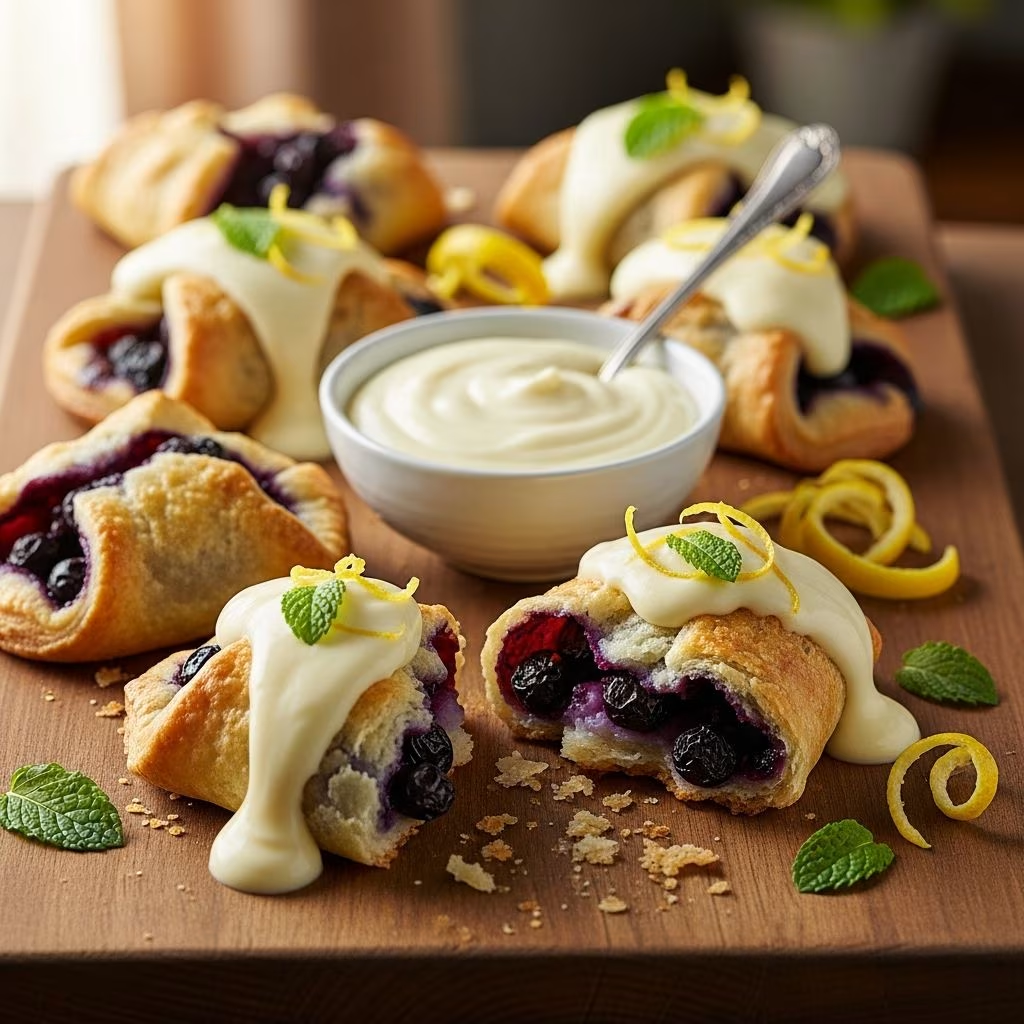
Creating pastries that combine sophisticated flavors with accessible home-baking techniques offers a rewarding culinary experience. This recipe brings together the brightness of citrus, the tanginess of Greek yogurt, and the natural sweetness of blueberries into an elegant dessert that appears far more complicated than its actual preparation requires. The finished pastries showcase the influence of Mediterranean cuisine, where traditional ingredients like sea salt and honey elevate simple components into something memorable.
Understanding the Components of This Pastry
The beauty of this pastry lies in its three distinct layers of flavor and texture. Each component serves a specific purpose in creating a balanced, sophisticated dessert that appeals to various palates. The foundation involves a light pastry shell that provides structure, while the frosting layer introduces creamy tanginess, and the blueberry topping contributes natural sweetness and visual appeal.
The Pastry Foundation
The base of these pastries requires a versatile dough that can support the frosting and toppings without becoming soggy or heavy. Many bakers choose phyllo pastry for its delicate, crispy texture, though puff pastry serves as an excellent alternative for those seeking a more substantial base. The key involves baking the pastry until golden brown before adding any wet components, ensuring structural integrity throughout storage and serving.
Alternatively, some recipes employ a graham cracker or shortbread-style crust that provides a more stable foundation. This approach works particularly well when the pastries will be stored in refrigeration for extended periods, as the denser base resists moisture absorption better than phyllo.
The Lemon Yogurt Frosting
The frosting represents the soul of this dessert, combining thick, strained Greek yogurt with bright lemon juice and natural honey sweetness. Straining yogurt for several hours or overnight removes excess whey, creating a frosting with the consistency of thick cream cheese while maintaining the characteristic tanginess that defines this filling. The lemon component—both zest and juice—cuts through the richness, while honey provides subtle sweetness without adding excessive sugar.
This frosting approach differs from traditional buttercream, offering a lighter, more refreshing alternative that pairs beautifully with fruit toppings. The yogurt base also provides probiotic benefits, making this dessert feel slightly more wholesome than purely decadent options.
Blueberry Selection and Preparation
Fresh, high-quality blueberries form the visual and flavor anchor of these pastries. The berries should be firm, deeply colored, and bursting with natural sweetness. When selecting blueberries, look for those with a silvery bloom on the surface, which indicates freshness and proper ripeness. Washing berries gently just before use prevents water absorption that could cause mushiness or mold development.
Some preparations involve reserving a portion of blueberries for the top while incorporating others into the filling or dough itself, creating multiple layers of berry flavor throughout the pastry.
Ingredient Specifications and Quality Considerations
| Ingredient | Quantity | Quality Notes |
|---|---|---|
| Greek Yogurt (Strained) | 2-3 cups | Nonfat or full-fat varieties work; strain overnight for optimal consistency |
| Fresh Lemon Juice | 2-3 tablespoons | Freshly squeezed provides superior flavor to bottled juice |
| Lemon Zest | 1-2 teaspoons | Use a microplane for fine texture; zest before juicing |
| Honey | 2-4 tablespoons | Raw or processed honey; raw adds complexity to flavor profile |
| Sea Salt | Pinch to 1/4 teaspoon | Fleur de sel or Maldon salt enhances sweetness perception |
| Fresh Blueberries | 1.5-2 cups | Peak season berries offer superior flavor and firmness |
| Pastry Shells | 6-8 individual units | Phyllo, puff pastry, or homemade tartlets |
Step-by-Step Preparation Process
Preparing the Frosting Foundation
Begin the frosting preparation by straining yogurt through fine cheesecloth or a fine-mesh strainer lined with coffee filters. This crucial step removes liquid whey, concentrating the yogurt into a thick spreadable consistency. Place the strainer over a bowl and refrigerate overnight for optimal results, though six hours represents the minimum for acceptable thickness.
Once the yogurt has reached the desired consistency, transfer it to a clean bowl and gently fold in freshly grated lemon zest, taking care not to overwork the mixture. Add fresh lemon juice gradually, tasting as you go to achieve the desired balance of tartness and sweetness. The acidity of lemon juice can slightly thin the yogurt, so add it in small increments. Drizzle in honey while stirring gently until the frosting reaches your preferred sweetness level. Finally, add just a pinch of sea salt, which amplifies the lemon flavor and provides a subtle complexity that prevents the frosting from tasting one-dimensionally sweet.
Preparing and Baking Pastry Shells
If working with phyllo pastry, brush individual sheets lightly with melted butter or olive oil before layering them into muffin tins or tartlet forms. Phyllo creates delicate, crispy shells that provide an elegant textural contrast to the creamy frosting. Bake at 375°F for approximately 12-15 minutes until golden brown and crispy throughout.
For puff pastry, cut squares or circles to size and place them on parchment-lined baking sheets. Prick the pastry with a fork to prevent excessive puffing, then bake at 400°F for 10-12 minutes until golden and crispy. Alternatively, pre-made tartlet shells or store-bought pastry cups can streamline preparation without sacrificing quality.
Final Assembly and Serving
Once pastry shells have cooled completely, carefully spread or pipe the lemon yogurt frosting into each shell. A piping bag fitted with a decorative tip creates a professional appearance, though a simple offset spatula produces equally delicious results. Arrange fresh blueberries artfully over the frosting, pressing them gently to secure. Finish with a light dusting of lemon zest and a whisper-fine sprinkle of sea salt flakes to enhance all the flavors present in the dish.
Flavor Profile and Culinary Context
These pastries exemplify the Mediterranean approach to dessert, where fresh ingredients take priority over elaborate techniques or heavy cream-based preparations. The combination of tart yogurt, bright citrus, and naturally sweet berries creates a balanced flavor profile that remains light and refreshing despite its elegance. The sea salt element, while subtle, serves as a professional touch that enhances perception of sweetness and adds a savory undertone reminiscent of Greek coastal cuisine.
The textural interplay between crispy pastry, creamy frosting, and juicy berries provides multiple sensory experiences with each bite. This complexity makes the dessert suitable for both casual entertaining and formal dinner occasions.
Storage and Make-Ahead Options
These pastries benefit from thoughtful preparation timing. Pastry shells can be baked and cooled several hours ahead, though they taste best served within a few hours of assembly. Store cooled shells in an airtight container at room temperature. The frosting can be prepared up to two days in advance and refrigerated in a covered container, allowing flavors to meld and develop.
Assemble pastries no more than four hours before serving to maintain pastry crispness. If assembly must occur earlier, apply the frosting closer to serving time and hold the blueberry topping until just before presentation. Refrigerate completed pastries until serving, removing them from cold storage 15-20 minutes beforehand to allow flavors to warm slightly, which intensifies the lemon and honey notes.
Variations and Personalization
This recipe framework accommodates numerous adaptations based on ingredient availability and personal preferences. Substitute raspberries or blackberries for blueberries while maintaining the same frosting components. Replace Greek yogurt with strained regular yogurt or even whipped cream mixed with sour cream for a slightly different texture.
Some bakers incorporate a thin layer of lemon curd between the pastry shell and frosting for added richness and tartness. Others add fresh herbs like mint or lavender to the frosting for subtle flavor complexity. Honey can be swapped for maple syrup or agave nectar, though honey’s floral notes particularly complement the yogurt and lemon combination.
Frequently Asked Questions
Can I prepare these pastries completely in advance?
While individual components can be prepared ahead, assembled pastries are best served within four hours. The pastry shell will gradually soften from moisture in the frosting, so timing assembly close to service maintains optimal texture and visual appeal.
What if I don’t have time to strain yogurt overnight?
In a pinch, use high-quality thick Greek yogurt and simply drain it for 2-3 hours. Alternatively, mix regular yogurt with a small amount of cream cheese to achieve similar thickness. The frosting will be slightly softer but still delicious.
Are these pastries suitable for dietary restrictions?
The recipe can be adapted for gluten-free diets by using gluten-free pastry shells or phyllo alternatives. For dairy-free versions, experiment with coconut yogurt or cashew cream, though the flavor profile will shift noticeably. Those avoiding honey can use agave nectar or maple syrup as sweeteners.
How far in advance can I bake the pastry shells?
Baked pastry shells maintain quality for up to one day when stored in an airtight container at room temperature. Longer storage risks staleness and moisture absorption. Phyllo shells remain crispest when baked no more than 12 hours before assembly.
References
- Blueberry Tart with Lemon-Honey-Yogurt Filling — Healthy GF Family. Accessed April 2026. https://www.healthygffamily.com/recipe/summery-blueberry-tart/
- Blueberry, Lemon & Honey Yoghurt Cake — Farm to Fork. Recipe by Courtney Roulston. Accessed April 2026. https://www.farmtofork.com.au/recipe-index/blueberry-lemon-honey-yoghurt-cake