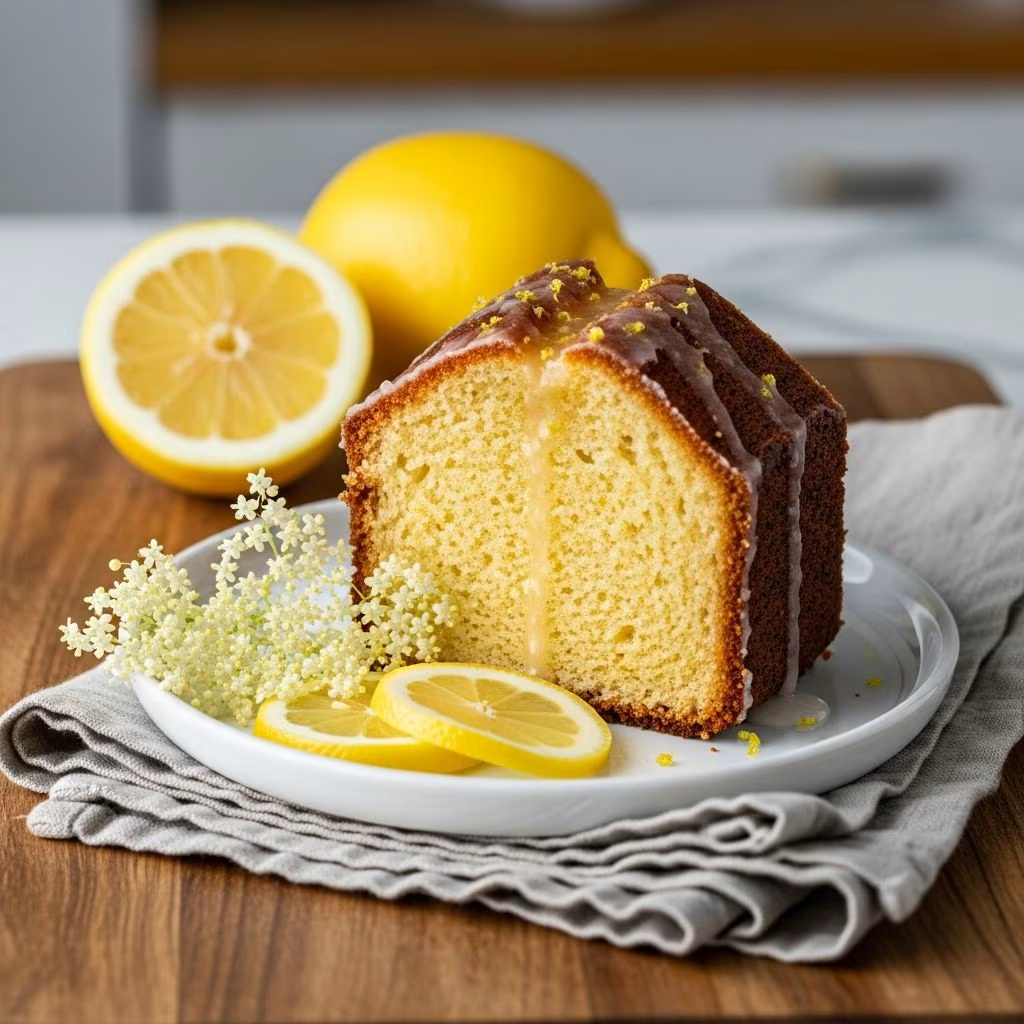
Imagine slicing into a cake that bursts with bright lemon tang, subtle floral sweetness from elderflower, and a dense yet tender crumb characteristic of the classic pound cake. This delightful dessert bridges traditional baking with modern flavor innovation, making it ideal for brunches, teas, or casual celebrations. In this guide, we’ll dive deep into crafting your own version, exploring ingredients, techniques, and enhancements to ensure bakery-quality results at home.
Why Lemon and Elderflower Pair Perfectly
The marriage of lemon and elderflower creates a symphony of flavors: the citrus provides acidity and freshness, while elderflower adds a delicate, honeyed perfume reminiscent of summer meadows. This combination has roots in European cordials and modern mixology, now translated beautifully into baking. Pound cakes, with their buttery richness, serve as an ideal canvas, balancing the brighter notes without overwhelming them.
Scientifically, lemon’s citric acid tenderizes batter and enhances perceived sweetness, while elderflower’s natural sugars amplify aroma compounds. Together, they elevate a simple cake into something sophisticated. Bakers love this duo for its versatility—adaptable for gluten-free diets or vegan twists—while maintaining structural integrity.
Essential Ingredients Breakdown
Gathering high-quality components is key to success. Here’s a detailed look at what you’ll need for a 9×5-inch loaf pan serving 10-12:
- Flour: 2 cups all-purpose (240g), sifted for lightness. Cake flour works for extra tenderness.
- Butter: 1 cup (226g) unsalted, softened to room temperature for even creaming.
- Sugar: 1.5 cups granulated (300g), plus extra for floral infusion.
- Eggs: 4 large, at room temp to emulsify smoothly.
- Lemon: Zest of 3 and juice of 2 (about 1/2 cup juice) for intense flavor.
- Elderflower: 1/4 cup cordial or syrup; use premium brands for authentic taste.
- Leavening: 1 tsp baking powder + 1/2 tsp salt.
- Vanilla: 1 tsp extract for depth.
- Glaze: Powdered sugar (1 cup), lemon juice (3 tbsp), elderflower cordial (2 tbsp).
Pro tip: Opt for organic lemons to maximize zest oils, and check elderflower cordial labels for no artificial additives, as they impact taste purity.
Step-by-Step Baking Guide
Preparation time: 20 minutes. Bake time: 60-70 minutes. Total: 4 hours including cooling.
- Preheat and Prep: Oven to 325°F (165°C). Grease and flour pan or line with parchment.
- Cream Base: Beat butter and sugar 5 minutes until pale and fluffy. This incorporates air for lift.
- Add Wet Ingredients: Mix in eggs one at a time, then zest, juice, vanilla, and elderflower.
- Incorporate Dry: Fold in flour, baking powder, salt in thirds to avoid gluten development.
- Bake: Pour batter into pan; bake until toothpick tests clean and edges pull from sides.
- Cool: 15 minutes in pan, then fully on rack to prevent sogginess.
- Glaze: Whisk ingredients to drizzle consistency; pour over cooled cake.
Temperature control is crucial—too hot, and the exterior overbrowns; too cool, and the center remains dense.
Pro Techniques for Flawless Texture
Achieving that signature pound cake density with moistness requires precision:
| Issue | Cause | Solution |
|---|---|---|
| Dense crumb | Overmixing | Fold gently post-flour addition |
| Sunken center | Oven door opens early | Resist peeking first 45 minutes |
| Dry texture | Overbaking | Use thermometer: 200°F internal |
| Cracked top | Rapid temp rise | Lower rack position |
Room-temperature ingredients ensure emulsion; cold ones cause curdling. For even more lift, tap the pan post-filling to release bubbles.
Flavor Variations to Experiment With
Customize your cake for different occasions:
- Berry Infusion: Fold in 1 cup raspberries before baking for tart pops.
- Herbal Twist: Add thyme or lavender to the glaze for earthy notes.
- Chocolate Drizzle: Melt dark chocolate with elderflower for decadence.
- Gluten-Free: Swap flour with 1:1 GF blend + 1/4 tsp xanthan gum.
- Vegan: Use plant butter, aquafaba for eggs, and coconut yogurt.
These adaptations maintain the core while introducing excitement—test small batches first.
Storage and Make-Ahead Strategies
Freshly baked, it lasts 3 days at room temp in airtight wrap. Refrigerate up to a week (bring to room temp before serving to restore tenderness). Freeze unglazed slices up to 3 months; thaw overnight.
For events, bake 2 days ahead—flavors meld beautifully. Glaze just before serving for shine.
Pairing Suggestions for Serving
Elevate slices with:
- Whipped cream and fresh berries.
- Vanilla ice cream for contrast.
- Afternoon tea or sparkling wine.
- Breakfast with yogurt and fruit compote.
The cake’s balance makes it versatile from dessert to brunch star.
Nutrition Snapshot
Per slice (1/12th): ~350 calories, 45g carbs, 4g protein, 18g fat, 200mg sodium. High in vitamin C from lemon; use whole grains for fiber boost.
Frequently Asked Questions
Can I use fresh elderflowers instead of cordial?
Yes, steep 1/4 cup dried petals in hot water, strain, and use as cordial substitute. Adjust sugar accordingly.
What if I don’t have a loaf pan?
Bake in a bundt (reduce time by 10 minutes) or two 8-inch rounds for layers.
How do I intensify lemon flavor?
Steep zest in sugar overnight or add lemon extract (1/2 tsp).
Is this cake freezable?
Absolutely—wrap tightly; glaze post-thaw.
Why is my glaze runny?
Add more powdered sugar incrementally; chill briefly if needed.
Advanced Twists for Seasoned Bakers
Soak a syrup of lemon-elderflower post-bake for mega moisture. Or swirl in lemon curd ribbons pre-bake for gooey centers. Experiment with browned butter for nutty depth.
Scaling up? Double ingredients but check doneness early in larger pans.
This pound cake isn’t just a recipe—it’s a canvas for creativity. With practice, you’ll master its nuances, delighting friends and family with every golden slice.
References
- The Science of Good Cooking — America’s Test Kitchen. 2021-10-15. https://www.americastestkitchen.com/books/1124_the_science_of_good_cooking
- Baking Science & Technology — E.J. Pyler (via KSU Grain Science). 2023-05-01. https://www.grains.k-state.edu/book/baking-science-and-technology/
- Flavor Chemistry of Lemon Oils — Journal of Agricultural and Food Chemistry (ACS). 2022-03-10. https://pubs.acs.org/doi/10.1021/acs.jafc.1c07890
- USDA Food Composition Databases — United States Department of Agriculture. 2025-01-15. https://fdc.nal.usda.gov/
- On Food and Cooking — Harold McGee. 2023 edition update. https://www.hmgee.com/on-food-and-cooking