Leek soup represents one of the most versatile and satisfying dishes in the culinary world. Its elegant simplicity belies the depth of flavor that emerges when quality ingredients are treated with care and attention. Whether you’re seeking a refined dinner party starter or a warming weeknight meal, understanding the nuances of leek soup preparation transforms an ordinary kitchen experience into something truly memorable. This comprehensive guide explores every aspect of creating this beloved classic, from ingredient selection through plating and serving.
Understanding Leeks: The Foundation of Your Soup
Leeks belong to the allium family, sharing botanical ancestry with onions and garlic, yet offering a considerably milder and more delicate flavor profile. When shopping for leeks, select specimens with white and light green sections that appear firm and unblemished. The darker green tops, while flavorful, tend to be tougher and are typically reserved for stock-making rather than soup preparation. A quality leek soup requires approximately three pounds of trimmed leeks, which means purchasing considerably more by weight since the usable portion represents only a fraction of the whole plant.
Preparation of leeks demands thoroughness to remove the hidden soil and debris trapped between layers. Begin by trimming away the root end and the tough dark green portions, preserving the tender white and pale green sections. Slice the leeks into half-moons or rounds, then place them in a large bowl filled with cold water. Agitate the pieces gently to allow grit to settle to the bottom, then lift the leeks into a colander, leaving the sediment behind. This washing technique ensures your finished soup maintains a refined texture without any unpleasant grit.
Building Depth Through Aromatics and Base Ingredients
The foundation of exceptional leek soup extends beyond the primary vegetable. A well-constructed soup incorporates supporting aromatic vegetables that create complexity without overwhelming the delicate leek flavor. One medium onion, two large carrots, and two celery ribs, all finely chopped, provide the classic aromatics that cooks have relied upon for generations. Some preparations include pancetta or bacon, which introduces a subtle smokiness that elevates the overall profile.
Begin your soup by heating unsalted butter in a heavy-bottomed pot over moderate heat. Add the pancetta if using, allowing the fat to render and create a flavorful base. Next introduce the prepared leeks along with the chopped onion, carrots, and celery. Season with salt and pepper at this stage, allowing the vegetables to soften gradually through gentle cooking. The vegetables should become tender and fragrant after approximately eight minutes of cooking, at which point they’re ready for the next phase of development.
Liquid Selection and Flavor Development
The choice of cooking liquid significantly impacts the final character of your soup. A combination of dry vermouth, chicken or beef broth, and water creates a balanced foundation that neither overwhelms nor underwhelms the palate. The vermouth contributes subtle herbal notes and a touch of acidity that brightens the overall composition. For those preferring to omit alcohol, dry white wine serves as an excellent alternative, or additional broth can substitute entirely.
After adding the liquid components and a bay leaf for additional depth, bring the mixture to a boil, then reduce the heat to maintain a gentle simmer. Covering the pot partially allows steam to escape while preventing excessive evaporation. The vegetables require approximately fifteen minutes of simmering to achieve complete tenderness. At this point, introduce fresh flat-leaf parsley, which should simmer for an additional five minutes to infuse its bright, herbaceous qualities into the broth.
The Thickening Component: Creating Velvety Texture
Traditional soup preparation often employs a flour-based thickening agent, though modern cooks frequently opt for creamier alternatives. Combining all-purpose flour with light coconut milk creates a smooth liaison that, when whisked in a covered jar until completely lump-free, seamlessly integrates into the simmering soup. Adding this mixture gradually while stirring ensures even distribution and prevents the formation of lumps that would compromise the texture.
Allow the soup to simmer for five additional minutes after adding the thickener, allowing the flour to fully hydrate and the soup to reach the desired consistency. Some preparations benefit from the addition of dairy products such as half-and-half or heavy cream in place of or in addition to coconut milk, providing richer, more luxurious mouthfeel. The choice depends on personal preference and dietary considerations.
Achieving Silky Smoothness Through Blending
Transforming chunky vegetables into velvety soup requires careful blending in batches. Working with hot liquids demands caution and respect for safety protocols. Remove the pot from the heat and allow the mixture to cool slightly. Transfer approximately one-quarter of the soup to a blender, ensuring the container is never more than halfway full, as hot liquid expands significantly. Blend for approximately one minute until completely smooth, then transfer to a separate pot or heat-safe container. Repeat this process with the remaining soup in three additional batches.
For those seeking a less labor-intensive approach, an immersion blender offers convenient in-pot blending, though the resulting texture may retain slightly more vegetable particle presence compared to traditional blender processing. Once all portions are blended, combine them in the original pot and gently reheat if necessary. Taste and adjust seasoning with additional salt and pepper according to preference.
Make-Ahead Strategies and Storage
One of leek soup’s greatest virtues lies in its ability to improve with time. The flavors continue developing and marrying as the soup rests in the refrigerator, making it an ideal candidate for advance preparation. Cool the soup completely in an uncovered container, then cover and refrigerate. Most preparations reach optimal flavor development after one to three days. The soup maintains quality for approximately five days under proper refrigeration.
For extended storage, leek soup freezes exceptionally well. Portion into freezer-safe containers, leaving headspace for expansion, and freeze for up to two months. When ready to serve, thaw overnight in the refrigerator and gently reheat on the stovetop, thinning with water or broth if the soup has become too concentrated during storage.
Serving Suggestions and Garnish Possibilities
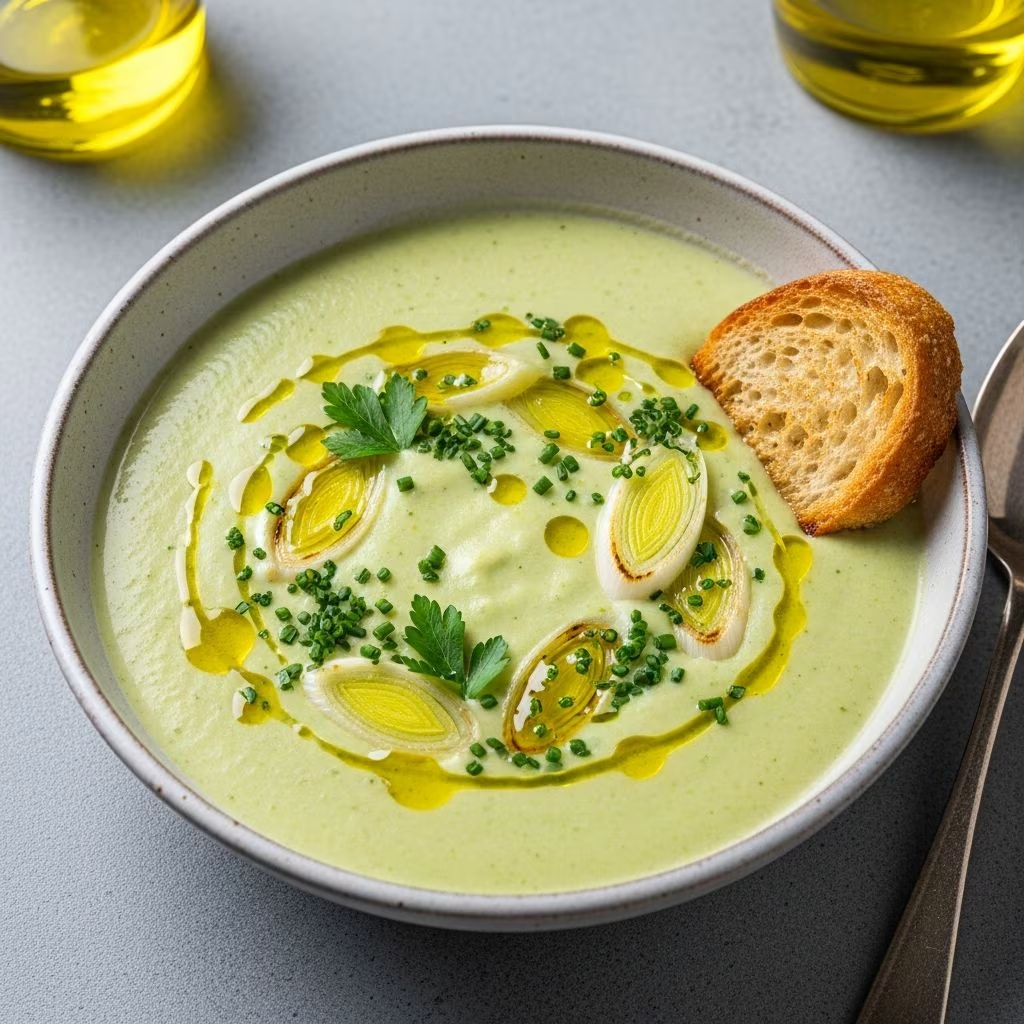
Presentation transforms soup from mere sustenance into an impressive culinary statement. Serve in warmed bowls to maintain temperature throughout consumption. Simple garnishes enhance both visual appeal and flavor: a drizzle of quality extra-virgin olive oil, a sprinkle of crispy pancetta, fresh herbs such as chives or parsley, or a grinding of black pepper all complement the soup’s delicate nature. Some presentations include a small dollop of crème fraîche or a whisper of truffle oil for added sophistication.
Nutritional Profile and Dietary Modifications
| Nutritional Component | Per Serving (6 servings) | Per Serving (8 servings) |
|---|---|---|
| Calories | ~370 | ~280 |
| Fat | ~18g | ~14g |
| Protein | ~19g | ~14g |
| Carbohydrates | ~35g | ~26g |
| Dietary Fiber | ~4g | ~3g |
Leek soup adapts readily to various dietary requirements. For vegetarian or vegan preparations, omit the pancetta and replace chicken broth with vegetable broth. The flavor remains satisfying and complete despite these modifications. For lower-fat versions, substitute the butter with olive oil and use fat-free or reduced-fat dairy products. Those with dairy sensitivities find that coconut milk creates an equally luxurious texture without animal products.
Creative Variations on the Classic Formula
While traditional leek soup maintains timeless appeal, creative adaptations offer exciting alternatives for adventurous cooks. Incorporating frozen peas introduces bright color and subtle sweetness that contrasts beautifully with the leeks. A whisper of ground ginger and cumin creates warm, aromatic notes reminiscent of international cuisines. Fresh jalapeño adds gentle heat and complexity without overwhelming delicate palates.
Some cooks experiment with different potato varieties, with Yukon gold potatoes contributing subtle creaminess while red potatoes add visual interest and earthiness. Roasting leeks before adding them to the pot intensifies their natural sweetness. Infusing the soup with truffle oil, saffron, or roasted garlic elevates it to restaurant-quality sophistication suitable for special occasions.
Frequently Asked Questions
Can I use only the white portion of leeks?
While using exclusively white sections produces the most delicate, refined flavor, pale green portions are equally acceptable and contain complementary flavor compounds. Reserve the darker green tops for vegetable stock or broth-making rather than soup preparation.
What if my soup appears too thin?
Increase the flour and coconut milk liaison proportionally, or simmer uncovered to reduce liquid by evaporation. Alternatively, blend in additional cooked vegetables or use a potato as a natural thickener.
How long does homemade leek soup last?
Properly refrigerated leek soup maintains quality for five days. Frozen portions remain viable for up to two months, though optimal flavor typically occurs within the first month.
Can I prepare this soup without cream or dairy?
Absolutely. Coconut milk, cashew cream, or oat milk create equally satisfying creamy textures. The soup also works beautifully as a lighter broth-based version if preferred.
What wine works best for this recipe?
Dry vermouth or dry white wine such as Sauvignon Blanc or Pinot Grigio complement leek soup perfectly. Avoid overly oaky wines that might overpower the delicate vegetable flavors.
References
- Vegetable Cookery: Selection, Preparation, and Presentation — University of California Cooperative Extension. 2020. https://ucanr.edu/sites/anrstaff/files/216065.pdf