Understanding the Heritage and Significance of Lebkuchen
Lebkuchen represents one of Germany’s most cherished culinary traditions, with roots extending back centuries into medieval European history. These distinctive treats originated in monastery bakeries during the 14th century in Nuremberg, Germany, where Catholic monks first created them using honey, aromatic spices, and nuts. The monks valued these ingredients not only for their delightful flavors but also for their purported healing properties, blending culinary artistry with wellness practices.
The name “Lebkuchen” itself carries historical significance, with etymological theories suggesting various origins connected to traditional German language and cultural practices. The term “lebkuchen” did not appear in written records until 1409, indicating that while the cookies existed earlier, their formal naming came much later. What began as a monastic creation eventually evolved into a secular treat enjoyed across German-speaking regions, particularly during the Christmas season.
The evolution of Lebkuchen reflects broader changes in European baking practices and ingredient availability. Medieval monks demonstrated remarkable ingenuity by repurposing oversized communion wafers as bases for their sticky gingerbread dough, creating what we now recognize as authentic Lebkuchen on wafer foundations. This practical solution became an integral part of the final product’s identity and texture profile.
Key Ingredient Selection and Preparation
Creating authentic Lebkuchen requires understanding the role each ingredient plays in achieving the desired texture, flavor, and appearance. The foundation of these cookies rests on a carefully balanced combination of sweeteners, fats, and structural elements that work together to produce the characteristic soft, chewy interior.
Sweetening Components
Honey serves as the primary sweetener in traditional Lebkuchen, providing both flavor depth and moisture retention. Honey combined with dark brown sugar creates the base sweetness foundation, with proportions varying between recipes depending on desired sweetness levels and texture preferences. Some bakers prefer using dark muscovado sugar, an unrefined cane sugar containing natural molasses that delivers richer flavor compared to standard dark brown sugar varieties.
The honey selection process warrants careful attention, as clover honey or other mild varieties work better than strongly flavored options that might overpower the delicate spice balance. Honey also contributes to the cookie’s moisture content, affecting shelf life and maintaining chewiness throughout the storage period.
Flour and Structural Ingredients
All-purpose flour forms the primary dry ingredient base, typically requiring between 1¾ to 3 cups depending on the recipe’s overall moisture content and desired dough consistency. Ground almonds frequently replace a portion of traditional flour, with recipes calling for up to 2 cups of almond flour combined with hazelnut flour for authentic versions. This substitution adds nutritional complexity and creates a more tender crumb structure.
The incorporation of ground nuts transforms the texture significantly, producing cookies that crumble more delicately on the palate while adding subtle nutty undertones that complement the spice profile. Some bakers grind their own almonds from whole nuts, ensuring freshness and controlling oil content in the final dough.
Aromatic Spice Blending
The distinctive character of Lebkuchen emerges from its complex spice blend, traditionally comprising multiple warming spices in carefully calibrated proportions. Essential spices include ground cinnamon, ground ginger, ground allspice, ground cloves, and ground nutmeg, with additional optional ingredients like ground coriander, anise, fennel seeds, and cardamom. The traditional German spice mixture, known as Lebkuchengewürz, represents centuries of refinement and cultural preference.
The ratio between spices demands precision, as excessive quantities of strong spices like cloves or nutmeg can overwhelm more delicate flavors. Ground cinnamon typically dominates the spice profile, with other spices playing supporting roles that enhance depth without creating harshness.
Leavening Agents and Additional Elements
Baking soda and baking powder work together to create the light, airy crumb texture characteristic of properly made Lebkuchen. Salt balances sweetness and highlights the spice complexity, while citrus elements—typically lemon zest and juice—provide brightness that cuts through the richness of honey and butter.
Some traditional recipes incorporate potassium carbonate and hartshorn salt as leavening agents, producing exceptionally light cookies with unique texture qualities impossible to achieve through conventional baking powder alone. These specialized ingredients require sourcing from specialty baking suppliers but deliver historically authentic results.
Step-by-Step Preparation Methodology
Initial Wet Ingredient Combination
Begin by combining honey, sugar, and unsalted butter in a heavy-bottomed saucepan over medium heat. Stir this mixture constantly until the sugar completely dissolves and the liquid reaches a gentle simmer. The heating process melts the butter and dissolves sugar crystals, creating a uniform liquid base for subsequent ingredient additions. Remove from heat and allow the mixture to cool until comfortably warm to touch, approximately body temperature.
Once cooled appropriately, whisk in a beaten egg, freshly grated lemon zest, and lemon juice. The egg acts as a binding agent while also contributing moisture and richness to the dough. Citrus elements brighten the overall flavor profile and prevent the cookies from tasting cloying.
Dry Ingredient Integration
In a separate step, stir in the egg, all spices, baking powder, baking soda and salt together, then combine with flour and ground almonds until a sticky dough forms. Add lemon juice in small quantities as needed to achieve the proper consistency. The resulting dough should hold together when squeezed but still maintain a slightly tacky texture.
This stage requires careful technique, as overmixing can develop gluten networks that produce tough, chewy cookies rather than tender ones. Mix just until ingredients combine fully, then stop immediately.
Dough Ripening Process
The dough benefits from a resting period of at least one hour at room temperature, though overnight ripening produces superior results. This aging process allows flavors to meld and develop, while also giving the flour time to fully hydrate. Many experienced bakers recommend this critical step as the “secret” to exceptional Lebkuchen, as it transforms the flavor profile substantially.
During this rest period, cover the dough with a clean kitchen towel to prevent surface drying. The dough may initially appear sticky, but it will firm up slightly as it sits, becoming easier to work with.
Shaping and Preparation for Baking
After the resting period, spray your hands lightly with cooking spray to prevent sticking. Scoop portions of dough and form into balls or press onto baking sheets if preparing bar-style Lebkuchen. Traditional Lebkuchen often uses thin wafer bases called Oblate or Backoblaten, which serve as edible foundations that support the sticky dough during baking.
If using wafer bases, position dough portions directly onto the wafers and gently flatten slightly. The wafers become incorporated into the final baked product, adding textural interest and serving as an authentic traditional element.
Flavor Profile and Texture Characteristics
Properly executed Lebkuchen exhibit a unique combination of textural and flavor properties that distinguish them from other cookie varieties. The cookies are soft and chewy with warming spices creating a festive taste profile, while the honey provides subtle sweetness that doesn’t overwhelm the palate.
The spice complexity develops on the palate gradually, with initial cinnamon notes giving way to more subtle undertones of ginger, allspice, and other warming elements. The texture crumbles slightly between the teeth while maintaining a chewy center, creating an engaging eating experience that encourages slow consumption and flavor appreciation.
Glazing and Finishing Techniques
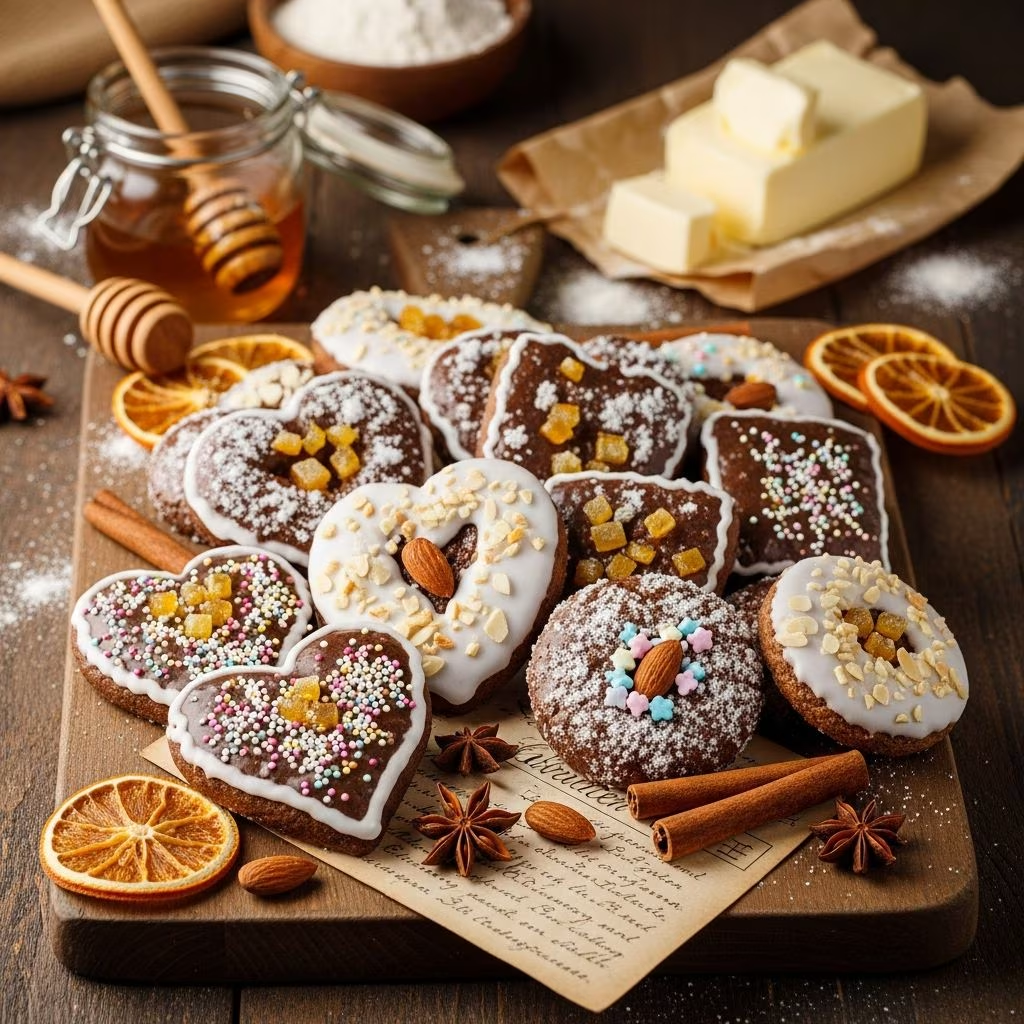
While Lebkuchen are delicious unadorned, traditional presentations often include simple glazes that enhance appearance and add subtle sweetness. A basic lemon glaze combines powdered sugar with fresh lemon juice and water, creating a thin coating that sets to a satin finish.
Some regional variations employ chocolate glazes, royal icing, or decorative toppings like whole almonds pressed into the surface before baking. These finishing touches add visual appeal while maintaining focus on the core spiced cookie flavor.
Storage and Preservation Guidelines
Properly stored Lebkuchen maintain their quality for extended periods, making them excellent candidates for advance preparation or gifting. Store cooled cookies in airtight containers at room temperature for up to two weeks, with parchment paper separating layers to prevent sticking or breakage.
For longer storage, freeze Lebkuchen in freezer-safe containers for up to three months. Allow frozen cookies to thaw at room temperature for approximately one hour before serving. The honey content in traditional recipes naturally extends shelf life compared to other cookie varieties.
Variations and Regional Adaptations
Lebkuchen range in taste from spicy to sweet and come in a variety of shapes with round being the most common. Some regions prefer thick bar-style versions, while others favor individually shaped rounds or rectangular pieces. The Nuremberg region produces particularly celebrated versions known as Nürnberger Elisenlebkuchen, which feature generous quantities of nuts and candied fruits.
Modern adaptations might incorporate alternative flours for dietary restrictions, substitute honey with maple syrup or brown rice syrup, or adjust spice levels to personal preferences. However, traditional recipes maintain their essential character through adherence to core techniques and ingredient ratios.
Common Baking Challenges and Solutions
Dough Consistency Issues
If dough appears too sticky after the resting period, gradually incorporate small amounts of additional flour while kneading. Conversely, if the dough seems too dry or crumbly, add lemon juice or water in small quantities until proper consistency develops. Environmental humidity significantly affects dough texture, requiring adjustments based on seasonal conditions.
Excessive Spreading During Baking
Lebkuchen that spread excessively may indicate insufficient flour content or excessive fat. Ensure accurate flour measurement by spooning flour into measuring cups and leveling with a knife rather than scooping directly from bags. If using oil instead of butter, reduce quantities slightly as oil distributes more readily than solid butter.
Hard or Tough Texture
Overbaking produces hard cookies lacking the characteristic chewiness Lebkuchen should possess. Monitor baking time carefully and remove cookies from the oven when edges are set but centers retain slight softness. Cookies continue cooking slightly as they cool on baking sheets.
Pairing Suggestions and Serving Ideas
Lebkuchen pair beautifully with hot beverages including mulled wine, spiced hot chocolate, coffee, or traditional German tea preparations. The spice warmth in the cookies complements similar warming notes in beverages, creating harmonious flavor combinations.
During festive gatherings, serve Lebkuchen alongside other traditional treats on holiday cookie platters. Their distinct flavor profile ensures they don’t compete with more delicate cookies while adding sophisticated depth to any selection.
FAQ Section
Can I make Lebkuchen without ground almonds?
Yes, all-purpose flour can replace ground almonds in equal measure, though the resulting cookies will have different texture and flavor characteristics. The almond flour contributes tenderness and subtle flavor depth, so omitting it produces slightly denser cookies.
How far in advance can I prepare Lebkuchen?
Lebkuchen dough can be prepared up to one week in advance when wrapped tightly and refrigerated. Baked cookies maintain quality for two weeks at room temperature or three months when frozen.
What if I cannot find Lebkuchengewürz spice mix?
You can create your own spice blend using the individual spices listed in this guide, combining them in appropriate proportions based on your taste preferences.
Are Lebkuchen suitable for gift-giving?
Absolutely. Their extended shelf life, festive appearance, and distinctive flavor make them excellent gift choices. Package them in decorative boxes or tins with tissue paper for elegant presentation.
Can I make Lebkuchen gluten-free?
Gluten-free all-purpose flour blends can substitute for traditional flour, though you may need to adjust liquid quantities slightly as gluten-free flours absorb moisture differently.
References
- Authentic German Lebkuchen – The Daring Gourmet — The Daring Gourmet. Accessed 2026. https://www.daringgourmet.com/traditional-nuernberger-elisenlebkuchen-german-lebkuchen/
- Lebkuchen (German Spice Cookies) – Kitchen Fun With My 3 Sons — Kitchen Fun With My 3 Sons. Accessed 2026. https://kitchenfunwithmy3sons.com/lebkuchen-german-spice-cookies/
- German Lebkuchen Are a Labor of Love With a Centuries-Old History — Atlas Obscura. Accessed 2026. https://www.atlasobscura.com/articles/best-gingerbread-recipe
- German Lebkuchen Cookies (How to Make …) – A Beautiful Plate — A Beautiful Plate. Accessed 2026. https://www.abeautifulplate.com/lebkuchen-cookies/
- Lebkuchen Recipes – The Fresh Loaf — The Fresh Loaf. Accessed 2026. https://www.thefreshloaf.com/node/4874/lebkuchen-recipes
- German Christmas Cookies: Lebkuchen – Happy Kitchen — Happy Kitchen. Accessed 2026. https://happykitchen.rocks/german-christmas-cookies-lebkuchen/