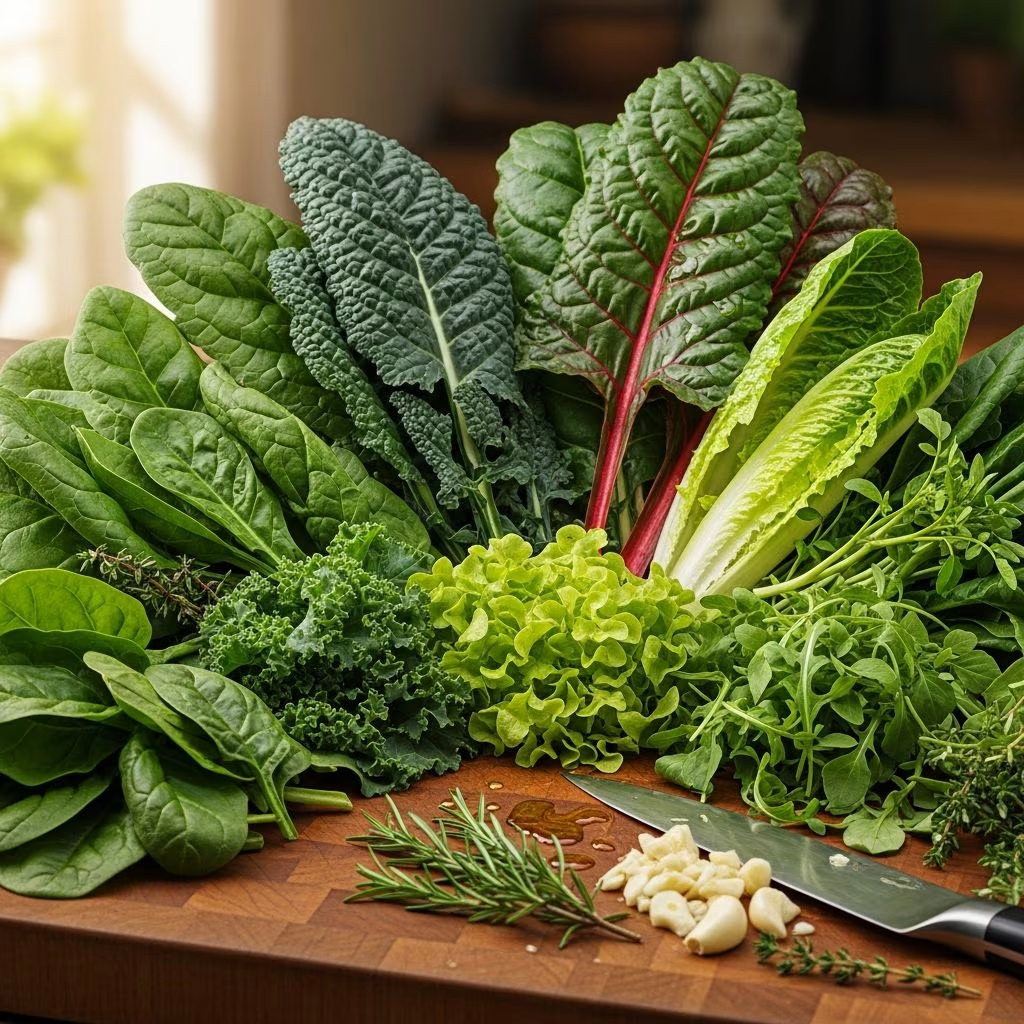
Leafy greens form the backbone of nutritious eating, delivering vitamins, minerals, and fiber in every bite. From tender baby spinach to robust kale, these vegetables offer endless ways to boost meals with color, crunch, and flavor. This guide dives into key varieties, their characteristics, preparation tips, and cooking techniques to help you incorporate them confidently.
Why Leafy Greens Matter for Your Diet
Leafy greens pack antioxidants, vitamins A, C, and K, plus folate and iron. They support heart health, digestion, and immunity. Tender greens like arugula shine raw, while heartier ones like collards excel cooked. Start small by mixing them into familiar dishes.
Popular Leafy Green Varieties
Understanding each green’s look, taste, and best uses unlocks culinary potential. Here’s a breakdown of favorites.
Kale: The Hearty Powerhouse
Kale features curly, dark green to purple leaves with firm stems. Its earthy, slightly bitter taste softens when cooked. Varieties include curly, lacinato (dinosaur), and Russian kale. Rich in vitamins and calcium, it’s ideal for massaging in salads to tenderize or roasting into chips.
- Appearance: Ruffled leaves, thick veins.
- Flavor: Robust, nutty.
- Nutrition: High in vitamin K, antioxidants.
Spinach: Versatile and Mild
Spinach has smooth, oval dark green leaves. Baby spinach is tender for raw use; mature leaves suit cooking. Mild and slightly sweet, it shrinks dramatically when heated, perfect for smoothies, eggs, or pasta.
- Appearance: Rounded, glossy leaves.
- Flavor: Delicate, earthy.
- Nutrition: Iron, folate, vitamin A.
Arugula: Peppery Kick
Arugula’s lobed, elongated leaves carry a spicy, nutty bite. Dark green with red hints, it’s a salad staple or pizza topper. Use sparingly raw to avoid overpowering dishes.
- Appearance: Small, jagged edges.
- Flavor: Mustard-like heat.
- Nutrition: Nitrates for blood pressure.
Collard Greens: Southern Staple
Large, flat, dark green leaves with thick central veins define collards. Mildly bitter, they tenderize beautifully when braised with pork or vinegar. Tough raw, they’re stars in stews.
- Appearance: Broad, paddle-shaped.
- Flavor: Cabbage-like, robust.
- Nutrition: Vitamin C, fiber.
Swiss Chard: Colorful Stems
Swiss chard boasts vibrant stems (red, yellow, white) and broad green leaves. Earthy with a beet-like sweetness, stems need longer cooking than leaves. Sauté or add to soups.
- Appearance: Thick stalks, crinkly leaves.
- Flavor: Mildly salty.
- Nutrition: Magnesium, potassium.
Mustard Greens: Bold and Spicy
Crinkled, dark leaves deliver sharp, horseradish heat. Similar to collards but punchier, they pair with fats to balance spice. Great in stir-fries or pickled.
Turnip and Beet Greens: Don’t Discard
Turnip greens are peppery with serrated edges; beet greens are earthy. Both often overlooked, they sauté well and add nutrition to roots.
Selecting and Storing Fresh Greens
Choose vibrant, crisp leaves without wilting or slime. Bunched greens should have firm stems; pre-washed bags save time but check dates. Store loosely in fridge bags with paper towels for 3-7 days. Tougher greens like kale last longer than delicate arugula.
Preparation Basics
Wash thoroughly in cold water, even pre-washed. Remove tough stems from kale, collards, chard. Chop or tear leaves. For kale salads, massage with oil and acid to soften.
Cooking Techniques for Every Green
Match method to texture: quick for tender, slow for tough.
Sautéing and Stir-Frying
Heat oil with garlic or ginger, add greens, season, cook 1-5 minutes. Spinach wilts fast; kale needs longer.
Roasting and Baking
Toss kale or chard with oil, salt; roast at 375°F for chips or sides. Crispy edges enhance flavor.
Blanching and Boiling
Brief boil tenderizes collards before chopping into salads or casseroles. Retains color.
Raw Preparations
Arugula, baby spinach, massaged kale for salads. Dress lightly.
Flavor Pairings and Seasonings
| Green | Best Pairings |
|---|---|
| Kale | Garlic, lemon, nuts, bacon |
| Spinach | Eggs, cream, nutmeg, cheese |
| Arugula | Parmesan, balsamic, pears |
| Collards | Ham hock, vinegar, onions |
| Swiss Chard | Tomatoes, beans, fennel |
Simple Recipes to Try
Garlicky Sautéed Greens
Heat 1 tbsp oil, add 2 minced garlic cloves, 1 lb chopped greens. Sauté 3-7 min, add lemon, salt. Serves 4.
Kale Chips
Tear kale, toss with oil/salt, bake 10 min at 300°F. Crunchy snack.
Collard Green Stew
Braise 1 bunch chopped collards with onion, broth, smoked meat 45 min. Comfort food.
Spinach Arugula Salad
Mix 2 cups each green, cherry tomatoes, vinaigrette, feta. Fresh side.
Health Benefits and Nutrition Comparison
| Green (per 1 cup raw) | Calories | Vit K (mcg) | Vit A (IU) |
|---|---|---|---|
| Kale | 33 | 547 | 9990 |
| Spinach | 7 | 483 | 9377 |
| Arugula | 5 | 109 | 2373 |
| Collards | 11 | 158 | 200 |
Data from USDA; values approximate. All low-cal, high-fiber.
Common Mistakes to Avoid
- Overcooking delicate greens into mush.
- Ignoring stems—chop small for chard.
- Not washing thoroughly.
- Skipping acid to cut bitterness.
Seasonal and Sourcing Tips
Peak in cooler months. Farmers markets offer variety like mizuna or radicchio. Grow your own for freshness.
FAQ
Can I eat greens raw?
Yes, tender ones like spinach and arugula; massage tough ones.
How to reduce bitterness?
Cook, pair with sweet/fatty ingredients.
Are beet greens edible?
Absolutely, sauté like chard.
Best storage for longevity?
Damp towel in perforated bag, fridge.
Freezing greens?
Blanch first, then bag for soups.
References
- Different Types of Leafy Green Vegetables — WebstaurantStore. 2023. https://www.webstaurantstore.com/article/526/types-of-greens.html
- How To Buy, Prepare, Store, and Cook with Leafy Greens — 7 Day Vegan. 2022. https://7dayvegan.com/greens/
- How to Cook Leafy Greens: Delicious Recipes & Healthy Cooking Tips — Sharon Palmer. 2023. https://sharonpalmer.com/how-to-cook-all-greens/