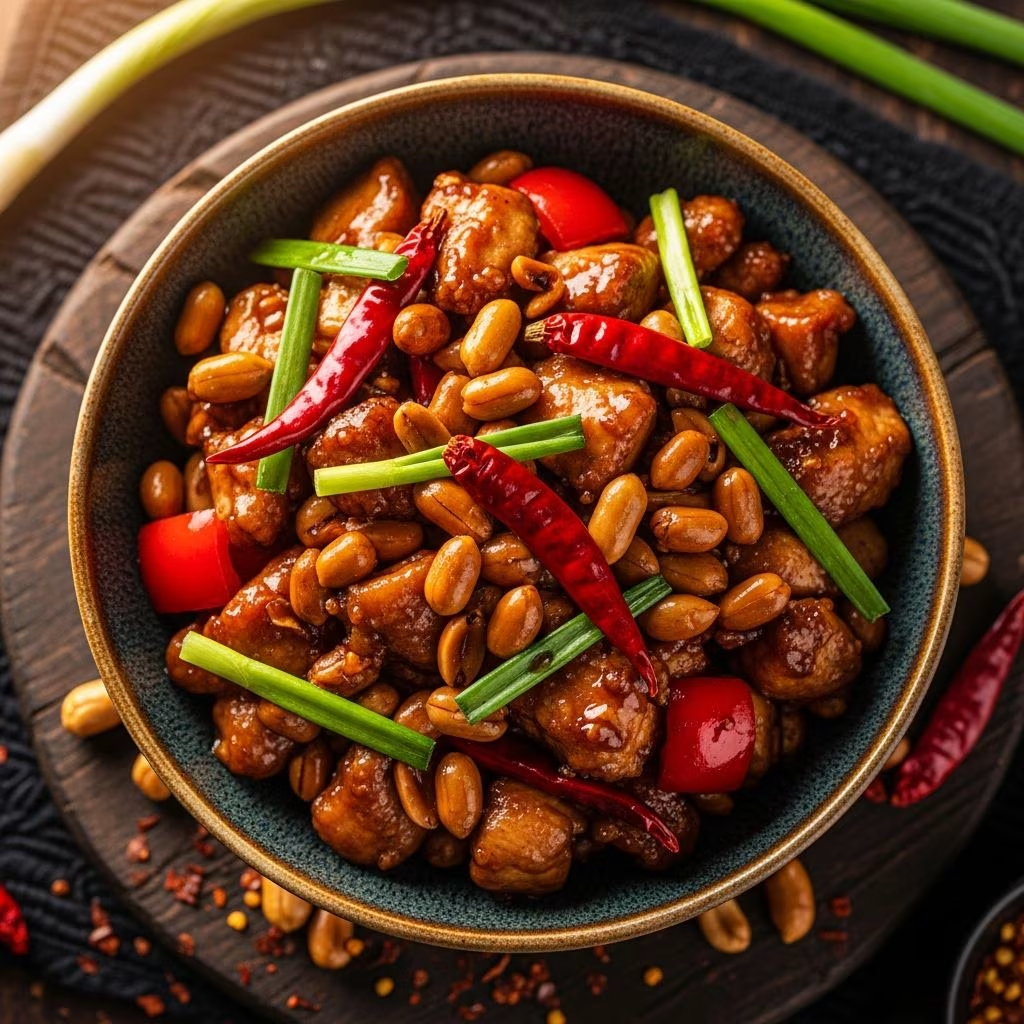
Kung Pao Chicken stands as a cornerstone of Sichuan cuisine, blending tender diced chicken with crunchy peanuts, fiery dried chilies, and a numbing kick from Sichuan peppercorns, all coated in a glossy, savory-sweet sauce. This dish, originating from China’s Sichuan province, has evolved into a global favorite, appearing on menus worldwide while retaining its bold, addictive profile.
Origins and Evolution of This Iconic Dish
Rooted in the flavors of Sichuan cooking, Kung Pao Chicken draws its name from a historical figure, though modern versions emphasize the region’s signature ma la taste—numbing (ma) from Sichuan peppers and spicy (la) from chilies. Traditional preparations use diced chicken thigh or breast, fried briefly for texture, then tossed with aromatics and peanuts. As it spread beyond China, adaptations emerged: Americanized takes often amp up sweetness, while purists stick to vinegar tang and peppercorn heat.
Today, home cooks can replicate restaurant-quality results using accessible ingredients. The key lies in balancing marinade for tenderness, sauce for gloss, and stir-fry timing to preserve crunch. Whether you’re a spice enthusiast or new to bold Asian flavors, this recipe delivers complexity without intimidation.
Essential Ingredients for Authentic Flavor
Gathering the right components ensures your Kung Pao Chicken captures the dish’s essence. Focus on fresh proteins, quality aromatics, and pantry staples for the sauce.
- Protein: 1 lb (450g) boneless chicken thighs or breasts, cut into 3/4-inch cubes for even cooking and bite-sized pieces.
- Nuts: 1/4 to 1/2 cup roasted peanuts or cashews, unsalted for control over saltiness; they add crucial crunch.
- Heat Elements: 6-10 dried red chilies (deseeded to moderate spice), plus 1/2 tsp Sichuan peppercorn powder or whole toasted and ground.
- Aromatics: 3-4 garlic cloves (smashed/sliced), 1-inch ginger (minced), 4-6 scallions (whites chopped, greens sliced for garnish).
- Sauce Base: Soy sauce (2-3 Tbsp), Shaoxing wine or rice wine (1-2 Tbsp), rice vinegar or black vinegar (1 Tbsp), brown sugar (1-2 Tbsp), cornstarch slurry for thickening.
- Oil and Veggies: Neutral oil (3-4 Tbsp), optional bell peppers or zucchini for color and texture.
Pro Tip: Toast Sichuan peppercorns lightly in a dry pan to release their citrusy numbness—essential for true authenticity.
Step-by-Step Marinade and Prep
Marinating tenderizes the chicken and infuses flavor, while prepping sauce ahead streamlines cooking.
Marinate the Chicken
- Cube chicken into uniform 3/4-inch pieces to ensure quick, even searing.
- In a bowl, combine 1 tsp cornstarch, 1 tsp vegetable oil, 1 tsp Shaoxing wine, 1/8 tsp salt, and a pinch of white pepper.
- Toss chicken in mixture; let sit 20-30 minutes (or refrigerate up to 1 hour for deeper flavor).
Whisk Up the Signature Sauce
The sauce is the dish’s soul: sweet, sour, salty, with umami depth.
| Ingredient | Quantity | Purpose |
|---|---|---|
| Soy sauce | 2 Tbsp | Savory base |
| Shaoxing/rice wine | 2 Tbsp | Acidity, tenderizing |
| Brown sugar | 2 Tbsp | Balances heat |
| Rice/black vinegar | 1 Tbsp | Tangy brightness |
| Cornstarch + water | 1 Tbsp each | Glossy thickening |
| Sesame oil (optional) | 1 tsp | Nutty finish |
Stir until sugar dissolves and cornstarch is smooth; set aside. Stir before adding to wok as starch settles.
Prep station: Mince garlic/ginger, chop chilies/scallions, measure peanuts. High heat and speed are key in stir-frying.
Cooking Technique: Mastering the Wok Stir-Fry
A hot wok (or large skillet) is non-negotiable for that signature sear and sauce cling. Total cook time: 10 minutes.
- Heat and Sear: Add 2 Tbsp oil to wok over high heat until shimmering. Add marinated chicken in a single layer; stir-fry 2-3 minutes until browned and 80% cooked. Remove to a plate.
- Aromatics Bloom: Lower to medium; add 1 Tbsp oil, garlic, ginger, chilies, Sichuan powder, scallion whites. Stir 30-60 seconds until fragrant—don’t burn.
- Reunite and Sauce: Return chicken; crank heat high. Pour in sauce, toss 1-2 minutes until thickened and coating everything. Add peanuts last 30 seconds for crunch.
- Finish: Garnish with scallion greens; serve over jasmine rice or noodles.
Common Pitfall: Overcrowding the wok steams instead of sears—cook in batches if needed. Taste and adjust chilies for your heat tolerance.
Ingredient Substitutions and Variations
Adapt for diet, availability, or twists while preserving core flavors.
- Protein Swaps: Tofu for vegetarian; shrimp or pork for variety. Use thighs for juiciness over breast.
- Nut Alternatives: Cashews for milder taste; skip for allergies, add sesame seeds.
- Spice Levels: Fewer chilies or sambal for mild; add fresh chilies post-cook.
- Gluten-Free: Tamari instead of soy; arrowroot for cornstarch.
- Veggie Boost: Bell peppers, broccoli, or carrots—stir-fry briefly before sauce.
For American-style: Increase sugar, add hoisin. Authentic: Chinkiang vinegar and whole peppercorns.
Nutrition and Pairing Suggestions
One serving (1/4 recipe): ~400 calories, 30g protein, 20g fat, 25g carbs. High in healthy fats from peanuts, lean protein.
- Sides: Steamed rice absorbs sauce; cucumber salad cools heat.
- Drinks: Tsingtao beer or iced jasmine tea cuts spice.
- Make-Ahead: Marinate overnight; sauce keeps 3 days in fridge.
Frequently Asked Questions
What makes Kung Pao Chicken spicy and numbing?
Dried red chilies provide heat, while Sichuan peppercorns create a tingling sensation via hydroxy-alpha-sanshool compounds.
Can I make it less spicy?
Remove chili seeds, use fewer pods, or substitute with bell peppers and mild chili sauce.
Chicken thighs vs. breast?
Thighs stay juicier; breast works if not overcooked.
How do I store leftovers?
Refrigerate up to 3 days; reheat in skillet with splash of water. Freezes 1 month.
Is Shaoxing wine necessary?
No—dry sherry or rice vinegar + water substitutes well.
Pro Tips for Restaurant-Quality Results
- Velveting technique (cornstarch marinade) ensures silky chicken.
- High smoke-point oil like peanut or canola prevents burning.
- Double sauce for extra gloss over rice.
- Experiment with whole dried chilies, snipped for controlled release.
With practice, Kung Pao Chicken becomes a weeknight staple—faster and fresher than takeout, packed with layers of flavor that evolve with each bite.
References
- Kung Pao Chicken: An Authentic Chinese Recipe — The Woks of Life. 2023-05-15. https://thewoksoflife.com/kung-pao-chicken/
- Kung Pao Chicken — Budget Bytes. 2024-02-10. https://www.budgetbytes.com/kung-pao-chicken/
- Easy Kung Pao Chicken — The Modern Proper. 2023-11-20. https://themodernproper.com/kung-pao-chicken
- Kung Pao Chicken — RecipeTin Eats. 2024-01-05. https://www.recipetineats.com/kung-pao-chicken/
- Better Than Takeout Kung Pao Chicken Recipe — YouTube (Natashas Kitchen). 2023-08-12. https://www.youtube.com/watch?v=B5v4wwNYrPg