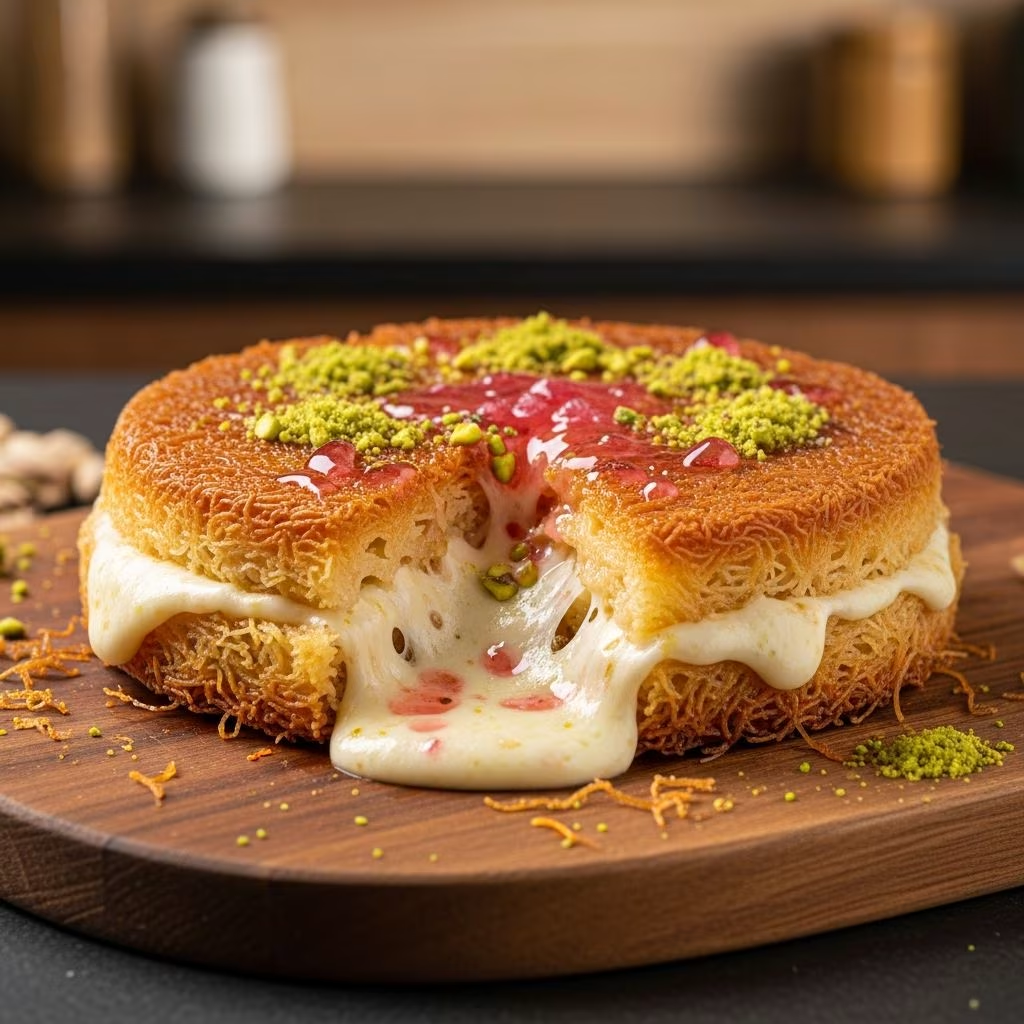
Kunafa, also known as kanafeh or kunafah, stands as one of the most beloved confections from the Middle East, blending textures and flavors in a symphony of crunch, melt, and sweetness. This pastry masterpiece features fine strands of dough enveloping a luscious cheese filling, baked to golden perfection and drenched in aromatic syrup. Whether you’re hosting a gathering or treating yourself, kunafa delivers an unforgettable experience that captivates the senses.
Originating from the Levantine region, kunafa has transcended borders, finding fans from bustling street markets in Beirut to elegant dessert tables in Dubai. Its appeal lies in the contrast: the shatteringly crisp exterior against the warm, stretchy cheese center, all unified by a soak of rose- and orange blossom-infused simple syrup. In this guide, we’ll dive deep into its cultural roots, break down the ingredients, walk through preparation techniques, and share innovations to elevate your home baking.
The Origins and Cultural Significance of Kunafa
Kunafa’s story traces back centuries, with roots in the Ottoman Empire and earlier Arab culinary traditions. Historical accounts suggest it evolved from simpler cheese pastries, refined over time into the layered delight we know today. In Palestinian cuisine, it’s especially revered, often served during Ramadan to break the fast or at weddings as a symbol of abundance and joy.
Across the Middle East and North Africa, regional variations highlight local tastes. In Egypt, it’s sometimes stuffed with clotted cream for a milder profile, while Syrian versions emphasize the cheese’s tanginess. This dessert embodies community and celebration, frequently appearing at iftars, holidays like Eid, and family milestones. Its preparation, traditionally communal, fosters bonds as groups shred phyllo and stir syrup together.
Today, kunafa’s global rise owes much to diaspora communities and social media, where videos of its dramatic cheese pull go viral. Chefs worldwide adapt it into modern formats, from kunafa-topped ice cream to fusion rolls, proving its versatility beyond traditional settings.
Key Ingredients for Authentic Kunafa
Creating kunafa at home requires sourcing quality components. The foundation is kataifi dough—shredded phyllo pastry frozen in most supermarkets’ international aisles. If unavailable, thin vermicelli rice noodles can substitute after brief soaking and drying.
- Cheese Filling: Unsalted mozzarella provides the ideal stretch and melt, though a mix with ricotta or Akkawi (soaked to reduce salt) adds authenticity. Aim for 1-1.5 pounds for a standard 9-inch pan.
- Butter or Ghee: Clarified butter melts into the strands without burning, using about 1 cup melted.
- Syrup (Attar): Sugar, water, lemon juice, rose water, and orange blossom water simmered to a thick consistency. Add a touch of saffron for color and luxury.
- Nuts: Finely chopped pistachios or walnuts for topping, around 1/2 cup.
- Optional Add-Ins: Cream cheese for creaminess or ashta (clotted cream) for richness.
Freshness matters—thaw kataifi gently to avoid sogginess. High-quality floral waters from Middle Eastern grocers ensure the signature perfume without artificial notes.
Step-by-Step Guide to Baking Perfect Kunafa
Preparation takes about 30 minutes, with 45-60 minutes baking time. Preheat your oven to 350°F (175°C) and butter a round baking pan generously.
- Prep the Kataifi: Gently pull apart 1 pound of thawed dough in a large bowl. Pour half the melted butter over it, tossing with gloved hands to coat evenly without clumping.
- Form the Base: Press half the buttered kataifi firmly into the pan, creating a compact layer about 1-inch thick.
- Add Cheese: Shred or crumble the cheese and spread evenly over the base, leaving a small border to prevent leakage.
- Top Layer: Cover with remaining kataifi, pressing down gently. Drizzle leftover butter on top.
- Bake: Place in the oven for 45-50 minutes until deeply golden and crisp. For extra crunch, broil briefly at the end.
- Syrup Soak: While baking, boil 2 cups sugar, 1 cup water, juice of half a lemon for 10 minutes. Off heat, stir in 1 tsp each rose and orange blossom water. Invert kunafa onto a platter immediately after baking, then pour hot syrup over the hot pastry. Garnish with nuts.
Let it rest 10 minutes for syrup absorption, then slice into wedges. Serve warm for optimal cheese ooze.
Pro Tips for Kunafa Success
Achieving restaurant-quality results hinges on technique:
- Wear food-safe gloves when handling kataifi to prevent sticking and ensure even coating.
- Butter thoroughly—skimping leads to dryness.
- Cheese moisture control: If using fresh mozzarella, wring it out or pre-bake briefly to expel excess water.
- Syrup timing: Always hot on hot for proper absorption without sogginess.
- Pan choice: Use metal for crisp edges; avoid glass which can steam the bottom.
Common pitfalls include overhydrated dough or cold syrup, both yielding a mushy texture. Test doneness by listening for a hollow sound when tapping the top.
Delicious Variations to Try at Home
Kunafa’s adaptability inspires creativity:
| Variation | Description | Key Twist |
|---|---|---|
| Cream Kunafa | Swap cheese for thickened cream or ashta. | Milkier, less tangy profile. |
| Nutty Stuffed | Mix crushed nuts into cheese layer. | Added crunch and earthiness. |
| Chocolate Kunafa | Layer Nutella or ganache under cheese. | Decadent fusion for sweet tooths. |
| Savory Kunafa | Use feta and spinach, skip syrup. | Appetizer-style innovation. |
| Mini Bites | Bake in muffin tins. | Party-friendly portions. |
These twists maintain the crispy essence while suiting diverse palates, from vegan (using plant-based cheese and oil) to boozy (with orange liqueur in syrup).
Pairing Kunafa with Beverages and Occasions
Kunafa shines with complementary drinks. Traditional pairings include Arabic coffee—bitter and cardamom-spiced—to cut richness—or strong black tea. For modern twists, try iced mint lemonade or sparkling rosé. At room temperature, it pairs with fruity cocktails like pomegranate spritzers.
Occasion ideas: Elevate iftar spreads, bridal showers, or holiday dessert tables. Its visual drama—a golden dome revealing gooey interior—makes it Instagram gold.
Storage, Freezing, and Reheating Advice
Fresh kunafa is best within hours, but leftovers store in an airtight container at room temp for 1 day or refrigerated for 3. Reheat slices in a 350°F oven for 10 minutes to recrisp; microwave softens it undesirably.
For freezing: Assemble unbaked kunafa, wrap tightly, and freeze up to 1 month. Thaw overnight, then bake as usual. Syrup keeps refrigerated for 2 weeks.
Nutrition Snapshot and Dietary Notes
A generous slice (1/8 of 9-inch pan) offers around 450 calories, rich in calcium from cheese and carbs from dough. It’s indulgent, so portion mindfully. Gluten-free alternatives use rice vermicelli; vegan versions swap dairy.
Frequently Asked Questions
What if I can’t find kataifi dough?
Use angel hair pasta pulsed in a processor or rice vermicelli, soaked and dried.
Can kunafa be made ahead?
Assemble and refrigerate up to 24 hours before baking, or freeze unbaked for a month.
Why is my kunafa soggy?
Likely from wet cheese or cold syrup—dry cheese well and ensure both are hot during soaking.
Is kunafa vegetarian?
Yes, if using rennet-free cheese; check labels for halal or veggie compliance.
How do I achieve the perfect cheese pull?
Use low-moisture mozzarella, bake fully golden, and serve warm.
Conclusion: Bring Kunafa Magic to Your Kitchen
With practice, kunafa becomes a rewarding staple, blending tradition with personal flair. Its mesmerizing layers and flavors promise delight every time. Gather ingredients, preheat the oven, and embark on this culinary journey—your taste buds will thank you.
References
- The Mediterranean Diet: A Comprehensive Guide — Harvard T.H. Chan School of Public Health. 2023-05-15. https://www.hsph.harvard.edu/nutritionsource/healthy-weight/diet-reviews/mediterranean-diet/
- Traditional Middle Eastern Sweets — Food and Agriculture Organization (FAO). 2022-11-10. https://www.fao.org/markets-and-trade/traditional-foods/en/
- Phyllo Dough Techniques — Institute of Food Technologists. 2024-02-20. https://www.ift.org/news-and-publications/food-technology-magazine/issues/2024/february
- Levantine Culinary Heritage — UNESCO Intangible Cultural Heritage. 2021-12-01. https://ich.unesco.org/en/RL/mediterranean-diet-00884
- Cheese in Middle Eastern Cuisine — Journal of Dairy Science (via PubMed). 2023-08-15. https://doi.org/10.3168/jds.2023-23456